Type of Object
Will
- Jean-Baptiste Massé (1687–1767)
On 2 October 1765, the miniature painter Jean-Baptiste Massé signed and dated his will, put his down on the oval tray of his silver inkstand, depicted in a late red-chalk self-portrait (fig. 186), and stored the document for safe-keeping.1 He was seventy-eight years old and nearing the end of a successful professional career. The preparation and writing of this, his last will and testament, must have taken days. It runs to thirty-six closely written folio-size pages stitched together with thread. The solemn concluding act of Massé’s life was, however, not over. He continued to deliberate on the division of his estate. On 8 September 1766 and 1 May, 20 July, 5 and 17 September 1767, he added a succession of codicils modifying the original will and adding a further twenty-four pages secured at the center of the testament with blue ribbon. Ten days later the will was deposited with his notary, Maître Guillaume-Charles Bioche and is now filed with acts completed in September 1767 by Bioche et Dulion at the Archives Nationales.2
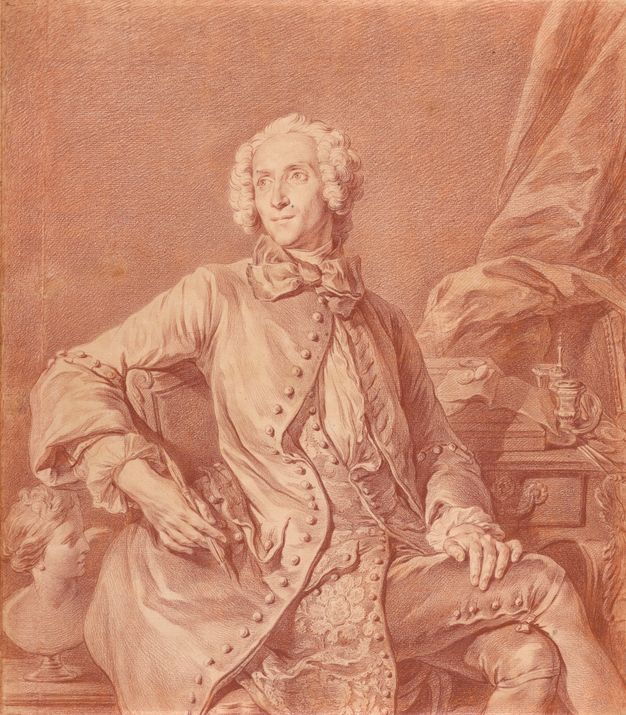
Massé is little remarked today and unlikely to become more so because so little of his oeuvre as a miniaturist and enameler survives.3 However, thanks to Émile Compardon’s publication of Massé’s will in 1880, he continues to be remembered as an exceptional testator.4 The draftsman and printmaker Charles-Nicolas Cochin had, over a century earlier, cited Massé’s will in his eulogy to his dead friend for the evidence it provided of his good character. It was, Cochin recalled, full of the most gratifying expressions of friendship and the most flattering testimony of Massé’s attachment.5 The will interpolates forty-two heirs and legatees, in fact, an extraordinary number, between whom it divided the miniaturist’s things, distributing hundreds of objects between them, of which approximately sixty were works of art.
For our book, the will is pertinent not only, therefore, as a thing in itself but also as an agent of transformation. It turned other stuff into hand-me-downs, keepsakes, and heirlooms, things in motion whose trajectories (between testator and beneficiary) enable us to see the human relations that enlivened them with affect and meaning.6 The will thus enlarges our historical understanding of the emotional response stirred by material culture and embodied in things: emotions of gratitude, friendship, kindness, love, and pity, as well as desire. To the extent that the contents of Massé’s will became a matter of public record, when in 1771 Cochin published his eulogy, it revealed the role of wills in the formation and reproduction of moral culture, an issue touched upon in conclusion and with regard to the Académie.
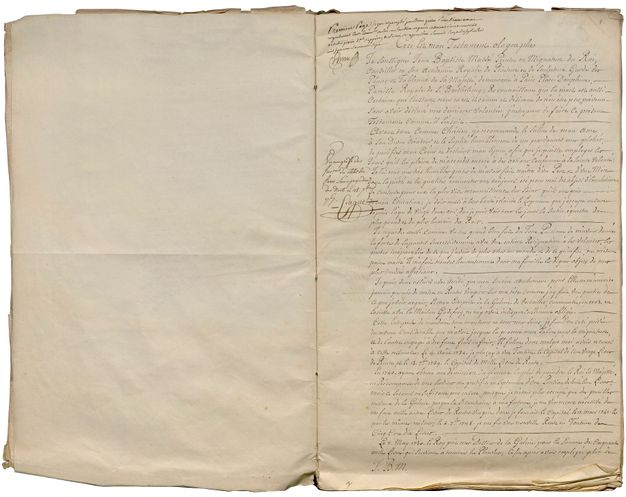
Jean-Baptiste Massé was a wealthy man, the descendant of jewelers and goldsmiths.7 He was also a bachelor and enjoyed as such unrestricted testamentary freedom in disposing of his estate.8 In writing his will “in his own hand,” rather than dictating it to a notary, as was becoming increasingly the norm,9 he enjoyed the additional freedom to elaborate and explain his wishes, disclosing his personal thoughts and feelings about his stuff and those on whom he intended to bestow it. This is not to say that Massé dispensed with the customary four-part form of the will (1: preamble; 2: instructions for the disposal of his body and the commendation of his soul; 3: division and distribution of the estate; 4: conclusion), but rather to observe that he was forced to hard reflection on his possessions as specific items because he was choosing not to leave them collectively as “effects.” Just as he took care in the craft of his will, leveling the script by use of ruled pencil guidelines, precisely forming letters, exactly spacing words, and capitalizing nouns (fig. 187) to forestall misreadings of the stuff indexed for inheritance, he also used pronouns and adjectives with care, clearly to identify the objects of his giving.10
Attention to the indexical specificity of language is most acute and conspicuous in relation to the bequests Massé made to his four servants, first because as cohabitants the distinction between his things and theirs was not always clear, and secondly because the things being left were mundane, or everyday stuff, which generally passes under the radar of consciousness and was consequently a challenge to describe. Possessive pronouns distinguished between things already “theirs” by virtue of being used in Massé’s service (livery) but legally still his; generic things, or chattels, impersonal to Massé (cutlery, furniture); his personal stuff (“my” nightgowns, “my” coat with the gold buttons); and, finally, things in the offing (shirts) that, when made, he intended to pass on.11 The sustained and intimate nature of Massé’s relationship with his servants blurred the difference between gifts inter vivos and bequests, and explains the changes Massé made repeatedly to his will concerning them as their relationship evolved.12 The value of the stuff Massé left them was mostly in its residual utility. He was thus careful to note the condition of things—whether extant or in plan, new or old, used or unused—and to employ physical descriptors to identify them: the “flannel” or “cotton” shirts, the “cotton” or “silk” stockings, the wool “ratine” coat.13 Effects became candidates for bequests by the intimate knowledge that Massé had not only of his servants’ lives but also of his possessions and by his capacity of writing and language to capture them clearly. So good, indeed, was Massé’s record of his property that when Me Bioche came to draw up Massé’s postmortem inventory he used the will as a template, keying the relevant inventory articles to the bequests described and numbered in the will.14
Bequeathing things depended not only on writing; it also required management and maintenance. In order to distribute his possessions appropriately and fairly, Massé needed a vantage from which to survey his stuff.15 His valet, Courcy, was charged with gathering and readying the contents of the library and cabinet for inclusion in the will.16 Things like the set of reproductive prints of Charles Le Brun’s great ceiling paintings in the Galerie des Glaces at Versailles, to which project Massé had dedicated thirty years of his life and much of his capital, not only needed organizing into sets, but individual impressions also required attention in some cases.17 For example, those of one set of the total fifteen he gave to family and friends, and which he reserved for his friend Cochin, were not only personally “selected” by him but also “revised” by his hand.18 Likewise, the bound set destined for the Académie was to have been “repaired,” the imperfections of the printing made good, had Massé’s health only permitted.19 Testamentary giving was not so much a “leaving” as an active preparation of property for donation, which in Massé’s case, was a task not only scribal, organizational, and legal, but creative. Although, according to Cochin, he had stopped painting some twenty years before his death, the will brought him out of retirement, and in the three years before 1765 he conserved and painted a number of family miniatures for his heirs.20 The will was, in short, the labor of Massé’s last years; he renewed old things, bought and created new ones, and prepared all for their new lives with others.
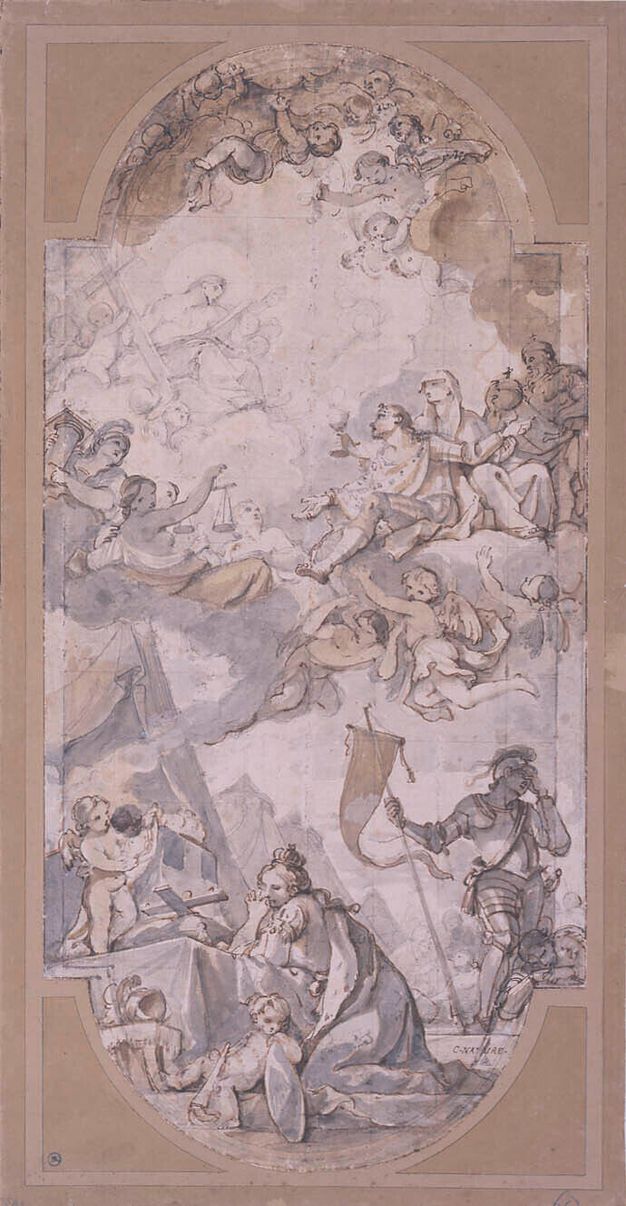
The work was emotional as well as practical. The portfolios he organized for his prints, the shagreen cases and gold boxes he had made by the glover Jean-Claude Galluchat and the jeweler Pierre-François Drais, to reframe his miniatures, were gestures of love comparable to the loving words that enclose the donations denoted in the will. Massé does not so much describe his miniatures, in the way he did the clothes left to his servants, as enfold them in personal narrative. “To my dear niece Marie-Anne Massé, whose birth I saw and whom I have watched grow in grace and virtue, I give my self-portrait miniature, which I painted when she left for Amsterdam; it was then well received under the sign of love. I hope it will now be under that of friendship.”21 To his lifelong friend and former pupil, the “very worthy and virtuous” Madeleine Basseporte, he gave as “a token of memory,” a preparatory drawing by Charles Natoire of the Apotheosis of Saint-Louis (fig. 188). “The satisfaction I have in having this work under my eyes makes me wish to afford her . . . the same privilege, and that of feeling as much pleasure as I have always had at looking at this admirable drawing.”22 The emphasis, in both instances, is not on miniature or drawing as such; it is, instead, on the origin and history of the object’s association with Massé.23 Through these histories his niece and his friend were called actively to keep Massé’s memory alive by holding and looking at his gifts and integrating the story of the objects’ former lives into their own.
Massé made and gave such keepsakes inscribed with his memory, mainly to women, as these examples suggest. It was in keeping with his character, apparently; Cochin remembered him as “gallant.”24 His legacies to men were more formal and conventional. He originally left his nephew Renouard, his gold , shoe buckles, and garters, “wishing with all my heart that these bagatelles will be as useful to him as they have been to me,” but he later rescinded the gift, replacing it with a sum of money—the body ornaments, on reflection, too personal and perhaps too frivolous to be judged appropriate.25
Sociologists Janet Finch and Jennifer Mason contrast keepsakes with heirlooms.26 Heirlooms, they suggest, are emotionally cooler because things that testators and beneficiaries feel obliged, rather than want necessarily to exchange. In the eighteenth century, family Bibles, medals, family portraits, and silver were objects of this kind, and as lineal property they circulated primarily between men.27 Massé’s will indicates that by 1765, he was the guardian of the Massé family portraits, his elder brothers Jacob and Étienne having died. He had inherited portraits of his maternal grandfather and his parents, to which small collection he had added new portraits of his parents by Marc Nattier; portraits of his elder brothers, one by Louis Tocqué, the other by Gustav Lundberg; a portrait of Jacob’s wife also by Tocqué; and portraits of himself by Jean-Marc Nattier and Tocqué.28 As a sign of his love, he gave his “very dear” sister a lifetime’s right to enjoy the portraits of their mother and their brother Étienne, but he left them entailed to Pierre Massé, his nephew by his eldest brother, whom he also made his principal heir. Were Pierre Massé’s own line to fail, the will stipulated that all the portraits should pass to the descendants of the younger brother Étienne, in order “to perpetuate the family’s memory of our ancestors and the desire to emulate them.”29
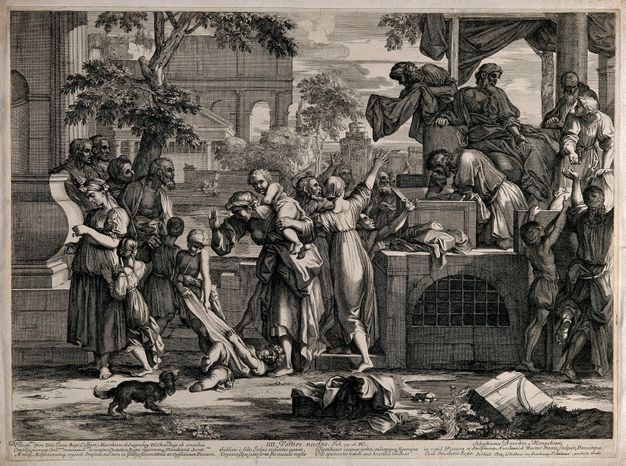
Massé’s will is described above as a legal instrument for the division and distribution of his estate, a document in which the voice of possession rings with enthralling frequency. It appears to confirm the findings of historians, according to whom eighteenth-century testamentary practice was, by contrast to that of earlier generations, conspicuously profane in its concern for family, not Christian fellowship, and for material, not spiritual goods.30 However, in Massé’s case, his sensibility for the stuff and meaning of his things was not developed at the expense of his spiritual aims. As a Huguenot, there was of course no place in his devotions for the kinds of objects adored by Catholics such as Hyacinthe Rigaud, or for the crucifixes, rosaries, and sacred they used to orient their prayers. Nevertheless, it seems likely that Massé’s bequests to his servants of clothes, cutlery, beds, and bedlinen were spiritual as well as practical, prompted by a desire to extend God’s compassion by Acts of Corporal Mercy, specifically feeding the hungry, clothing the naked, and sheltering the homeless.31 The Seven Acts of Mercy by Sébastien Bourdon, himself a Protestant, was one the few religious works Massé owned (fig. 189). Significantly, he willed the set of prints to nephew Pierre as treasured models of Christian duty, as heirlooms of the faithfulness of his ancestors to the reformed church, and as signs of the family’s identity.32
In his eulogy, Cochin was conspicuously silent about the state of Massé’s soul, though the spiritual portrait was a literary trope of many artists’ biographies. Having failed to execute Massé’s wish to be buried next to his father at the Catholic church of Saint-Barthélémy,33 Cochin endeavored in his eulogy to do justice instead to Massé’s memory by erecting a secular “monument” to the veteran academician. Gratitude and friendship were, he said, Massé’s defining virtues. He related how Massé had had a copy of the Académie’s Portrait of the Marquis de Marigny by Tocqué made to hang opposite his bed, in the place that is often reserved for the image of Christ, in order to have more frequently before him the likeness of the one to whom so much gratitude was owed by the arts.34 The virtue of gratitude, not to be mistaken with simple politeness, was, according to moral philosophy, the origin of community and fellowship because it was a freely given response to the personal encounter with human need.35 It therefore begets charity and friendship.
At the beginning of this entry attention was drawn to Cochin’s acknowledgment of Massé’s generosity. His liberality, according to Cochin, extended beyond his intimate circle and beyond the bestowal of stuff. Such was his generosity of spirit, says Cochin, that he had sustained friendships with both François Lemoyne and Jean-François de Troy at a time in the 1730s when their professional rivalry had bitterly divided the Académie.36 The spirit of charitable union that he sought instead always to promote had led him in 1764 to endeavor to level fortunes by establishing an institutional fund for the widows and orphans of impoverished academicians, and it appears also to have informed the pattern of his testamentary giving to individuals.37 In choosing to leave sets of the same prints of the Grande Galerie to all his friends, did he not hope to spare the feelings of those who might have felt wounded by the preference implicit in bequests of different things?38 Without fear of humiliating others, Cochin publicly acknowledged his inheritance under Massé’s will. He ended his eulogy by affirming that the “most precious” gift that Massé had left the Académie was “the example of these his virtues.”39 §
-
See Jean-Baptiste Massé, “Inventaire après décès,” AN, MC/ET/XCVII/422, 13 October 1767, for a verbal description of the ink stand. ↩︎
-
“Dépôt de testament,” AN, MC/ET/XCVII/ 422, 28 September 1767. ↩︎
-
Charles-Nicolas Cochin noted in his eulogy that at Massé’s death, examples of his work were already hard to find. See Cochin, “Éloge de Jean-Baptiste Massé,” in Emile Compardon, Un artiste oublié: J. B. Massé peintre de Louis XV, dessinateur, et graveur (Paris: Charavay, 1880), 40. ↩︎
-
Compardon, Massé, 79–191. See Pierre Chaunu, La mort à Paris (Paris: Fayard, 1978), 225–30, on the proportion of Parisians who made wills. ↩︎
-
Cochin, “Éloge,” 73. See also Pierre-Jean Mariette, Abecedario, ed. Emile Courajod (Paris: J. B. Dumoulin, 1853–62), 3:277–80. ↩︎
-
On trajectories, see Arjun Appadurai, “Commodities and the Politics of Value,” in The Social Life of Things, ed. Arjun Appadurai (Cambridge: Cambridge University Press, 1986), 3–63. ↩︎
-
Massé’s will is exceptional in providing a history of his assets prior to donation. See Compardon, Massé, 83–91. ↩︎
-
On French laws of inheritance, see Emmanuel Le Roy Ladurie, “Family Structures and Inheritance Customs in Sixteenth-Century France,” in Families and Inheritance, ed. Jack Goody et al. (Cambridge, England: Cambridge University Press, 1976), 37–70. ↩︎
-
See Philippe Ariès, “Du sentiment modern de la famille dans les testaments et les tombeaux,” in Essais sur l’histoire de la mort en Occident du moyen âge à nos jours (Paris: Seuil, 1975), 132–38; and Serge Briffaud, “La famille, le notaire et le mourant: Testament et mentalité dans la region de Lanchon (1650–1790),” Annales du Midi 97 (1985): 389–409. ↩︎
-
See Louis Rossignol, L’art d’écrire (1756), plates 23, 27, for examples of the Italian “batarde” script used by notaries for this purpose. ↩︎
-
Massé had bought a length of 100 meters (83.5 aulnes) of “belle toile” shirting for the purpose. See Compardon, Massé, 99, 101–2. ↩︎
-
See the disinheritance of his servant Le Roux for ingratitude and abandonment, Compardon, Massé, 159. ↩︎
-
Compardon, Massé, 99, 100. ↩︎
-
For marginal references to the will not transcribed in Compardon, see AN, MC/ET/XCVII/422, 13 October 1767. ↩︎
-
On Massé’s sense of his giving, see Compardon, Massé, 92–93. ↩︎
-
For Courcy’s “care” and “intelligent attention,” Massé left him an additional 500 livres. See codicil, 5 September 1767, in Compardon, Massé, 186–87. The engraver Johann Georg Wille is credited (Compardon, Massé, 147) with having “bonifier” the prints. Mémoires et journal de J-G. Wille, ed. Georges Duplessis, 2 vols. (Paris: Renouard, 1857), 1:366. ↩︎
-
Jean-Gérard Castex, “Graver Le Brun au siècle des Lumières: Le recueil de la Grande galerie de Versailles de Jean-Baptiste Massé, ” 2 vols, PhD diss. (Paris X–Nanterre, 2008). ↩︎
-
Compardon, Massé, 136. ↩︎
-
Compardon, Massé, 175–76. ↩︎
-
Compardon, Massé, 125–28. See Cochin, “Eloge,” 40. ↩︎
-
Compardon, Massé, 105. ↩︎
-
Compardon, Massé, 143–44. ↩︎
-
Massé especially valued his gifts; The Apotheosis of Saint-Louis had been given to him by Natoire. ↩︎
-
Cochin, “Éloge,” 35. ↩︎
-
Compardon, Massé, 164–65. ↩︎
-
Janet Finch and Jennifer Mason, Passing-on: Kinship and Inheritance in England (London: Routledge, 2000), 139–61. ↩︎
-
Two medals given to Massé by the king of Denmark are described in the will as a “monument” to the honor of the family. Massé trusted his heirs would not sell them. See Compardon, Massé, 115–17. ↩︎
-
Compardon, Massé, 111–13. ↩︎
-
Compardon, Massé, 119–24. ↩︎
-
See Gaël Rideau, “Pour une relecture globale du testament: L’individualisation religieuse à Orléans au XVIIIe siècle (1667–1787),” Revue d’histoire moderne et contemporaine 57 (2010): 97–123. ↩︎
-
On the material culture of French Protestants, see David Garrioch, “Religious Identities and the Meaning of Things in Eighteenth-Century Paris,” French History and Civilization 3 (2009): 17–25. ↩︎
-
See AN, MC/ET/XCVII/422, 13 October 1767. ↩︎
-
See Compardon, Massé, 94–96. Massé was buried in the Protestant cemetery. In 1767 France was emerging from the Callas crisis. Massé owned pamphlets on the torture and wrongful execution of Jean Callas. ↩︎
-
Cochin, “Éloge,” 72–73. ↩︎
-
Gratitude was a secondary meaning of “reconnaissance,” according to the Dictionnaire de l’Académie française (Paris: Brunet, 1762), 2: s.v. “Reconnaissance.” Its synonym was “bienfaisance,” or benevolence. See “reconnaissance” in the moral sense in Encyclopédie, 13:860, https://encyclopedie.uchicago.edu/, 13:860. ↩︎
-
Cochin, “Éloge,” 70–72. ↩︎
-
Cochin, “Éloge,” 58–61; and Compardon, Massé, 132–33. ↩︎
-
Massé left his Grande Galerie to the following: Madeleine Basseporte, Pierre-Antoine Baudouin, Charles-Nicolas Cochin, Jean-Baptiste Fernex, Étienne Jeaurat, Jean-Baptiste Lemoyne, Jean-Baptiste Pigalle, Joseph-Marie Vien, and Johann Georg Wille. He had originally intended leaving Vien his copy of Bernard de Montfaucon’s L’antiquité expliqué but changed his mind. See Compardon, Massé, 141–42, 182. ↩︎
-
Cochin, “Éloge,” 24–25. ↩︎