Chicago
Ly, Julianna, Chun Liu, Jing Qu, Gerald Poirier, and Matthew
Cushman. “49. Analysis of Evolon CR as a Poulticing Agent for
Wax-Resin Lining Adhesives: Py-GCMS, BET, and SEM Analyses of
Used Evolon CR Tissues.” In
Conserving Canvas, by
Cynthia Schwarz, Ian McClure, and Jim Coddington. Los Angeles:
Getty Conservation Institute, 2023.
https://www.getty.edu/publications/conserving-canvas/viii-posters/49/.
MLA
Ly, Julianna, et al. “49. Analysis of Evolon CR as a Poulticing
Agent for Wax-Resin Lining Adhesives: Py-GCMS, BET, and SEM
Analyses of Used Evolon CR Tissues.”
Conserving Canvas, by
Cynthia Schwarz et al., Getty Conservation Institute, 2023,
https://www.getty.edu/publications/conserving-canvas/viii-posters/49/.
Accessed DD Mon. YYYY.
49.
Analysis of Evolon CR as a Poulticing Agent for Wax-Resin Lining
Adhesives: Py-GCMS, BET, and SEM Analyses of Used Evolon CR
Tissues
49. Analysis of Evolon CR as a Poulticing Agent
Julianna Ly,
Assistant Conservator of Paintings,
Cleveland Museum of Art
Chun Liu,
Scientist,
Janssen Pharmaceutical Companies of Johnson & Johnson,
Titusville, New Jersey
Jing Qu,
Research Scientist,
University of Delaware Advanced Materials
Characterization Laboratory, Newark, Delaware
Gerald Poirier, Director,
University of Delaware Advanced Materials
Characterization Laboratory, Newark, Delaware
Matthew Cushman,
Winterthur / University of Delaware Program in Art
Conservation, Newark, Delaware
Evolon CR, an absorbent fabric composed of polyester and
polyamide microfilaments, is currently used in conservation
for the purpose of reducing and removing overpaint and
varnish from paintings. This study explores its use as a
poulticing agent for the reduction of wax from wax-resin
lining treatments. Experiments involving different methods
of using the tissue, as well as analyses of the tissue after
use employing various analytical methods, indicate that it
is most effective when used as a single sheet of
solvent-wetted tissue. While the tissue can be used more
than once, its ability to poultice wax-resin significantly
decreases after first use. Finally, the most important role
in influencing the efficacy of poulticing is the solvent
choice.
Despite the successful use of Evolon CR (a nonwoven tissue
made of a polyester and polyamide blend)1
in removing overpaint and varnish (Ribits 2017Ribits, Julie. 2017. “Lifting the Microfiber Veil:
Utilizing Evolon® Fabric at the Mauritshuis to Remove
Aged Varnish from Hendrick Heerschop’s
A Visit to the Doctor.” Paper presented at
Treatment 2017: Innovation in Conservation and Collection
Care: 45th Annual Meeting of the American Institute for
Conservation of Historic and Artistic Works, Chicago, May
28–June 2, 2017.), little research has been done on its ability to poultice
wax-resin mixtures. Confronted with two wax-resin lined
paintings that required relining, the authors sought a method
that would achieve a homogeneous surface topography and remove
residual wax-resin mixtures on the verso. The successful
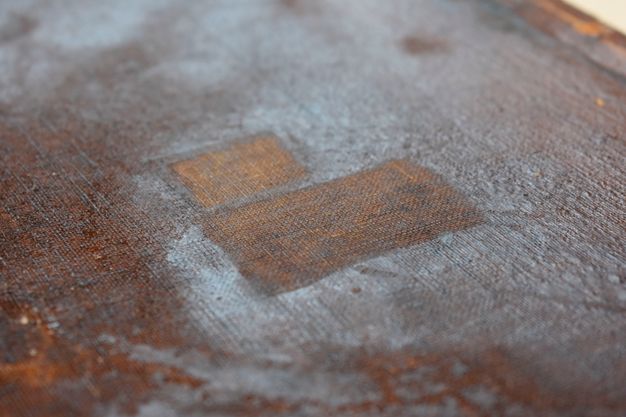
reduction of wax-resin mixtures (fig. 49.1a) prompted further research into the efficacy of this method
and into the constituent materials poulticed into and onto the
Evolon CR tissue. The goals of this study were to better
understand the chemical and physical properties of Evolon CR
and to evaluate the tissue’s efficacy at reducing wax-resin
mixtures in an effort to improve and expand its practical use
in conservation.
Experimental Design
Fragments of twentieth-century paintings, previously wax-lined
by students using a 2:1 microcrystalline wax to Piccolyte
resin, were used for this study. Following the removal of the
old lining with heat, the adhesive mixture on the verso of the
canvases was reduced using the following procedure (unless
otherwise noted): Evolon CR squares measuring 2 inches (each
weighing 0.18 g ± 0.001 g) were placed onto the verso of the
painting and then wetted with 1 mL of petroleum benzine,
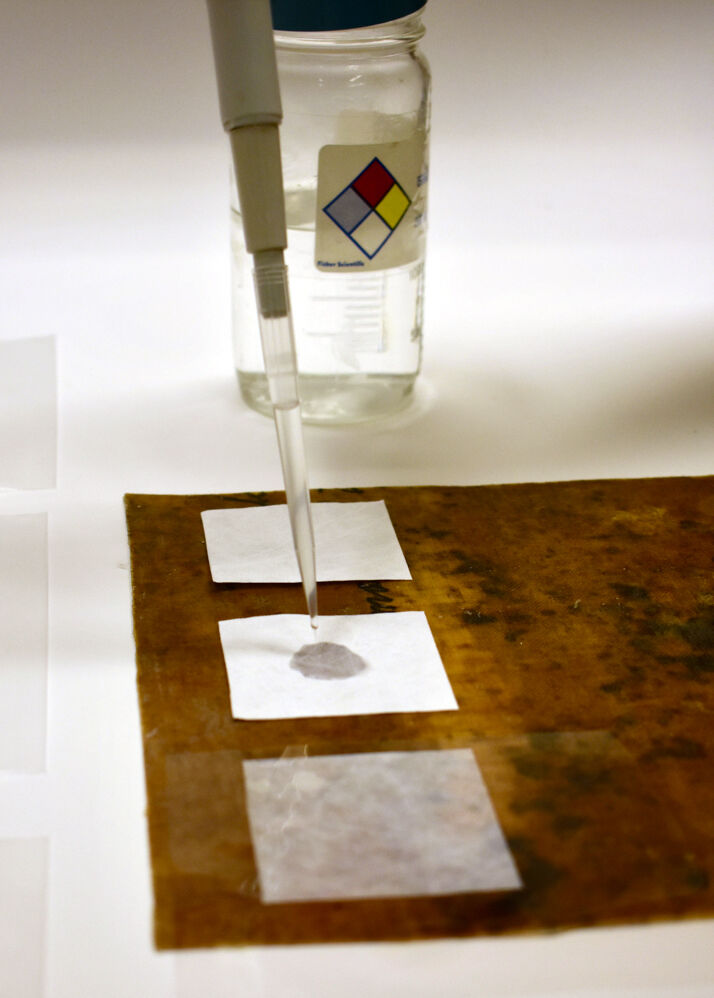
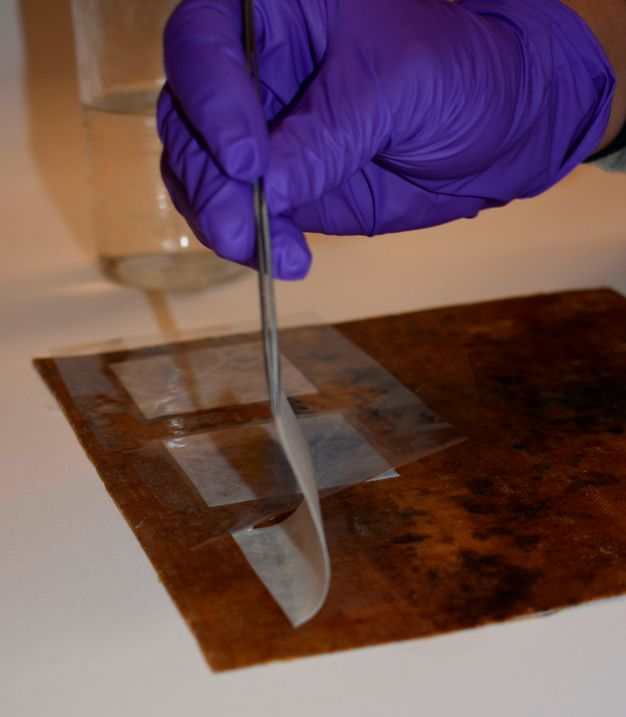
delivered by Eppendorf 1000 uL pipette. They were then covered
with Mylar and left for varying lengths of dwell time before
being removed (figs. 49.1b,
49.1c).
Figure 49.1 (a)
Initial test areas with Evolon CR tissue and solvent on
the verso of a painting following wax-lining reversal. (b)
Applying 1 mL of solvent to Evolon CR tissue. (c) Removal
of Evolon CR after prescribed dwell time. Images: Julianna
Ly
Four experiments were conducted to evaluate solvent dwell time
on the surface, the potential to reuse the tissue, different
application methods, and the solvent delivered with Evolon CR.
All tissues were manipulated with gloves to prevent transfer
of oils or dirt from hands in the event this would impact
weight gain or pyrolysis–gas chromatography–mass spectrometry
(Py-GCMS) analysis, and all were allowed to off-gas overnight.
Quantitative analyses included calculating the weight and
porosity changes between unused and used tissues. The weight
of the tissue was measured before and after each use for all
four experiments on a scale accurate to 0.0001g. Porosity
change analyses were conducted using Brunauer-Emmett-Teller
(BET) theory. Qualitative tests included scanning electron
microscopy–energy dispersive X-ray spectroscopy (SEM-EDS) with
back-scattered electron (BSE) imaging, and analysis of
poulticed organic materials with Py-GCMS. All experiments and
analyses were conducted in 2019 at Winterthur Museum
Scientific Research and Analytical Laboratory (SRAL) and the
University of Delaware Advanced Materials Characterization
Laboratory (UDAMCL).
Dwell Time
Experiment 1, Dwell Time, assessed the efficacy of Evolon CR
left on the surface and under Mylar for one, five,2
and fifteen minutes. Time points were selected to explore
practical and extreme scenarios.
Single- versus Double-Layer Application
Experiment 2, Single- versus Double-Layer Application,
assessed the difference between applying a single square of
Evolon CR versus a two-layer system (a single wetted square
under a dry square covered with Mylar). This method was
investigated to determine whether layering a dry tissue over a
solvent-soaked Evolon CR tissue could increase the poulticing
ability of the material. Both the Single-Layer and
Double-Layer experiments were run in triplicate with a
five-minute dwell time.
Iterative Use
Experiment 3, Iterative Use, assessed the effects of reusing
the same Evolon CR tissue up to three times. The experiment
aimed to explore the capacity of the material for reuse and
the subsequent changes in efficacy.
Solvent Studies
Experiment 4, Solvent Studies, assessed the effect of using
different ratios of acetone and petroleum benzine and how the
solvent selection influenced the materials poulticed and
retained in the tissue. Ratios of 10% and 50% acetone in
petroleum benzine were compared to neat acetone and petroleum
benzine alone.3
Analytical Methods
SEM-EDS
SEM-EDS was used to analyze the Iterative Use experiments to
visualize morphology changes within the tissue structure after
repeated uses. Samples were examined using a Zeiss EVO MA15
SEM with LaB6 source at an accelerating voltage of 20 kV for
the electron beam. Each of the runs was imaged at 25×, 50×,
137×, and 302×. SEM-EDS was conducted by Dr. Judy Rudolph, a
volunteer conservation scientist at SRAL.
BET
Porosity measurements of the tissue were conducted for the
Iterative Use experiments to assess the effects of iterative
tissue use compared to a control. Porosity measurements were
done on a Micromeritrics BET analyzer (Micromeritics ASAP
2020). The pore-size detection limit was 10 nanometers. BET
was conducted by Dr. Jing Qu, research scientist, and Gerald
Poirier, director of UDAMCL.
Py-GCMS
Py-GCMS was used to analyze the Solvent Studies experiment to
characterize low-molecular-weight solvent-extractable
materials poulticed from the surface. Samples were analyzed
using a Frontier Lab Multi-Shot Pyrolyzer (EGA/PY-3030D), a
double-shot pyrolysis system interfaced to an Agilent 7820A
gas chromatograph equipped with a 5975 mass selective detector
(MSD). GC-MS analysis was conducted by Dr. Chris Petersen, a
volunteer conservation scientist and affiliated associate
professor at SRAL.
Results and Discussion
The first three experiments aimed to understand the practical
features of Evolon CR, while experiment 4, Solvent Studies,
was designed to understand whether the amide and ester
functional groups within the tissue influence the material
poulticed.
Dwell Time
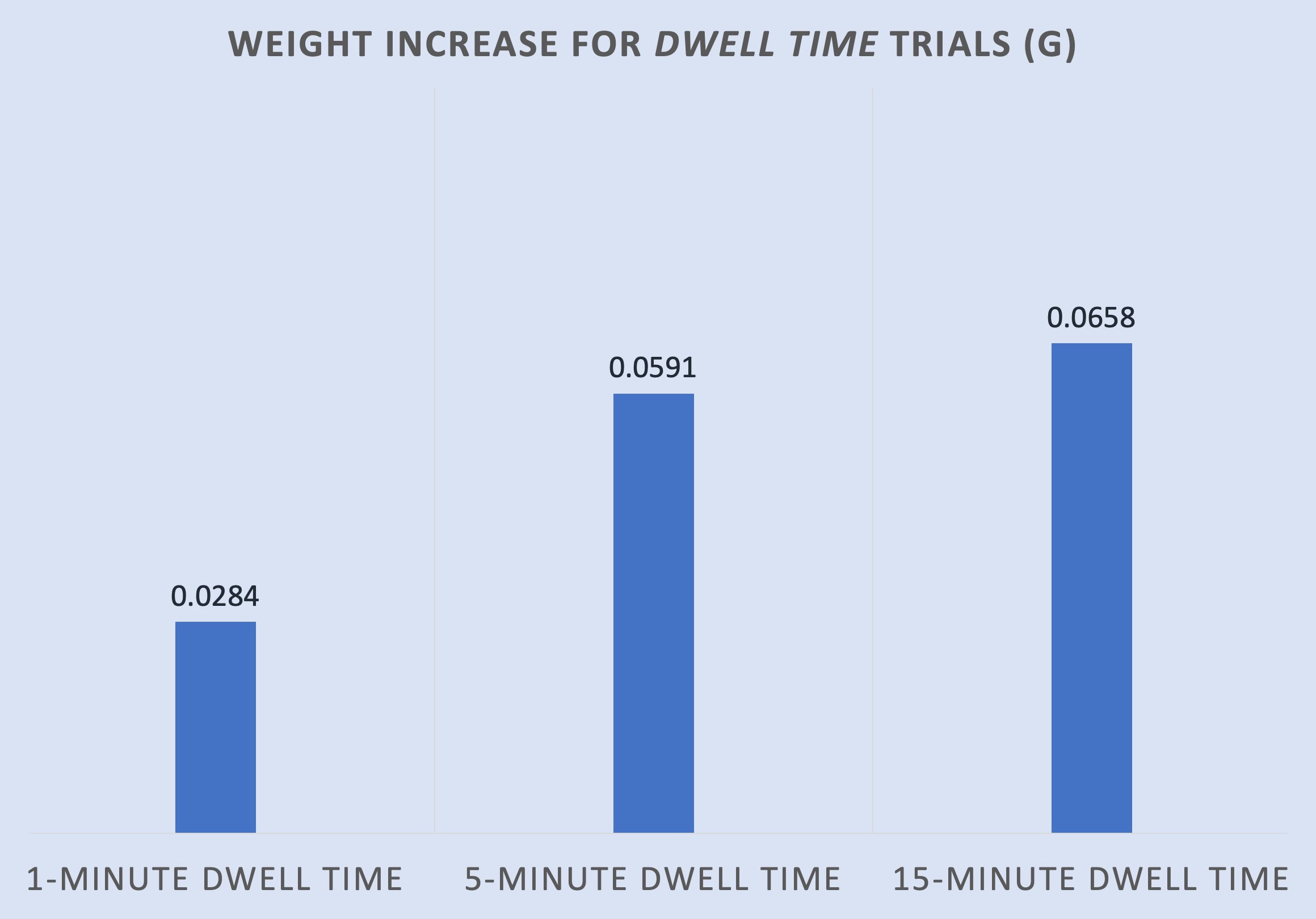
Differences in the amount of material poulticed nearly doubles
when the tissue is left to dwell for five minutes compared to
one minute (fig. 49.2). However, an
extra ten-minute dwell only yielded an additional 11% increase
in poulticed material. These results support that poulticing
capacity decreases as the tissue approaches its saturation
point. The fifteen-minute time point, representing an extreme
scenario, was tested to understand the length of time it would
take for the tissue to approach saturation. In practice, the
ideal dwell time should be tested for each particular case.
ExpandFigure 49.2Amount (in grams) of the wax-resin mixture poulticed into
each tissue after 1-, 5-, and 15-minute dwell times.Image: Julianna Ly
Single- versus Double-Layer Application
The use of a two-layer application proved less effective at
poulticing material into the tissue compared to using a single
sheet of Evolon CR (table 49.1).
Wetted single-layer tissues consistently poulticed more
material compared to both wetted tissues only and the combined
wet and dry tissues from the Double Layer experiment. A
possible explanation is that the dry tissue wicks solvent out
of the wet tissue, reducing the amount of solvent delivered to
the wax-resin mixture.
Table 49.1 Weight increases for Single versus Double Layer
Application trials
Single-Layer experiment
(5-minute dwell time)
Double-Layer experiment
(5-minute dwell time)
Trial 1
55.0 mg
Trial 1
Wetted
36.0 mg
Dry
8.7 mg
Combined
44.8 mg
Trial 2
59.6 mg
Trial 2
Wetted
42.5 mg
Dry
8.6 mg
Combined
51.1 mg
Trial 3
62.6 mg
Trial 3
Wetted
39.5 mg
Dry
10.2 mg
Combined
49.7 mg
Table: Julianna Ly
Iterative Use
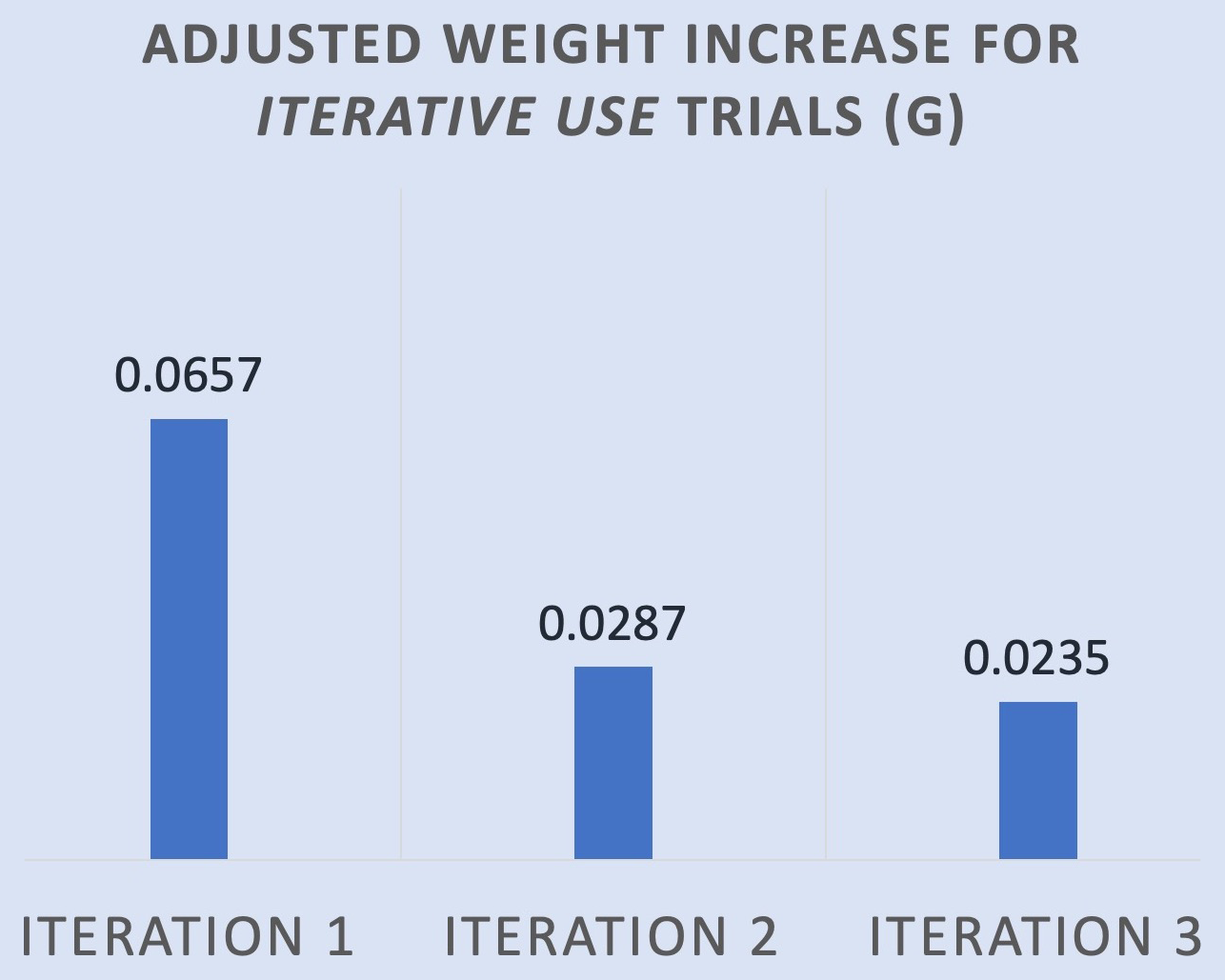
In addition to assessing the efficacy of wax-resin poulticing
through weight gain, this series also used SEM-EDS and BET to
gather information regarding physical changes. Each use of the
Evolon CR tissue resulted in increased material sorption,
albeit with decreased amounts for each iteration (fig. 49.3). This trend can be explained using a similar rationale as
the decreased weight gain when using excessively long dwell
times: as the tissue approaches saturation, its poulticing
capacity decreases.
ExpandFigure 49.3Weight increase (in grams) after each iterative
use.Image: Julianna Ly
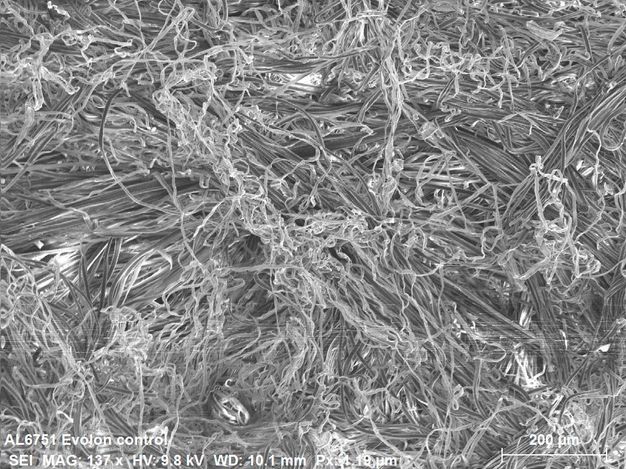
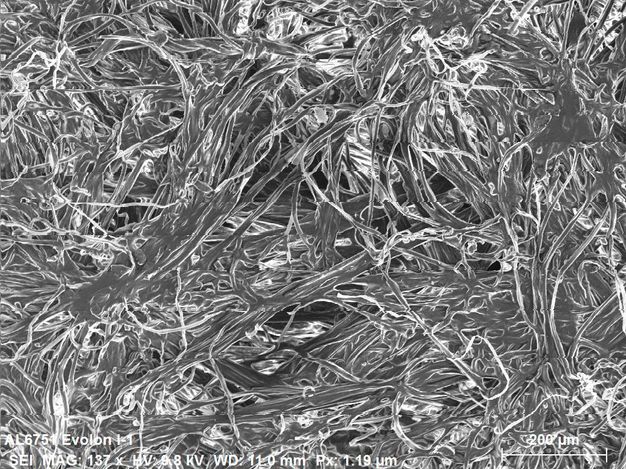
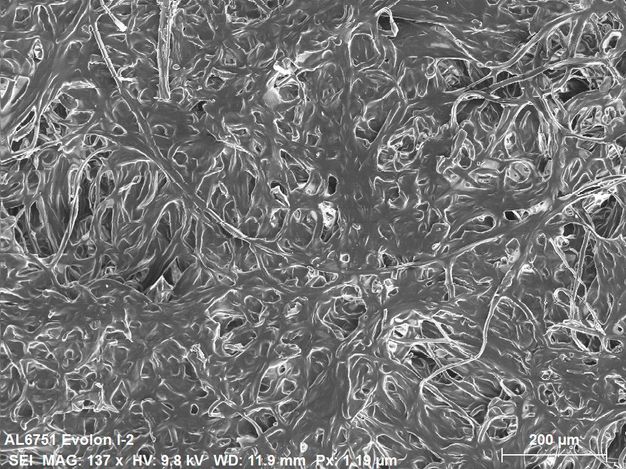
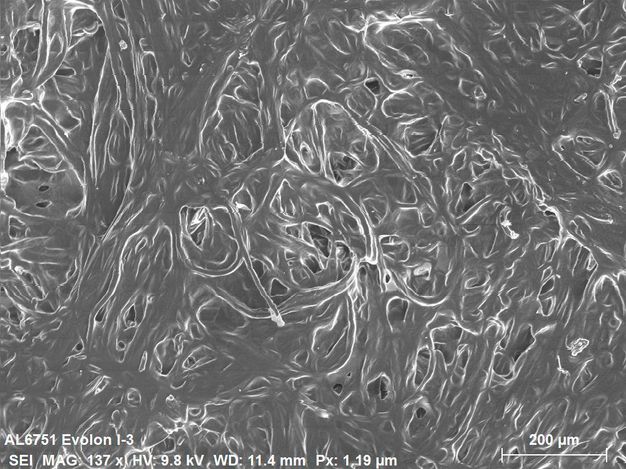
SEM images (fig. 49.4) visualized
morphology changes on the surface. With each use, the
individual fibers become increasingly less distinct,
presumably as the wax resin coats and fills the pores. The
loss of definition with each use could be attributed to
redistribution of the wax resin already poulticed into the
tissue upon re-exposure to solvent, the continued filling of
tissue interstices with freshly solubilized/softened wax
resin, or a combination of both.
Figure 49.4 SEM BSE
images of unused tissue: (a) control, (b) after iteration
1, (c) after iteration 2, (d) after iteration 3. (Surface
morphology changes visualized in SEM BSE images captured
at 137× by Dr. Judy Rudolph, volunteer conservation
scientist, SRAL, Winterthur Museum. Images: Julianna
Ly
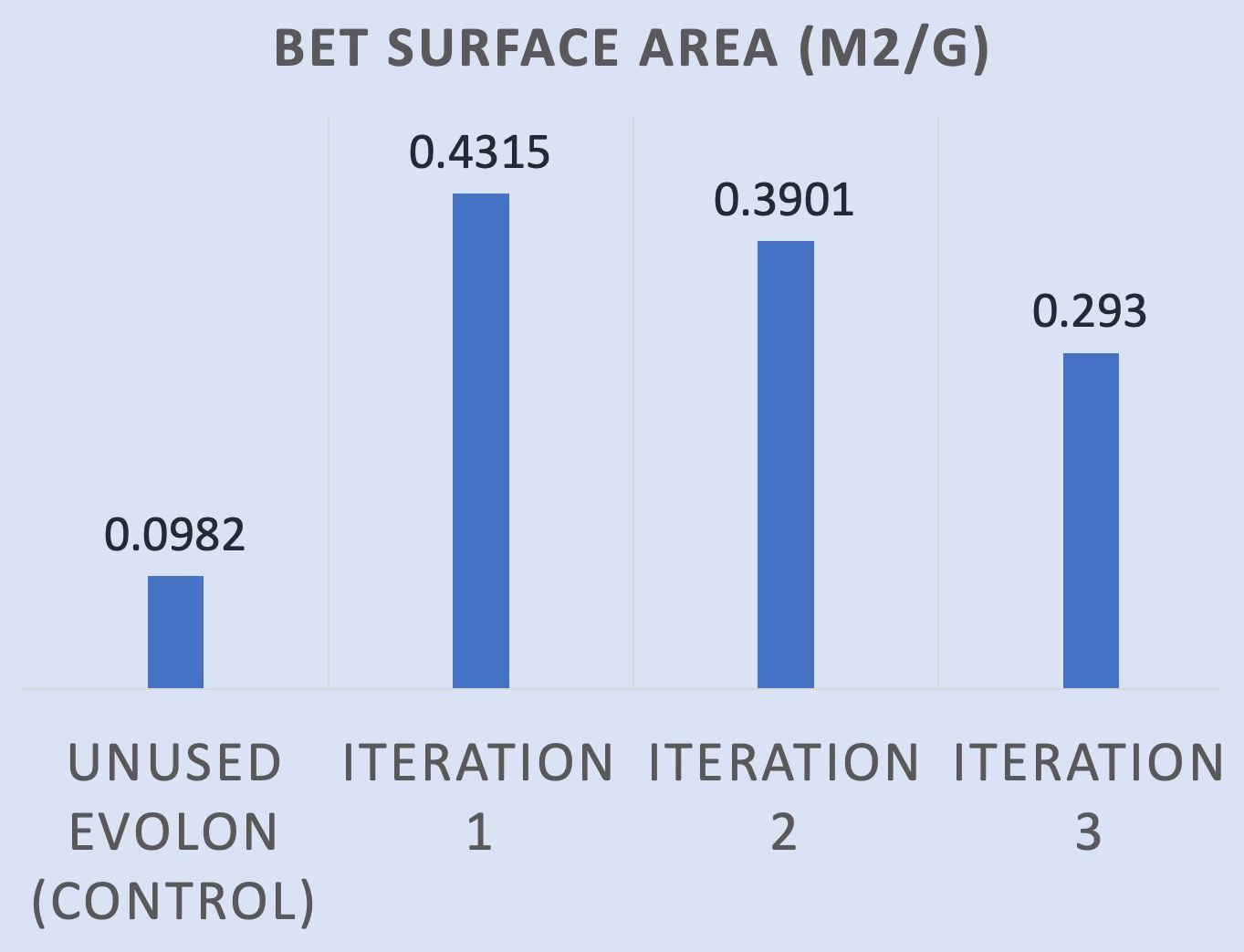
BET analysis yielded a surprising result (fig. 49.5). An increase in measured surface area was observed after
the first use, from 0.0982 2/g (unused control) to
0.4315 2/g (after single use). Contrary to the
weight-gain data and SEM images, both of which confirmed that
the tissue had picked up wax resin, BET suggested the porosity
increased. However, after the first iteration, BET data
trended as expected: with each iterative use, the measured
surface area decreased as more wax resin was poulticed into
the tissue.
ExpandFigure 49.5Increase in surface area (2/g) analyzed
through BET.Image: Julianna Ly
While this publication was in preparation, further analysis of
the BET data revealed an anomaly. After further discussion
with external scientific colleagues, our preliminary data
suggest that BET might not be the ideal instrument for
analyzing porosity in Evolon CR due to the relatively low
porosity of the fibrous tissue compared with materials BET is
typically used to analyze. Further research is needed to
develop a quantitative method for measuring porosity changes
in Evolon CR before and after use.
Solvent Studies
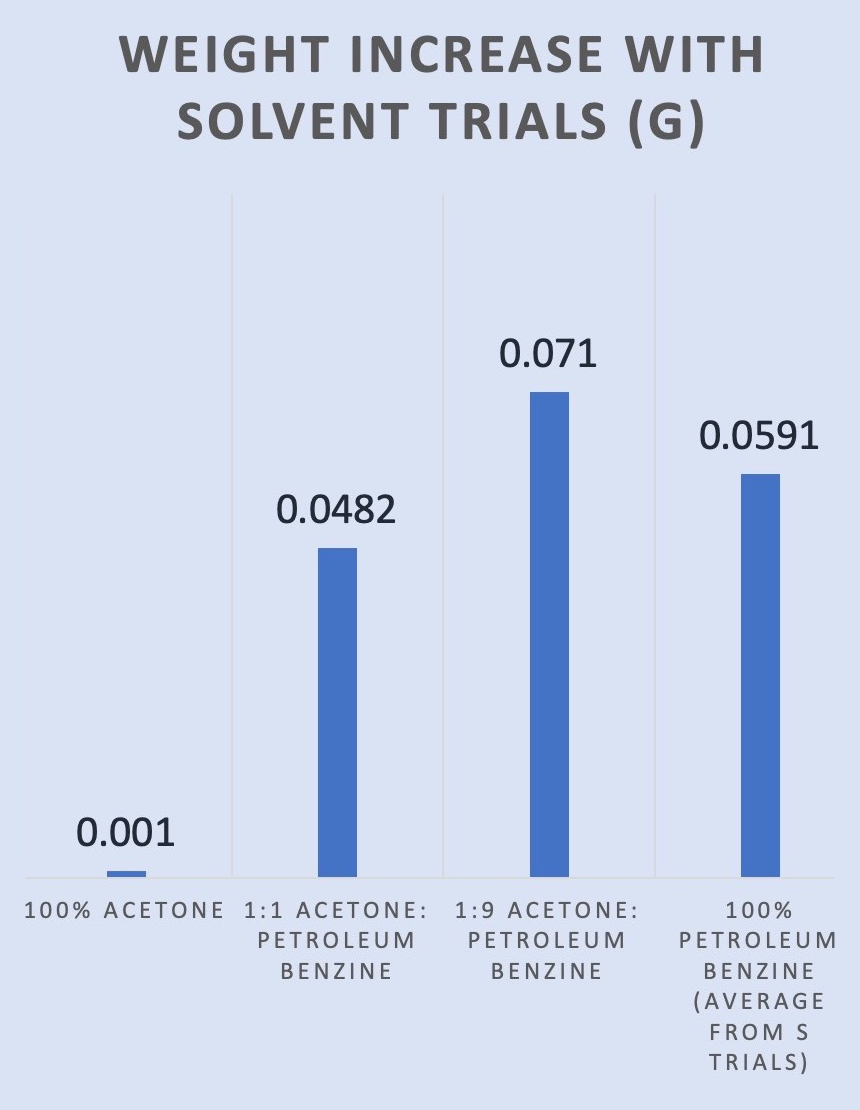
The 1:9 mixture of acetone and petroleum benzine gave the
largest weight increase, followed by neat petroleum benzine
(fig. 49.6a). These results
demonstrate a clear relationship between the choice of solvent
and amount of poulticed material. The 1:9 mixture likely
performed best due to acetone’s ability to solubilize resinous
components in the wax-resin mixture. As expected, neat acetone
resulted in negligible weight gain given its chemical
incompatibility with nonpolar, aliphatic compounds.
Importantly, this latter result also suggests that the
chemical groups making up the Evolon CR (the polyamide and
polyester fibers) have minimal effects in poulticing wax
resin. The efficacy of poulticing appears to come primarily
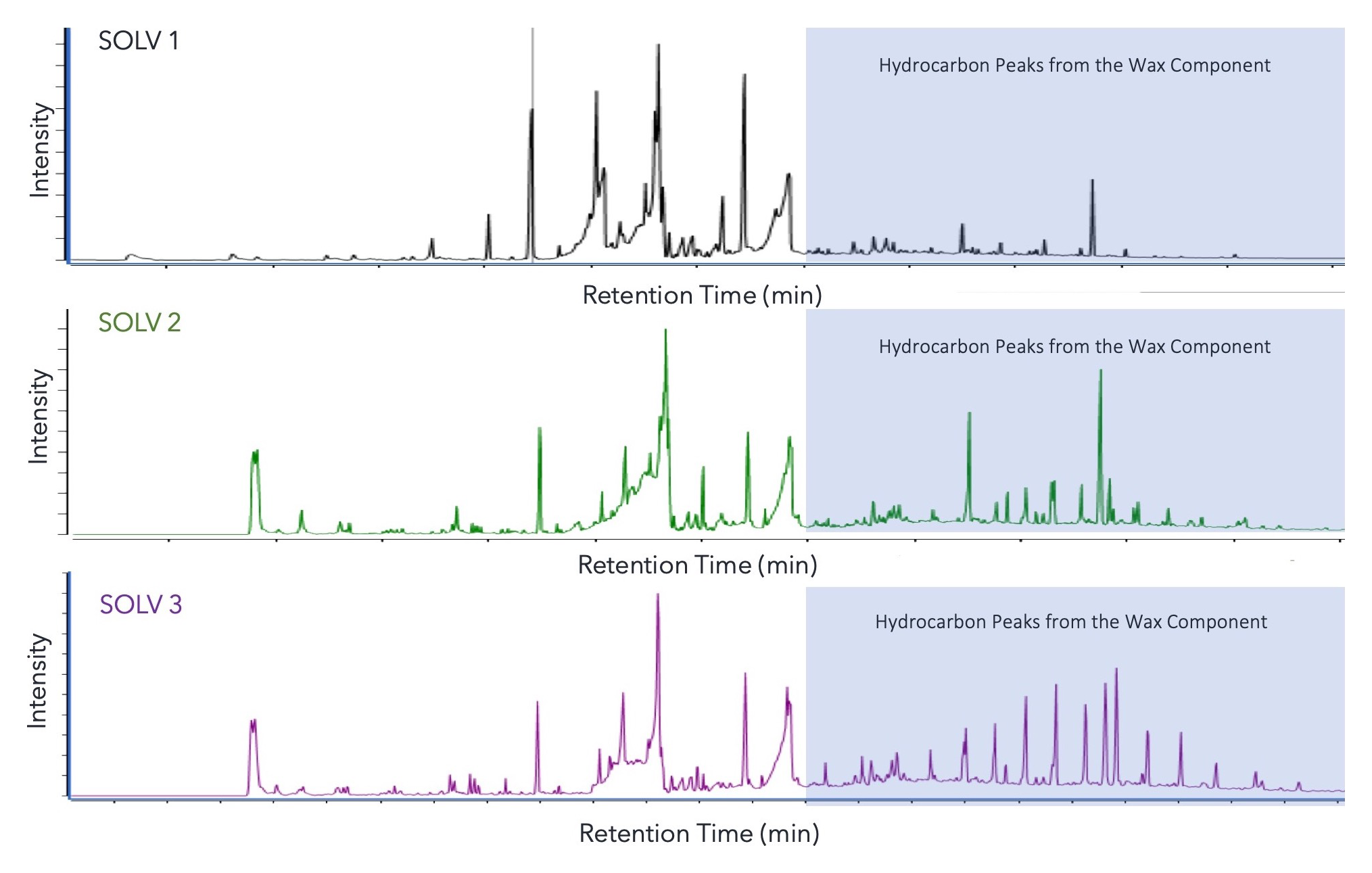
from solvent choice. Py-GCMS analysis (fig. 49.6b) of the poulticed material showed the characteristic
Gaussian distribution of hydrocarbon peaks from the wax
component. As expected, the wax-based hydrocarbon peaks
increased in intensity as the ratio of petroleum benzine to
acetone increased.
Figure 49.6 (a)
Weight increases (in grams) for each tissue exposed to the
solvents or mixtures tested. (b) Py‑GCMS analysis of the
three solvents: solvent 1 is 100% acetone, solvent 2 is
1:1 acetone and petroleum benzine, and solvent 3 is 1:9
acetone and petroleum benzine. (Py-GCMS analysis conducted
by Dr. Chris Petersen, volunteer conservation scientist
and affiliated associate professor, SRAL, Winterthur
Museum.) Images: Julianna Ly
In summary, the results from all experiments indicate that
Evolon CR is an effective material for reducing wax resin;
however, the tissue alone never resulted in complete removal
of the adhesive.
Evolon CR in Practice
Much still remains to be understood about practical uses of
Evolon CR, yet results from these experiments indicate that,
under our testing conditions, it was less effective to use two
layers compared to a single sheet of solvent-wetted tissue.
Additionally, while Evolon CR can be used more than once, its
ability to poultice wax resin significantly decreases after
its first use. Finally, our results indicate solvent choice
plays an important role in poulticing, and that this role, at
least for the removal of wax resin, is stronger than that
resulting from the chemical composition of the Evolon CR
fibers. Our studies did not use controlled loading of Evolon
CR, a recently developed parameter of application where the
tissue is loaded with only a fraction of its maximum solvent
capacity instead of full saturation (Tauber et al. 2018Tauber, Gwen, S. Smelt, P. Noble, K. Kirsch, A. Siejek,
K. Keune, H. van Keulen, S. Smulders-De Jong, and R.
Erdman. 2018. “Evolon C®: Its Use from a
Scientific and Practical Conservation Perspective.”
AIC Paintings Specialty Group Postprints 31:
45–50.).
Future Directions
While most research on Evolon CR has centered around its use
in varnish and overpaint reduction and removal, more study is
needed to maximize the efficacy of Evolon CR at poulticing
wax-resin lining mixtures. This can include testing
aromatic/aliphatic solvent mixtures in differing ratios to
most effectively target the wax-resin mixture.
To better understand whether solvents play a role in
increasing the porous network of Evolon CR through a
rearrangement of the microfilament bundles or if another
physical or chemical interaction is at work, continued
analysis on solvent-exposed Evolon CR is needed. These
experiments should also be conducted on other common
poulticing materials used in the field, including Tek Wipe and
cotton blotting paper, for comparison.
Data for the five-minute time point are the average of
the triplicate run from the Single-Layer experiment in
the Single- versus Double-Layer Application portion of
the study. Note that the data for the one-minute and
fifteen-minute time points are single runs (not an
average).
↩︎
Data for neat petroleum benzine solvent are the average
of the triplicate run from the Single-Layer experiment
in the Single- versus Double-Layer Application portion
of the study. Note that the data for the neat acetone,
1:9 acetone to petroleum benzine, and 1:1 acetone to
petroleum benzine solvents are single runs (not an
average of a triplicate run).
↩︎