The Russian school of oil paintings conservation has come a long way since the 1960s—from applying only traditional structural treatment techniques with water-based adhesives to accepting modern approaches and synthetic polymer materials. This article is devoted to the milestones achieved during this process. Transformation of traditional lining methods is discussed, including changes in procedure and formulations. The paper also covers the development of less-invasive conservation techniques (such as tear mending, sizing, and hydrophobization) and putting them into practice.
6. Structural Conservation of Canvases in Russia from the 1960s to the Present: Evolution of Methods and Approaches
- Anastasia Yurovetskaya, Research Fellow, Department of Scientific Conservation of Oil Paintings, State Research Institute for Restoration (GOSNIIR), Moscow
Introduction
The tradition of Russian conservation officially started in 1743, when the German artist Lucas Conrad Pfandzelt came to Saint Petersburg to care for the royal painting gallery. During the first decades of its existence, conservators established main principles that were retained for about two centuries. One of these was sticking to a complex structural treatment that would always include such serious interventions as transferring paintings from their original supports and, of course, lining (Alyoshin, Anatoliy. 1989. Conservation of Easel Oil Paintings in Russia. Leningrad: Khudozhnik RSFSR.).
For a very long time after the October Socialist Revolution of 1917, conservation in Russia developed in isolation from the rest of the world. With the beginning of the thaw period in Soviet culture (from the mid-1950s to the mid-1960s), the sphere of heritage preservation experienced significant evolution, and the restoration community started to wander away from techniques developed in the nineteenth century. In 1957, with the founding of the All-Union Central Research Laboratory for Conservation and Restoration of Museum Valuables,1 conservation science in Russia gained momentum; however, it was not until the 1960s that conservators of easel paintings were able to access professional literature and scientific events from abroad to learn about methods used in current practice by their foreign colleagues.
These developments coincided with advances in the chemical industry—all of which set the stage for big changes in the conservation field in Russia. Analyzing professional scientific journals published in GOSNIIR in the 1960s,2 we can see a deep interest in chemical research into objects. The use of new synthetic materials for consolidation, the study of biocide agents, and the use of new conservation equipment such as vacuum hot tables were discussed. During this period, worldwide experience was collected and evaluated. Some journal issues were devoted solely to reviewing specialized essays for museum conservation professionals.3
From the 1960s to the 1980s, Soviet conservators reviewed, created, and adapted structural conservation techniques, some of which were considered to be a quantum leap in our country. At that time, the most successful branch was on the track of choosing noninvasive methods (as they were understood then). Despite some new approaches introduced to the professional community during the Greenwich Conference on Comparative Lining Techniques (Villers, Caroline, ed. 2003. Lining Paintings: Papers from the Greenwich Conference on Comparative Lining Techniques. London: Archetype.), Soviet conservators would not turn away from natural materials and traditional methods. But the drive to make treatments less invasive and more reversible triggered a significant number of research projects. Such operations as tear mending, consolidation of the flaking paint layer, and improvement of deformations were reconceived in order to avoid dipping canvases in collagen adhesives and to delay lining for as long as possible.
Transformations of Traditional Lining Technique
From the beginning of the 1960s until the mid-1980s, attention was particularly given to the traditional lining technique. A lot of experiments were undertaken to work out best recipes (Lelekova, Olga. 1966. “Consolidation of Old Russian Easel Paintings.” Reports of All-Union Central Research Laboratory for Conservation and Restoration of Museum Valuables, 17–18: 97–112.) or to pick plasticizers. Historically, natural honey was used for this purpose, but its effects and properties in lining compounds were always questioned. In 1960, research on different lining adhesives was published in which specialists from State Central Arts and Conservation Studios4 discussed shrinkage of sturgeon-glue films, both pure and with different added plasticizers. As a result of their experiments, the authors proposed using polyvinyl alcohol with glycerin, as these materials guarantee a more predictable effect, whereas the plasticizing properties of honey were considered insignificant and very much dependent on the amount of sucrose in its composition (Trostyanskaya, Elena, Galina Tomashevich, and Evdokiya Sorokina. 1960. “Adhesives for Lining.” In Issues in Restoration and Conservation of Works of Visual Art, 173–82. Moscow: Publishing of Academy of Arts.).
However, the results of this research were not widely applied in practice. New instructions and publications would still recommend that conservators use compounds for lining made up of different proportions of sturgeon glue and honey. For example, Margarita Alekseyeva and Zinaida Tcherkasova in an article on aqueous lining solutions mention all the known drawbacks of sturgeon glue–honey compounds but still include the recipes in their guidelines (Alekseyeva, Margarita, and Zinaida Tcherkasova. 1968. “Compositions of Aqueous Solutions of Sturgeon Glue for Relining Easel Oil Paintings.” Reports of All-Union Central Research Laboratory for Conservation and Restoration of Museum Valuables 20: 18–26.).
The authors offer two practical methods of performing the process of lining canvases. The first is based on a recipe with a 1:1 ratio of honey to dry sturgeon glue, by weight. It suggests that the lining canvas be glued three times: the first two with a 4%–8% solution and the third with an 8%–10% solution. All three layers of glue should be dried in sequence. The original canvas is covered with a 3%–6% water solution of sturgeon glue with honey. After it dries, a second layer of 8%–10% solution is applied. As this second layer becomes tacky, the two canvases are joined, evenly pressed together, and ironed using warm and cold irons alternately until the condensed moisture stops being released.
The second method is based on a recipe with 2:1 ratio of dry sturgeon glue to honey, again by weight. The lining canvas is prepared with two layers of warm 6%–8% solution of sturgeon glue and honey. The original canvas of the painting is infused with the same compound from one to five times, with each layer being allowed to dry between coats. Before the lining procedure, both canvases would be infused with a 12%–17% solution prepared in a proportion of 2–3:1 of dry sturgeon glue and honey, respectively. As the layers on both canvases become tacky, they are joined evenly and left to dry in a vertical position for three to six hours. After that, the canvases are ironed using warm and cold irons alternately until the condensed moisture stops being released (Alekseyeva, Margarita, and Zinaida Tcherkasova. 1968. “Compositions of Aqueous Solutions of Sturgeon Glue for Relining Easel Oil Paintings.” Reports of All-Union Central Research Laboratory for Conservation and Restoration of Museum Valuables 20: 18–26.).
Several years later these methods and their variations were included by Ivan Gorin and Zinaida Tcherkasova in a chapter of a text for art colleges teaching conservation; it remained the most popular guide to practical restoration for at least twenty years (Gorin, Ivan, and Zinaida Tcherkasova, eds. 1977. Conservation of Easel Oil Paintings: Teaching Guide for Secondary Art Schools. Moscow: Iskusstvo.). Interestingly, it also has chapters on structural treatments with wax-resin adhesives that were already falling out of practice by that time.
In 1974, Larissa Yashkina made a presentation at the Greenwich conference, basing her speech on a variation of the first method described above, though she offered slightly different formulations of the lining compounds and gave more technical details about the procedure (Yashkina, Larisa. 2003. “Relining of Easel Oil Paintings with Sturgeon Glue.” In Lining Paintings: Papers from the Greenwich Conference on Comparative Lining Techniques, edited by Caroline Villers, 101–4. London: Archetype.). It was a more common method at that time and considered to be more reliable.
Further investigations on sturgeon-glue lining compounds were conducted in the 1970s and 1980s. In 1975, Roza Yabrova presented a paper discussing some new materials for plasticizing sturgeon glue (Yabrova, Roza. 1975. “A Study of Effectiveness of Glutine (Sturgeon) Glue Plastification.” Artistic Heritage: Storage, Research, Restoration 1, no. 31: 3–20.). Her comparative research showed that such additives as polyethylene glycol (trade name PEG 600), carbamide, and sorbitol could replace natural honey without all its problems and drawbacks. But traditions seem to be extremely strong among the Russian conservators, as none of these materials were adopted in standard practice, so later research continued to focus on sturgeon-honey solutions—as well as concentrating on solving the problem of collagen glues being prone to biodeterioration (Nazarova, Olga. 1984. “Studies in Physicomechanical and Physicochemical Properties of Fish Glue with Additives of Catamine AB and Honey.” Express Information: Culture and Art in USSR: Museum Studies and Preservation of Cultural Heritage: Restoration and Conservation of Museum Valuable 9: 27–28.; Nazarova, Olga, and Evgeniy Potapov. 1984. “Using Infrared Spectroscopy to Investigate the Process of Degradation of Fish Glue, Containing Catamine AB and Honey.” Express Information: Culture and Art in USSR: Museum Studies and Preservation of Cultural Heritage. Restoration and Conservation of Museum Valuable 7: 6–8.; Rebrikova, Natalia. 2013. “Fungicidal Treatment of Easel Oil Paintings with Quaternary Ammonium Salt: 2012.” Artistic Heritage: Storage, Research, Restoration 27 (57). https://www.gosniir.ru/files/62be0cd4-5394-4e5c-a488-9bf3d212e1ef.epub.).
Nowadays traditional lining technique is still one of the most common methods of consolidation of original canvas supports of the paintings. But during the past ten years, there has been a significant change in the whole procedure. First of all, sturgeon has become an endangered species in Russia—since 2013 it has been protected by a federal law that limits sturgeon fishing and processing. The State Research Institute for Restoration has studied rabbit-skin glue as an alternative to sturgeon glue and came to the conclusion that if used in less-concentrated solutions, rabbit-skin glue can be successfully applied to consolidate paint and ground layers and also used for lining.5
Moreover, there is now a trend toward reducing the amount of additives in the lining compounds. As the storage and exhibit conditions in Russian museums have generally become more stable—with balanced temperature and humidity—there is no need to add biocides and plasticizers during each treatment. Case studies demonstrate good results for paintings that were treated with collagen glue solutions without honey (Alyoshkina, Ekaterina. 2015. “Experience of Retreating a Painting by Unknown Artist of the 18th Century: Portrait of Unknown Archiereus (Bishop Athanasius Volkhovsky?).” In Research in Conservation of Cultural Heritage, Materials of International Scientific Methodological Conference, issue 4, edited by S. V. Filatov, I. V. Lebedeva, and G. I. Gerasimova, 6–20. Moscow: Indrik.; Voronina, Marina. 2019. “Developing Individual Method and Conservation of the Painting from State Historical Museum Portrait of Duke B. A. Golitsyn.” In Materials of All-Russian Scientific and Practical Conference “RESCON-2019,” edited by S. G Burshneva, 120–24. Kazan, Russia: Kazan University Press. http://www.gosniir.ru/file.ashx?objid=10fd34b6-8329-4b61-b39b-bf25c46f63e0.; Yurovetskaya, Anastasia. 2016. “Application of the Techniques of the State Research Institute for Restoration on the Example of Structural Conservation of the Painting Portrait of a Woman in Black from the Collection of I. Mashkov Fine Art Museum in Volgograd.” In Materials of the 3rd International Scientific and Practical Seminar: The Preservation of Cultural Heritage: The Scientific Study and Conservation of 17th–19th Century Dutch and Flemish Painting, 8–12 June 2015, edited by A. Chernyavskaya, E. Reutova, I. Simonova, and B. Vermet, 144–52. Amsterdam: Maarten Spruyt.).
Treatments to Postpone Lining
In the 1970s and 1980s, leading studios and institutions evolved new methods of preserving linen canvases that are still widely used in conservation practice in Russia. One of the most vivid examples is a tear-mending technique developed at GOSNIIR in the 1970s that is still widely used by conservators throughout the country (Surovov, Ivan, and Larisa Yashkina. 1979. “Methods of Treating Tears, Losses in Canvas and Edges on Easel Oil Paintings Edge-to-Edge.” Artistic Heritage: Storage, Research, Restoration 5, no. 35: 117–21.). It suggests that tears and cuts of the textile painting supports are treated with 5% solution of polyvinyl butyral (PVB) in ethanol or isopropanol. Saturated threads are interwoven and after drying are fixed using a hot spatula. This adhesive has been widely used in conservation practice in Russia since the 1950s (Rumyantsev, Evgeniy. 1953. “Applying Synthetic Resins at Archeological Excavations.” Brief Reports of the Institute for the History of Material Culture 49: 133–38.), especially for treating murals, ceramics, and fabric painting supports. Its glass transition temperature (Tg) is approximately 60°C–70°C. “PVB films are resistant to light and heat-sealable at temperatures above 120°C … PVB films are noted for their biostable and abrasion resistance properties as well as for good colorfastness against UV light, low static generation, and low water absorbtion” (Sannikova, Evgeniia. 2018. “Polyvinyl Butyral: Composition, Properties and History of Use in Conservation and Restoration.” International Institute for Conservation of Historic and Artistic Works. Austria. Papers in Conservation 35: 103–21.). In 2008, the tear-mending technique was slightly extended by adjusting the method for strip-lining two-sided paintings to avoid overlaps of new margins over the paint layer (Yashkina, Larisa, and Maria Churakova. 2013. “Methods of Tear Mending, Filling Losses in Canvas and Edges on Easel Oil Paintings by Jointing Threads: 1978–2008.” In Artistic Heritage: Storage, Research, Restoration 27 (57).). The working procedure has also slightly changed. Following a general trend holding that less is more, conservators tend to use less adhesive for the process: instead of saturating canvas around the tears, they just apply it to the direct spots.
A method of stabilizing canvases by starch sizing was introduced by conservators of the State Tretyakov Gallery and came into common practice as a procedure for conserving canvas (Yushkevich, Galina. 1995. “Repairing the Mechanical Damages on Easel Oil Paintings on Canvas without Lining.” In Reposts of the State Tretyakov Gallery: Art of the Second Part of the 19th–20th Centuries: Issues on Conservation and Museology, edited by L. I. Iovleva, 176–81. Moscow: State Tretyakov Gallery.). The technique was first developed in the 1970s but was not published until the mid-1990s, being constantly improved in the interim by its author, Galina Yushkevich (Yushkevich, Galina. 1995. “Repairing the Mechanical Damages on Easel Oil Paintings on Canvas without Lining.” In Reposts of the State Tretyakov Gallery: Art of the Second Part of the 19th–20th Centuries: Issues on Conservation and Museology, edited by L. I. Iovleva, 176–81. Moscow: State Tretyakov Gallery.).
Before performing the operation, the picture must be stretched on paper margins; the painting layer should be fully covered by the facing. These precautions guarantee that the canvas of the painting is kept from shrinking during treatment, which involves heat and moisture. Afterward, the painting is put facedown on a flannel or woven felt to protect the impasto. Sizing is performed by applying a 10% starch paste on the reverse of the picture and spreading it evenly. After the paste dries a little, it is delicately removed with a palette knife. The small amount of remaining starch is pressed with a warm iron. This causes the residue of the paste to be absorbed into the structure of the picture, which helps reduce canvas deformations and makes the support less responsive to changes in temperature and humidity.
This method is effective for treatment of canvas undulations, so it was adopted by many conservators and is still widely used in many studios. However, during the past few years this method has been reevaluated. Saturating canvas with starch ultimately makes the linen fibers more brittle and prone to microbiological damage. Nowadays cellulose ethers are mostly substituted for the starch; this also functions to better adsorb dust and glue residues from the canvas (Churakova, Maria, Olga Karasyova, and Anastasia Yurovetskaya. 2018. Typology of Deformations of Textile Supports of Easel Oil Paintings and Methods of Their Elimination. Moscow: GOSNIIR.), but such total saturation of fabric support is still debatable.
In the late 1980s, another interesting technique used to stabilize canvas supports was introduced by GOSNIIR: hydrophobization of textile supports with solutions of organosilicons in isopropanol or refined gasoline (Malachevskaya, Elena, and Larisa Yashkina. 1986. Instructional Guidelines for Hydrophobization of Verso Sides of Easel Oil Paintings with Silazane 141-50K. Moscow: VNIIR.). Two coats of a 5% solution of polymethylhydrosiloxane are applied sixty minutes apart by brushing or spraying onto the reverse side of the picture. This coats the textile fibers and reduces the canvas’s response to changes in temperature and humidity. The process of polymerization is usually finished after eight to ten days of exposure, when the solvent evaporates. The properties of organosilicons (such as polymethylhydrosiloxane) still allow for later protein glue treatments, including sturgeon-glue linings (Fedoseeva, Tatyana. 1999. The Materials for Conservation of Paintings and Applied Arts. Edited by Vladimir Zverev. Moscow: Editorial and Publications Division of GOSNIIR.).
Evaluating methods of hydrophobization of canvases with solutions of organosilicons seems to be a more complicated task for now. All tests performed with the samples showed very good results. According to publications on the project, treated canvases quickly repel surface moisture, do not get wet, are not prone to shrinkage and deformation, and withstand sharp increases in humidity (Nazarova, Irina, Elena Malachevskaya, and Larisa Yashkina. 1990. “Technique of Restoring Paintings on Canvas without Lining.” In ICOM Committee for Conservation, 9th Triennial Meeting, Dresden, German Democratic Republic, 26-31 August 1990: Preprints, 130–32. Los Angeles: Getty Conservation Institute.). Furthermore, the air and vapor permeability of canvases did not change (Malachevskaya, Elena, and Larisa Yashkina. 2013. “Method of Preservation of Paintings Canvas.” Artistic Heritage: Storage, Research, Restoration, 27 (57). https://www.gosniir.ru/files/62be0cd4-5394-4e5c-a488-9bf3d212e1ef.epub.). However, when this treatment was applied to the paintings, it turned out that on some artworks the consolidation operations with water-based solutions were not as effective as they were on the untreated paintings with organosilicon objects. Moreover, the process of degradation of polymethylhydrosiloxane is still to be investigated.
Accepting Global Trends and Materials
We did not have an industry dedicated to conservation products in the former Soviet Union, nor do we currently have one in Russia. None of the polymers that have been studied, tested, and applied were produced specifically for conservation purposes; all of them were created for the production sector and then adapted to conservation needs. In the 1990s, not only the political but also the economic life of our country underwent serious changes after the collapse of the Soviet Union. Many manufacturers either closed or changed production technology, afterward offering new materials to the market. At the same time, importation of European and American conservation materials started to grow, so people working in the conservation and restoration sphere suddenly had a broad selection of totally new polymers to get acquainted with. Consequently, the beginning of the new period in Russian history started with much experimentation, comparative work, and research in the conservation field. Specialists returned to the international conservation community, attending conferences and scientific seminars and learning more about the work of their foreign colleagues. At this time numerous tests were also carried out, including those on materials for structural conservation of canvases.
GOSNIIR conducted comparative research on three acrylic dispersions: Lascaux 498 HV (Lascaux Colours & Restauro) was compared to two adhesives originally produced in Russia for coated paper and textile manufacturing. The first has the trade name ABV-1B and is a copolymer of butyl acrylate, methacrylic acid, and vinyl acetate. The second has the trade name AK-243 and is a copolymer of ethyl acrylate, methacrylic acid, vinyl acetate, and acrylonitrile. Both have a working concentration of up to 50% (Fedoseeva, Tatyana, Olga Belyaevskaya, Valentina Gordushina, Elena Malachevskaya, and Svetlana Pisareva. 2016. Conservation Materials: Course of Lectures. Lecture series. Moscow: Indrik.). All three dispersions meet the general requirements for a strip-lining adhesive: they do not penetrate deeply into the threads of the canvas, they do not cause shrinkage of the canvas, they have a high adhesive capacity, and they form a film with elasticity that persists over time.
Results of the comparative analysis showed that the AK-243 and ABV-1B dispersions are superior to the Lascaux adhesive on a number of indicators; in particular, they penetrate less into the threads of the canvas and do not cause shrinkage (Fedoseeva, Tatyana, Elena Malachevskaya, and Larisa Yashkina. 1997. Instructional Guidelines for Strip Lining Easel Oil Paintings Using Acrylic Dispersions. Moscow: GOSNIIR.). Nevertheless, today the most popular adhesives for strip-lining are Beva products (Beva 371 Film or Beva D-8 Dispersion) and Lascaux 498 HV (Romanova, Anastasia. 2019. “Using Different Adhesives for Strip-Lining.” In Materials of All-Russian Scientific and Practical Conference “RESCON-2019,” edited by S. G Burshneva, 170–73. Kazan, Russia: Kazan University Press. http://www.gosniir.ru/file.ashx?objid=10fd34b6-8329-4b61-b39b-bf25c46f63e0.). This is despite the fact that both AK-243 and ABV-1B are still produced in Russia: manufacturers sell them only in industrial-scale volumes and retailers are not interested in organizing packaging the products in smaller sizes, thus conservators have problems obtaining them.
Following international trends, in the 1990s the Russian conservation community started to familiarize itself with synthetic materials for lining and to compare them with traditional techniques (Fedoseeva, Tatyana. 1998. Guidelines for Using Foreign Counterpart of Wax-Resin Adhesive BEVA 371 for Lining Oil Paintings. Moscow: GOSNIIR.). There was also the intent to develop or adapt Russian synthetic polymers for the lining process.6 In the end, an understanding that the most common sturgeon-glue lining has obvious drawbacks and is not suitable for all artworks led to adopting a method for treating oil paintings that has been well known for lining textiles since the 1970s, when it was introduced at the Pranas Gudynas Centre for Restoration in Lithuania.
The method employs an acrylic adhesive with the trade name A-45-K, which is a copolymer of vinyl acetate, butyl acrylate, and acrylic acid in ethyl acetate (Emelyanov, Dmitriy. 2005. “Study of Physico-Mechanical Properties of Textile Preserving Agent Polyacrylic Resin A45K.” In Sculpture: Applied Arts: Conservation. Research, 208–14. Moscow: VHNRC.). In a form of either a dispersion or acetone solution, it can be brushed or sprayed on a lining cloth and later activated by temperature (Semechkina, Elena. 1993. “Techniques of Applying Acrylic Polymer A-45K on the Lining Cloth and Their Effectiveness.” In Sculpture: Applied Arts: Conservation: Research, edited by N. N. Bankovskiy and T. I Barabanova, 122–26. Moscow: VHNRC.). Its properties are in many ways similar to Plextol and Lascaux adhesives, but choosing a local manufacturer was preferred in the 1990s, not only to support the country’s economy but also because this particular material was well known and tested. A-45-K has not become very popular for standard lining procedures for canvases, but it showed good results in a few specific case studies.
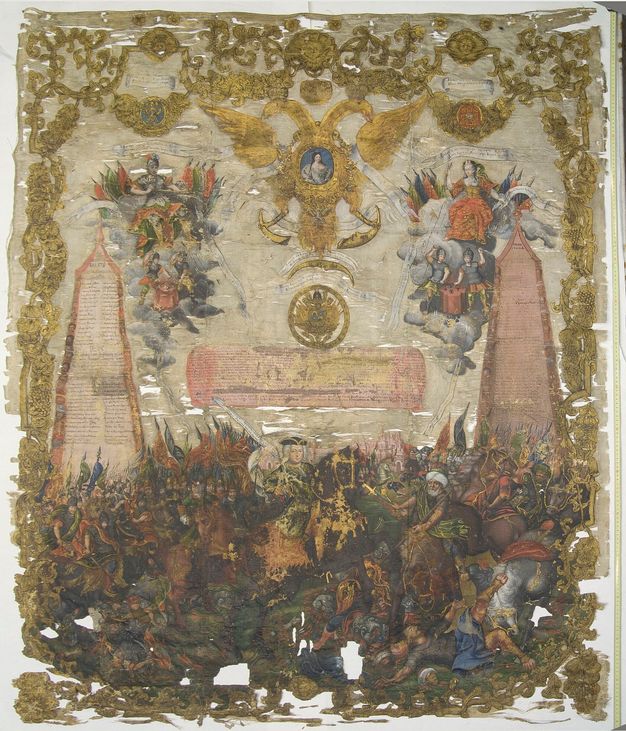
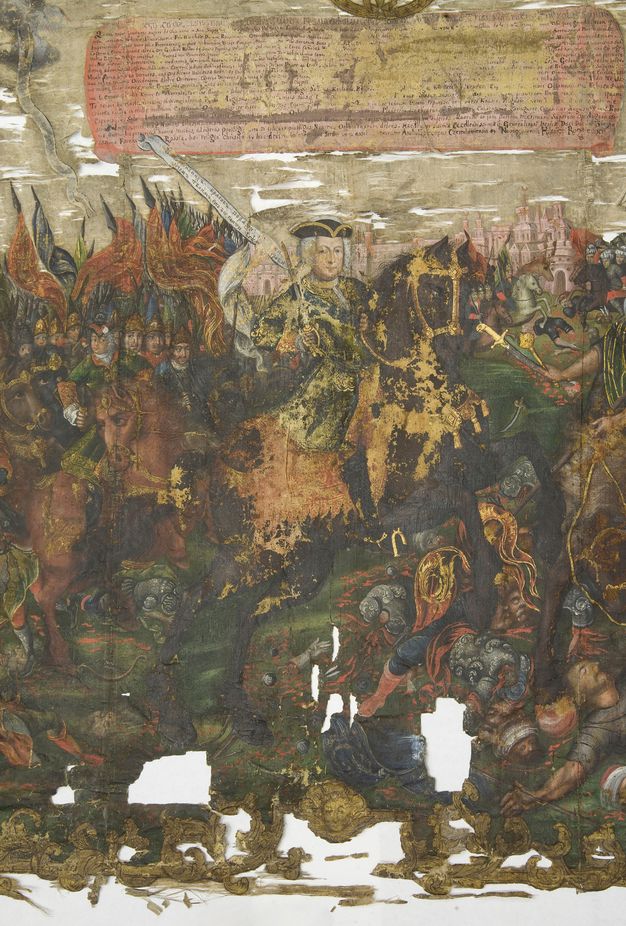
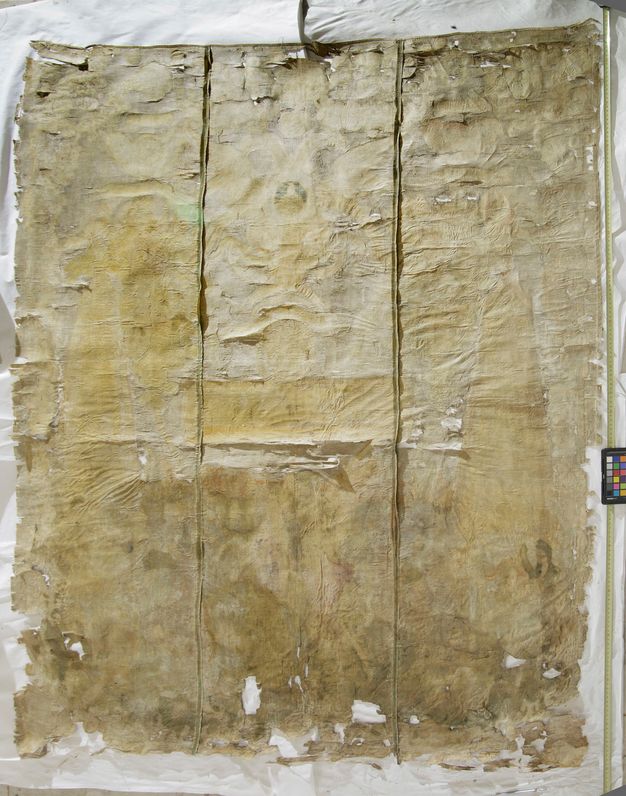
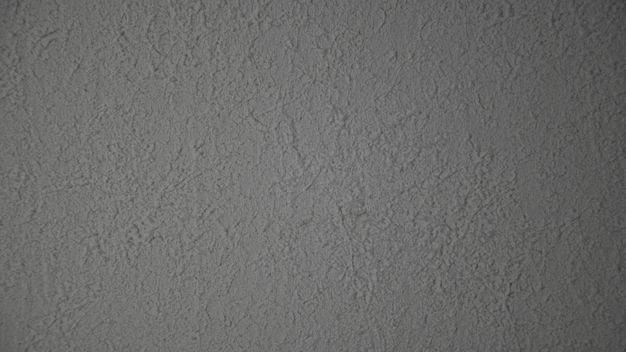
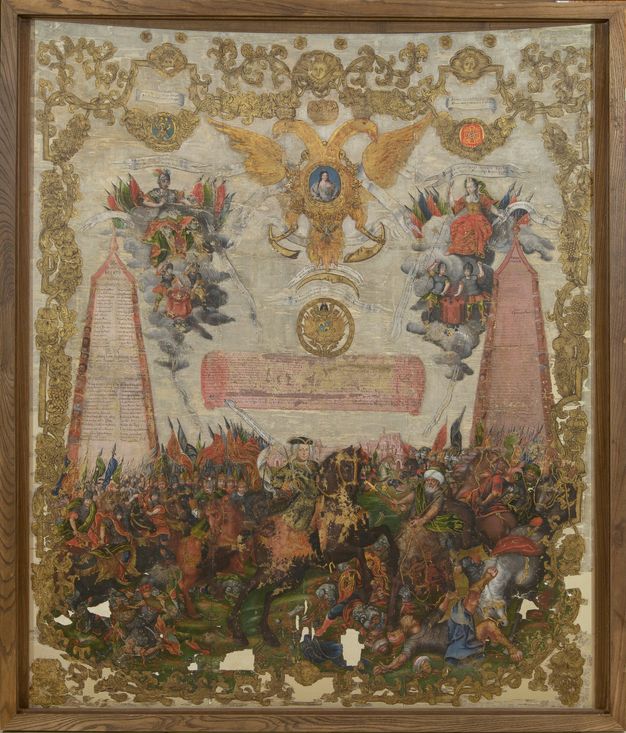
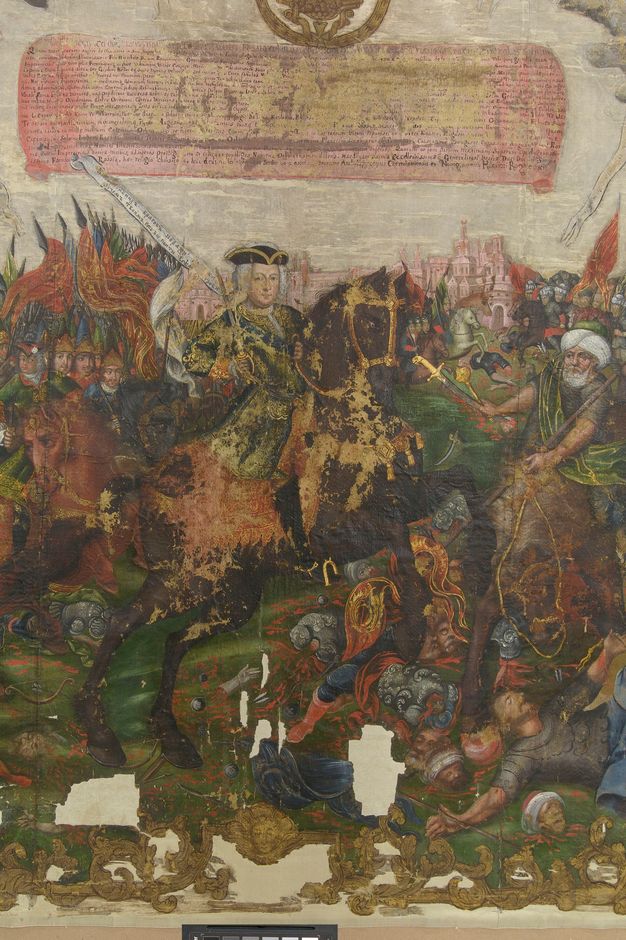
One example is the lining support of the eighteenth-century painting Conclusions of Field Marshall General Count B. H. Minikh on the Seizure of Ochakov (fig. 6.1) (Iurovetskaia, Elena, Sofia Martyanova, Maria Churakova, and Ekaterina Morozova. 2019. “Unconventional Approach for Treating a Unique Artwork: Research and Conservation of the Painting by Unknown Artist of the 18th Century Apotheosis of Anna Ioannovna Created on Silk Support.” In Research in Conservation of Cultural Heritage, issue 5, edited by S. V. Filatov and G. I. Gerasimova, 313–18. Materials of an international scientific methodological conference. Moscow: Print, OOO.). Silk was used as a support (fig. 6.2), and the image layer combined oil, gold paint, and ink. Adhesive A-45-K dissolved in acetone was sprayed on the surface of the lining cloth (fig. 6.3) and after matching with the original support was activated locally by heat (fig. 6.4). Effective application of A-45-K for this art piece still has not led to widespread adoption of this technique among professional conservators because, since 2006, when this method was first introduced for lining the Mikhail Vrubel painting Gwydon on a sackcloth support, it has become increasingly complicated to acquire the material from the manufacturers.
Nowadays restoration professionals in Russia often face difficulty accessing materials adapted for conservation purposes in our country and thus turn to reliable professional materials by internationally known suppliers. In this way, the conservation field in Russia is experiencing globalization, with all its challenges and opportunities, and mostly sticking to materials and techniques that are used worldwide. This certainly makes our work more comfortable, but it also eliminates distinctions between different conservation schools with their unique methods and approaches.
Notes
-
Later reorganized into the All-Union Research Institute for Restoration, now called the State Research Institute for Restoration (GOSNIIR). ↩︎
-
The online library of GOSNIIR includes periodicals from 1960 to the present: http://www.gosniir.ru/library/artistic-heritage.aspx. ↩︎
-
Reports of All-Union Central Research Laboratory for Conservation and Restoration of Museum Valuables, issues 12, 15, and 22–23 (1964–70). http://www.gosniir.ru/library/artistic-heritage.aspx. ↩︎
-
Later reorganized into the All-Russian Scientific Restoration Center, now called the Grabar Conservation Center. ↩︎
-
“Studying the Properties of Rabbit Skin Glue,” archival fonds of GOSNIIR, no. 1, inventory 37, 2013, p. 51. ↩︎
-
“Developing Method of Lining Easel Oil Paintings Using Russian Synthetic Materials,” archival fonds of GOSNIIR, no. 1, inventory 13, folder 105, 1992. ↩︎