Chicago
Calvo, Ana, Ana Macarrón, Rita Gil, and Julia Betancor. “18.
Gacha Lining’s Treatment Viability: The Spanish and European
Glue-Paste Adhesive Used since the Seventeenth Century.” In
Conserving Canvas, by
Cynthia Schwarz, Ian McClure, and Jim Coddington. Los Angeles:
Getty Conservation Institute, 2023.
https://www.getty.edu/publications/conserving-canvas/iii-open-questions/18/.
MLA
Calvo, Ana, et al. “18.
Gacha Lining’s Treatment Viability: The Spanish and European
Glue-Paste Adhesive Used since the Seventeenth Century.”
Conserving Canvas, by
Cynthia Schwarz et al., Getty Conservation Institute, 2023,
https://www.getty.edu/publications/conserving-canvas/iii-open-questions/18/.
Accessed DD Mon. YYYY.
18. Gacha Lining’s Treatment Viability: The Spanish and
European Glue-Paste Adhesive Used since the Seventeenth Century
18. Gacha Lining’s Treatment Viability
Ana Calvo,
Conservation Professor, Faculty of Fine Arts,
Complutense University of Madrid
Ana Macarrón,
Conservation Professor (retired), Faculty of Fine
Art,
Complutense University of Madrid
Rita Gil,
Conservator,
National Museum of Natural Science (MNCN-CSIC) and in
private practice, Madrid
Julia Betancor,
Principal Conservator,
JB Art C&R, and Head Art Conservator, Colección SOLO,
Madrid
A research project was carried out between 2011 and 2015 at
the Complutense University of Madrid, the aim of which was
to suggest improvements to guarantee future conservation of
canvases lined with a glue-paste adhesive called
gacha. We started with three objectives:
documenting the origin of recipes and the different methods
used for this treatment in Spain and Europe, as there is
still little knowledge about this kind of lining; choosing
case studies; and finally, carrying out a series of
experimental tests to evaluate the performance of the basic
materials in the recipes and of some variants in the
textiles often used as lining supports.
The proposal to carry out a research project on glue-paste
linings arose during a course on structural treatments of
paintings on canvas led by Vishwa Mehra and Matteo Rossi-Doria
at the Universitat Politècnica de València. The scarcity of
scientific knowledge about linings carried out in the past
with glue paste (in Spanish, traditionally called
a la gacha) was exacerbated by the gradual abandoning
of this procedure, now replaced by modern synthetic adhesives.
The project—titled Materials and Methods of Glue-Paste Linings
for the Reinforcement of Canvas Paintings: Documentation,
Functionality, and Conservation—was a coordinated effort
carried out between 2011 and 2015 by a group of sixteen
international specialists, a number of Spanish institutions,
and the support of several companies.1
It was coordinated from Spain by the Complutense University of
Madrid and funded by a grant2
from the Ministerio de Economía y Competitividad (MINECO).
The Need for Lining Through the Ages
It is evident that lining has allowed many paintings on canvas
to survive into the present. Some linings are as much as three
hundred years old. In Spain and most of the rest of Europe,
linings were carried out since the seventeenth century on
using linen cloth and glue paste as an adhesive (fig. 18.1). This procedure remained in practice until the 1990s, when
synthetic adhesives came to prevail in the field of
conservation. Especially in Holland and the humid Atlantic
countries, glue paste was often replaced by wax resin from the
nineteenth to the early twentieth century.
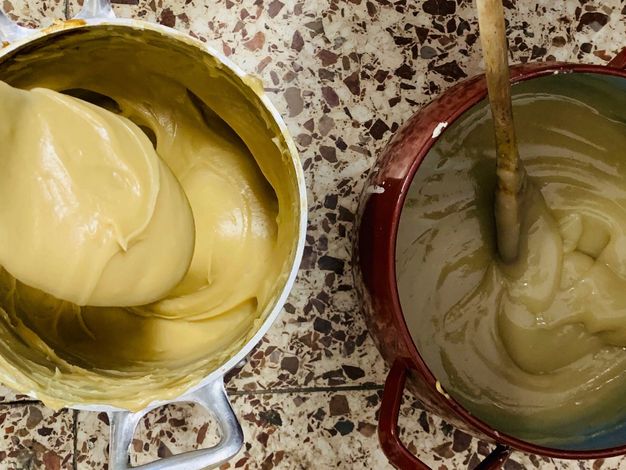
ExpandFigure 18.1Adhesive made with glue paste (gacha).Image: Julia Betancor
In Spain, it was not only the passing of time and the lack of
care that caused the poor condition of the works but also the
historical vicissitudes of the country, some of which, we now
know, led to the need for numerous treatments to the
paintings’ supports. For example, on Christmas Eve in 1734, a
fire broke out in the Real Alcázar de Madrid, which housed the
royal collections, many of which are now in the Museo del
Prado. Many paintings burned, and others were in such a bad
state that they had to be cut into pieces—and as a result many
canvases were lined. Juan García de Miranda and Andrés de la
Calleja were the first court painters put in charge of
restorations. Their inventories recount the works saved, for
example, Titian’s
Charles V at the Battle of Mühlberg, which they
identified as being in very bad condition (Barreno Sevillano 1980Barreno Sevillano, María Luisa. 1980. “La restauración de
pinturas en las colecciones reales durante el siglo
XVIII.” Archivo español de arte 53, no. 212:
467–90.).
Between 1808 and 1814, during the Napoleonic Wars, many works
were taken to Paris from different parts of Spain (Cádiz,
Sevilla, Madrid) and arrived in terrible condition. Before
being returned to Spain, some canvases were treated with
linings in France, such as
Juan the Patrician’s Dream by Murillo. Similarly,
some paintings on panels were transferred to canvas,
including, among others, Raphael’s
Christ Falls on the Way to Calvary, also known as
El Pasmo de Sicilia (González Mozo and Alonso 2011González Mozo, Ana, and Rafael Alonso. 2011. “Reflexión
ante la restauración del Pasmo de Sicilia, de
Rafael.” Boletín del Museo del Prado 24, no. 47:
104–19.).
During the Spanish Civil War (1936–39), the great works of art
at the Museo del Prado and other areas on the front line were
evacuated to avoid damage during the fighting. Despite the
care with which they were packed and transported, incidents
occurred that caused some canvases to tear, and they were
later lined; these include Goya’s
The 2nd of May 1808 in Madrid, also known as
La carga de los mamelucos.
In 1828, the Sala de Restauración at the Museo del Prado was
created by royal decree. Official posts for liners were set up
and filled by competitive examination. The fact that there
were professional specialists in lining shows that this kind
of treatment was frequently being carried out. We can
therefore count on a huge quantity of works lined with glue
paste in Spain, many of which are very well preserved. For
example, of the forty-nine Velázquez paintings studied in the
Museo del Prado, only seven (about 14%) had not been lined,
and of the paintings attributed to El Greco, fifty-one were
studied and only six had not been lined (about 11.7%).3
If we apply an average percentage of 13% to the 6,367
paintings on canvas held by the Museo del Prado at the end of
2019, we can hypothesize that more than eight hundred have not
been lined, and more than five thousand could have been lined.
These numbers lead us to reflect on the durability of these
linings and the future conservation of all those works: Which
conservation conditions are the most appropriate for their
preservation, and what should be done when the adhesives start
aging and failing?
Developing the Project
Among the aims of the project was to get a better
understanding of the historical glue-paste recipes and methods
of applying treatments. We then proposed using a sample recipe
and making models and tests that would allow us to determine
their possible efficiency and the process of
deterioration—that is, to study and verify the present
suitability of a reinforcement treatment that evolved over
more than three hundred years in Europe, especially its
suitability for paintings that were treated with this adhesive
previously. We know that this method presents little toxicity,
employs materials similar to and compatible with most
paintings on canvas, and is reversible, inexpensive, and
sustainable compared with modern synthetic adhesives, which
have certain advantages and disadvantages; some plastic
materials need high temperature to activate the adhesive, for
example. In addition, we wanted to use the experimental
results to suggest improvements and guidelines for preventive
conservation and future preservation of paintings lined in
this way.
The project was organized in three parts: a documentary work
or study, an experimental study, and the sharing of the
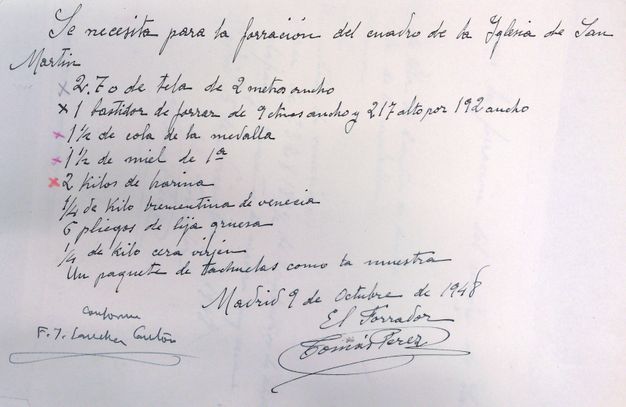
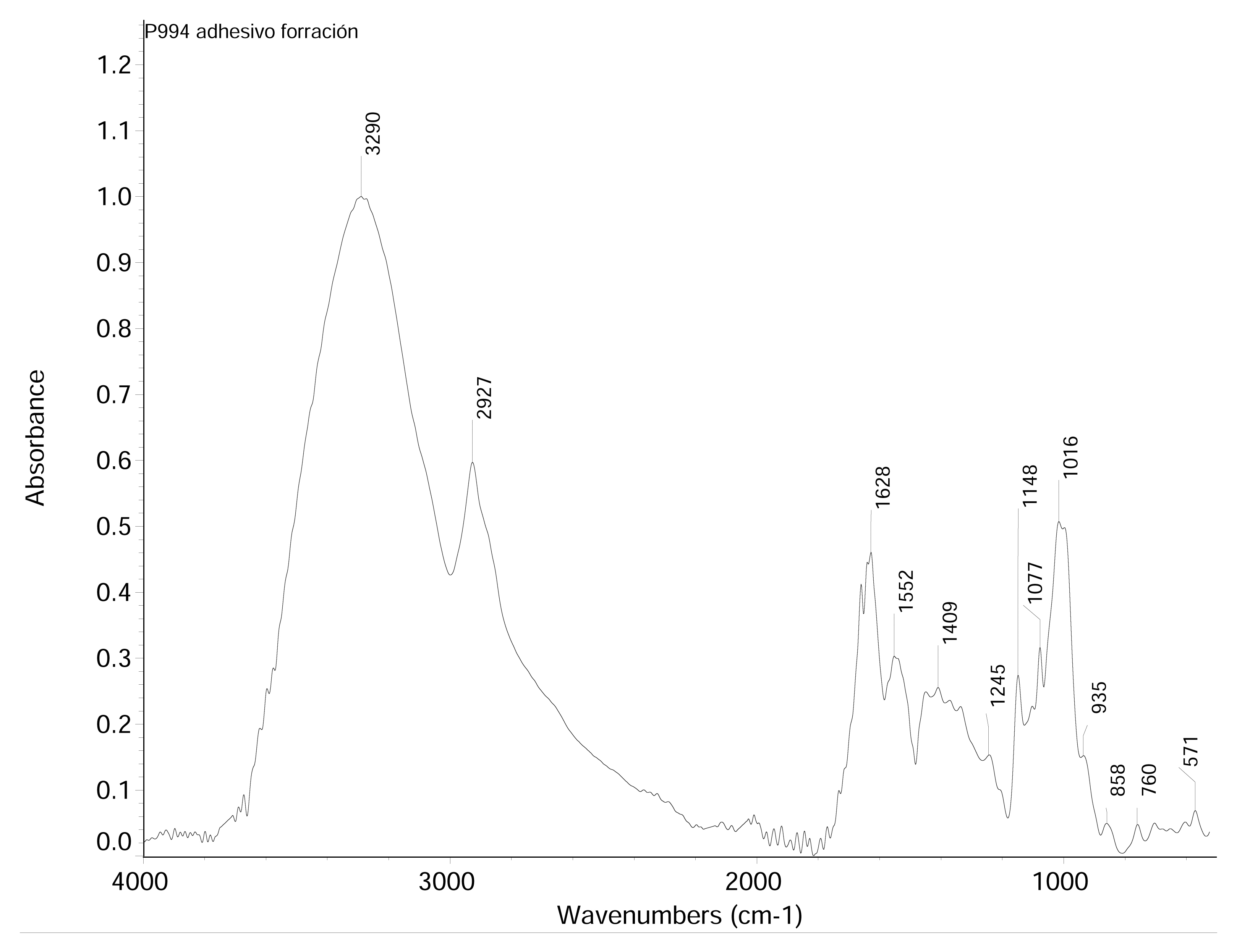
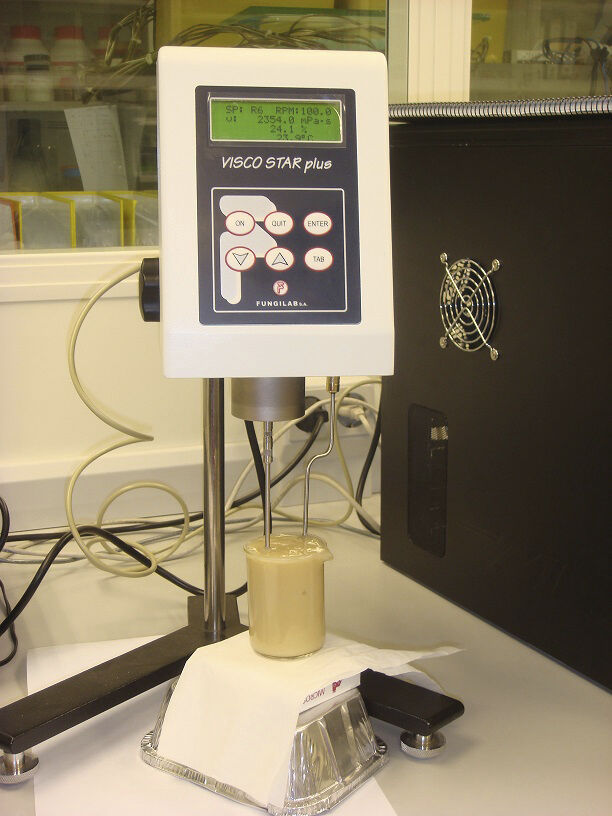
research as it was carried out (fig. 18.2, table 18.1).
Figure 18.2 (a) A
recipe for gacha used in 1948 by Tomás Pérez
Alférez, liner at the Museo del Prado for the lining of an
unspecified painting of the Church of San Martín. (b)
Fourier transform infrared spectroscopy (FTIR) analysis of
the adhesive used to line
El sueño del Patricio Juan (Juan the Patrician’s Dream), by Bartolomé Esteban Murillo. (c) Measure of viscosity
in a gacha recipe taken during the experimental
study in the project. Images: (a) Archivo del Museo
Nacional del Prado, (b) Laboratorio de Análisis del Museo
Nacional del Prado, (c) Lining Project HAR 2011-24217 and
Universidad Politècnica de València.
Table 18.1 Components of recipes from documents and analytical
studies
Glue-paste component
Type of material
Function
Materials named in the glue lining paste recipes
Basic components
Skin glue
Adhesive
Rabbit, cartilage, technical gelatin. Trademarks:
“glue of the Medalla” (extra strong glue D. Pedro
Álvarez SA Chemical), “glue of Salamanca”
Honey, molasses, sugar, syrup, or maple syrup
(employed in the National Gallery of Denmark in
first half of 20th century)
Plants (garlic)
Disinfectant, adhesion strengthening, siccative
Garlic (old recipes: Andrés de la Calleja recipes;
recipes from 19th and first half of 20th centuries
at the Museo del Prado)
Salts, chemicals
Disinfectant
Sodium pentachlorophenate or alum and Nipagin
(sodium salt of p‑hydroxybenzoate); Micospec
(econazole nitrate) in ethanol, quaternary ammonium
salts, sodium fluoride, benzoic acid
Grasilla (gum juniper: ground yellowish
resin used for the preparation of varnishes, recipes
from Spanish authors in the 16th century, recipes of
Juan García de Miranda)
Oxgall
Surfactant, wetting
Oxgall (liquid or paste)
Table: Rita Gil
Documentary Stage
For the documentary stage, we consulted treatises, archival
documents, and various bibliographies and sent questionnaires
to various European professionals and institutions. We used
two types of questionnaires: one for the cases treated in the
more distant past and another for lining treatments carried
out in the twentieth century. More than sixty questionnaires
were sent, although the amount of information received varied
greatly.
It was not easy to find all the recipes used. In some cases,
old documentary information presented the ingredients in
invoices, but it did not detail how they were prepared and
applied. Similarly, we met with certain reticence from
conservator-restorers when it came to explaining the recipes
they were currently using, since many of them were personal
variations developed by the professionals themselves.
The Origin of the Use of Gacha, or Glue Paste
Knowing the materials used to prepare a canvas is essential to
understanding the behavior of the lining treatment. With
reference to the recipe, materials, and ingredients used in
canvases in Spain, interesting research has been done (e.g.,
Gayo and Jover de Celis 2010Gayo, María Dolores, and Maite Jover de Celis. 2010.
“Evolución de las preparaciones en la pintura sobre lienzo
de los siglos XVI y XVII en España.”
Boletín del Museo del Prado 28, no. 46:
39–59.), but we still have a lot to learn. For example, the
presence of ashes in the preparatory layers has only recently
been confirmed in paintings ( Jover de Celis and Gayo García 2014Jover de Celis, Maite, and María Dolores Gayo García.
2014. “‘This they use in Madrid’: The Ground Layer in
Paintings on Canvas in 17th-Century Madrid.” In
Making and Transforming Art: Technology and
Interpretation: Proceedings of the Fifth Symposium of
ICOM-CC Art Technological Source Research Working
Group, edited by Hélène Dubois, Joyce Townsend, Jilleen
Nadolny, Sigrid Eyb-Green, Sylvie Neven, and Stefanos
Kroustallis, 40–46. London: Archetype.;
Carò, Centeno, and Mahon 2018Carò, Federico, Silvia A. Centeno, and Dorothy Mahon.
2018. “Painting with Recycled Materials: On the Morphology
of Calcite Pseudomorphs as Evidence of the Use of Wood Ash
Residues in Baroque Paintings.”
Heritage Science 6, no. 3: 1–11.), although it appeared in recipes and treatises.
Through the documents, we know that from the moment people
started painting on canvas, a flour paste was used to prepare
the canvas. Giorgio Vasari has written about flour with walnut
oil, glue, and white lead for preparing the canvas (Vasari [1568] 1998, 119Vasari, Giorgio. [1568] 1998.
Las vidas de los más excelentes arquitectos, pintores y
escultores italianos desde Cimabue a nuestros tiempos. Anthology. Madrid: “Tecnos.”). An anonymous Spanish manuscript from the end of the
sixteenth century also mentions preparing the canvas with
glue, flour, and gypsum and states that “if it were all flour,
it would be better” (Bruquetas Galán 1998Bruquetas Galán, Rocío. 1998. “Reglas para pintar. Un
manuscrito anónimo de finales del siglo XVI.”
PH: Boletín del Instituto Andaluz del Patrimonio
Histórico
6, no. 24: 33–44.).
We find the same in Francisco Pacheco’s treatise from the
mid-seventeenth century: “Some work with flour or mill-dust
paste, cooking oil and a little honey (which you can eat even
if you are not hungry); they apply a coating of this to a
well-stretched canvas to cover over the pores . . . But
experience has taught me that any paste of gypsum, flour or
ash gets damp and with time rots the canvas and the painting
comes out in scabs” (Pacheco [1638] 1990, 481Pacheco, Francisco. [1638] 1990.
Arte de la Pintura. Madrid: “Cátedra.”). Antonio Palomino raises similar concerns in 1715, when
explaining how to prepare the mixture by boiling and shaking
it to avoid lumps: gacha paste with flour and water,
honey, and a little linseed oil (Palomino [1715] 1947, 483Palomino, Antonio. [1715] 1947.
El museo pictórico y escala óptica. Madrid:
“Aguilar.”). In some cases, the presence of flour paste has been
identified by scientific analysis (Helwig and Daly Hartin 1999Helwig, Kate, and Debra Daly Hartin. 1999. “A
Starch-based Ground Layer on a Painting Attributed to
Louis Dulongpré.”
Journal of the Canadian Association for
Conservation
24: 23–28.).
A treatise by the Spaniard Vicente Poleró published in the
mid-nineteenth century points to the lining of the canvas as
an essential operation (Poleró [1853 and 1866] 2018Poleró, Vicente. [1853 and 1866] 2018.
Arte de la Restauración y otros textos sobre
conservación de cuadros. Edited by Ana Macarrón. Seville: Athenaica Ediciones
Universitarias.). He describes the procedure: cover the paint surface with
paper and apply the adhesive to both the lining fabric mounted
on a loom and to the original canvas on the back, then iron
until it is completely dry. The idea was not simply to
reinforce the support but also to fix the layers of color with
an impregnation of glue paste (which was surely much more
compatible with the original materials than modern plastic
adhesives).
Using the information gathered and the results of the
questionnaire, we were able to establish the different
ingredients used in the recipes and their function in the
mixture: thickener, adhesive, fungicide, humectant, and so
forth (see table 18.1).
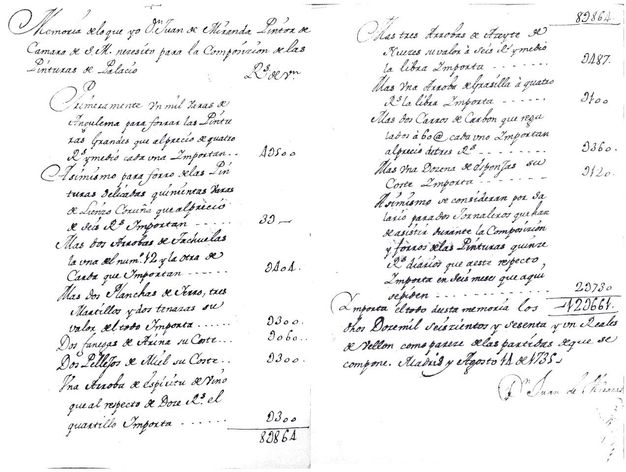
In older recipes for gacha paste, such as those of
Juan García de Miranda in 1735 (fig. 18.3), we find flour (the main component of which is starch),
honey, walnut oil, and grasilla ( juniper resin).
Among the ingredients of the Poleró recipe we also find
garlic, glue, and linseed oil. Later formulas mention
molasses, Venetian turpentine, oxgall, vinegar, Italian
colletta, alum, flax seeds, and phenol. In Spain,
wheat flour was typically used, but in France, Italy, and
Portugal we find mention of rye flour. The glue used varies
from strong or bone glue (called in Spanish what translates to
carpenter’s glue) to hide or rabbit-skin glue. More recent
recipes add Plextol B 500 as an adhesive and plasticizer.
ExpandFigure 18.3Order for materials made by the court painter Juan García
de Miranda for lining and repairing the paintings damaged
by the fire at the Real Alcázar de Madrid in 1734.Image: Archivo General de Palacio, Patrimonio Nacional de
España
María Luisa Gómez has noted several characteristics of lining
with gacha paste (Gómez 1998Gómez, María Luisa. 1998.
La restauración. Examen científico aplicado a la
conservación de obras de arte.
Madrid: “Cátedra.”), for example that “there is no change in color, or only
very slight change. Also, that the high moisture content
allows for the smoothing out of cracks. However, the mixture
is very hygroscopic and sensitive to humidity. There is a risk
that the original canvas will shrink. There is a danger of
fungal growth. Adhesion reduces rapidly in bad weather
conditions, and it becomes hard and fragile. It has an acid
pH. It requires the applying of heat.”4
She concluded that the use of Venetian turpentine and other
resins was not justified because they were insoluble in water,
darkened, and became more fragile, and therefore suggested
simplified recipes made up of only starch and animal glue with
a few drops of fungicide, and that they be applied cold and
used only for lining in dry climates.
Case Studies
For some cases of lined works, we were able to find references
to the date and to the restorers who carried out the
treatment, and we were even able to analyze the
gacha adhesive present in them, such as those
analyzed by María Dolores Gayo at the Museo del Prado, those
in the Instituto del Patrimonio Cultural de España, and
Ribera’s Crucified Christ, analyzed by Andrés Sánchez
Ledesma (Arte-Lab S.L.) (Diputación Foral de Álava 2018Diputación Foral de Álava. 2018.
El Cristo crucificado de Jose Ribera en el Patrimonio
de Álava.
Vitoria-Gasteiz, Spain: Publicaciones de la Diputación
Foral de Álava.). Analyses of the gacha are complex because
sometimes it is difficult to determine the exact composition.
Apart from the difficulty of accessing representative samples,
they are possibly not very homogeneous adhesives, and the
quantities of certain additives were too small to be
identified. We should also bear in mind other treatments and
products applied to the paintings over the years, which may
interfere in the analytical results.
Examples of case studies include:
Ribera’s Crucified Christ, in the Diputación
Foral de Álava.
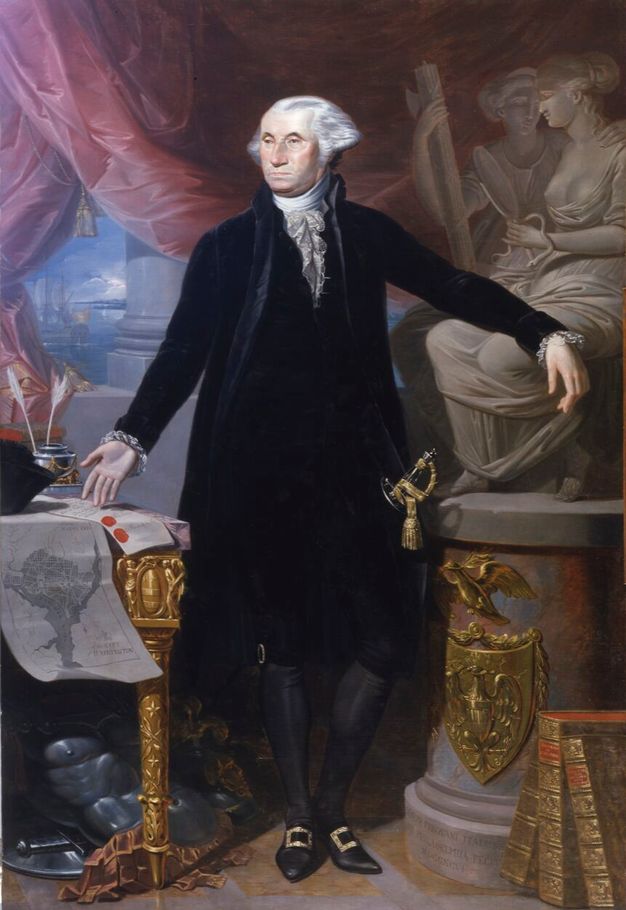
Perovani’s Portrait of George Washington, in the
Real Academia de Bellas Artes de San Fernando in Madrid,
which was lined by Tomás Pérez, restorer at the Museo del
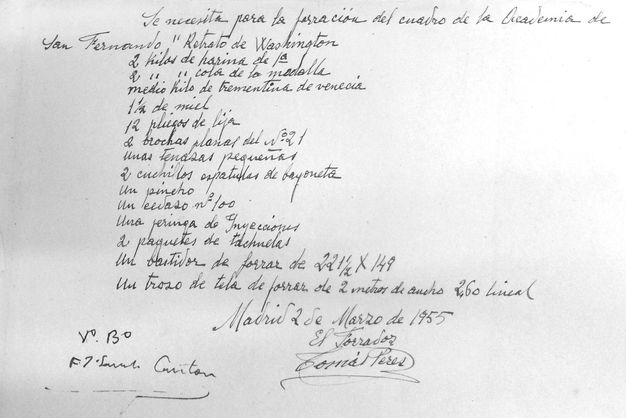
Prado, in 1955 (fig. 18.4). For
this painting, we also were able to locate the original
1955 gacha recipe and to examine the state of the
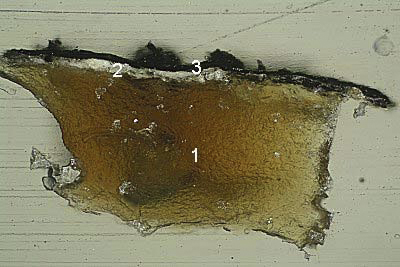
lining via cross sections (fig. 18.5).
Murillo’s Juan the Patrician’s Dream, in the
Museo del Prado.5
The Spinners and
Philip III on Horseback by Velázquez, in the
Museo del Prado.
ExpandFigure 18.4Joseph Perovani (Italian, 1765–1835),
Portrait of George Washington, 1796. Oil on
canvas, 220 × 145 cm (86 5/8 × 57 1/16 in.).Image: Real Academia de Bellas Artes de San Fernando de
Madrid
Figure 18.5 (a)
Recipe for gacha used in 1955 by Tomás Pérez
Alférez, liner at the Museo del Prado, on the painting
shown in fig. 18.4. (b) Cross section of glue-paste
lining, corresponding to the left sleeve. Layers from the
bottom: (1) glue-paste, (2) ground, (3) black paint.
Images: (a) Archivo del Museo Nacional del Prado; (b) Real
Academia de Bellas Artes de San Fernando de Madrid (E.
Parra, Larco Química y Arte; conservation report: Silvia
Viana, Ángeles Solís, and Judit Gasca)
The two latter paintings have additional canvas strips to
widen them. We know that The Spinners was lined in
1785 by Jacinto Gómez, and perhaps he carried out the widening
of the painting, although its measurements vary from one
inventory to another at different periods, probably due to
adaptations for specific locations. During the last
intervention on the painting, many repaints were detected,
covering damage that may have arisen from shrinkage when using
a new close-weft canvas or may have been caused by burns
during ironing (Macarrón, Calvo, and Gil 2017Macarrón, Ana, Ana Calvo, and Rita Gil. 2017. “Cas
d’étude des rentoilages historiques à la colle de pâte en
Europe: Documentation et évaluation.” In
Conservation Restauration de biens culturels. Retours
d’expérience et regards rétrospectifs,
6e colloque international de l’ARAAFU, Paris, Cité de
l’architecture et du patrimoine, 26, 27 et 28 novembre
2014, 35–42. Paris: ARAAFU.).
Creating the Database
For the documentary study, we gathered recipes, materials, and
tools used for gacha linings. We collected invoices
for products bought for lining and as much data referring to
these as we could find, such as the restorer’s signature on
the back of some canvases. Thus, in the Royal Palace we found
an order for materials bearing painter-restorer Juan García de
Miranda’s signature from 1735, in which the materials for the
lining are listed (Macarrón, Calvo, and Gil 2013Macarrón, Ana, Ana Calvo, and Rita Gil. 2013. “Old
Materials, New Solutions.” In
Science and Technology for the Conservation of Cultural
Heritage: Proceedings of the International Congress on
Science and Technology for the Conservation of Cultural
Heritage, Santiago de Compostela, Spain, 2–5 October
2012, edited by E. Cano, M. Lazzari, and Miguel Ángel
Rogerio-Candelera, 325–28. London: CRC Press, Taylor &
Francis Group.).
We also collected analyses and studies carried out in the
collaborating institutions for certain selected case studies,
according to their characteristics. All this information was
stored in a Microsoft Access database, divided into several
sections:
A general catalogue of works—paintings on canvas with
lining and interventions
Recipes, treatises, and other documentary sources
Appendices: records of restorers, work tools, ingredients
in the recipes, glossary
The version of the Access software allowed us to filter by
countries and dates, as well as by the ingredients, tools, and
materials used. However, the amount of information gathered in
Spain was much larger than that from other European countries
taking part in the project. Likewise, the amount and kind of
data gathered in the case studies were not comparable due to
the different information gleaned: analysis, recipes, methods,
and restorers.
Experimental Stage
Following in the wake of other experimental studies (Daly Hartin et al. 2011Daly Hartin, Debra, Eric Hagan, Stefan Michalski, and
Mylène Choquette. 2011. “CCI Lining Project: Testing of
Lined Model Paintings from Fractions of a Second to
Decades.” In
ICOM-CC Lisbon 2011: Preprints, 16th Triennial
Conference, Lisbon, 19–23 September 2011, edited by Janet Bridgland and Catherine Antomarchi,
paper 1309, 288–96. Almada, Portugal: Critério Produção
Grafica; Paris: ICOM Committee for Conservation.), we decided to start a scientific study of the materials of
a glue-paste lining, starting with the basic ingredients:
flour, glue, and cloth. Thus, a number of tests and mock-ups
were carried out to assess the behavior of the lining.
We used an animal glue chosen from previous tests because of
its Bloom strength of 240–250. Four types of flour with
differing protein content were used: two kinds of finely
ground white wheat flour (different brands), coarse-ground
semi–whole wheat flour, and coarse-ground semi–whole rye
flour. Two kinds of linen fabric were also used: open and
closed weft.6
The adhesive was prepared at the Universitat Politècnica de
València, adhesive films were made for analysis, and the
linings were carried out. Some of the samples were placed on
stretchers and some were not.
The samples were sent to the Centre Interdiciplinaire de
Conservation et de Restauration du Patrimoine (CICRP) in
Marseilles for accelerated aging and study of susceptibility
to biodeterioration (estimate of mold growth and pest
infestation). They were also sent to Valencia (for
morphological studies using optical and scanning electron
microscope [SEM]), Copenhagen (examination of cross sections
of mock-ups with optical microscopy [OM] and tensile and peel
tests), and Maastricht (investigation of cracking using
reflectance transformation imaging [RTI]). Members of the
research team who specialized in the different techniques
worked in each of these places. Some of the samples were
studied before and after artificial aging: we measured
viscosity and pH, used FTIR for the characterization of the
original materials and lining adhesives, and carried out
morphological analysis using OM, SEM, and RTI. We also
conducted tests of mechanical traction performance and
peeling.
The partial results of these tests included chemical
characterization, morphological analysis, studies on
mechanical behavior, and biodeterioration (Fuster-López et al. 2017Fuster-López, Laura, Cecil Krarup Andersen, Nicolas
Bouillon, Fabien Frohrer, Matteo Rossi-Doria, Mikkel
Scharff, Kate Seymour, Ángel Vicente-Escuder, Sofia
Vicente-Palomino, and Dolores J. Yusà-Marco. 2017.
“Glue-Paste Linings: An Evaluation of Some Biological,
Chemical and Mechanical Aspects of a Traditional
Technique.” In
ICOM Committee for Conservation, 18th Triennial
Conference, Copenhagen, Denmark, 4–8 September 2017:
Linking Past and Future; Preprints, edited by Janet Bridgland. Paris: ICOM.).
Dissemination
The third phase of the project was to share the work by
disseminating it widely so as to familiarize professionals
with this kind of canvas lined with glue paste. The first
objectives of the project were shown at the Museo
Thyssen-Bornemisza in Madrid in 2012, along with the state of
knowledge on the subject at that time.7
In 2012, we also presented a poster to the TechnoHeritage
Congress and published some of the documentary work (Macarrón, Calvo, and Gil 2013Macarrón, Ana, Ana Calvo, and Rita Gil. 2013. “Old
Materials, New Solutions.” In
Science and Technology for the Conservation of Cultural
Heritage: Proceedings of the International Congress on
Science and Technology for the Conservation of Cultural
Heritage, Santiago de Compostela, Spain, 2–5 October
2012, edited by E. Cano, M. Lazzari, and Miguel Ángel
Rogerio-Candelera, 325–28. London: CRC Press, Taylor &
Francis Group.). The following year, at Lo Stato dell’Arte 11, Matteo
Rossi-Doria presented a paper on the critical recovery of
traditional lining methods (Rossi-Doria 2013Rossi-Doria, Matteo. 2013. “Requiem o recupero critico
dei metodi di foderatura tradizionali [Requiem for, or
critical recovery of, traditional lining methods].” In
XI Congresso nazionale IGIIC Lo stato dell’arte 11:
Accademia delle belle arti: Bologna, 10–12 ottobre
2013, 77–87. Florence: Nardini.
https://cbccoop.it/app/uploads/2017/05/testo-IGIIC-2013-1.pdf.). In a similar context, an article was published comparing
the lining systems used in Portugal and Spain (Calvo, Maltieira, and Barbosa 2014Calvo, Ana, Rita Maltieira, and Carlota Barbosa. 2014.
“Confluencias y divergencias de los materiales de
forración entre España y Portugal.”
Estudos de Conservação e Restauro 6: 275–92.
https://doi.org/10.34618/ecr.6.7563.).
In 2014, we put forward some case studies at the Association
des Restaurateurs d’Art et d’Archéologie de Formation
Universitaire (ARAAFU) Colloquium in Paris (Macarrón, Calvo, and Gil 2014Macarrón, Ana, Ana Calvo, and Rita Gil. 2014. “Cas
d’étude des rentoilages historiques à la colle de pâte en
Europe. Documentation et évaluation.” Paper presented at
Colloque ARAAFU: Retours d’expérience et regards
rétrospectifs: Association des Restaurateurs d’Art et
d’Archéologie de Formation Universitaire, Paris, November 26–28, 2014.,
2017Macarrón, Ana, Ana Calvo, and Rita Gil. 2017. “Cas
d’étude des rentoilages historiques à la colle de pâte en
Europe: Documentation et évaluation.” In
Conservation Restauration de biens culturels. Retours
d’expérience et regards rétrospectifs,
6e colloque international de l’ARAAFU, Paris, Cité de
l’architecture et du patrimoine, 26, 27 et 28 novembre
2014, 35–42. Paris: ARAAFU.). That same year we also produced a poster for the Art
Technological Source Research working group’s congress at
ICOM-CC in Amsterdam, whose contents we published in 2016
(Macarrón, Calvo, and Gil 2015Macarrón, Ana, Ana Calvo, and Rita Gil. 2015. “European
Recipes for Glue Lining Paste.” In
Sources on Art Technology: Back to Basics: Proceedings
of the Sixth Symposium of the ICOM-CC Working Group Art
Technological Source Research, edited by Sigrid Eyb-Green, Joyce H. Townsend, Stefanos
Kroustallis, Kathrin Pilz, and Idelette van Leeuwen,
139–40. London: Archetype.).
The partial results of the experimental section were presented
and published at the ICOM-CC in Copenhagen in 2017 (Fuster-López et al. 2017Fuster-López, Laura, Cecil Krarup Andersen, Nicolas
Bouillon, Fabien Frohrer, Matteo Rossi-Doria, Mikkel
Scharff, Kate Seymour, Ángel Vicente-Escuder, Sofia
Vicente-Palomino, and Dolores J. Yusà-Marco. 2017.
“Glue-Paste Linings: An Evaluation of Some Biological,
Chemical and Mechanical Aspects of a Traditional
Technique.” In
ICOM Committee for Conservation, 18th Triennial
Conference, Copenhagen, Denmark, 4–8 September 2017:
Linking Past and Future; Preprints, edited by Janet Bridgland. Paris: ICOM.).
In 2018, we presented a summary of the project at the II
Colloquium in Lisbon: Investigación en Conservación del
Patrimonio (Heritage Conservation Research) (Macarrón, Calvo, and Gil 2018Macarrón, Ana, Ana Calvo, and Rita Gil. 2018. “Materiales
y métodos en los tratamientos de refuerzo de pintura sobre
lienzo mediante entelados a la gacha: documentación,
función y Conservación.” In
Livro de Resumos, Investigações em Conservação do
Património, II Colóquio, Lisboa 27–29 setembro 2018,
Universidade de Lisboa, Faculdade de Belas Artes,
Lisboa, 111–13. Lisbon: Faculdade de Belas Artes.). More recently, in June 2019, the four authors of this
essay organized and taught a workshop at the Complutense
University of Madrid, titled Applications of Traditional and
Modern Lining Methods, with the assistance of museum
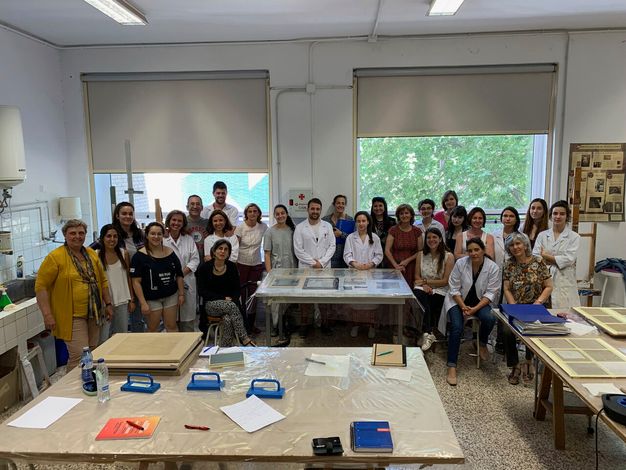
professionals, private practitioners, and students (fig. 18.6). During the workshop, a wide range of adhesive formulations
was tested on facsimiles. Thanks to the Avangrid Foundation
grant, Ana Calvo and Julia Betancor were able to present this
research during the Conserving Canvas symposium at Yale
University in October 2019.
ExpandFigure 18.6Participants in the Applications of Traditional and
Modern Lining Methods workshop, June 2019, at the Faculty
of Fine Arts at the Complutense University of
Madrid.Image: Julia Betancor
Conclusions
In certain historical cases, we found linings with glue paste
that had changed and completely lost the glue paste’s
adhesiveness, which led to its removal. We also found that
there are now new alternatives and methodologies for
structural treatment of paintings on canvas (such as
strip-lining, tear mending, and suction tables), but
importantly, there are also new criteria regarding structural
canvas treatments. This should not, however, justify a loss of
understanding and knowledge of linings with glue paste.
Thanks to the project described in this essay, we have learned
that hundreds of paintings in Spain are lined with glue
paste—some three centuries ago and others more recently. Most
are in good condition. However, more information is needed
about works lined a la gacha: the recipes and
application methods used and the environmental conditions of
conservation.
In experimental studies (Fuster-López et al. 2017Fuster-López, Laura, Cecil Krarup Andersen, Nicolas
Bouillon, Fabien Frohrer, Matteo Rossi-Doria, Mikkel
Scharff, Kate Seymour, Ángel Vicente-Escuder, Sofia
Vicente-Palomino, and Dolores J. Yusà-Marco. 2017.
“Glue-Paste Linings: An Evaluation of Some Biological,
Chemical and Mechanical Aspects of a Traditional
Technique.” In
ICOM Committee for Conservation, 18th Triennial
Conference, Copenhagen, Denmark, 4–8 September 2017:
Linking Past and Future; Preprints, edited by Janet Bridgland. Paris: ICOM.), we discovered variables in biodegradation, which depends
on the fineness of the flour, the proportions of flour and
glue, and the kind of starch and protein when the proportion
of flour to glue is constant. Gacha recipes with
semiwhole flour are more likely to biodeteriorate than those
made with finely milled white flours, and the protein content
of the cereal used affects the degradation process. Regarding
the mechanical and dimensional stability of linings with glue
paste, we found differences related to the kind of flour used,
the degree of milling or grinding, and the thickness of the
weft in the canvas used for lining. This suggests that
conservation strategies for the long-term care of lined
paintings must be carefully assessed, taking into
consideration the kind of flour used in the adhesive.
It would be useful to continue testing to determine the
different additives in the traditional recipes (garlic,
oxgall, Venetian turpentine, disinfectants) to understand the
role these products played in the lining and their effects.
But on the basis of our findings and in light of the current
condition of works lined a la gacha, we must raise
the following questions:
Might a version of this adhesive be appropriate nowadays?
Could it be used as a cold, or almost cold, contact
adhesive?
Might it be advisable for cases where fixing paint layers
is necessary?
Which are the most appropriate conservation conditions for
works lined in this way?
Might it be an alternative for the necessary relining of
paintings that already have this kind of adhesive?
Notes
The main researcher on the project was Ana Macarrón and
the following were part of the team: Ana Calvo, who
started out as a member of the School of Arts at the
Universidade Católica Portuguesa and then moved on to
the Complutense University of Madrid (UCM), Spain; Rita
Gil, technical support for the project at the UCM and
coauthor of the database; Laura Fuster, Sofía Vicente,
and Dolores Yusá from the Universitat Politècnica de
València, Spain; Matteo Rossi-Doria, in private practice
in Italy; Cecil K. Andersen and Mikkel Scharff from the
KADK School of Conservation in Copenhagen, Denmark; Kate
Seymour from the Stichting Restauratie Atelier Limburg
(SRAL), Maastricht, Netherlands; Nicolas Bouillon and
Fabien Forher from the Centre Interdiciplinaire de
Conservation et de Restauration du Patrimoine (CICRP),
Marseilles, France; Aurelia Chevalier, in private
practice in France; Paul Ackroyd from the National
Gallery, London; Joan Reifsnayder from ICOM-CC; and
Marion Mecklenburg from the Smithsonian Institution.
Spanish institutions that took part as contributors are
Museo del Prado, Patrimonio Nacional, Museo
Thyssen-Bornemisza, Instituto del Patrimonio Cultural de
España (IPCE), Real Academia de Bellas Artes de San
Fernando, and Diputación Foral de Álava. Funding was
provided by CTS Spain, SIT Spain, PC Conservation
Products Spain, and canvas manufacturer Claessens in
Belgium.
↩︎
Personal communications with Laura Alba and Jaime
García-Maiquez.
↩︎
“No hay cambios de color o son muy ligeros. Su elevado
contenido en humedad permite aplanar ciertos cuarteados.
Sin embargo, la mezcla es muy higroscópica y sensible a
la humedad. Existe riesgo de encogimiento de la tela
original. Presenta peligro de crecimiento de hongos. Su
adhesividad disminuye rápidamente en malas condiciones
climáticas, y se hace dura y frágil. Tiene un pH ácido.
Requiere aplicación de calor” (Gómez 1998, 386Gómez, María Luisa. 1998.
La restauración. Examen científico aplicado a la
conservación de obras de arte.
Madrid: “Cátedra.”). ↩︎
We would like to thank the conservator-restorer of the
Museo del Prado, María Álvarez Garcillán, for all the
information she provided us on the condition of this
painting.
↩︎
For details of all materials, see
Fuster-López et al. 2017Fuster-López, Laura, Cecil Krarup Andersen, Nicolas
Bouillon, Fabien Frohrer, Matteo Rossi-Doria, Mikkel
Scharff, Kate Seymour, Ángel Vicente-Escuder, Sofia
Vicente-Palomino, and Dolores J. Yusà-Marco. 2017.
“Glue-Paste Linings: An Evaluation of Some
Biological, Chemical and Mechanical Aspects of a
Traditional Technique.” In
ICOM Committee for Conservation, 18th Triennial
Conference, Copenhagen, Denmark, 4–8 September
2017: Linking Past and Future; Preprints, edited by Janet Bridgland. Paris: ICOM.. ↩︎
“Reinforcement Treatments of Canvas Paintings: Studio
Cases, Evolution and Behavior,” seminar presented at
Complutense University of Madrid and Museo
Thyssen-Bornemisza, October 15, 2012.
↩︎
Honey, molasses, sugar, syrup, or maple syrup (employed
in the National Gallery of Denmark in first half of 20th
century)
Plants (garlic)
Disinfectant, adhesion strengthening, siccative
Garlic (old recipes: Andrés de la Calleja recipes;
recipes from 19th and first half of 20th centuries at
the Museo del Prado)
Salts, chemicals
Disinfectant
Sodium pentachlorophenate or alum and Nipagin (sodium
salt of p‑hydroxybenzoate); Micospec (econazole nitrate)
in ethanol, quaternary ammonium salts, sodium fluoride,
benzoic acid
Grasilla (gum juniper: ground yellowish resin
used for the preparation of varnishes, recipes from
Spanish authors in the 16th century, recipes of Juan
García de Miranda)
Oxgall
Surfactant, wetting
Oxgall (liquid or paste)
Table: Rita Gil
Figure 18.3Order for materials made by the court painter Juan García de
Miranda for lining and repairing the paintings damaged by the
fire at the Real Alcázar de Madrid in 1734. Image: Archivo
General de Palacio, Patrimonio Nacional de España
Figure 18.4Joseph Perovani (Italian, 1765–1835),
Portrait of George Washington, 1796. Oil on canvas,
220 × 145 cm (86 5/8 × 57 1/16 in.). Image: Real Academia de
Bellas Artes de San Fernando de Madrid
a
b
Figure 18.6Participants in the Applications of Traditional and Modern
Lining Methods workshop, June 2019, at the Faculty of Fine
Arts at the Complutense University of Madrid. Image: Julia
Betancor