The collections of the Neue Pinakothek and the Sammlung Schack—two important collections of nineteenth-century art in Munich—contain a large number of paintings that have remained relatively untouched since their creation. Initially this was just an empirical observation by conservators. Despite incomplete data, a study verified that out of more than 1,700 paintings investigated, about seventy percent are unlined. This has been proven through an evaluation of technological information and restoration reports. One of the results of this study is that conservators decided—in addition to traditional lining—in favor of very restrained interventions early on. The documented restoration techniques, including lining and other treatments, are generally explained and contextualized in relation to developments in the field of paintings conservation. The results of this study accord with the trend toward minimal intervention that began in German-speaking countries more than forty years ago.
32. Less Is More: Juxtaposing the History of Lining and Alternative Treatments as Found in the Neue Pinakothek and the Sammlung Schack in Munich
- Renate Poggendorf, Head of Conservation, Neue Pinakothek and Sammlung Schack, Doerner Institut, Bayerische Staatsgemäldesammlungen, Munich
Introduction
Publications offer us only a fragmentary understanding of developments in conservation. One such fragment is the plea to “do in future only that which is absolutely necessary, and if in doubt, do nothing at all—always heeding the fact that each intervention is in and of itself irreversible” (Weddigen, Erasmus. 1980. “Zur Fragwürdigkeit des Doublieren.” Mitteilungen Deutscher Restauratorenverband 1: 30–34.). This statement represents a shift witnessed in the field of paintings conservation in German-speaking countries around 1980.1 This new approach called into question the suitability of lining canvas paintings as the default method for treating many types of defects. As a result, lining was indeed largely replaced by less-invasive alternatives in the following years. Retaining an artwork’s “untouched” condition, thus enabling later generations to uncover clues whose significance may not yet be understood, gained importance as a value in its own right.2 Around the same time, an occupational profile was developed for conservation-restoration that defined academic training as a future standard. Considering the treatment of canvas paintings, this change took place over years and—depending on the country—at different times, influenced by leading conservators and university teaching. Nowadays, more than a generation of German-speaking conservators see lining as an almost exclusively historical technique that is only taught to elucidate its various methods.
At the 1974 Conference on Comparative Lining Techniques in Greenwich, lining was not yet challenged per se; the focus was on improving materials and methods. While the exchange of ideas across language borders was still quite limited at this time,3 the impact of this conference is nevertheless evident in some German publications thereafter.4 By the annual meeting of the Deutscher Restauratorenverband (German Association of Conservators-Restorers) in 1980, however, lining was fundamentally questioned and alternatives sought (von Manteuffel-Szoege, D. 1980. “Jahrestagung des Deutschen Restauratorenverbandes e.V. 1980.” Maltechnik Restauro 86, no. 4: 247–49.). Here, probably for the first time in such an arena, thread-by-thread tear mending was presented (Gabler, Wolfram. 1979. “Eine Möglichkeit der Restaurierung von Rissen in Leinwandgemälden ohne Doublierung, dargestellt am Beispiel des Gemäldes Die Nacht von Ferdinand Hodler.” Mitteilungen Deutscher Restauratorenverband, 22–25.). In Switzerland, too, criticism was being leveled at traditional lining techniques under the caption “Gaining experience through failure” (Weddigen, Erasmus. 1981. “Tagungsbericht des SKR aus La Chaux-de-Fonds 28.-30.5.81.” Maltechnik Restauro 87, no. 4: 276–78.). Occasional discussions of improved lining methods followed,5 but from the 1990s onward it was all about tear mending with adhesives, and later stitching (see, e.g., Heiber, Winfried. 1996. “Die Rißverklebung.” ZKK Zeitschrift für Kunsttechnologie und Konservierung 10, no. 1: 117–46.; and Beltinger, Karoline. 1992. “Die Vernähung eines Risses in einem Leinwandgemälde.” Zeitschrift für Kunsttechnologie und Konservierung 6, no. 2: 353–59.). In this context, retrospectives published in 1983 on the history of lining, marouflage, and paintings transfer assume an almost epitaphic quality (Marty, Hanspeter. 1983. “Übersicht über die Werkstoffe der Gemäldedoublierung und der Festigung der Malschichten.” Maltechnik Restauro 89, no. 4: 278–84.; Schaible, Volker. 1983a. “Die Gemäldeübertragung.” Maltechnik Restauro 89, no. 2: 96–129., Schaible, Volker. 1983b. “Der Weg der Doubliertechniken: Versuch einer Zwischenbilanz.” Maltechnik Restauro 89, no. 4: 250–56. ; Schiessl, Ulrich. 1983. “Das Leinwandgemälde auf der starren Platte.” Maltechnik Restauro 89, no. 4: 233–49.).
At a conservation conference in 1984, Winfried Heiber used a microscope linked to a projection screen to give a live demonstration of thread-by-thread tear mending.6 In his comprehensive description of the method published in 1996, Heiber noted in amazement that “an idea can quietly assert itself—with little to no publication, very modest practical instruction on the part of the protagonists, no indoctrination attempts and no divisive fundamental discussions” (Heiber, Winfried. 1996. “Die Rißverklebung.” ZKK Zeitschrift für Kunsttechnologie und Konservierung 10, no. 1: 117–46.).
As the author began her conservation career at the time of this turning point, the minimal intervention approach was natural to her from early on. Reviewing countless paintings that were “overrestored” (from today’s perspective) across centuries was a painful experience. This made the discovery that Munich’s two nineteenth-century state painting collections—the Neue Pinakothek and the Sammlung Schack (for whose conservation the author is responsible)—seem to contain an unusually large number of paintings in a fairly original state of preservation all the more inspiring. This study was conducted in order to support this empirical observation and to better understand and provide access to the restoration history of the collections. It is limited to a summary record of the treatments carried out on the canvas paintings, as far as these are documented, and their placement within the temporal context. Verification of the data or specific follow-up examinations of individual paintings was not possible within the scope of the project.
The Collections
The restoration history of a work depends on the specifics of how it was made as well as its provenance and history. Use and whereabouts determine its aging process, while the particular expectations of various owners and the professional convictions of conservators have a bearing on treatments undertaken. Thus, we begin with the history of the collections considered in this study.
The Bayerische Staatsgemäldesammlungen (Bavarian State Paintings Collections) houses Bavarian art holdings dating from the fourteenth century to the present day. Currently, the collection is divided across seventeen museums, with the Doerner Institut responsible for conservation. Of the five galleries located in Munich, two specialize in nineteenth-century artworks: the Neue Pinakothek and the Sammlung Schack. The two galleries have much in common but differ in significant ways.
The Neue Pinakothek was founded in 1853 by Ludwig I (1786–1868). The former king of Bavaria was passionate about art. During his reign (1825–48), he developed the state capital of Munich into a cultural gem. He had numerous monumental structures erected, including the Glyptothek and Alte Pinakothek, museums built to house the royal collections of antique sculptures and old master paintings. Ludwig I also supported the arts by amassing a collection of paintings and sculptures by artists of his time. His Neue Pinakothek was one of the very first museums ever to be dedicated exclusively to contemporary art.
The Sammlung Schack is also a private collection, founded by Count Adolf Friedrich von Schack (1815–1894), a wealthy, well-traveled poet and historian of art and literature. When he settled in Munich in 1855, the vibrant local art scene inspired him to begin building a collection of contemporary art. Schack had his own ideas regarding suitable themes, and he commissioned local artists to create paintings for him in keeping with his artistic and literary ideals. In addition, he commissioned young artists to create eighty-four full-size copies, predominantly of Venetian Renaissance paintings.
The two museums have in common that they were founded as private collections; however, while Schack’s collection has remained an almost unaltered ensemble, the Neue Pinakothek continued to expand after Ludwig’s death (fig. 32.1).
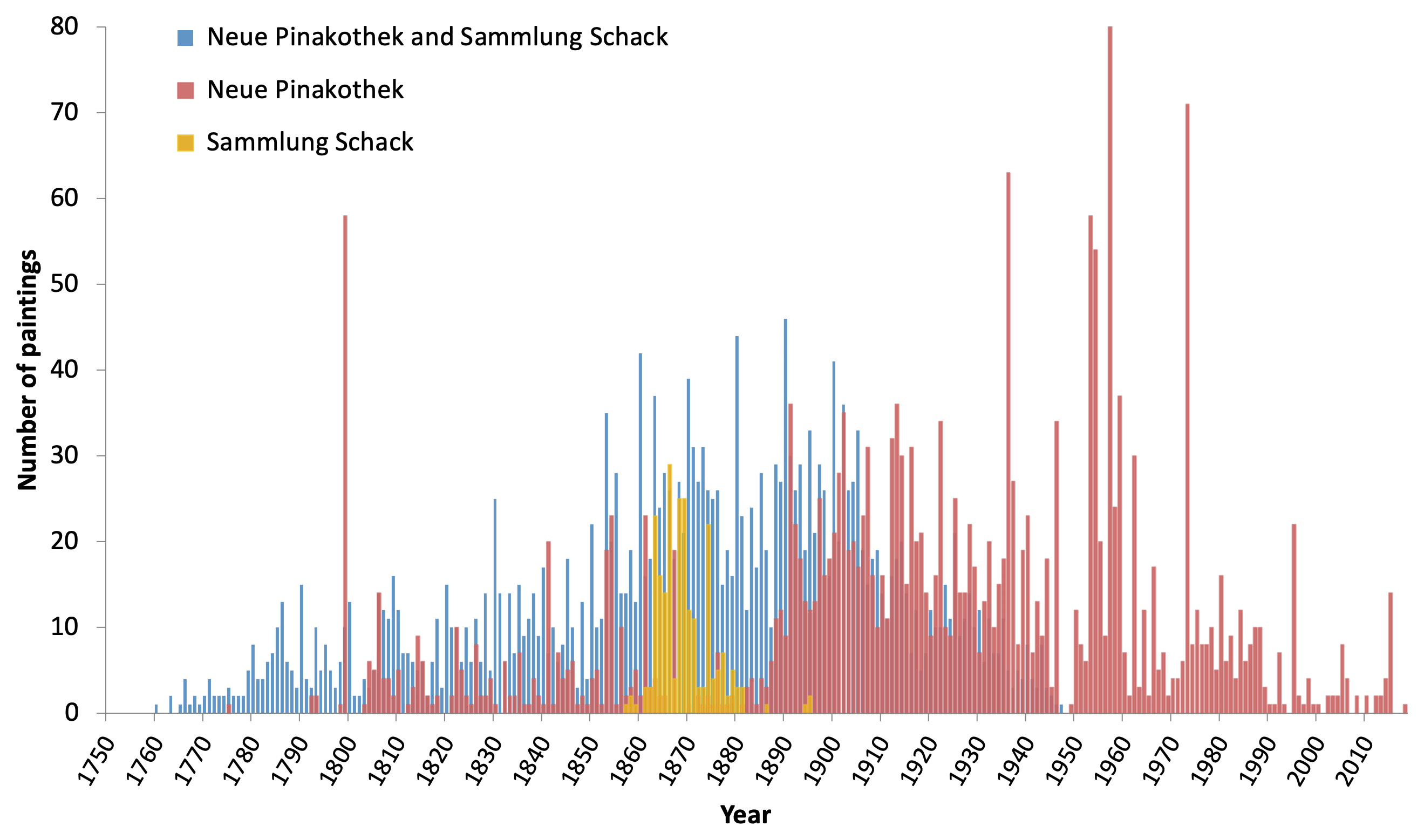
The Sammlung Schack comprises 267 paintings, mostly made over the course of about twenty-five years, in the 1860s and 1870s. After Schack’s death, the collection became public property, and it has been part of the Bayerische Staatsgemäldesammlungen since 1939.
By contrast, the Neue Pinakothek’s collection consists of over 3,300 paintings in addition to various sculptures, photographs, and graphic art. The works date from a period spanning some two hundred years, from the mid-eighteenth to the mid-twentieth century, that is, well beyond the nineteenth century. From the last quarter of the nineteenth century onward, Ludwig I’s collection was increasingly expanded using state funds. Artists estates were accepted and new artifacts purchased, in particular from major Munich art exhibitions. While the initial focus of the acquisitions was on local artists, it gradually became more international. A significant enhancement was the acquisition of recent French art, which began in 1909. With World War II came the destruction of the museum building, marking a turning point in the collection’s history. For the opening of the new building in 1981, the museum again strengthened its international orientation by acquiring French, English, and Spanish paintings.
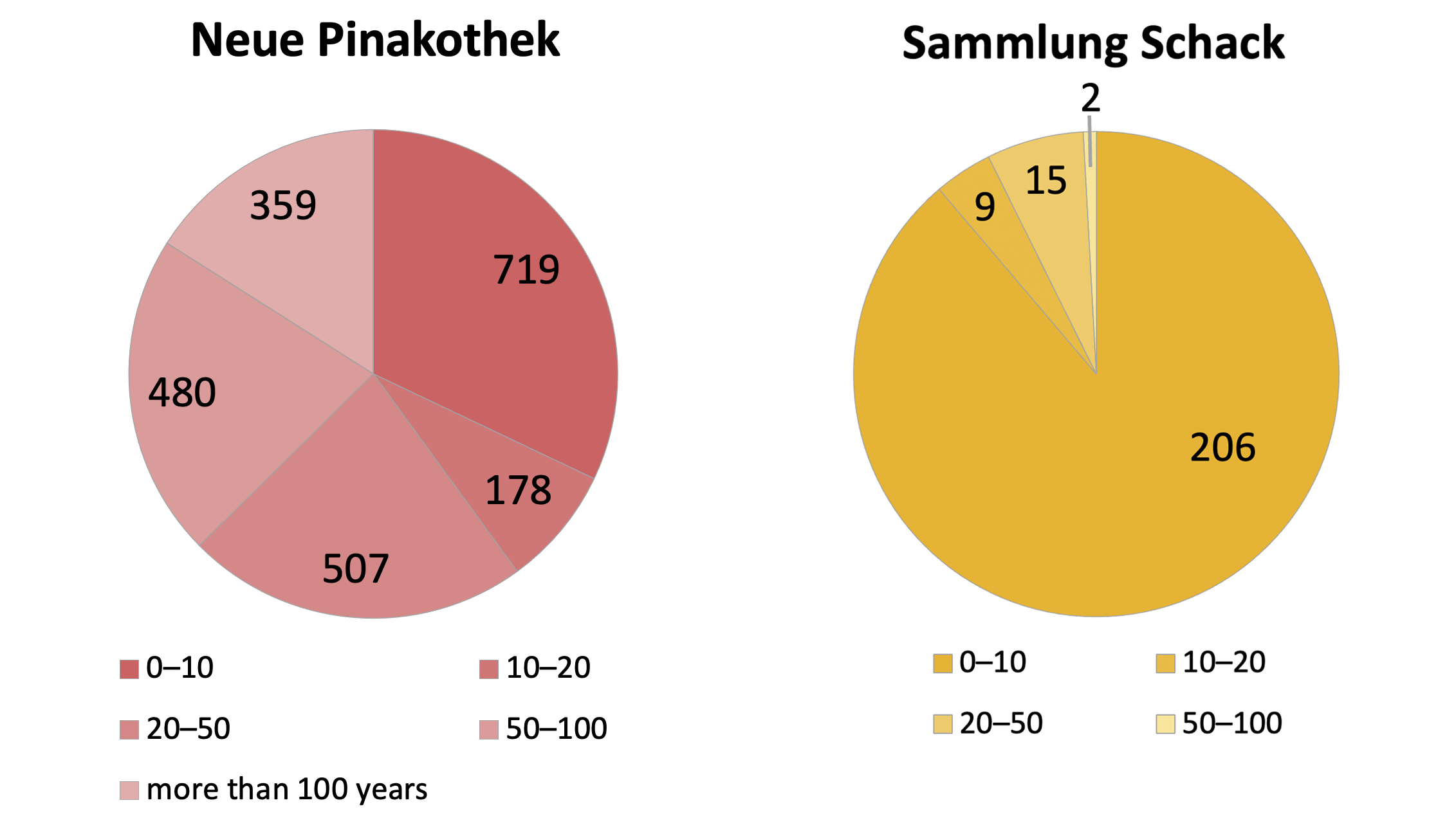
A decisive difference between the two collections is their acquisition history. Schack acquired at least 70% of his works more or less directly from the artists themselves, with about 90% of his paintings bought within ten years of being painted. Their aging and restoration backgrounds are thus directly tied to the history of the collection itself.
By contrast, only about a third of the paintings in the Neue Pinakothek were acquired soon after they were painted, while the rest entered the collection with individual histories going back up to two hundred years (fig. 32.2).
Conservation History of the Collections
Initially, the paintings were still “young” and had little need for conservation. Any necessary treatments were carried out by Alte Pinakothek conservators (see also Wiesmann, Alexander. 2007. “Der Restaurator: Ein Berufsbild im Wandel: Zur Gemälderestaurierung an Hand von Münchner Quellen zwischen 1850 und 1950.” PhD diss., Julius-Maximilians-Universität Würzburg.). Some fifty years ago, with a growing number of museum buildings and an increase in staff, the responsibility of caring for certain collections was divided up among the conservators—a structure that is still in place today. This specialization reflects the altered professional profile of the conservator, who continues to step in once intervention is required but now also acts preventively by overseeing a host of museum processes, including exhibitions and loans.
Following World War II, the Doerner-Institut was affiliated with the Staatsgemäldesammlungen. Two separate restoration workshops then operated side by side until they were united under the name Doerner-Institut in 1977.7 Reports of previous differences in working methods can be simply summarized: The museum conservators tended to practice more “considered” collection care, preferring to rely on tradition and experience and thus taking a more cautious approach to new developments. The conservators at the research facility Doerner-Institut, on the other hand, were more open to experimental approaches using new materials and methods.
A distinction between conservators specializing in treatments carried out on painted surfaces versus those who work exclusively on supports seems never to have been made, as is usual at other institutions. However, it was not uncommon in the past for work on wooden panels and linings to be passed to the carpenters, even if such a division of labor is only rarely traceable in the reports.
Today there are a dozen permanent positions at the Doerner Institut for conservators specializing in paintings, contemporary art, new media, and frames.
Data Collection
This study is built on several pillars:
-
The museum database made it possible to sort the paintings in this study and transfer their basic data into an Excel spreadsheet with the following columns: inventory number, artist, title, date of origin, date of acquisition, provenance, and medium.
-
Between 1969 and 2003, the majority of paintings in both collections were reindexed in inventory catalogues.8 For this purpose, the technical details of each painting were systematically recorded, in most cases only by visual assessment, and a brief description was noted in a form. These questionnaires included questions on lining and whether or not the canvas attachment was original, but not about partial treatments of the support. Only core information (e.g., “oil on canvas”) was entered into the database.
-
Conservation reports date back to the 1830s. Most of the time, standardized forms were used that initially divided the data only into “findings” and “work report.” In 1972, multiple-choice forms were introduced that included the option of adding notes. These comprised both a section on technical findings (e.g., previous lining and lining method) and a section for noting condition and current conservation treatment. With the introduction of digital word processing in the 1990s, the work of conservators was increasingly documented in their own words and with growing attention to detail.
-
When a museum database was initiated in 2002, data-entry fields for technological findings, condition, and treatments were included, although filling them out was entirely optional. This tempted people to forgo entries on the technical details of a work in straightforward treatment cases.
As we know, conservation perspectives and methods change over time. On the whole, it can be said that reports were often filed with too little regard for whether they would be comprehensible for later generations.
After processing the canvas paintings from both collections, the related files were viewed and relevant information on the restoration history was entered into the spreadsheet both as text and as yes/no answers under the following categories: lining, type of lining, marouflage, loose-lining, impregnation, strip-lining, tear mending, conservator, and date of intervention. This made it possible to generate graphs from the data.9
The results for Neue Pinakothek and Sammlung Schack are summarized below. Differences are illustrated by the graphs. Alongside the systematic analysis of the data, the author also presents a subjective evaluation based on her twenty-five years of experience caring for both collections.
Results
Taken together, the two collections contain 2,475 canvas paintings, which make up 71% of the total number of paintings (fig. 32.3a).
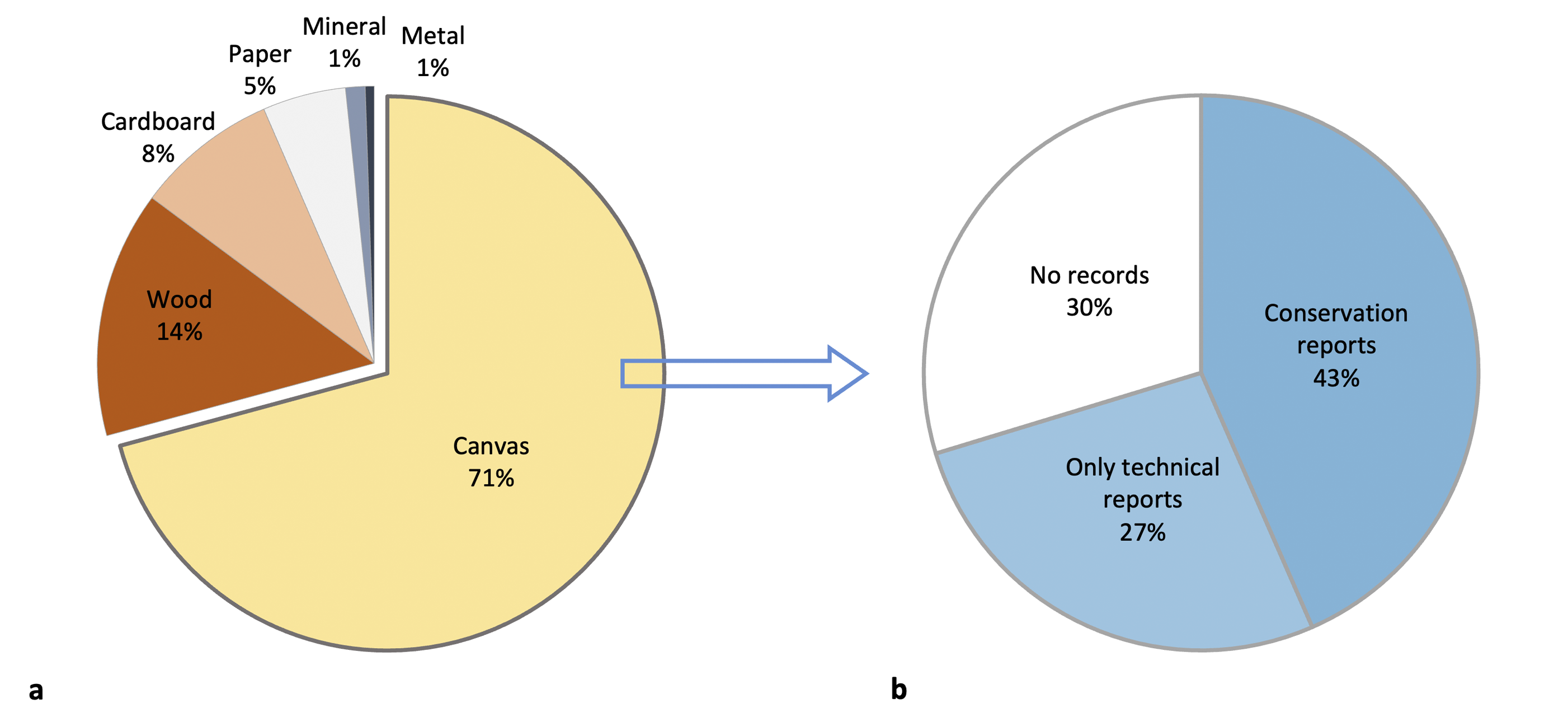
Unfortunately, the existing records for these paintings turned out to be less complete than hoped. Thirty percent of the canvas paintings have no files or reports; for a further 27%, only technological information is available, whereas 43% have at least one restoration report (fig. 32.3b). Many reports mention earlier interventions for which there is no documentation, even though the work must have been carried out while the piece was in the museum’s possession. Apparently, despite the long tradition of documenting conservation treatments and a simplified procedure using forms, the obligation to record interventions was often not met. Furthermore, information regarding measures undertaken prior to the museum’s acquisition is almost always missing. Consequently, the study had to be reduced to the 1,740 canvas paintings (70%) for which evaluable reports are archived—a selection that is nevertheless considered sufficient for the evaluation carried out here.
The different measures considered in detail (figs. 32.4, 32.5) are as follows:
-
88 of the canvases are glued onto rigid supports, 15 of them on wood and 73 on cardboard. Knowledge of the collection indicates that the wooden supports were attached as restoration measures. For the paintings described as “canvas on cardboard,” the date of and reason for the cardboard backing cannot be confirmed. Is it a prefabricated, two-layered support or an unstretched canvas—typical for oil sketches—which for various reasons was subsequently glued onto cardboard?
-
409 of the paintings are lined. Of these, 242 were lined using a paste, 30 using a wax-resin mixture, and in 137 cases, the method used was not documented.10 Paste was probably most likely used, as it was already a common nineteenth-century method and thus not specifically mentioned. Alternatives to traditional techniques that appeared following the 1974 Greenwich conference, such as nap-bond cold-lining or mist-lining, the use of fabrics made of synthetic or glass fibers, or the use of newer adhesives such as acrylic resins or Beva 371, were not in evidence.
-
The lining information in the evaluated reports seems highly reliable. However, data about the following techniques do not appear to be statistically evaluable, since the data were not systematically recorded using forms but derive solely from individual reports. (The figures should still be shown here, however, as they at least reveal overall trends.) For 33 paintings, we have documentary evidence of strip lining; 5 paintings received a loose-lining with a second canvas and 1 with paper (some of these were possibly original reinforcements); 5 paintings were mounted onto plywood panels without adhesive to help stabilize particularly thick layers of paint or extensive damage to the canvas; and 18 of the paintings were impregnated with wax.
-
1,181 of the paintings are thought to be unlined. Documentary analysis and experience show that measures may still have been carried out on the canvases. Even before thread-by-thread tear mending established itself in the 1980s, tears were often only mended locally, for example by attaching patches of tow or fabric to the back. Tacking-edge repairs can range from local tear stabilization to restretching a painting after complete strip-lining—without necessarily having been documented.
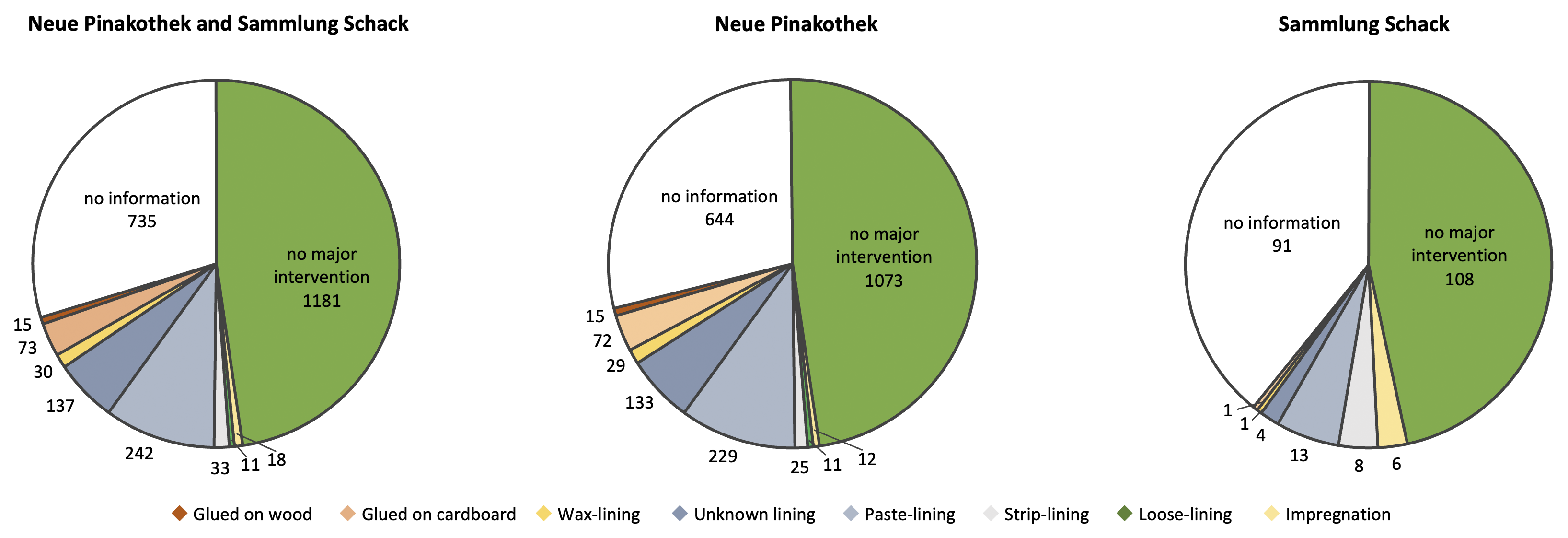
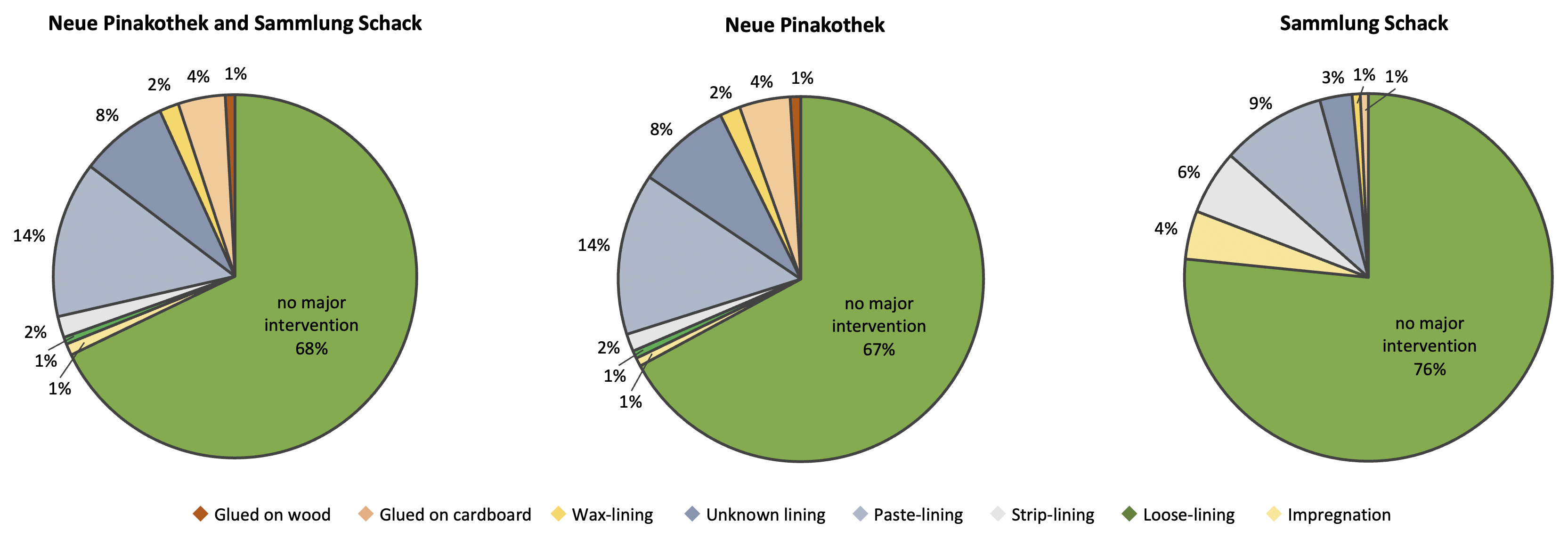
According to a subjective impression of the entire collection, the above result—that approximately 70% of the 1,740 documented paintings have not yet been lined, marouflaged, or impregnated—appears to be on the low side. The reason is that the 735 canvas paintings (30% of the total number) without documentation are predominantly pictures that have been kept in storage for decades and not exhibited. On the whole, if there were no plans to show the paintings, they were not restored.
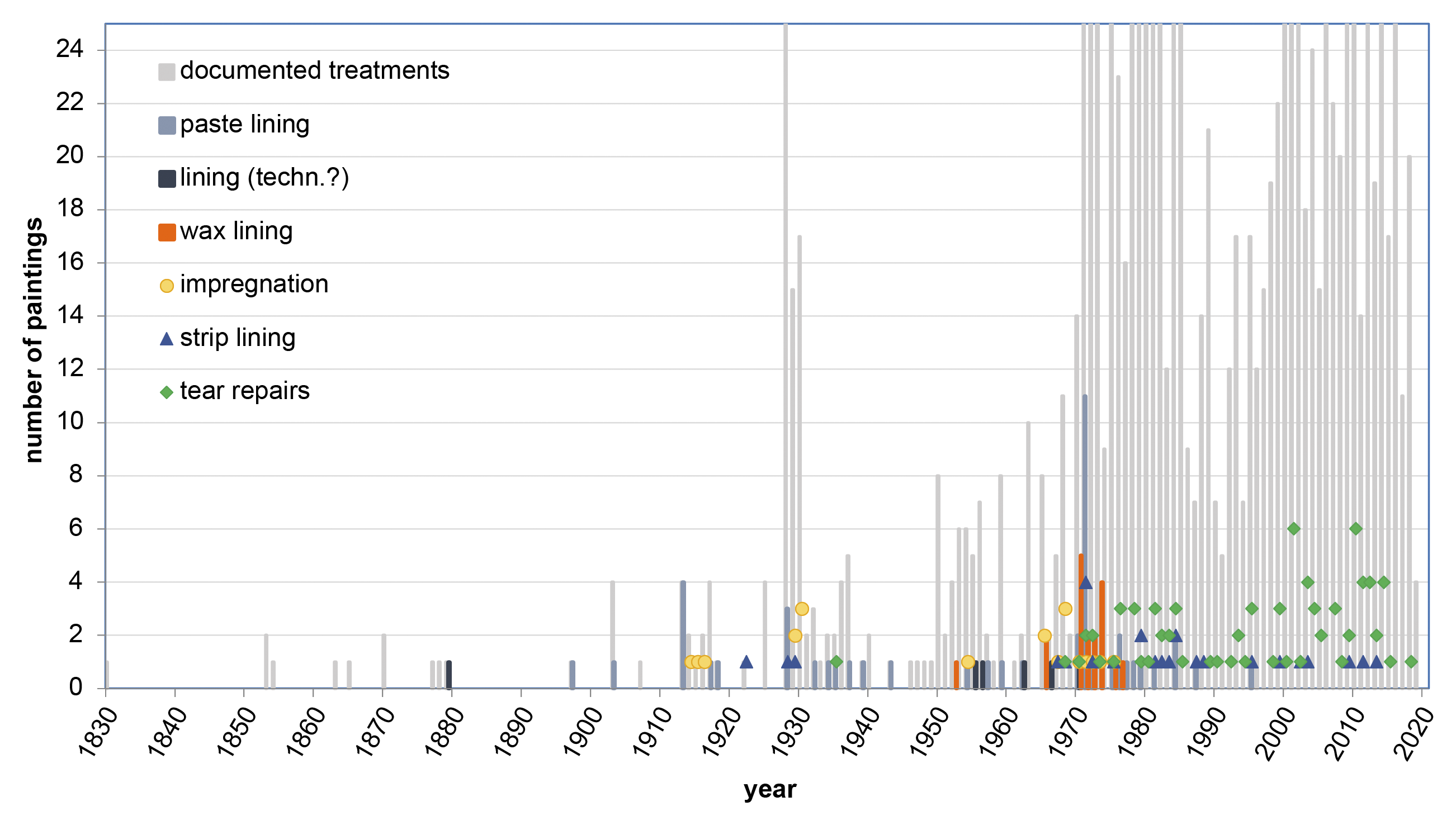
Despite the limited informative value of the data found, its temporal distribution will be presented graphically (fig. 32.6), as it reveals certain trends. For two-thirds of the 1,740 verifiable treatments, we know the year of execution. Considering the distribution along the time axis, we see a gradual increase becoming more apparent from the 1970s onward. Knowing that interventions were not consistently documented, this increase cannot be equated with an increase in conservation measures. Rather, it shows the professionalization of conservation, and that trend led to more systematic documentation. The graph does not indicate the scope of the measures either: minimal intervention is represented in the same manner as extensive conservation work. Taken separately:
-
None of the marouflages can be definitively dated. The same applies to a large number of the linings; 60% of the wax-linings but only 19% of the paste-linings can be classified by date. The first documented wax-lining took place in 1952, with the first recorded use of a heating table in 1965.11 The years leading up to the last documented wax-lining—carried out in 1976, shortly after the Greenwich conference—mark the heyday of this method. The fact that this period coincides with a general increase in documentation explains why the number of unreported cases of wax-linings is lower than that of paste-linings. Paste was also used to line paintings during and after the boom in wax treatments, recorded for the last time in 1995.12 The exact formulation of the adhesive or a description of the working method is very rarely provided.13
-
Around 1915 and again around 1930, there are several references to canvases being impregnated with a wax mixture called “Dutch mass.” This was an alternative to the usual glue lining used to consolidate and flatten paintings with intact fabrics and protect them against moisture. From the mid-1960s to the mid-1970s, when wax-lining and heating tables were in their prime, several paintings were also impregnated with wax.
-
Strip-lining has been documented since the 1920s, sometimes only applied partially. Beva 371 has been the preferred adhesive since 1975.14
-
As mentioned earlier, localized methods for treating canvas tears can be inferred only from individual restoration reports. Knowledge of the collection indicates that far more partial repairs to old tears have been carried out than were ever documented. Perhaps local treatments had to be somehow unusual to merit being described in a report. In 1935, for instance, a 20-centimeter tear was repaired using only thin tissue patches. Treating such a sizable tear without lining seems to have been unique. It was not until the 1970s that tears were regularly mended with adhesive or holes closed with fabric inlays without the additional application of a patch. For about ten years, Calaton CB15 was the adhesive of choice. It was replaced by a standard white glue16 commonly used by joiners. An alternative was a two-component epoxy resin adhesive17 that was considered advantageous not least because of its resistance to solvents used in subsequent work steps. By the time of Heiber’s 1996 publication on thread-by-thread tear mending, a mixture of sturgeon glue and wheat-starch paste had become the predominant adhesive in use.
-
For the first time, in 1917, and occasionally thereafter, we find reports specifically mentioning that a painting had been left on its old strainer or stretcher, or that these had been repaired. Again, this approach was probably written down because it was unusual. Common practice was to replace old stretchers when they were regarded as insufficient, particularly in cases where the canvas had to be taken off its stretcher anyway. As awareness grew of how much information could be gleaned from various types of stretchers, historical labels, and original canvas attachments, stretchers stopped being replaced around 1980. Remaining stretchers that no longer carried their original painting but had not yet been discarded were gathered together to form a collection.18
Evaluation of the Results
This study confirms the general development in German-speaking countries outlined at the beginning of this paper: the move away from the traditional and regular use of lining to almost complete abandonment of the method. Evaluation of the individual reports, however, also indicates that this was not a linear process. Even if certain methods were preferred during certain periods, there seems to have been no fixed rules; instead, it seems that conservators were generally free to make their own decisions. For example, certain names stand out for taking a particularly considered and cautious approach. It is also noticeable that, at the time of the transition to minimal intervention, exemplary reports were often written by younger colleagues, perhaps because they were especially open to exploring new developments.
In contrast to the canvas paintings examined here, the majority of those in the old masters collections have been lined. Reasons for this may include their age and that restoration was already required at a time when lining was still the obvious choice. That being said, the works considered here are now already up to 270 years old.
Which factors determine that a painting requires restoration—the quality of the workmanship (some paintings are surprisingly well preserved despite their great age), the environmental conditions in which a collection is housed (only over the last few decades has the potential for damage been significantly reduced for paintings in the Neue Pinakothek and Sammlung Schack, thanks to ongoing improvements), the extent to which the works have been displayed (generally, disregarded paintings were treated less often than those on permanent display or that traveled regularly to exhibitions); the availability of staff and funds, or other variables? A decisive factor seems to be the expectations held by owners and conservators regarding the condition and appearance of a painting. These vary depending on the period in question and, to this day, on location, as different schools of thought or trends in conservation still coexist around the world.
This conclusion is exemplified by some of the French and British paintings acquired for the Neue Pinakothek. Of thirty late nineteenth-century paintings by Courbet, Cézanne, Manet, Monet, Van Gogh, Gauguin, and others, two-thirds had already been lined when they were acquired between 1909 and 1916, when the paintings were only fifteen to fifty-five years old and had barely any damage of the kind that, from today’s perspective, would justify lining. This treatment must have been regarded as some kind of improvement by the artists themselves or by art dealers or collectors at the turn of the century. By way of comparison, of fifty-seven artworks, mostly by German painters, painted and acquired at exactly the same time, less than a third have been lined to date.
In 1799, the Bavarian court bought its very first painting by an English painter: The Pointer, by George Stubbs, dated 1766. In 1929, the painting was removed from its stretcher and pressed to reduce cupping, but it was not lined—an early example of a conservative approach to restoration. In contrast, almost all thirteen British paintings dating from 1750 to 1850 that were purchased on the art market from the 1960s to the 1980s had been lined previously. For some, the lining seems to have been carried out shortly before the museum acquired the painting; that is, it was possibly done especially for the sale.
The Neue Pinakothek’s entire collection, including works from the Sammlung Schack not currently on display, was examined by conservators in 2018–19 in preparation for the museum building to be completely cleared for renovation. Some of the paintings featured localized paint-layer delamination, poor attachment of the canvas, or evidence of old tears—damage that often appears to have occurred decades ago and has slowly worsened under the storage conditions. Localized stabilization was all that was needed to prepare the paintings for transport and additional years of storage. Proof—if proof were needed—that “only doing what is absolutely necessary” for a long period of time has suited the paintings very well indeed.
Closing Thoughts
It would be interesting to examine on a broader scale what triggered the shift toward less-invasive treatments. As far as canvas paintings are concerned, it seems that the habit of using heating tables to apply wax-linings in the 1960s and 1970s may have been too much of a supposedly good thing. But perhaps it was also the growing need to restore paintings of the past hundred years featuring deliberate matte-gloss variations and textured surfaces that opened conservators’ eyes to the limitations and “crudity” of applying a uniform treatment that was customary for older paintings at the time.
A comparative look at developments beyond the world of conservation also seems appealing. At around the same time, awareness was growing of the fact that technical applications never merely fulfill their intended objective but can also have undesirable side effects. Examples include the emergence of the ecological movement and the development of technology assessment as a field of research.
The appreciation for artworks that have remained relatively untouched over time also seems to have grown outside the conservation field, be it in the art trade or among museum curators—even though this can restrict possible uses for the paintings. A piece might, for example, be stable enough to be exhibited without the need for conservation, while at the same time being so fragile that lending it out is not advised. Greater authenticity, however, also makes possible the discovery of traces pertaining to the artwork’s creation and history that are essential for understanding the piece in its entirety.19 Added to which, the experience of viewing an artwork that appears to be untouched is always uniquely special.
These two collections, maintained with a more “conservative” approach to restoration, are presented in the hope of inspiring others. In the knowledge that to this day conservators’ opinions still differ concerning the best approach, this study hopes to gain support for the author’s own conviction that less is more.
Minimal intervention demands that conservators control the need to lay their hands on the object and limit the perfectionist streak that most share (though that is a laudable trait to have). Why? Because both can be more dangerous for the artwork than the ravages of time. One should always bear in mind that aging is a very slow process.
Acknowledgments
Great appreciation is due to my teachers Winfried Heiber and Hans Brammer, who in different ways pioneered a more cautious approach to conservation. My predecessor Konrad Laudenbacher is credited for the extent to which he valued and maintained the high degree of original preservation of the two collections. My thanks go to Veronika Poll-Frommel and Jan Schmidt for reviewing the manuscript, and to Josephine Beney for the translation.
Notes
-
Limiting the reference point to German-speaking countries seems sensible, given how little exchange there was between conservators across language borders in the past. Of vital importance to developments in conservation were conferences in Germany, Austria, and Switzerland, as well as publications such as the Mitteilungen Deutscher Restauratorenverband (1980–86), Mitteilungen des Österreichischen Restauratorenverbands (since 1986), and magazines such as Maltechnik Restauro (1972–87), Restauro (since 1988), Zeitschrift für Kunsttechnologie und Konservierung (since 1987), and Beiträge zur Erhaltung von Kunst- und Kulturgut (since 2003). However, it must also be acknowledged that, due to the political situation at the time, the exchange between conservators in the German Democratic Republic (GDR) and the Federal Republic of Germany (FRG) was very limited until 1989. This report is written from an FRG point of view. ↩︎
-
Examples include provenance research or current art technological issues: a database with some five hundred manufacturer’s labels or stamps was compiled. ↩︎
-
Sixteen West Germans, sixteen Swiss nationals, and two Austrians took part in the Greenwich Conference, including Veronika Poll, a conservator from the Bayerische Staatsgemäldesammlungen. ↩︎
-
For example, articles by G. A. Berger, V. R. Mehra, and A. Ketnath, among others, appeared in such publications. ↩︎
-
For example, articles by B. Hacke, A. Ketnath, V. Schaible, W. Heiber, and V. R. Mehra, among others. ↩︎
-
Annual conference of the Deutscher Restauratorenverband, 1984, in Marburg. ↩︎
-
For the history of the Doerner Institut, see Burmester, Andreas. 2016. Der Kampf um die Kunst. Max Doerner und sein Reichsinstitut für Maltechnik. 2 vols. Cologne: Böhlau.. ↩︎
-
Bayerische Staatsgemäldesammlungen, Gemäldekataloge (Bavarian State Paintings Collections, catalogues), vols. II (1969), III (1978), IV (2003), V (1984), VI (1977), VII (1990), VIII/1–3 (2003). ↩︎
-
If only a time period was available, not a specific year of creation or acquisition, these data are shown in the graphs as average values. Percentages have been rounded for the sake of legibility. ↩︎
-
Paste and wax are the usual collective terms, although mixtures were generally used; see note 13 below. ↩︎
-
The first heated vacuum table was acquired in 1959 (Wolters, Christian. 1960. “Some Notes on Vacuum Hot-Tables. Doerner-Institut, Bayerische Staatsgemäldesammlungen.” Studies in Conservation 1, no. 5: 18–20, fig. 20.). ↩︎
-
The Doerner Institut still possesses a veneer press used for paste-linings in the past. ↩︎
-
Components of wax-resin mixtures: beeswax + rosin, Venetian turpentine, dammar or AW2 in various proportions. Components of paste: rye flour + animal glue and possibly Venetian turpentine. ↩︎
-
Previously, traditional lining adhesives were used, as well as commercially available PVA adhesives. ↩︎
-
Calaton CB, manufactured by ICI, United Kingdom. ↩︎
-
Trade name Ponal: a polyvinyl acetate (PVA) adhesive developed for gluing wood in 1959, manufactured by Henkel, Düsseldorf, Germany. ↩︎
-
UHU Plus Endfest 300, manufactured by UHU GmbH, Bühl, Germany. ↩︎
-
We have my predecessor Konrad Laudenbacher to thank for this collection of around fifty stretchers. ↩︎
-
Reference is made to two examples of the author’s own research, in which analysis of the canvas attachments provided important information regarding artistic intention and history of the painting: Poggendorf, Renate. 2015. “Was Street in Åsgårdstrand and a Woman in Red Dress by Edvard Munch Restored by the Artist?” In Public Paintings by Edvard Munch and His Contemporaries: Change and Conservation Challenges, edited by Tine Frøysaker, Noëlle L. W. Streeton, Harmut Kutzke, Françoise Hanssen-Bauer, and Biljana Topalova-Casadiego, 230–40. London: Archetype.; and Boitelle, R., R. Poggendorf, and L. Stevenson. Forthcoming. “A Decisive Experience: A Technical Examination of Martinique Paintings by Paul Gauguin and Charles Laval.” In Gauguin and Laval in Martinique. Amsterdam: Van Gogh Museum.. ↩︎