See figs. 59, 146, 185, 189, 202, 203, 204, 227, 230, 545, 548, video 12.
A technique for joining separately parts using high temperatures resulting in partial melting of the parts. A filler metal is often applied.
Note: In a technique very specific to Greek and Roman large bronzes, a steady stream of poured molten was used both to melt and to join the edges of separately cast sections or to secure repairs. This process is known as flow welding or flow-fusion welding. Modern welding processes for copper alloys include MIG (metal inert gas) and TIG (tungsten inert gas). See I.5, video 12 Open viewer.
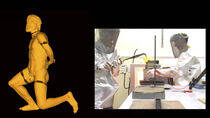 Open viewer
Video 12
Open viewer
Video 12
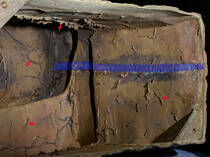 Open viewer
Figure 59
Open viewer
Figure 59
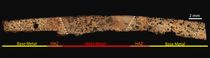 Open viewer
Figure 146
Open viewer
Figure 146
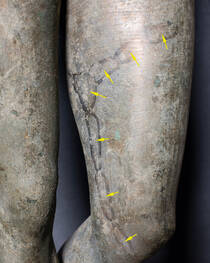 Open viewer
Figure 185
Open viewer
Figure 185
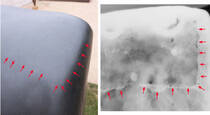 Open viewer
Figure 189
Open viewer
Figure 189
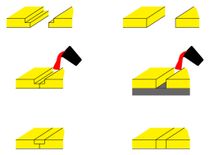 Open viewer
Figure 202
Open viewer
Figure 202
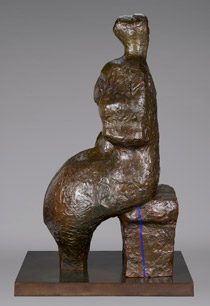 Open viewer
Figure 203
Open viewer
Figure 203
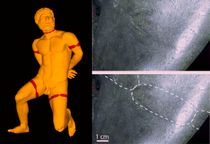 Open viewer
Figure 204
Open viewer
Figure 204
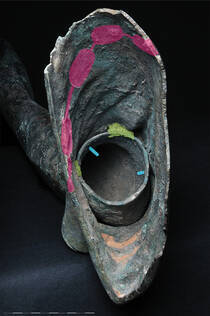 Open viewer
Figure 227
Open viewer
Figure 227
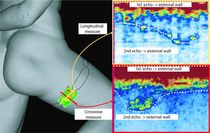 Open viewer
Figure 230
Open viewer
Figure 230
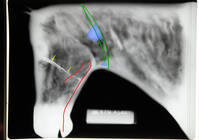 Open viewer
Figure 545
Open viewer
Figure 545
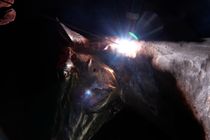 Open viewer
Figure 548
Open viewer
Figure 548
Sources
Cultural Heritage: Salter, C. J., and B. J. J. Gilmour. n.d. “Glossary of Terms Used in the Study of Ancient Metal-Working and Associated Processes.” Materials Science-Based Archaeology Group, Department of Materials, University of Oxford.; Beale, Arthur. 1975. “A Technical View of Nineteenth-Century Sculpture.” In Metamorphoses in Nineteenth-Century Sculpture, 28–55. Cambridge, MA: Harvard University Press., 28–55
Copper Industry: Brunhuber, Ernst. 1988. Gießerei-Fachwörterbuch = Foundry Dictionary. 4th ed. Berlin: Schiele & Schön.
Art and Craft Textbooks: Rome, Richard, and Hamish Young. 2003. Fine Art Metal Casting: An Illustrated Guide to Mould Making and Lost Wax Processes. London: Robert Hale., 312; Untracht, Oppi. 1982. Jewelry: Concepts and Technology. London: Robert Hale.
To Be Distinguished From
Translations
French:
soudage
Technique d’assemblage de deux éléments métalliques coulés séparément, entraînant le développement, entre les deux éléments, d’une microstructure commune – on parle de solution de continuité, contrairement au qui s’apparente à du collage. Le résultat est similaire à celui observé lors du soudage de deux parties d’os après fracture.
Note: L’assemblage peut se faire sans apport de métal, par soudure dite autogène (Bader, O., and M. Théret. 1961. Dictionnaire de métallurgie. Paris: Eyrolles., par exemple au moyen d’un arc électrique ou d’un TIG). L’assemblage peut aussi se faire par apport d’un métal de composition proche de celui des parties à assembler. Pour la sculpture en bronze et en particulier les grands bronzes antiques, on parle de soudage par fusion au bronze liquide (Azéma, Aurélia, and Benoît Mille. 2013b. “Un point sur la technique de fabrication des grands bronzes antiques.” L’actualité chimique 377:43–44.). Dans l’industrie moderne, le soudage des métaux peut se faire à l’état solide, sans fusion, par exemple par soudage par diffusion, cf. Murry, Guy. 1994. “Soudage et soudabilité métallurgique des métaux.” Techniques de l’ingénieur MC2, no. M715: 1–35..
Sources
Copper Industry: Brunhuber, Ernst. 1988. Gießerei-Fachwörterbuch = Foundry Dictionary. 4th ed. Berlin: Schiele & Schön.; Murry, Guy. 1994. “Soudage et soudabilité métallurgique des métaux.” Techniques de l’ingénieur MC2, no. M715: 1–35.
German:
Schweißen
Source
Deutsches Kupferinstitut. 2005. Trennen und Verbinden von Kupfer und Kupferlegierungen. Informationsdruck i.16. Düsseldorf: Deutsches Kupferinstitut. https://www.kupferinstitut.de/fileadmin/user_upload/kupferinstitut.de/de/Documents/Shop/Verlag/Downloads/Verarbeitung/i016.pdf., 18
Italian:
saldatura
Often specified by a fusione or per fusione
Sources
Treccani; Battaglia, S. 1961. Grande dizionario della lingua italiana. Edited by Giorgio Bárberi Squarotti. Turin, Italy: Unione tipografico-editrice torinese. http://www.gdli.it/., under saldatura [vol. 16, 387]; Bruni, Francesco. 1994. La fusione artistica a cera persa. Venezia-Marghera: Edizioni Arte., 122–23; Brunhuber, Ernst. 1988. Gießerei-Fachwörterbuch = Foundry Dictionary. 4th ed. Berlin: Schiele & Schön.
Alternate Translation
-
saldatura metallurgica per colata
Term also used for brazing, and (in antiquity) for flow fusion welding
Sources: Formigli, Edilberto. 2010. “La storia della tecnologia dei grandi bronzi.” In La lupa capitolina: Nuove prospettive di studio: Incontro-dibattito in occasione della pubblicazione del volume di Anna Maria Carruba, La lupa capitolina: Un bronzo medievale: Sapienza, Università di Roma, Roma 28 febbraio 2008, edited by Gilda Bartoloni, 15–24. Supplementi e monografie della rivista Archeologia classica 5. Roma: L’Erma di Bretschneider., 20
Chinese: 熔焊
Sources
Ming Juxin | 明举新. 2001. 汉英冶金工业词典 = Han ying yejin gongye cidian = A Comprehensive Chinese-English Dictionary of Metallurgical Industry. 3rd ed. 长沙市: 中南大学出版社 = Changsha shi: Zhongnan daxue chuban she [Zhong Nan University Press]., 1211; TNATD