See figs. 293, 306, 307, 308, 309, 313, 314, 323, 326, 328, 332, 338, 500.
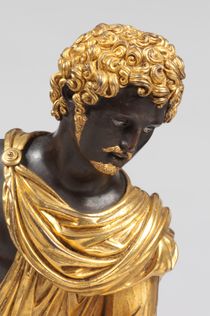
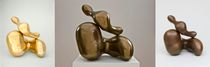
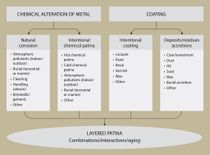
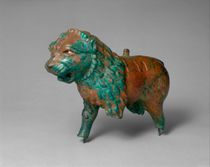
The term has at least three different meanings: 1) a pleasing surface alteration acquired over time—whether on a or marble sculpture, furniture, or a painting—that may add aesthetic value; 2) the chemical transformation of a metal surface; to a mineral layer (sometimes referred to as chemical patina, see ) that usually has a different color from and reduces the bright metallic reflectance of the polished original surface; or 3) (as opposed to chemically induced patinas) organic such as resin, lacquer, oil, wax, or synthetic resins applied to the surface of metals that can change the color, texture, saturation, and/or reflectance.
Note: Some researchers do not consider applied organic coatings part of the patina layer.
 Open viewer
Figure 293
Open viewer
Figure 293
 Open viewer
Figure 306
Open viewer
Figure 306
 Open viewer
Figure 307
Open viewer
Figure 307
 Open viewer
Figure 308
Open viewer
Figure 308
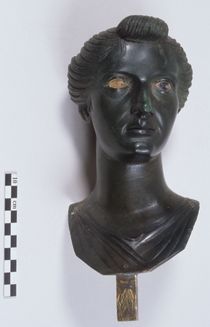 Open viewer
Figure 309
Open viewer
Figure 309
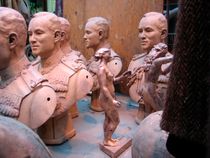 Open viewer
Figure 313
Open viewer
Figure 313
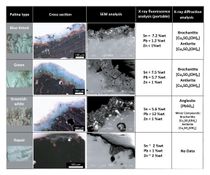 Open viewer
Figure 314
Open viewer
Figure 314
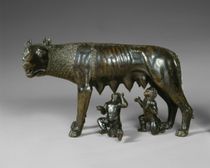 Open viewer
Figure 323
Open viewer
Figure 323
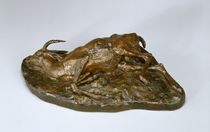 Open viewer
Figure 326
Open viewer
Figure 326
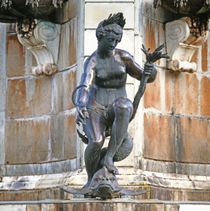 Open viewer
Figure 328
Open viewer
Figure 328
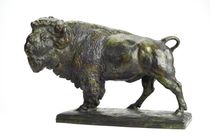 Open viewer
Figure 332
Open viewer
Figure 332
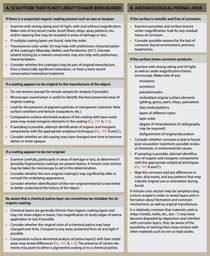 Open viewer
Figure 338
Open viewer
Figure 338
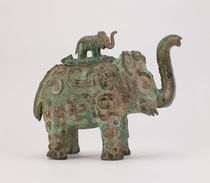 Open viewer
Figure 500
Open viewer
Figure 500
Sources
Cultural Heritage: Weil, Phoebe Dent. 1996. “A Review of the History and Practice of Patination.” In Historical and Philosophical Issues in the Conservation of Cultural Heritage, edited by Nicholas Stanley-Price, Mansfield Kirby Talley, and Alessandra Melucco Vaccaro, 394–414. Readings in Conservation. Los Angeles: Getty Conservation Institute., 394–414; Ward, Gerald W. R. 2008. The Grove Encyclopedia of Materials and Techniques in Art. Oxford and New York: Oxford University Press.
Historical: Hiorns, Arthur H. 1907. Metal-Colouring and Bronzing. London and New York: Macmillan., 62–63; Littre, M. P. Emile. 1873. Dictionnaire de la langue Francaise. n.p.: n.p.
Copper Industry: Brunhuber, Ernst. 1988. Gießerei-Fachwörterbuch = Foundry Dictionary. 4th ed. Berlin: Schiele & Schön.; Association Technique de Fonderie, Commission Ingénieurs et Techniciens. 1979. Dictionnaire idéologique de fonderie / Indexed Foundry Dictionary / Systematisches Giessereiwörterbuch. Meudon: Techniques des industries de la Fonderie.
Art and Craft Textbook: Fishlock, David. 1962. Metal Colouring. Teddington, UK: Robert Draper.
Translations
French:
patine
Le terme patine recouvre plusieurs sens. 1) Désigne la belle surface aussi bien d’un bronze, d’un marbre que d’un meuble en bois, colorée par le temps. 2) Désigne, pour un bronze, les couches non métalliques de surface issues de la transformation chimique du métal par l’action de l’homme et/ou du temps () (Baudry, Marie Thérèse, and Dominique Bozo. 1978. La sculpture: Méthode et vocabulaire. Principes d’analyse scientifique. Paris: Impr. nationale., 634; Bewer, Francesca G., David Bourgarit, and Jane Bassett. 2008. “Les bronzes français (XVIe–XVIIIe siècle): Notes techniques.” In Bronzes français de la Renaissance au Siècle des lumières, edited by Geneviève Bresc-Bautier and Guilhem Scherf, 28–41. Paris: Musée du Louvre, Somogy.; Azéma, Aurélia, and Benoît Mille. 2013b. “Un point sur la technique de fabrication des grands bronzes antiques.” L’actualité chimique 377:43–44.; Lebon, Elisabeth, Cecile Godefroy, Virginie Perdrisiot, and Diana Widmaier Picasso. 2016. “Glossaire.” In Picasso: Sculptures. Paris: Musée national Picasso, Somogy; Brussels: Palais des beaux-arts Bruxelles., 331; Robbiola, Luc. 2015. “Les patines naturelles des bronzes – quelques développements majeurs.” In La conservation-restauration des métaux archéologiques: Des premiers soins à la conservation durable, edited by S. Clerbois, C. Cappucci, J. Moulin, L. Nonne, S. Piermarini, and M.-H. Schumacher, 45–50. Les Dossiers de l’Institut Du Patrimoine Wallon (IPW) 15. Namur, Belgium: IPW Institut du Patrimoine wallon.; Association Technique de Fonderie, Commission Ingénieurs et Techniciens. 1979. Dictionnaire idéologique de fonderie / Indexed Foundry Dictionary / Systematisches Giessereiwörterbuch. Meudon: Techniques des industries de la Fonderie.). 3) Peut parfois désigner (surtout en anglais), en sus des couches transformées, toute couche de surface présente sur un bronze (vernis, etc.) (Aucouturier, Marc, Michel Keddam, Luc Robbiola, and Hisasi Takenouti. 2003. “Les patines des alliages de cuivre: Processus naturel ou œuvre de l’homme?.” Techné 18:86–94.).
Note: La signification de ce terme est très débattue.
Sources
Cultural Heritage: Aucouturier, Marc. 2007. “Patinage et patines.” Techniques de l’ingénieur.; Baudry, Marie Thérèse, and Dominique Bozo. 1978. La sculpture: Méthode et vocabulaire. Principes d’analyse scientifique. Paris: Impr. nationale., 634; Robbiola, Luc. 2015. “Les patines naturelles des bronzes – quelques développements majeurs.” In La conservation-restauration des métaux archéologiques: Des premiers soins à la conservation durable, edited by S. Clerbois, C. Cappucci, J. Moulin, L. Nonne, S. Piermarini, and M.-H. Schumacher, 45–50. Les Dossiers de l’Institut Du Patrimoine Wallon (IPW) 15. Namur, Belgium: IPW Institut du Patrimoine wallon.; Aucouturier, Marc, Michel Keddam, Luc Robbiola, and Hisasi Takenouti. 2003. “Les patines des alliages de cuivre: Processus naturel ou œuvre de l’homme?.” Techné 18:86–94.; Bewer, Francesca G., David Bourgarit, and Jane Bassett. 2008. “Les bronzes français (XVIe–XVIIIe siècle): Notes techniques.” In Bronzes français de la Renaissance au Siècle des lumières, edited by Geneviève Bresc-Bautier and Guilhem Scherf, 28–41. Paris: Musée du Louvre, Somogy.; Lebon, Elisabeth, Cecile Godefroy, Virginie Perdrisiot, and Diana Widmaier Picasso. 2016. “Glossaire.” In Picasso: Sculptures. Paris: Musée national Picasso, Somogy; Brussels: Palais des beaux-arts Bruxelles., 331; Azéma, Aurélia, and Benoît Mille. 2013b. “Un point sur la technique de fabrication des grands bronzes antiques.” L’actualité chimique 377:43–44.
Copper Industry: Brunhuber, Ernst. 1988. Gießerei-Fachwörterbuch = Foundry Dictionary. 4th ed. Berlin: Schiele & Schön.; Association Technique de Fonderie, Commission Ingénieurs et Techniciens. 1979. Dictionnaire idéologique de fonderie / Indexed Foundry Dictionary / Systematisches Giessereiwörterbuch. Meudon: Techniques des industries de la Fonderie.
Historical: Diderot, Denis, Jean le Rond d’Alembert et al. 1751. Encyclopédie; ou Dictionnaire raisonné des sciences, des arts et des métiers. 17 vols. Paris: Briasson. http://enccre.academie-sciences.fr/encyclopedie/., 12:173, entry « patine »
Art and Craft Textbook: Lambert, Daniel. 2002. Moulage et fonderie d’art: Du modèle au bronze final. Dourdan, France: Vial., 273; Rama, Jean-Pierre. 1988. Le bronze d’art et ses techniques. Dourdan, France: Editions H. Vial., 374
Alternate Translation
-
couleur
Source: Historical: Félibien, André. 1690. Des principes de l’architecture, de la sculpture, de la peinture et des autres arts qui en dépendent: Avec un dictionnaire des termes propres à chacun de ces arts. 2nd ed. Paris: Chez la veuve de Jean Baptiste Coignard et Chez Jean Baptiste Coignard fils. https://archive.org/details/principesdelarch00fl., 334
German:
Patina
Source
Association Technique de Fonderie, Commission Ingénieurs et Techniciens. 1979. Dictionnaire idéologique de fonderie / Indexed Foundry Dictionary / Systematisches Giessereiwörterbuch. Meudon: Techniques des industries de la Fonderie.
Italian:
patina
Sources
Giuffredi, Augusto. 2006. Manuale delle techniche di formatura e fonderia. Florence: Alinea., 144, 220; “Treccani - La Cultura Italiana - Enciclopedia.” n.d. Accessed April 4, 2023. https://www.treccani.it/enciclopedia/., under patina; Battaglia, S. 1961. Grande dizionario della lingua italiana. Edited by Giorgio Bárberi Squarotti. Turin, Italy: Unione tipografico-editrice torinese. http://www.gdli.it/., under patina [vol. 12, 822]; Bruni, Francesco. 1994. La fusione artistica a cera persa. Venezia-Marghera: Edizioni Arte., 126–28; Brunhuber, Ernst. 1988. Gießerei-Fachwörterbuch = Foundry Dictionary. 4th ed. Berlin: Schiele & Schön.
Chinese: 古色
This term is more commonly used in art historical references and means “an aged surface accumulated over time.”
Alternate Translations
-
铜绿
There is no general term in Chinese for patina as defined here; this term can be translated as “green corrosion on copper” and is used specifically for ancient works.
Source: TNATD
-
铜锈
There is no general term in Chinese for patina as defined here; this term can be translated as “corrosion on copper” and is used specifically for ancient works.
Source: TNATD
-
陈年色泽
More commonly used in art historical references, meaning “an aged surface accumulated over time”
Source: TNATD