See figs. 310, 311, 312, 314, 315, 318, 334, 348, 500.
A chemical process that causes a metal such as to change from a metallic state into a chemically more stable mineral compound known as a corrosion product.
Note: Most metals undergo natural corrosion, except for pure so-called noble metals such as gold and platinum-group metals. A chemical patina refers to corrosion of the surface by either natural causes (e.g., burial) or the intentional application of chemicals. The minerals formed during the process may be similar to ones from which the metal was smelted or refined prior to manufacture. Sometimes artificially induced chemical patinas intentionally mimic natural corrosion products.
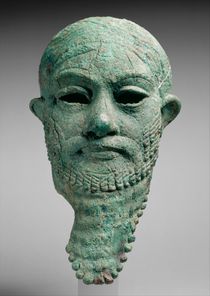 Open viewer
Figure 310
Open viewer
Figure 310
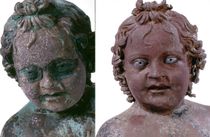 Open viewer
Figure 311
Open viewer
Figure 311
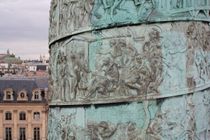 Open viewer
Figure 312
Open viewer
Figure 312
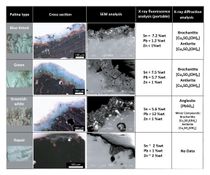 Open viewer
Figure 314
Open viewer
Figure 314
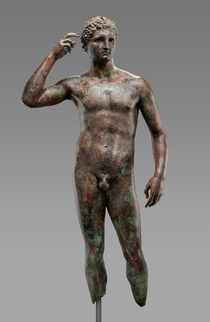 Open viewer
Figure 315
Open viewer
Figure 315
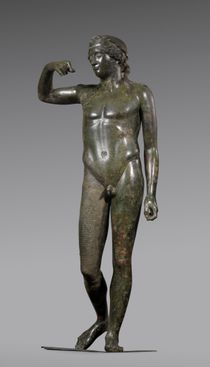 Open viewer
Figure 318
Open viewer
Figure 318
 Open viewer
Figure 334
Open viewer
Figure 334
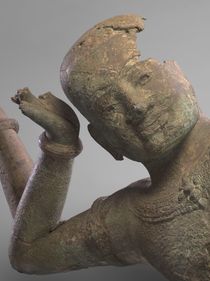 Open viewer
Figure 348
Open viewer
Figure 348
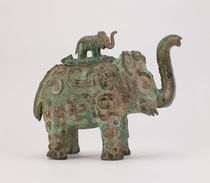 Open viewer
Figure 500
Open viewer
Figure 500
Sources
Cultural Heritage: Gettens, Rutherford J. 1970. “Patina: Noble and Vile.” In Art and Technology: A Symposium on Classical Bronzes, edited by Suzannah Doeringer, David Gordon Mitten, and Arthur Steinberg, 57–68. Cambridge, MA: MIT Press.; Scott, David A. 2002. Copper and Bronze in Art: Corrosion, Colorants, Conservation. Los Angeles: Getty Publications.; Chase, W. Thomas 1994. “Chinese Bronzes: Casting, Finishing, Patination, and Corrosion.” In Ancient and Historic Metals: Conservation and Scientific Research, edited by David A. Scott, Jerry Podany, and Brian B. Considine, 85–117. Los Angeles: Getty Conservation Institute. https://www.getty.edu/publications/virtuallibrary/0892362316.html.; Selwyn, Lyndsie, and Canadian Conservation Institute. 2004. Metals and Corrosion: A Handbook for the Conservation Professional. Ottawa: Canadian Conservation Institute.
General Dictionary: https://www.merriam-webster.com/dictionary/corrosion
Other: Scott, David A. 1991. Metallography and Microstructure of Ancient and Historic Metals. Marina del Rey, CA: Getty Conservation Institute in association with Archetype Books., 43–47, 81
Translations
French:
corrosion
Pour un bronze, transformation chimique du métal en un composé non métallique sous l’action d’un environnement particulier. Désigne aussi le produit résultant.
Sources
Cultural Heritage: Baudry, Marie Thérèse, and Dominique Bozo. 1978. La sculpture: Méthode et vocabulaire. Principes d’analyse scientifique. Paris: Impr. nationale., 648; Aucouturier, Marc, Michel Keddam, Luc Robbiola, and Hisasi Takenouti. 2003. “Les patines des alliages de cuivre: Processus naturel ou œuvre de l’homme?.” Techné 18:86–94.; Robbiola, Luc. 2015. “Les patines naturelles des bronzes – quelques développements majeurs.” In La conservation-restauration des métaux archéologiques: Des premiers soins à la conservation durable, edited by S. Clerbois, C. Cappucci, J. Moulin, L. Nonne, S. Piermarini, and M.-H. Schumacher, 45–50. Les Dossiers de l’Institut Du Patrimoine Wallon (IPW) 15. Namur, Belgium: IPW Institut du Patrimoine wallon.
Art and Craft Textbook: Rama, Jean-Pierre. 1988. Le bronze d’art et ses techniques. Dourdan, France: Editions H. Vial., 372
German:
Korrosion
Source
Fachkunde Metall: Bovenkerk, Konrad, Herwig Braun, and Rolf Dörflinger. 1987. Fachkunde Metall. 48. Europa-Fachbuchreihe für Metallberufe. Wuppertal: Europa Lehrmittel., 128
Italian:
corrosione
Sources
“Treccani - La Cultura Italiana - Enciclopedia.” n.d. Accessed April 4, 2023. https://www.treccani.it/enciclopedia/., under corrosione; Battaglia, S. 1961. Grande dizionario della lingua italiana. Edited by Giorgio Bárberi Squarotti. Turin, Italy: Unione tipografico-editrice torinese. http://www.gdli.it/., under corrosione [definition 2, vol. 3, 845]
Chinese: 腐蚀
Sources
Ming Juxin | 明举新. 2001. 汉英冶金工业词典 = Han ying yejin gongye cidian = A Comprehensive Chinese-English Dictionary of Metallurgical Industry. 3rd ed. 长沙市: 中南大学出版社 = Changsha shi: Zhongnan daxue chuban she [Zhong Nan University Press]., 452; TNATD
Alternate Translation
-
锈蚀
Sources: Ming Juxin | 明举新. 2001. 汉英冶金工业词典 = Han ying yejin gongye cidian = A Comprehensive Chinese-English Dictionary of Metallurgical Industry. 3rd ed. 长沙市: 中南大学出版社 = Changsha shi: Zhongnan daxue chuban she [Zhong Nan University Press]., 1586; TNATD