See figs. 8, 10, 57, 61, 69, 112, 428, 431, 473, 475.
The portion of the that defines the internal space in a hollow sculpture. It may be formed in a variety of ways and is usually (but not always) made of similar material as that used for the outer portion of the mold. The term is also used as shorthand to refer to the material it is made of. A core is generally solid but may be hollow (see GI§2.1.1).
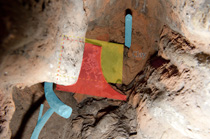 Open viewer
Figure 8
Open viewer
Figure 8
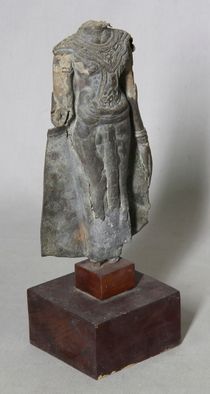 Open viewer
Figure 10
Open viewer
Figure 10
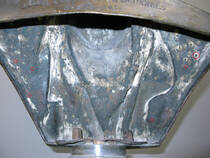 Open viewer
Figure 57
Open viewer
Figure 57
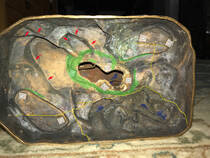 Open viewer
Figure 61
Open viewer
Figure 61
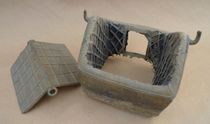 Open viewer
Figure 69
Open viewer
Figure 69
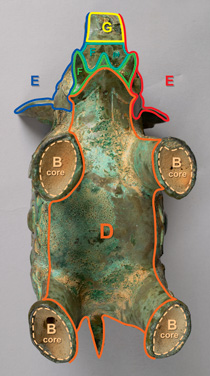 Open viewer
Figure 112
Open viewer
Figure 112
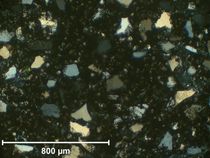 Open viewer
Figure 428
Open viewer
Figure 428
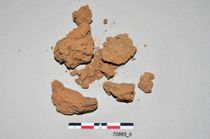 Open viewer
Figure 431
Open viewer
Figure 431
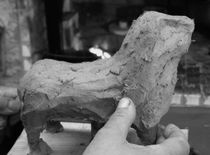 Open viewer
Figure 473
Open viewer
Figure 473
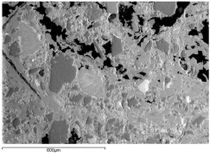 Open viewer
Figure 475
Open viewer
Figure 475
Sources
Cultural Heritage: Bassett, Jane, and Peggy Fogelman. 1997. Looking at European Sculpture: A Guide to Technical Terms. Los Angeles: J. Paul Getty Museum in collaboration with the Victoria and Albert Museum.
Historical Source: Bolland, Simpson. 1894. The Encyclopedia of Founding and Dictionary of Foundry Terms Used in the Practice of Moulding. New York: Wiley.
Copper Industry: Brunhuber, Ernst. 1988. Gießerei-Fachwörterbuch = Foundry Dictionary. 4th ed. Berlin: Schiele & Schön.; Association Technique de Fonderie, Commission Ingénieurs et Techniciens. 1979. Dictionnaire idéologique de fonderie / Indexed Foundry Dictionary / Systematisches Giessereiwörterbuch. Meudon: Techniques des industries de la Fonderie.; Palmer, R. H. 1929. Foundry Practice: A Text Book for Executives, Molders, Students and Apprentices. 4th ed. New York: John Wiley & Sons. http://archive.org/details/foundrypracticet00palm.
Art and Craft Textbook: Rome, Richard, and Hamish Young. 2003. Fine Art Metal Casting: An Illustrated Guide to Mould Making and Lost Wax Processes. London: Robert Hale.
General Dictionary: https://www.merriam-webster.com/dictionary/core [definition 1e]
Translations
French:
noyau
Partie interne du déterminant le volume interne d’une fonte creuse. Le noyau est souvent (mais pas systématiquement) réalisé dans le même matériau que la partie externe du moule réfractaire (la chape). Le noyau peut-être plein ou creux.
Sources
Cultural Heritage: Rolley, Claude. 1994. La sculpture grecque. Vol. 1, Des origines au milieu du Ve siècle. Les manuels d’art et d’archéologie antiques. Paris: Picard., 70; Baudry, Marie Thérèse, and Dominique Bozo. 1978. La sculpture: Méthode et vocabulaire. Principes d’analyse scientifique. Paris: Impr. nationale., 625; Bewer, Francesca G., David Bourgarit, and Jane Bassett. 2008. “Les bronzes français (XVIe–XVIIIe siècle): Notes techniques.” In Bronzes français de la Renaissance au Siècle des lumières, edited by Geneviève Bresc-Bautier and Guilhem Scherf, 28–41. Paris: Musée du Louvre, Somogy.; Azéma, Aurélia, and Benoît Mille. 2013b. “Un point sur la technique de fabrication des grands bronzes antiques.” L’actualité chimique 377:43–44.; Lebon, Elisabeth. 2012. Le Fondeur et le sculpteur: Technique du bronze et histoire de l’art. Paris: Publications de l’Institut national d’histoire de l’art., Glossaire: http://journals.openedition.org/inha/3448
Copper Industry: Cuénin, Pierre. 1994. “Moulage – noyautage.” Techniques de l’ingénieur fonderies et moulages: aspects généraux TIB352DUO (m3512). https://www.techniques-ingenieur.fr/base-documentaire/materiaux-th11/fonderies-et-moulages-aspects-generaux-42352210/moulage-noyautage-m3512/., 5; Koch, Zbigniew J., and W. C. Newell, eds. 1963. Vocabulary of Foundry Practice, In Six Languages: English, Czech, German, French, Polish, Russian. Oxford; New York: Pergamon Press.; Association Technique de Fonderie, Commission Ingénieurs et Techniciens. 1979. Dictionnaire idéologique de fonderie / Indexed Foundry Dictionary / Systematisches Giessereiwörterbuch. Meudon: Techniques des industries de la Fonderie.; Brunhuber, Ernst. 1988. Gießerei-Fachwörterbuch = Foundry Dictionary. 4th ed. Berlin: Schiele & Schön.
Historical: Mariette, Pierre-Jean. 1768. Description des travaux qui ont précédé, accompagné et suivi la fonte en bronze d’un seul jet de la statue équestre de Louis XV, le Bien-Aimé, dressée sur les mémoires de M. Lempereur. Paris: Imprimerie de P. G. Le Mercier. https://archive.org/details/gri_33125010908289/mode/2up., 61–64; Félibien, André. 1690. Des principes de l’architecture, de la sculpture, de la peinture et des autres arts qui en dépendent: Avec un dictionnaire des termes propres à chacun de ces arts. 2nd ed. Paris: Chez la veuve de Jean Baptiste Coignard et Chez Jean Baptiste Coignard fils. https://archive.org/details/principesdelarch00fl., 324; Launay, Jean-Baptiste. 1827. Manuel Du Fondeur Sur Tous Métaux. Vol. 1. 2 vols. Paris: Roret. https://gallica.bnf.fr/ark:/12148/bpt6k62000p., 2:277; Guettier, André. 1858. De la fonderie telle qu’elle existe aujourd’hui en France et de ses nombreuses applications à l’industrie. Paris: Chez Carilian-Cœury et Dalmont; Angers, France: Chez Cosnier et Lachèse; Metz, France: Chez Mme Thiel. https://books.google.fr/books?id=FmEUAAAAQAAJ., notice 605, pp. 311–12; Boffrand, Germain. 1743. Description de ce qui a été pratiqué pour fondre en bronze d’un seul jet la figure équestre de Louis XIV, élevée par la ville de Paris dans la place de Louis le Grand, en 1699. Paris: Guillaume Cavelier. https://archive.org/details/gri_33125010863229/page/n3., 27 et sq; Diderot, Denis, Jean le Rond d’Alembert et al. 1751. Encyclopédie; ou Dictionnaire raisonné des sciences, des arts et des métiers. 17 vols. Paris: Briasson. http://enccre.academie-sciences.fr/encyclopedie/., 11:268, entries « noyau terme de fonderie » et « noyau terme d’artillerie »
Art and Craft Textbooks: Lambert, Daniel. 2002. Moulage et fonderie d’art: Du modèle au bronze final. Dourdan, France: Vial., 272; Rama, Jean-Pierre. 1988. Le bronze d’art et ses techniques. Dourdan, France: Editions H. Vial., 374
Alternate Translations
-
âme
Sources: Historical: Félibien, André. 1690. Des principes de l’architecture, de la sculpture, de la peinture et des autres arts qui en dépendent: Avec un dictionnaire des termes propres à chacun de ces arts. 2nd ed. Paris: Chez la veuve de Jean Baptiste Coignard et Chez Jean Baptiste Coignard fils. https://archive.org/details/principesdelarch00fl., 325; Boffrand, Germain. 1743. Description de ce qui a été pratiqué pour fondre en bronze d’un seul jet la figure équestre de Louis XIV, élevée par la ville de Paris dans la place de Louis le Grand, en 1699. Paris: Guillaume Cavelier. https://archive.org/details/gri_33125010863229/page/n3., 27 et sq; Diderot, Denis, Jean le Rond d’Alembert et al. 1751. Encyclopédie; ou Dictionnaire raisonné des sciences, des arts et des métiers. 17 vols. Paris: Briasson. http://enccre.academie-sciences.fr/encyclopedie/., 11:268, entries « noyau terme de fonderie » et « noyau terme d’artillerie »
German:
Kern
Source
Brunhuber, Ernst. 1988. Gießerei-Fachwörterbuch = Foundry Dictionary. 4th ed. Berlin: Schiele & Schön.
Italian:
anima
Sources
“Treccani - La Cultura Italiana - Enciclopedia.” n.d. Accessed April 4, 2023. https://www.treccani.it/enciclopedia/., under anima [definition 4]; Battaglia, S. 1961. Grande dizionario della lingua italiana. Edited by Giorgio Bárberi Squarotti. Turin, Italy: Unione tipografico-editrice torinese. http://www.gdli.it/., under anima [definition 16, vol. 1, 480]; Giuffredi, Augusto. 2006. Manuale delle techniche di formatura e fonderia. Florence: Alinea., 219; Biringuccio, Vannoccio. (1540) 1977. De la pirotechnia. Edited by Adriano Carugo. Milano: Edizioni Il Polifilo., fols. 77–78; Bruni, Francesco. 1994. La fusione artistica a cera persa. Venezia-Marghera: Edizioni Arte., 81–82; Brunhuber, Ernst. 1988. Gießerei-Fachwörterbuch = Foundry Dictionary. 4th ed. Berlin: Schiele & Schön.
Alternate Translations
-
anima di fusione
Source: Bruni, Francesco. 1994. La fusione artistica a cera persa. Venezia-Marghera: Edizioni Arte., 81–82
-
maschio
Early Italian term for core that literally translates as “male.”
Sources: Leonardo da Vinci. 1490. The Madrid Codices. Translated by L. Reti. New York: McGraw-Hill., fols. 156, 157v; Biringuccio, Vannoccio. (1540) 1977. De la pirotechnia. Edited by Adriano Carugo. Milano: Edizioni Il Polifilo., fols. 77v, 84
-
nocciolo
Early Italian term for core that means “nut.”
Source: Cellini, Benvenuto. (1568) 1983. Due Trattati: Uno Intorno Alle Otto Principali Arti Dell’oreficeria: L’altro in Materia Dell’arte Della Scultura, Dove Si Veggono Infiniti Segreti Nel Lavorar Le Figure Di Marmo, & Nel Gettarle Di Bronzo. Edited by Antonio Altomonte. Modena: Edizioni Aldine., 11, fols. 48, 49
Chinese: 芯型
Source
Ming Juxin | 明举新. 2001. 汉英冶金工业词典 = Han ying yejin gongye cidian = A Comprehensive Chinese-English Dictionary of Metallurgical Industry. 3rd ed. 长沙市: 中南大学出版社 = Changsha shi: Zhongnan daxue chuban she [Zhong Nan University Press]., 1573
Alternate Translation
-
芯范
Source: Zhang Changping et al. | 张昌平. 2010. “二里冈文化至殷墟文化时期青铜器范型技术的发展 = Development of Clay Mold-Making Technology for Bronze Casting from Erligang Culture to Yinxu Culture.”考古 = Kaogu 8:79–86. Republished in English in Chinese Archaeology 11 (2011): 148–54., 82