DEFINITION
An identification of the type and number of works described.
SUBCATEGORIES
- 1.1. Catalog Level 🔺
- 1.2. Object/Work Type 🔺
- 1.3. Object/Work Type Date
- 1.4. Components/Parts
- 1.5. Remarks
- 1.6. Citations
- Examples
GENERAL DISCUSSION
This category identifies the logical focus of discussion. It describes what the work is and makes it possible to find works of a particular type and their components.
Works of art or architecture may be considered a single item, or they may be made up of many physical parts or arranged in separate physical groupings. It is necessary to define the particular work of art, architecture, or group of objects in question, whether it be a single painted canvas or an altarpiece made up of many panels, a monolithic sculpture or an installation, a single structure or a building composed of various parts that were constructed at significantly different times, a single drawing on one piece of paper or a volume of drawings such as an album or sketchbook, or an archival group comprising drawings, prints, computer diskettes, and photographs.
Catalog level
The level of specificity at which an art object, architecture,
or group of works is described will depend on the practice of
the individual institution. The level of cataloging
represented in the record should be recorded in
; this is particularly important when cataloging groups. When
both the whole and its parts are described separately, the
whole/part relationships should be recorded in
. The parts of a work or group may have hierarchical
relationships to the whole. In the example of a
sixteenth-century illuminated manuscript, the illumination of
Christ Led Before Pilate on folio 138 verso is part
of the whole
Prayer Book of Cardinal Albrecht of Brandenburg
[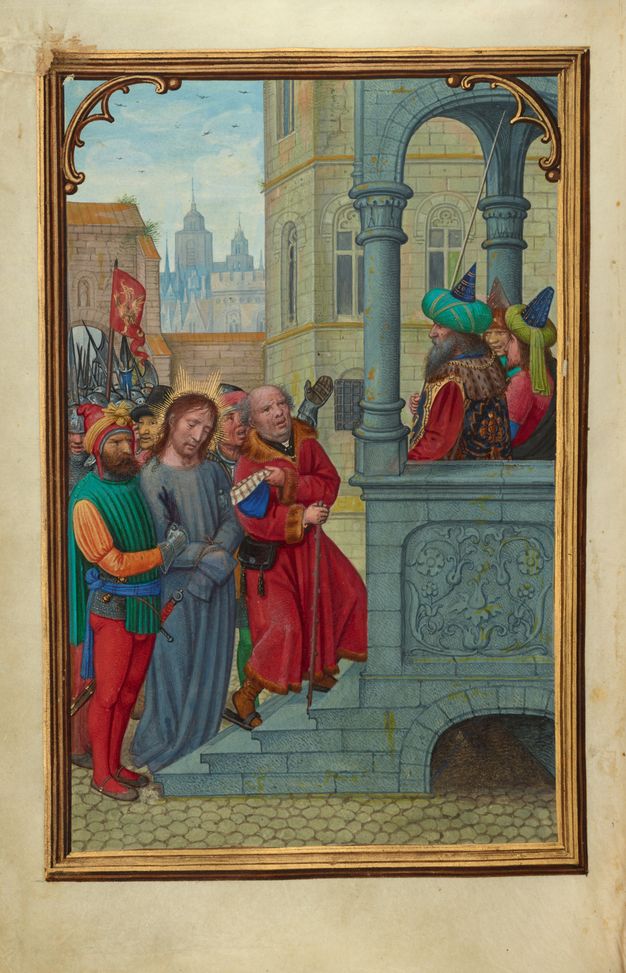 Figure 7a
Christ before Pilate, about 1525-1530;
artist: Simon Bening (Flemish
illuminator, ca. 1483 - 1561);
tempera colors, gold
paint, and gold leaf, Leaf: 16.8 × 11.4 cm (6 5/8 × 4 1/2
in.);
J. Paul Getty Museum (Los Angeles, CA), Ms.
Ludwig IX 19, fol. 138, 83.ML.115.138v.] [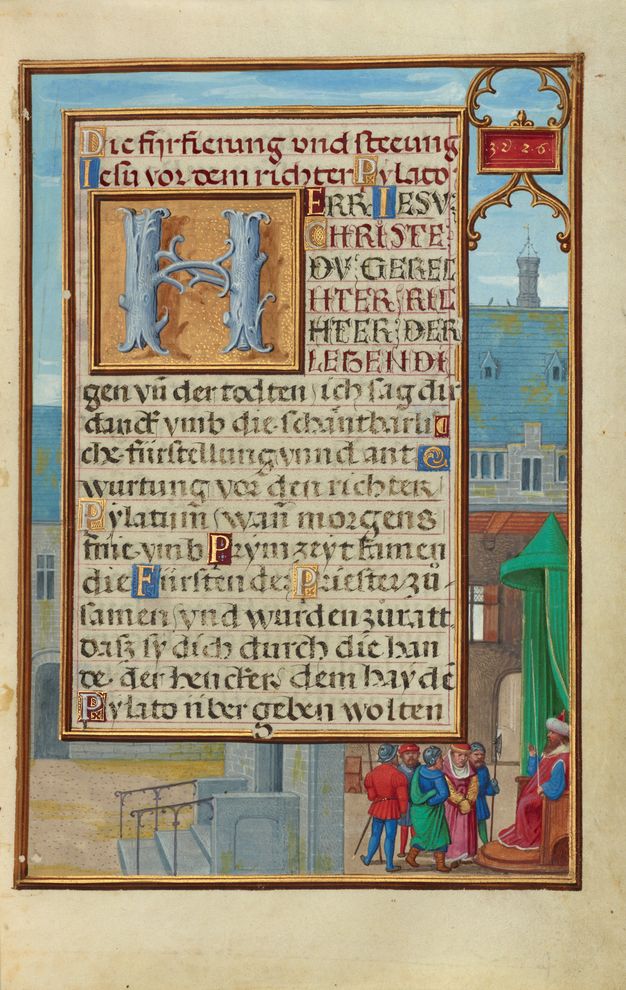 Figure 7b
Border with a Captured Prophet before a Prince or
King, about 1525-1530;
artist: Simon Bening (Flemish
illuminator, ca. 1483-1561);
tempera colors, gold
paint, and gold leaf, Leaf: 16.8 × 11.4 cm (6 5/8 × 4 1/2
in.);
J. Paul Getty Museum (Los Angeles, CA), Ms.
Ludwig IX 19, fol. 139, 83.ML.115.139.].
The whole/part designation of the work may be relative and changeable. When an altarpiece is held by one owner in its entirety, it will probably be described as a single object. If it has been dismantled and dispersed, the many parts of the same original work will now be recorded as separate works. Historical whole/part relationships should be recorded as ; examples include a disassembled sketchbook and its former folios, dispersed panels that once were part of the same altarpiece, or architectural spolia that were once part of another structure.
Facets
In a hierarchical database, it is recommended to include broad facet levels in order to structure the database at a high level. For an implementation of such a structure, see Cultural Objects Name Authority (CONA): 3.1 Hierarchical Relationships.
-
Built Works
Built works include structures or parts of structures that are the result of conscious construction, are of practical use, are relatively stable and permanent, and are of a size and scale appropriate for, but not limited to, habitable buildings. Models and miniature buildings are not built works (they are movable works). Most built works are manifestations of the built environment that are typically classified as fine art, meaning it is generally considered to have esthetic value, was designed by an architect (whether or not his or her name is known), and constructed with skilled labor. However, other structures that do not fall under this definition may also be included.
-
Movable Works
Movable works include the visual arts and other cultural works that are of the type collected by art museums and special collections, or by an ethnographic, anthropological, or other museum, or owned by a private collector. Examples include paintings, sculpture, prints, drawings, manuscripts, photographs, ceramics, textiles, furniture, and other visual media such as frescoes and architectural sculpture, performance art, archaeological artifacts, and various functional objects that are from the realm of material culture and of the type collected by museums. Are monumental works “movable works”? For stained glass windows, architectural sculptures, frescoes, freestanding monumental sculptures, furniture, and such other large works, the works should be cataloged as movable works, because their characteristics (types of artists, materials, designs, etc.) have more in common with movable works than with architecture; such works should be linked to the built work with which they are associated, if any.
-
Visual Surrogates
This facet could contain records for images and three-dimensional works intended to be surrogates for the works, for example study photographs. Visual surrogates are fully discussed in the category.
-
Conceptual Works
This facet contains records for series as a concept, conceptual records for multiples, records for a conceptual group as for an architectural competition, and other similar records. Physical works, such as prints that belong to a series, may be linked to the conceptual record for the series or other conceptual works.
-
Unidentified Named Works
This facet contains records for works described in archival inventories or other sources, but their identity is not established. While such a facet would be unnecessary for an individual repository’s collection management system, it would be a useful facet in a compiled database for research, such as CONA.
Record Type
In cataloging, it is useful to identify the type of record represented. Suggested Record Types include the following:
-
Movable Work: Movable work records should be found in the Movable Works facet or in the Unknown Named Works facet.
-
Built Work: Includes records for architectural works. Built works should be found in the Built Works facet or the Unknown Named Works facet.
-
Conceptual Work: Includes records for series, multiples, and other entities that are conceptual rather than physical. Conceptual works should be found in the Conceptual Works facet.
-
Visual Surrogate: Includes records for photographs, digital images, plaster casts, or other works intended only as a surrogate for the work, not as a work of art in themselves. Visual surrogate records should be found in the Visual Surrogates facet.
-
Guide Term: A Guide Term (also called a node label) is a level used to organize the hierarchy into logical segments.
-
Facet: A facet is a broad division of the hierarchy, generally appearing directly under the Root. In the CDWA model, currently the facets are Movable Works, Built Works, Conceptual Works, Visual Surrogates, and Unknown Named Works.
Components and parts
can record the quantity and component types of the parts of the work being cataloged, whether or not the parts are cataloged as separate works and linked as .
For example, it is useful to list the components of an
eighteenth-century porcelain lidded bowl [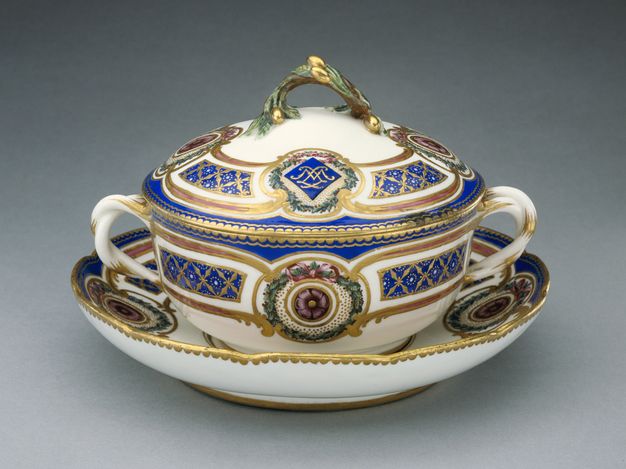 Figure 1
Lidded Bowl on Dish, 1794;
artist: painted by Pierre-Antoine Méraud (French porcelain
painter and gilder, ca. 1735-1791);
soft-paste porcelain, colored enamel decoration, gilding,
12.7 x 19.7 x 21.1 cm;
The Metropolitan Museum of Art (New York, New York),
78.DE.65 © The Metropolitan Museum of Art. All Rights
Reserved.], the panels of an Italian Renaissance altarpiece [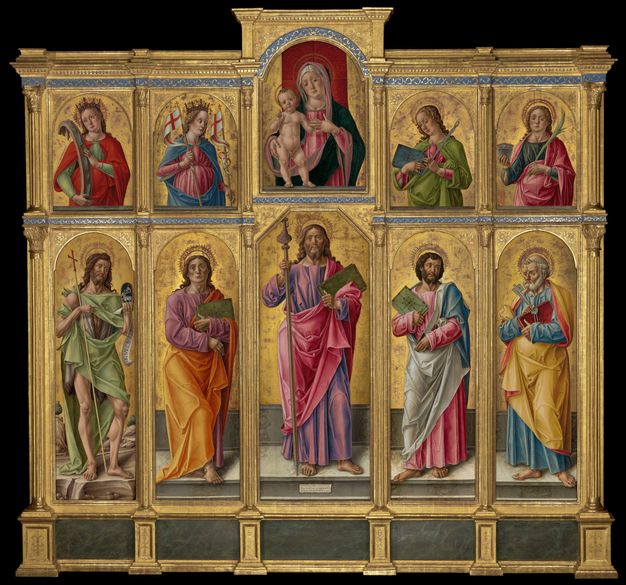 Figure 2
Polyptych with St. James Major, Madonna and Child, and
Various Saints
(altarpiece), 1490;
artist: Bartolomeo Vivarini
(Italian painter and draftsman, active from ca. 1440, died
after 1500);
tempera on panel, 280 x 215 cm;
J. Paul Getty Museum (Los Angeles, California),
71.PB.30.], or note that a sheet of paper contains drawings on both
the recto and the verso [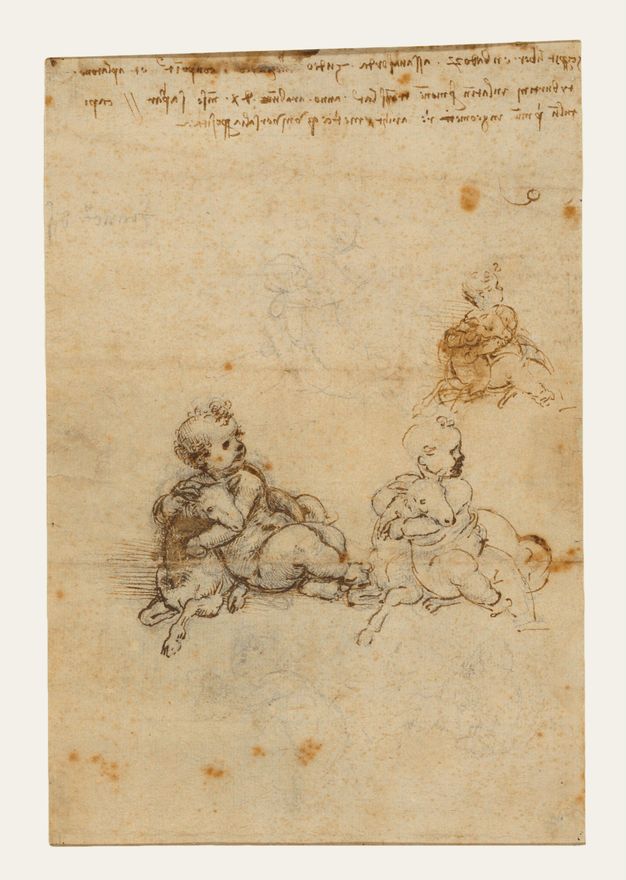 Figure 30a
Studies for the Christ Child with a Lamb
(recto);
Head of an Old Man, and Studies of Machinery
(verso), about 1503-1506;
artist: Leonardo da Vinci
(Italian painter, draftsman, scientist, 1452-1519);
black chalk, pen and brown ink, Unframed: 21 × 14.1
cm (8 1/4 × 5 9/16 in.);
J. Paul Getty Museum (Los
Angeles, California), 86.GG.725 © The J. Paul Getty
Trust. All Rights Reserved.] [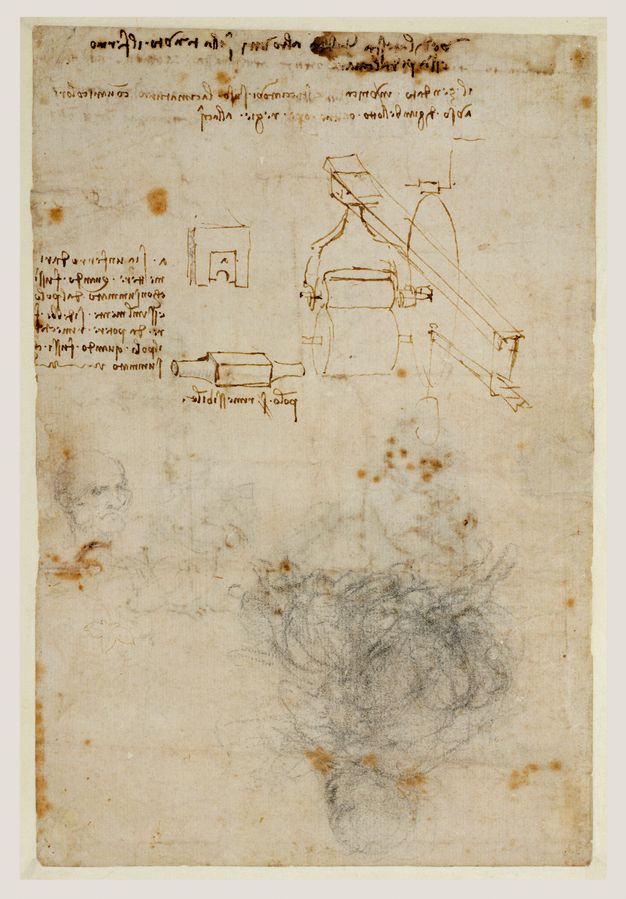 Figure 30b
Studies for the Christ Child with a Lamb
(recto);
Head of an Old Man, and Studies of Machinery
(verso), about 1503-1506;
artist: Leonardo da Vinci
(Italian painter, draftsman, scientist, 1452-1519);
black chalk, pen and brown ink, Unframed: 21 × 14.1
cm (8 1/4 × 5 9/16 in.);
J. Paul Getty Museum (Los
Angeles, California), 86.GG.725 © The J. Paul Getty
Trust. All Rights Reserved.]. See also the
subcategory.
If a work is made up of many components, the components may also have parts; these relationships should be indicated. For example, it should be possible to indicate the relationships between a teapot and its lid, and between a cup and its saucer, when both sets form part of the larger tea set being described. An installation in the stations format may have many parts or stations, each made up of different objects. A basilica may have towers and a dome that were constructed during separate design and building campaigns. is repeatable within the set of subcategories.
Contemporary works
In the case of contemporary works of art, it is important to distinguish parts of the original work from parts deriving from the artifactual trace (e.g., a visual surrogate). It is not possible to make this determination solely on the basis of physical form. For example a video could be a document of a performance piece recorded in , or it could be an integral part of an installation recorded in .
Cataloging rules
For the subcategories in this section, basic recommendations and discussion are provided below. For a fuller, more prescriptive set of cataloging rules for some of the subcategories, see “Chapter 1: Object Naming” in Cataloging Cultural Objects (CCO), which deals with a critical subset of the CDWA.
RELATED CATEGORIES and ACCESS
When the parts are cataloged separately, the relationship between the work of art, architecture, or group described and its parts should be recorded in . Often utilitarian objects, structures, or parts of works do not have formal titles and are known by their (for example, a desk). This should be indicated in and also in (e.g., the Title of a work may be Desk, and its Object/Work Type may be desk).
The subcategories and are Primary Access Points. Subcategories of should be retrievable in combination with other categories. For example, an art historian examining landscape composition in the late Renaissance might search for drawings of landscapes from Genoa, Italy that were created in the fifteenth or sixteenth centuries. A scholar planning a research trip may wish to identify kilims in repositories in Brazil.
1.1 Catalog Level 🔺
DEFINITION
An indication of the level of cataloging represented by the record, based on the physical form or intellectual content of the material.
EXAMPLES
- item
- volume
- album
- group
- subgroup
- collection
- series
- set
- multiples
- component
- box
- fond
- portfolio
- suite
- complex
- object grouping
- performance
- items
DISCUSSION and GUIDELINES
Required: As a preliminary step in cataloging the work, determine the cataloging level that is appropriate to both the work and the goals of the cataloging institution. Record a term indicating if the catalog record represents an item, volume, group, subgroup, collection, series, set, or component. Specialized archival terminology may be used (e.g., fond).
Form and syntax
Record the singular form of the term, with the exception of items. Record the term in lower case. Avoid abbreviations. Record terms in natural word order, not inverted. Do not use punctuation.
Item
An item (term is a singular noun) is an individual object or work. Most works in museums are cataloged as items.
A stand-alone architectural work should generally be cataloged as an item.
An item may be composed of multiple parts or components, and it may be desirable to catalog the parts separately, linking the records for the components to the record for the whole. An item differs from a component in that the component cannot stand alone as an independent work.
- For disassembled works: For works that formerly were part of a larger whole and are now disassembled, often held by different repositories, choose item. These works are treated as individual items by their repositories, not as components. They may be linked to a record representing the former whole as whole/part through , as Hierarchical Relationships.
Group
An archival group (or record group) is an aggregate of items that share a common provenance. Archival groups may range in size from several thousand items (e.g., the entire body of drawings, models, and written documents from an architect’s office) to just a few items (e.g., a handful of surviving drawings from one architectural project).
Group-level cataloging focuses on the description of coherent, collective bodies of works. The description emphasizes the characteristics of the group as a whole, and highlights the unique and distinctive characteristics of the most important works in the group. Groups are usually defined by repositories, and may have several subgroups that are established by archival principles of provenance.
The catalog record for a group normally corresponds to a physical group as it currently exists and is stored by the repository; however, historical groups may also be described.
Groups may be divided into subgroups. Items, volumes, or sub-groups may be cataloged separately and linked to the group as . The number and types of items, volumes, or subgroups in the group may be noted and thoroughly indexed in . Alternatively, a simple listing of the count of the parts in general could be made in .
Portfolio
A portfolio comprises unbound works brought together, issued, or housed together, often in a portfolio and often including a loose title page or text introduction. In archival description, a portfolio may occasionally comprise a level of archival organization.
Volume
A volume comprises sheets of paper, vellum, papyrus, or another material that are bound together. Volumes may include printed books, manuscripts, or sketchbooks. Where the parts of a historical volume have been dispersed, records for the individual sheets may be linked as a historical volume for research purposes.
The codicology of the volume may be described in (e.g., 574 folios + 3 flyleaves, 84 historiated initials, numerous decorated initials). For intact books, manuscripts, and sketchbooks, the illuminations or other parts may be better cataloged as components rather than items (but this is a judgment call). Items or components should be linked to the record for the volume as . The number and types of items or components (e.g., folios or pages) in the volume may be noted and thoroughly indexed in . Alternatively, a simple listing of the count of the items or components in general could be made in .
Album
While some repositories will consider an album the same thing as a volume for cataloging purposes, others may wish to designate the album as a separate , since albums are gathered and created in a manner differently from typical printed books or manuscripts.
Given that an album contains individual drawings, prints, or other art works that have been mounted, the drawings, etc. in an album may be cataloged as items and linked to the record for the volume through hierarchical relationships. The description of the album may be included in . The count of the items may be indexed in .
Collection
A collection comprises multiple items that are conceptually or physically arranged together for the purpose of cataloging or retrieval. A collection differs from an archival group because the items in a collection are bound informally for convenience and do not necessarily share a common provenance or otherwise meet the criteria for an archival group. Individual items in a collection may be cataloged separately and linked to the collection as . The number and types of items in the collection may be noted and thoroughly indexed in . Alternatively, a simple listing of the count of the items in general could be made in .
Series
A series comprises a number of works that were created in temporal succession by the same artist or studio and intended by the creator(s) to be seen together or in succession as a cycle of works. Examples of series include a series of prints and a fresco cycle. Works in a series or cycle typically share the same or related subjects, the same or similar media, or other characteristics, but their defining characteristic is that they were intended to be conceptually related as a series. Individual items in a unique physical series (e.g., the Wheatstacks by Claude Monet) may be cataloged separately and linked to the series through hierarchical relationships in . For series of multiples, which are for cataloging purposes conceptual rather than physical series, the series should be cataloged as a Conceptual Work, and unique physical items linked to the series in . The number and types of items in the series may be noted and thoroughly indexed in . Alternatively, a simple listing of the count of the items in general could be made in .
Set
A set is an assembly of items that the creator intended to be together (e.g., a tea set, a desk set, a pair of terrestrial and celestial globes). A set differs from a collection in that it is typically smaller and was intended by the creator to be grouped together. It is useful to catalog the set as a whole when the items in the set will not be cataloged separately or when there are characteristics of the whole set that may not be apparent in the individual records for the parts. Items in the set may be cataloged separately and linked to the set as . The number and types of items in the set may be noted and thoroughly indexed in . Alternatively, a simple listing of the count of the items in general could be made in . If it is not necessary or possible to make a record for the set, the members of the set should be cataloged as items and linked to each other as .
Suite
A suite is an assembly of items intended to be together. The designation is often reserved for assemblies of furniture or other items that are commonly referred to as a suite rather than a set.
Multiples
A record for multiples typically includes general information about a printing plate and the prints made from it. This may also be used for sculptures and other works produced in multiples from a plate, mold, computer program, or other device or method. It is useful to catalog the group of multiples as a whole when the individual works will not be cataloged separately, or when there are characteristics of the whole multiples group that do not apply to each item in the group. For example, this record will allow you to capture information about the relationship between various states of a print or cancellation of a plate. Items in the multiples group may be cataloged separately and linked to the multiples group as . The number and types of items in the multiples group may be noted and thoroughly indexed in the subcategory. Alternatively, a simple listing of the count of the items in general could be made in for the multiples group.
Component
A component is a part of a larger item. A component differs from an item in that the item can stand alone as an independent work but the component typically cannot or does not stand alone (e.g., a panel of a polyptych, an architectural component). If a separate record is made for the component, it must be linked to a record for an item or a volume as a . It is necessary to create a separate record for the component only when the information for the whole work (item) varies significantly from information for the parts, including when the artist, dates, style, or media differ between the whole work and its parts. For works that were historically components but are detached from the original whole and now stand alone, it is generally better to catalog the works as an items rather than a components (although historical whole/part relationships may be made between the item and its former whole in ). If it is not necessary to make separate records for the components, the number and types of components may be noted and thoroughly indexed in . Alternatively, a simple listing of the count of the components in general could be made in .
- For disassembled works: For works that were historically components of a larger whole, but are now detached from the original whole, particularly when the former part stands alone in a different repository from other parts, catalog each part as an item rather than a component (although historical whole/part relationships may be made between the item and its former whole through .)
Complex
A complex, or building complex, is an aggregation of buildings, other structures, and open spaces, often multifunctional.
Object grouping
An object grouping refers to a grouping of discrete visual works that are placed together, either as intended by the artist or as collected and arranged at a later date.
Performance
Performance or performance art refers to works of art that unfold over time and that combine elements of theater and object-oriented art.
Items
The items is used as a broader record for multiple works that form part of an assembly of some kind, but the assembly is not adequately explained by one of the other designations. The designation should be used only when the cataloging institution has reason to make a broader-level record for two or more items. Do not use to casually group together works for research purposes or other such reasons.
The same objects may be referenced in multiple records. For example, a general record may be made for a group of works, and individual records may be made for volumes or items that are part of the group. This category records the level of cataloging represented in the record; it is particularly important when cataloging groups. It allows for the distinction between records for groups and items, and explains a record’s relative position within a hierarchy of groups and objects. Such hierarchies reflect the relationships within groups of objects, and do not necessarily correspond to administrative hierarchies or classifications within the originating institution.
Levels of cataloging in different disciplines
The most common levels of cataloging include groups, subgroups, volumes, and single items. Archives typically catalog (or “describe”) on the group level, because they collect large bodies of objects that can be readily broken into intellectual and physical groups. A defining characteristic of group-level cataloging is that the objects in a group can be described meaningfully as an aggregate, generally because they share a common purpose or origin; however, a group often contains many different types of objects (e.g., drawings, books, models, and correspondence). Museums traditionally favor item-level cataloging, assigning accession numbers and other catalog information to every individual object in their collections. Libraries traditionally catalog volumes as individual items and typically do not catalog individual prints or illustrations in the pages of a volume.
Although archives, museums, and libraries traditionally employ different strategies for description or cataloging, the various levels of cataloging discussed in CDWA may be employed at certain times by all types of institutions. For example, an archive may make item-level records for their most important works, linking the item’s record to the record for the group of which it is a part. Museums may catalog large bodies of drawings, prints, or artifacts as a group, based upon the origin of the items (e.g., a particular donor’s collection). Museums may develop strategies by which they initially catalog an entire collection on the group level in order to gain immediate control over the materials, and then go back and make item-level records for the individual objects when time allows. A library containing rare books may use item-level cataloging for the most important individual prints in a volume, and link the item-level records to the record for the volume.
TERMINOLOGY/FORMAT
Controlled list
Use a controlled list of terminology: item, group, subgroup, volume, collection, series, set, component, and additional terms as necessary.
RELATED CATEGORIES and ACCESS
Record whole/part relationships between groups and subgroups or items, or between an object or architectural structure and its parts in . If necessary, record a description of the individual objects in a group in .
If a work belongs to a group, the most salient information about the group should be accessible to users querying for the individual item or work. At the same time, however, retrieval strategies should recognize that the items that are part of a group should not necessarily inherit all characteristics of the group. Keep in mind that the group record describes the material collectively, and every item will not have all the same characteristics of all other items in the group.
1.2 Object/Work Type 🔺
DEFINITION
The kind of object or work described.
EXAMPLES
-
painting [
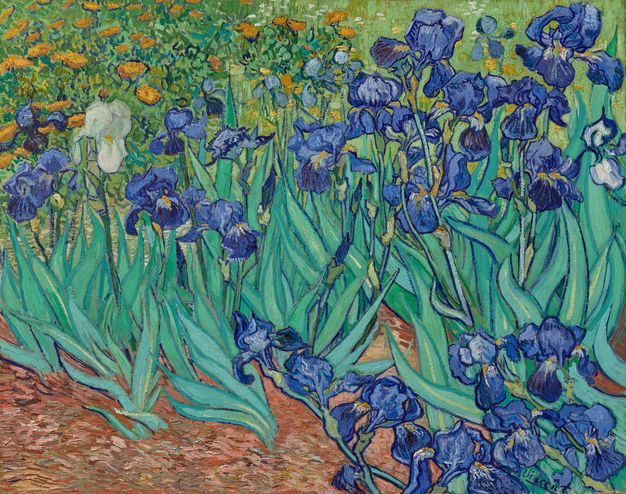 Figure 17
Irises (painting), 1889;
artist: Vincent van Gogh (Dutch painter and draftsman, 1853-1890);
oil on canvas, 71 x 93 cm;
J. Paul Getty Museum (Los Angeles, California), 90.PA.20 © The J. Paul Getty Trust. All Rights Reserved.] -
photograph [
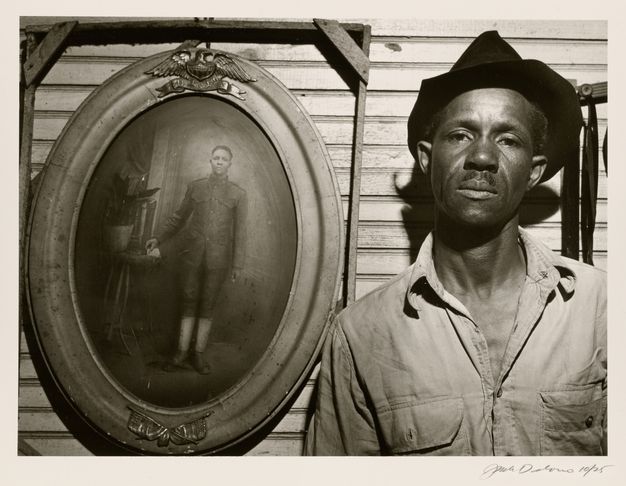 Figure 12
[Man and Photograph], negative about 1940; print later;
artist: Jack Delano (American photographer and filmmaker, born 1914);
Gelatin silver print, Image: 22.9 × 30.8 cm (9 × 12 1/8 in.), Sheet: 27.7 × 35.6 cm (10 7/8 × 14 in.);
J. Paul Getty Museum (Los Angeles, California), 2012.63.5 © The J. Paul Getty Trust. All Rights Reserved. ] -
drawing [Figure 30a
Studies for the Christ Child with a Lamb (recto); Head of an Old Man, and Studies of Machinery (verso), about 1503-1506;
artist: Leonardo da Vinci (Italian painter, draftsman, scientist, 1452-1519);
black chalk, pen and brown ink, Unframed: 21 × 14.1 cm (8 1/4 × 5 9/16 in.);
J. Paul Getty Museum (Los Angeles, California), 86.GG.725 © The J. Paul Getty Trust. All Rights Reserved.] [Figure 30b
Studies for the Christ Child with a Lamb (recto); Head of an Old Man, and Studies of Machinery (verso), about 1503-1506;
artist: Leonardo da Vinci (Italian painter, draftsman, scientist, 1452-1519);
black chalk, pen and brown ink, Unframed: 21 × 14.1 cm (8 1/4 × 5 9/16 in.);
J. Paul Getty Museum (Los Angeles, California), 86.GG.725 © The J. Paul Getty Trust. All Rights Reserved.] -
print [
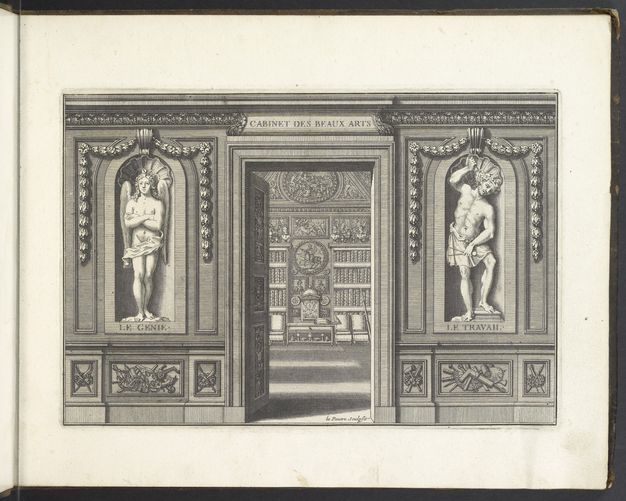 Figure 34
Les Cabinet des Beaux Arts, ca. 1690;
artist: probably engraved by Pierre Lepautre (French sculptor and printmaker, born ca. 1660, died 1744);
from *Le Cabinet des Beaux Arts, ou, Recueil d’estampes gravés d’aprés les tableaux d’un plafond ou les beaux arts sont representées avec explication de ces mêmes tableaux;
engraving on laid paper, plate mark: 17.6 x 26.4 cm (6 7/8 x 10 3/8 inches);
Getty Research Institute (Los Angeles, California), 88-B12341[plate 2] © The J. Paul Getty Trust. All Rights Reserved.] -
bust [
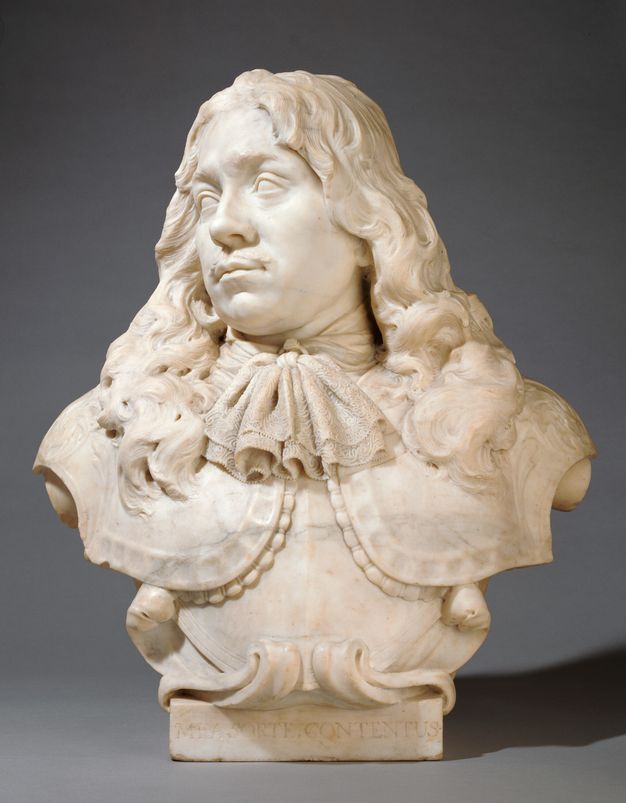 Figure 22
Bust of Jacob van Reygersberg, 1671;
artist: Rombout Verhulst (Flemish sculptor, 1624-1698, active in the Netherlands);
marble, 63 cm (height);
J. Paul Getty Museum (Los Angeles, California), 84.SA.743 © The J. Paul Getty Trust. All Rights Reserved.] -
statue [
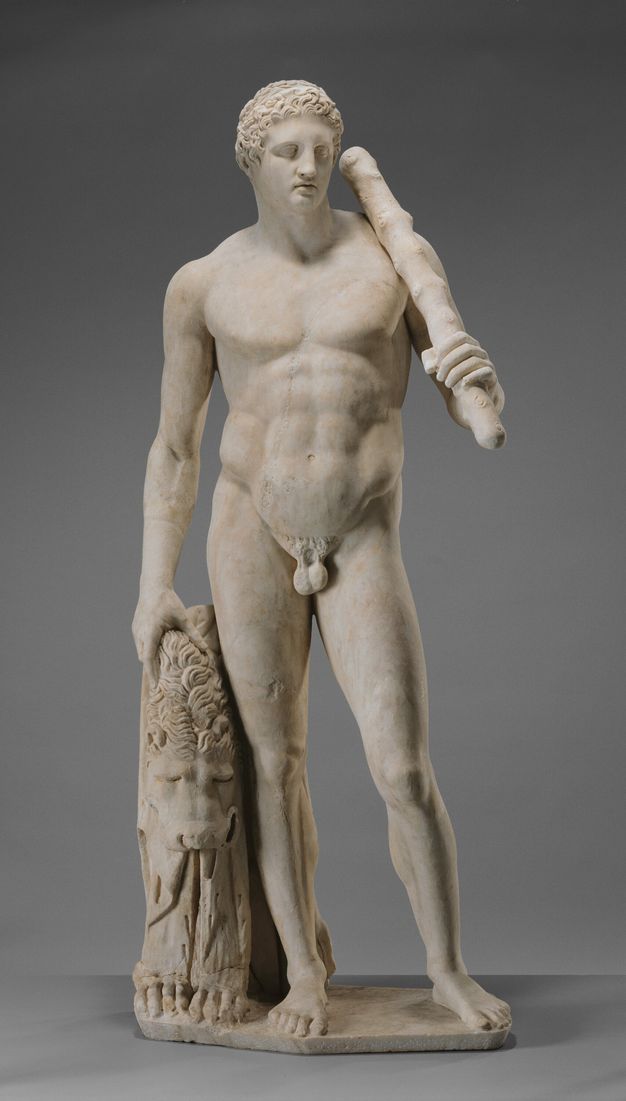 Figure 5
Lansdowne Herakles, ca. 125 CE;
artist: unknown Roman, after lost Greek original from School of Polykleitos;
Pentelic marble, 193.5 cm (height);
J. Paul Getty Museum (Los Angeles, California), 70.AA.109] - coin
- mask
-
chair [
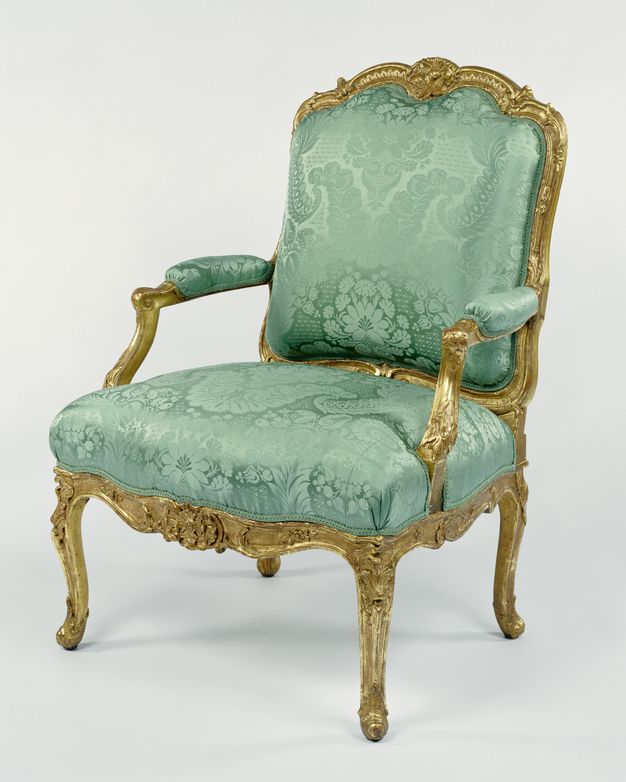 Figure 14
One of a Pair of Armchairs, ca. 1750-1755;
artist: Jean Avisse (French menuisier, 1723-after 1796);
carved and gilded beechwood with modern upholstery and braiding, 104.7 x 76.2 x 59.6 cm;
J. Paul Getty Museum (Los Angeles, California), 83.DA.230.1 © The J. Paul Getty Trust. All Rights Reserved.] - prayer rug
- necklace
- video
- kylix
- album
-
altarpiece [Figure 2
Polyptych with St. James Major, Madonna and Child, and Various Saints (altarpiece), 1490;
artist: Bartolomeo Vivarini (Italian painter and draftsman, active from ca. 1440, died after 1500);
tempera on panel, 280 x 215 cm;
J. Paul Getty Museum (Los Angeles, California), 71.PB.30.] - sketchbook
- portfolio
- installation
- performance
- tea set
- basilica
- dome
- monastery
DISCUSSION and GUIDELINES
Required: Record a term specifying the particular kind of work of art, architecture, or group described in the catalog record.
You may record multiple in subsequent occurrences of the subcategory, as necessary. Note that a single work may have more than one (e.g., altarpiece, painting). Also, a single record may represent more than one object; if more than one object is being cataloged in a single catalog record (e.g., for a group-level record), record the multiple or record the types of the parts under .
Specificity
Record one or more terms that characterize the type of work being cataloged, referring to the work’s physical form, function, or media. It is recommended to use the most specific, appropriate term. The focus of the collection and expertise of the users should be considered; most institutions must accommodate both the expert and the general user. If an term refers to materials or technique (e.g., engraving) or any other characteristic that should also be indexed in another field, repeat it in the additional appropriate subcategory.
Form and syntax
Record the singular form of the term for one work; record a plural term if more than one work is being cataloged in the record. Record the term in lower case except where the term includes a proper noun or is otherwise capitalized in the controlled vocabulary. Avoid abbreviations. Record terms in natural word order, not inverted. Do not use punctuation, except hyphens, as required.
What constitutes a work
A work can be a single physical thing, a fragment or part of a broken or dispersed work, a work composed of many parts, or an event considered an art work, such as a happening or other time-based, nonpermanent work. For a discussion of how to record the parts of a work or group, see .
Work may change over time
can change over time. The physical form or function of a work can change, such as when a sculptural group now located in a museum was originally used as a support for a table. A building that now houses a museum may have originally been designed as a church. It is important to record the of the work as it was created, as well as all subsequent functions and forms. may have differing definitions (for example, is a watercolor a painting or a drawing? It may depend upon whether or not the support is paper). Controlled vocabularies with specific definitions or scope notes should be used to avoid confusion.
Object/Work Type and Classification
The is generally displayed with the . The is intended to identify the work that is the focus of the catalog record, whereas refers to broad categories or a classification scheme that groups works together on the basis of shared characteristics, including materials, form, shape, function, region of origin, cultural context, or historical or stylistic period. See further discussion under .
TERMINOLOGY/FORMAT
Authority: Control this subcategory with the , which can be populated with terminology from the AAT (especially Objects facet), ACRL/RBMS Binding Terms, ACRL/RBMS Genre Terms, ACRL/RBMS Paper Terms, ACRL/RBMS Printing and Publishing Evidence, Base Mérimée: Lexique, the British Archaeological Thesaurus, Glass’ Subject Index for the Visual Arts, ICOM Costume Terms, Index of Jewish Art, ISO 5127-3: Iconic Documents, ISO 5127-11: Audio-visual Documents, LC Descriptive Terms for Graphic Materials, Moving Image Materials, Revised Nomenclature, Reyniès’ Le Mobilier Domestique, and Tozzer Library Headings.
RELATED CATEGORIES and ACCESS
The of two works may imply various stages in the creative process, as when one work is preparatory for another. Explicitly record this relationship in . Discussion of the history of placement of the work in an architectural environment, its archaeological excavation, or events associated with the work can be recorded in .
This is a Primary Access Point. If is used, the end-user will need to search and together to find all works of a particular type. For example, in searching for drawings by Dan Flavin, users need to find works with drawings, whether or not they are part of a sketchbook.
1.3. Object/Work Type Date
DEFINITION
A description of the date or range of dates when the Object/Work Type (1.2) is or was applicable.
EXAMPLES
- from 500 BCE
- 1993
- before 1652
- 1842-1896
- 17th century
DISCUSSION and GUIDELINES
Optional: Record the date when the was or is valid. Include references to uncertainty or ambiguity as necessary.
Form and syntax
Follow the applicable rules for display dates in the subcategory.
If a work has had mutliple over time, this date is useful in establishing when the work served a particular function or purpose.
Dates may be estimated or approximate; for example, it may only be known that a work was a certain size in the 18th century, but not precisely on which day or year the measurement was taken. For further discussion of dates in general, see .
TERMINOLOGY/FORMAT
Free-text: This is not a controlled field. Maintain consistent capitalization, punctuation, and syntax where possible. Index the dates in the controlled and subcategories.
1.3.1 Earliest Date
DEFINITION
The earliest date for which the Object/Work Type (1.2) is or was applicable.
EXAMPLES
- 1970
- 1842
- 01-21-2001
DISCUSSION and GUIDELINES
Optional: Record the earliest year indicated by the display .
Form and syntax
Always record years in the proleptic Gregorian calendar in the indexing dates fields. It is optional to record ; however, if you record a value here, you must also record . For rules, see the subcategory within the category.
TERMINOLOGY/FORMAT
Controlled format: Date information must be formatted consistently to allow retrieval. Local rules should be in place. Suggested formats are available in the ISO Standard and W3 XML Schema Part 2.
-
ISO 8601:2004 Representation of dates and times: International Organization for Standardization. Data Elements and Interchange Formats. Information Interchange. Representation of Dates and Times. Geneva, Switzerland: International Organization for Standardization, 2004.
1.3.2 Latest Date
DEFINITION
The latest date for which the Object/Work Type (1.2) is or was applicable.
EXAMPLES
- 1985
- 9999
- 01-21-2001
DISCUSSION and GUIDELINES
Optional: Record the latest year indicated by the display .
Form and syntax
Always record years in the proleptic Gregorian calendar in the indexing dates fields. It is optional to record ; however, if you record a value here, you must also record . For rules, see within the category.
TERMINOLOGY/FORMAT
Controlled format: Date information must be formatted consistently to allow retrieval. Local rules should be in place. Suggested formats are available in the ISO Standard and W3 XML Schema Part 2. For dates that are still current, use the year 9999.
-
ISO 8601:2004 Representation of dates and times: International Organization for Standardization. Data Elements and Interchange Formats. Information Interchange. Representation of Dates and Times. Geneva, Switzerland: International Organization for Standardization, 2004.
1.4 Components/Parts
DEFINITION
The kinds and numbers of parts of the object or work, or the members of the group, collection, or series described.
EXAMPLES
- group comprises 23 Hollinger boxes containing approximately 15 prints each, 4 rolls of blueprints, 2 video tapes and 10 computer diskettes
- portfolio contains 10 lithographs
- sketchbook comprises 23 folios and 5 loose sheets
-
sheet contains drawings on both recto and verso
[Figure 30a
Studies for the Christ Child with a Lamb (recto); Head of an Old Man, and Studies of Machinery (verso), about 1503-1506;
artist: Leonardo da Vinci (Italian painter, draftsman, scientist, 1452-1519);
black chalk, pen and brown ink, Unframed: 21 × 14.1 cm (8 1/4 × 5 9/16 in.);
J. Paul Getty Museum (Los Angeles, California), 86.GG.725 © The J. Paul Getty Trust. All Rights Reserved.] [Figure 30b
Studies for the Christ Child with a Lamb (recto); Head of an Old Man, and Studies of Machinery (verso), about 1503-1506;
artist: Leonardo da Vinci (Italian painter, draftsman, scientist, 1452-1519);
black chalk, pen and brown ink, Unframed: 21 × 14.1 cm (8 1/4 × 5 9/16 in.);
J. Paul Getty Museum (Los Angeles, California), 86.GG.725 © The J. Paul Getty Trust. All Rights Reserved.] -
volume comprises 178 leaves with 7 full-page
illuminations, and oak covers with silver and copper
gilt reliefs
[
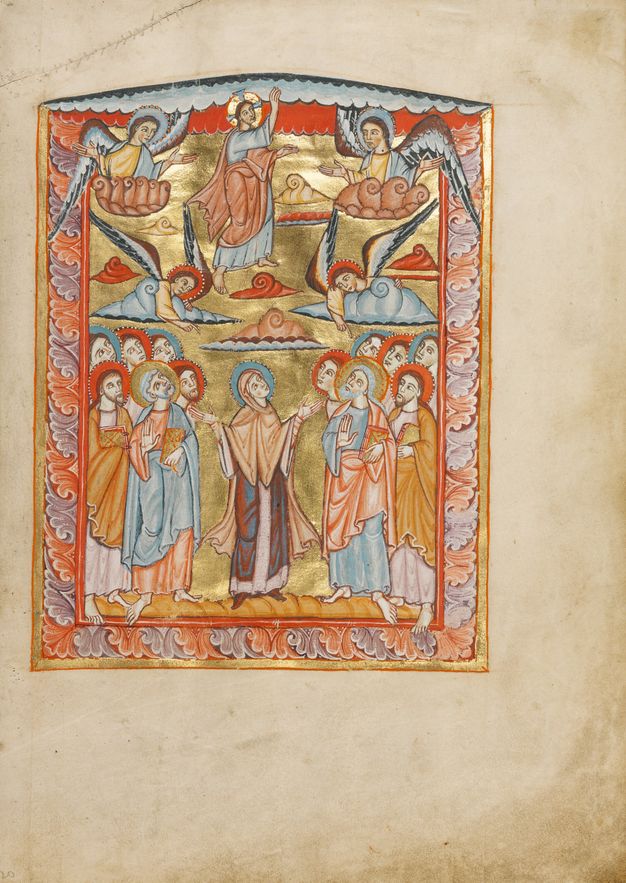 Figure 31a
The Christ in Majesty (cover), and The Ascension (illumination), about 1025-1050;
artist:unknown Ottonian;
tempera colors and gold, dimensions unknown;
J. Paul Getty Museum (Los Angeles, California), Ms. Ludwig V 2, fol. 20, 83.MF.77.20 © The J. Paul Getty Trust. All Rights Reserved.] [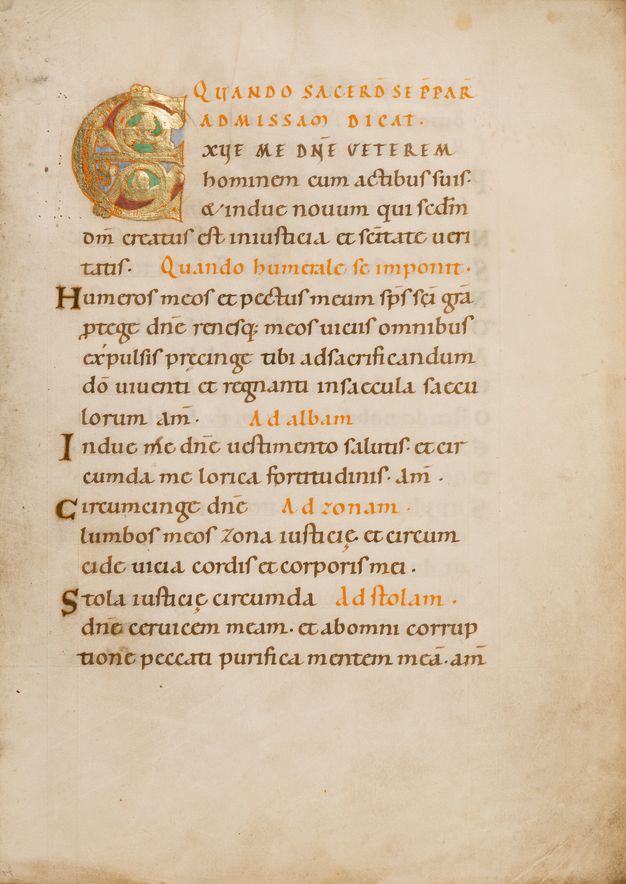 Figure 31b
The Christ in Majesty (cover), and The Ascension (illumination), about 1025-1050;
artist:unknown Ottonian;
tempera colors and gold, dimensions unknown;
J. Paul Getty Museum (Los Angeles, California), Ms. Ludwig V 2, fol. 20, 83.MF.77.20 © The J. Paul Getty Trust. All Rights Reserved.] -
altarpiece comprises central panel, 4 side panels,
and upper tier of 5 panels
[Figure 2
Polyptych with St. James Major, Madonna and Child, and Various Saints (altarpiece), 1490;
artist: Bartolomeo Vivarini (Italian painter and draftsman, active from ca. 1440, died after 1500);
tempera on panel, 280 x 215 cm;
J. Paul Getty Museum (Los Angeles, California), 71.PB.30.] - sculpture is composed of 2 statues and 1 carved base
-
object comprises bowl, lid, and stand [Figure 1
Lidded Bowl on Dish, 1794;
artist: painted by Pierre-Antoine Méraud (French porcelain painter and gilder, ca. 1735-1791);
soft-paste porcelain, colored enamel decoration, gilding, 12.7 x 19.7 x 21.1 cm;
The Metropolitan Museum of Art (New York, New York), 78.DE.65 © The Metropolitan Museum of Art. All Rights Reserved.] - set comprises 2 chairs
-
monastery comprises chapel, cloisters, library,
refectory, and enclosed garden
[
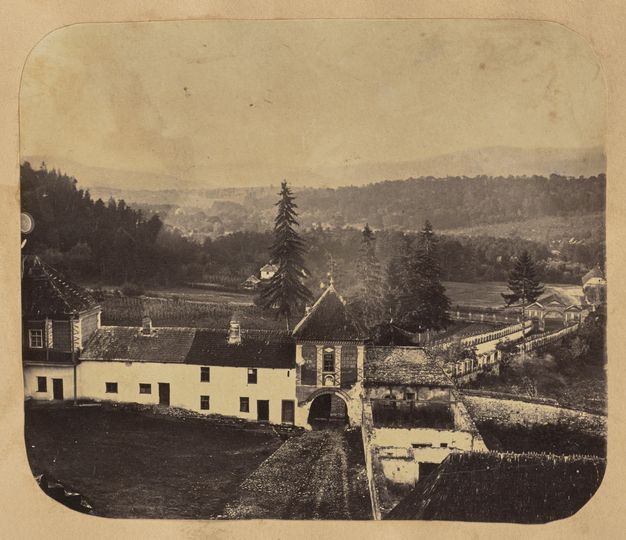 fig-35
[Horezu Monastery], about 1866;
artist: possibly Carol Pop de Szathmari (Romanian painter, lithographer, and photographer, 1812-1887);
Albumen silver print, Image: 10 × 11.7 cm (3 15/16 × 4 5/8 in.), Mount: 28.3 × 21.6 cm (11 1/8 × 8 1/2 in.);
J. Paul Getty Museum (Los Angeles, CA), 84.XA.823.8.86 © The J. Paul Getty Trust. All Rights Reserved.]
DISCUSSION and GUIDELINES
Optional: Record a description of the parts of a particular group, collection, set, series, or work of art or architecture. Index this information in and . This category is particularly important for archival goups of works; the number of objects may be an estimate, especially for a large group.
There are three levels of thoroughness that may be used for recording parts or components:
-
The parts may be noted and indexed in detail in , and also recorded in separate work records and linked as .
-
The parts may be noted and indexed in detail in , but separate work records need not be made for the individual parts.
-
If a thorough indexing of the parts or components is not necessary, the parts may be simply noted and indexed in a general way in the category.
Form and syntax
Use phrases in lower case. Capitalize proper names. For other words, use lower case. Avoid abbreviations. Provide directional descriptions for architecture, sculpture, and other three dimensional objects (e.g., for a building, view from the east, or for a portrait bust, left profile). Do not capitalize cardinal directions (east, west, etc.) Note special lighting conditions (e.g., raking light).
Alternatively use sentence case and complete sentences or phrases.
When to catalog the parts separately
If a work of art or architecture has parts with significantly different characteristics, including separate artists, dates of execution, styles, materials, or physical locations, record them as and also create separate records for the parts and link them as .On the other hand, catalog the work or group of works together in one record when the artist and other characteristics of the parts are the same or very similar; the parts should still be indexed as (or simply noted in a general way in ), but it is not necessary to create separate records for the parts linked in .
Practice may vary due to local practice and circumstances
surrounding the history of the object. For example, one
institution might describe a suite of prints as a whole
[Figure 34
Les Cabinet des Beaux Arts, ca. 1690;
artist: probably engraved by Pierre Lepautre (French
sculptor and printmaker, born ca. 1660, died 1744);
from *Le Cabinet des Beaux Arts, ou, Recueil
d’estampes gravés d’aprés les tableaux d’un plafond ou
les beaux arts sont representées avec explication de
ces mêmes tableaux;
engraving on laid paper, plate mark: 17.6 x 26.4 cm (6
7/8 x 10 3/8 inches);
Getty Research Institute (Los Angeles, California),
88-B12341[plate 2] © The J. Paul Getty Trust. All
Rights Reserved.], listing only the number and object type of the 13
engravings contained within it as
. However, another collection may describe the suite,
then also fully describe each of the individual
engravings; in this case, the parts would be noted as
and the records for the parts would be associated with the
record for the suite through
.
The relationships between a work and its parts may be complex, especially when a given description refers to many objects, each of which itself has constituent parts. Maintain these relationships so that, for example, a saucer in a tea set remains linked to its cup, rather than being associated with a teapot in the set.
TERMINOLOGY/FORMAT
Free-text: This is not a controlled field. Maintain consistent capitalization, punctuation, and syntax where possible.
RELATED CATEGORIES and ACCESS
This set of subcategories records the parts of the work referred to in the category. When the parts are also described individually in separate records, maintain the relationships between the parts and the whole. These relationships are accessible through .
1.4.1 Components Quantity
DEFINITION
The number of parts of a specific type that constitute the object, work, group, collection, or series described.
EXAMPLES
- 1
- 25
- 60
DISCUSSION and GUIDELINES
Optional: Record the number of parts or items of a given kind belonging to a work, group, collection, or series. The category should repeat with to index the quantity and kind of parts.
TERMINOLOGY/FORMAT
Controlled format: Whole numbers or decimal fractions only.
RELATED CATEGORIES and ACCESS
This subcategory and may be associated with other that are part of a larger work or group, as when a panel is part of a predella, which is itself part of an altarpiece.
1.4.2 Components Type
DEFINITION
The kind of components of the object, work, group, collection, or series described.
EXAMPLES
- panels
- folios
- paintings
- drawings
- videos
- saucer
- prints
- orange crates
- dome
DISCUSSION and GUIDELINES
Optional: Record the type of parts or items of a given kind belonging to a work, group, collection, or series. The category should repeat with to index the quantity and kind of parts. Use lower case.
TECHNOLOGY/FORMAT
Authority: Control this subcategory with the , which can be populated with the AAT and other terminology from the controlled vocabularies named in above.
RELATED CATEGORIES and ACCESS
If components are indexed here but not recorded in separate work records and linked as , the will serve as Primary Access Point. Researchers will need to find all works of a particular type, whether they are described individually in separate records or noted only as . For example, a researcher may wish to find photographs, whether they are described individually or are components of albums. Note that complex relationships must be accommodated, as when a saucer is part of a cup and saucer set, and the cup-and-saucer together are part of a tea set.
1.5 Remarks
DEFINITION
Additional notes or comments pertinent to information in this category.
DISCUSSION and GUIDELINES
Optional: Record a note regarding the Object/Work. Use consistent syntax and format. For rules regarding writing notes, see .
TERMINOLOGY/FORMAT
Free-text: This is not a controlled field. Use consistent syntax and format.
1.6. Citations
DEFINITION
A reference to a bibliographic source, unpublished document, or individual opinion that provides the basis for the information recorded in this category.
DISCUSSION and GUIDELINES
Optional: Record the sources used for information in this category. For a full set of rules for citations, see .
FORMAT/TERMINOLOGY
Authority: Ideally, this information is controlled by citations in the citations authority; see .
1.6.1 Page
DEFINITION
Page number, volume, date accessed for Web sites, and any other information indicating where in the source the information was found.
DISCUSSION and GUIDELINES
Optional: For a full set of rules for pages, see the subcategory.
FORMAT/TERMINOLOGY
Free-text: This is not a controlled field. Use consistent syntax and format.
Examples
The examples below include subcategories in this chapter in addition to the subcategory.
Object/Work Type referring to form:
-
Catalog Level:🔺 item
Classification:🔺 sculpture
Object/Work Type:🔺 statuette
Object/Work Type referring to form:
-
Catalog Level:🔺 itemD
Classification:🔺 architecture
Object/Work Type:🔺 basilica
Object/Work Type referring to function:
-
Catalog Level:🔺 item
Classification:🔺 decorative arts
Object/Work Type:🔺 mosque lamp
Object/Work Type referring to function:
-
Catalog Level:🔺 item
Classification:🔺 paintings
Object/Work Type:🔺 altarpiece
Object/Work Types referring to function and form:
-
Catalog Level:🔺 item
Classification:🔺 architecture
Object/Work Type:🔺 cathedral | basilica
Object/Work Type referring to materials or technique:
-
Catalog Level:🔺 item
Classification:🔺 prints
Object/Work Type:🔺 engraving
Object/Work Type referring to content:
-
Catalog Level:🔺 item
Classification:🔺 textiles
Object/Work Type:🔺 sampler
Object/Work Types referring to content:
-
Catalog Level:🔺 item
Classification:🔺 drawings
Object/Work Type:🔺 design drawing | elevation
Object/Work Type referring to performance:
-
Catalog Level:🔺 item
Classification:🔺 performance art
Object/Work Type:🔺 performance art | installation
Object/Work Type has changed over time:
-
Catalog Level:🔺 item
Classification:🔺 architecture
Object/Work Type:🔺 church
Work Type Date: from 4th century
Earliest Date: 0300 Latest Date: 1500
Object/Work Type:🔺 mosque
Work Type Date: under Ottomans
Earliest Date: 1500 Latest Date: 1934
Object/Work Type:🔺 museum
Work Type Date: since 1934
Earliest Date: 1934 Latest Date: 9999
One way to record parts of a group; the parts may or may not be cataloged separately and linked as :
-
Catalog Level:🔺 group
Classification:🔺 drawings
Object/Work Type:🔺 architectural drawings
Components: group contains 47 architectural drawings
Components Type: presentation drawings Quantity: 9
Components Type: elevations Quantity: 12
Components Type: oblique projections Quantity: 20
Components Type: plans Quantity: 6
A second way to record parts of a group; the parts may or may not be cataloged separately and linked as :
-
Catalog Level:🔺 group
Classification:🔺 drawingsD
Object/Work Type:🔺 presentation drawings | elevations | oblique projections | plans
A third way to record parts of a group; the parts may or may not be cataloged separately and linked as :
-
Catalog Level:🔺 group
Classification:🔺 drawings
Object/Work Type:🔺 presentation drawings | elevations | oblique projections | plans
Dimensions Description:🔺 47 items; various dimensions
Extent: items Value: 47 Type: count
NOTE: 🔺 indicates a core CDWA category.
Revised 5 December 2023
by Emily Benoff