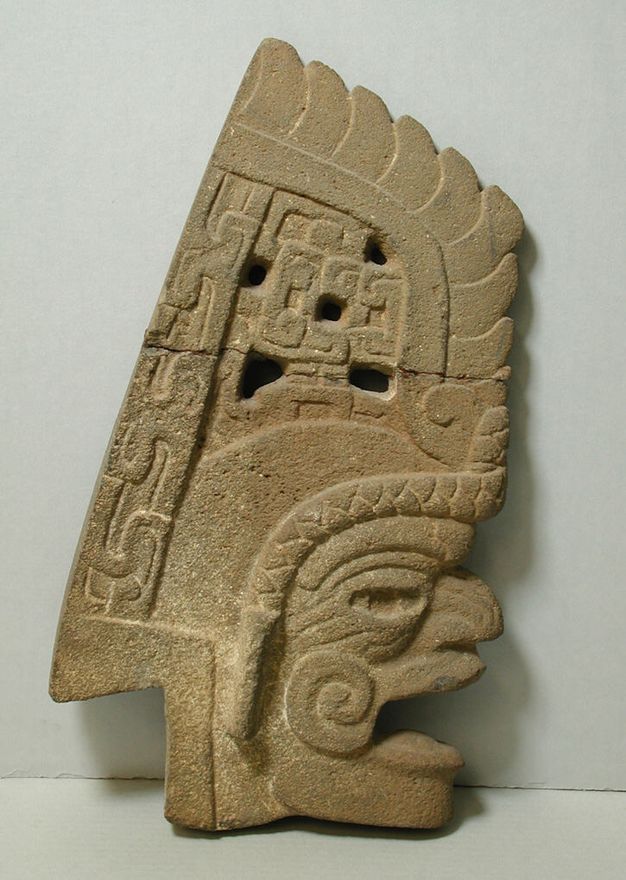
artist: Unknown Mesoamerican;
Stone, H. 3 × W. 10 × D. 18 in. (7.6 × 25.4 × 45.7 cm);
The Metropolitan Museum of Art (New York, New York), Gift of Charles and Valerie Diker, 2004, 2004.551.2 © The Metropolitan Museum of Art. All Rights Reserved.
Object/Work🔺
- Catalog Level:🔺 item (value type: controlled list)
- Type:🔺 hacha (value type: authority)
Classification🔺
-
Terms:🔺
sculpture
Mexican art
Mesoamerican art
Pre-contact Era art (value type: controlled list)
Titles or Names🔺
-
Text:🔺 Head Hacha (value type: free text)
Preference: preferred (value type: controlled list)
Type: repository
Creation🔺
-
Creator Description:🔺 unknown Veracruz (value type: free text)
-
Identity:🔺 unknown Veracruz (_value type: authority)
Role:🔺 scultor -
Creation Date:🔺 400-800 A.D. (value type: free text)
Earliest:🔺 400 Latest:🔺 800 (value type: controlled format) -
Creation Place/Original Location: Veracruz (Mexico) (value type: free text and/or controlled format)
Style/Period/Group/Movement
- Indexing Terms: Classic Veracruz (value type: authority)
Measurements🔺
-
Dimensions Description:🔺 7.6 x 25.4 x 45.7 cm (3 x 10 x 18 inches) (value type: free text)
-
Value: 7.6 Unit: cm Type: height
Value: 25.4 Unit: cm Type: width
Value: 45.7 Unit: cm Type: diameter (value type: controlled format and controlled lists)
Materials and Techniques🔺
-
Description:🔺 stone (value type: free text)
-
Material Name: stone (value type: authority)
Subject Matter🔺
-
Indexing Terms:🔺
religion/mythology
human figure
face
helmet
ceremonial object
ballgame
sports equipment (value type: authority)
Descriptive Note
-
Text: Like other hachas distinctive to the Classic Veracruz culture, this ax-like sculpture represents the the gear worn by players of a ceremonial ballgame popular in ancient Mesoamerica. It most likely depicts the head of an individual adorned with a helmet, a common costume associated with Mesoamerican ballgames. As the actual hachas used in ballgames were made of lighter materials, this hatcha sculpture probably served a more ritualistic purpose; it could have been worn during the cycle of rituals associated with the ballgame, awarded as a trophy, or displayed as an actual ballcourt marker, amongst other potential uses. (value type: free text)
-
Citation: The Met Collection online (value type: authority)
Page: accessed 29 July 2024 (value type: free text) -
Citation: Dumbarton Oaks online (value type: authority)
Page: accessed 29 July 2024 (value type: free text) -
Citation: J. Paul Getty Museum online (value type: authority)
Page: accessed 29 July 2024 (value type: free text)
Current Location🔺
-
Repository Name/Geographic Location:🔺
The Metropolitan Museum of Art (New York, New York, United
States) (value type: authority)
Repository Numbers:🔺 2004.551.2 (value type: free text)
NOTE: 🔺 indicates a core CDWA category.
Revised 29 July 2024
by Emily Benoff