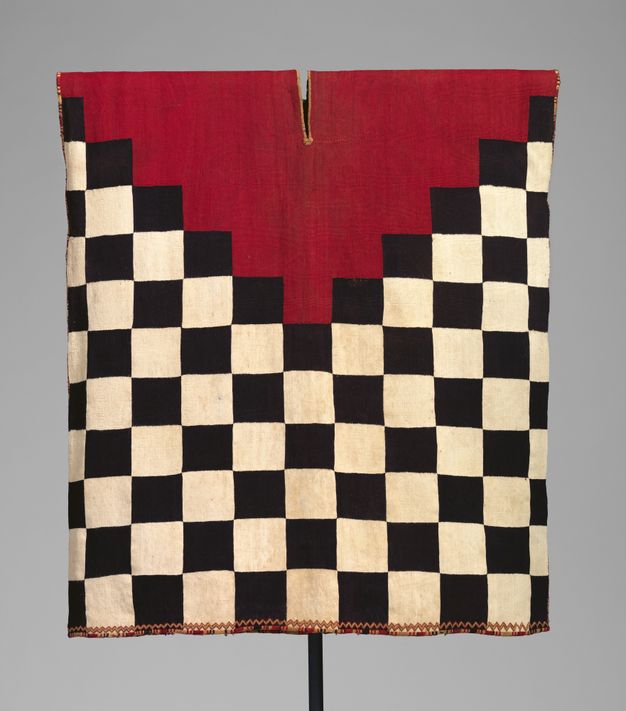
artist: Unknown Incan;
Camelid fiber, H. 34 1/4 x W. 30 1/8 in. (87 x 76.5 cm);
The Metropolitan Museum of Art (New York, New York), Purchase, Fletcher Fund, Claudia Quentin Gift, and Harris Brisbane Dick Fund, 2017, 2017.674 © The Metropolitan Museum of Art. All Rights Reserved.
Object/Work🔺
- Catalog Level:🔺 item(value type: controlled list)
- Type:🔺 tunic (value type: authority)
Classification🔺
-
Terms:🔺
costumes
textiles
South American art
Pre-Columbian art
precolonial art (value type: controlledl list)
Titles or Names🔺
-
Text:🔺 Tunic (value type: free text)
Preference: preferred (value type: controlled list)
Type: repository
Creation🔺
-
Creator Description:🔺 unknown Inca (value type: free text)
-
Identity:🔺 unknown Inca (_value type: authority)
Role:🔺 weaver -
Creation Date:🔺 16th century (value type: free text)
Earliest:🔺 1501 Latest:🔺 1600 (value type: controlled format) -
Creation Place/Original Location: Argentina, Peru, or Bolivia (South America) (value type: authority)
Style/Period/Group/Movement
- Indexing Terms: Inca (value type: authority)
Measurements🔺
-
Dimensions Description:🔺 87 x 76.5 cm (34 1/4 x 30 1/8 in) (value type: free text)
-
Value: 87 Unit: cm Type: height
Value: 76.5 Unit: cm Type: width (value type: controlled format and controlled lists)
Materials and Techniques🔺
-
Description:🔺 camelid fiber (value type: free text)
-
Material Name: camelid fiber (value type: authority)
Technique Names: tapestry (value type: authority)
Subject Matter🔺
-
Indexing Terms:🔺
apparel
needlework
checkerboard
warriors
Inca state
Inca army
royalty (value type: authority)
Descriptive Note
-
Text: This tapestry-woven garment, featuring a black-and-white checkerboard design with a red V-shaped yoke, exemplifies a common type of tunic worn by Incan men of political, military, social, or religious importance. In 1532, Francisco de Jerez, secratary to Fransisco Pizarro, first described this checkerboard design, noting its significance as the costume worn by the Inca army’s first regiment. The tunic’s bottom edge is adorned with a zigzag line comprised of similarly colored yarns. Though the significance of this zigzag line is unknown, it was often included in early depictions of royal Incan tunics. (value type: free text)
-
Citation: Metropolitan Museum of Art online (value type: authority)
Page: accessed 20 August 2024 (value type: free text)
Current Location🔺
-
Repository Name/Geographic Location:🔺
The Metropolitan Museum of Art (New York, New York, United
States) (value type: authority)
Repository Numbers:🔺 2017.674 (value type: free text)
NOTE: 🔺 indicates a core CDWA category.
Revised 20 August 2024
by Emily Benoff