In Love’s Jewelled Fetter (1895), the Dutch painter Sir Lawrence Alma-Tadema situated an ancient Mediterranean romantic fantasy against a backdrop of a cerulean sea and a cool marble interior where a lover’s portrait hangs—unmistakably modeled on a funerary portrait from Roman Egypt.1 The 1896 exhibition poster for antiquities dealer Theodor Graf’s collection of Romano-Egyptian mummy portraits presents them as “ancient Greek” portraits. The poster’s iconography stages these portraits between orientalizing motifs and a toolkit typical for Western European old master painters: a palette, maulstick, and a set of brushes.2 In the early twentieth century, German expressionist painter Paula Modersohn-Becker emulated the technique and composition of mummy portraits to paint a series of self-portraits. Modersohn-Becker had studied mummy portraits at the Louvre and through reproductions, two of which survive as part of her estate.3
These are three early examples of people inspired by mummy portraits who used them to tell stories and to paint pictures.4 The inspirational effect of mummy portraits has not waned since. With a thousand-odd portraits and fragments surviving worldwide, the corpus is not vast; yet since the late nineteenth century, researchers have continued to investigate how mummy portraits were made and to endeavor to better understand their state of preservation. The APPEAR project has proven to be a catalyst for this type of material-technical research in the last decade. The conferences sparked a variety of new research directions, and the database makes it possible for collaborators to share and compare the results of their research.
Identifying a pigment or binding medium can tell us more than just what the ancient painter had on their palette; it embeds mummy portraits in histories of trade, art technology, and artistic choices. This paper advocates the use of the Morellian method as a structuring tool in composing such histories. This method consists of a structured analysis of isolated details in an artwork to draw conclusions about its making. The method emerged in the late nineteenth century from the work of the Italian art connoisseur Giovanni Morelli as a scientifically informed process for attributing paintings to schools, workshops, and individual artists. This paper, however, argues for extending the Morellian method beyond attribution and authentication, the typical purviews of connoisseurship. It aims to demonstrate the value of the method as a conceptual tool in mummy portrait studies and as a means to facilitate composing histories along the lines of material-technical findings.
The storytelling potential of technical examination shines most brightly when illuminated by a case study. Hence, the technical examination of four mummy portraits from the Allard Pierson collection in Amsterdam forms the stage on which this paper presents a Morellian, story-based approach to mummy portrait studies. This case study commences with an introduction to the research project and the portraits. Two vignettes of themes follow—ones that emerged from compiling the research results in the light of a Morellian gaze—the choices of materials and their meanings, and conservation-restoration interventions as the physical evidence of these portraits’ second lives as part of collections. First, however, the next section looks more closely at the Morellian method and its adaptation for this research project.
Morelli and Mummies?
Long after Alma-Tadema and Modersohn-Becker, passionate twenty-first-century researchers continue to tell stories about mummy portraits. Expertise and creativity still abound among those researchers, but modern analytical techniques have paved the way to compose studies to investigate mummy portraits using a palette that is virtually boundless. Macro X-ray fluorescence (MA-XRF) spectroscopy mapping detects the distribution of elements in mummy portraits. Gas chromatography/mass spectrometry (GC/MS) can identify binding media in sampled areas. Infrared reflectography and X-radiography can penetrate paint layers in the quest for underdrawings and modern additions.
Those familiar with the work of the Italian art connoisseur Giovanni Morelli may also associate his name with images. Diagrams of hands and ears have become nearly synonymous with the Morellian method. In the late nineteenth century, Morelli developed a method to structurally analyze habitually depicted details in a painting.5 Morelli’s purviews were those of the traditional connoisseur: attribution and authentication. His method served to provide a more solid ground for identifying the hand of a painter or workshop.
Jaynie Anderson, Morelli’s biographer, captures the essence of his method as “focusing on highly characteristic details of all kinds which he considered of high value for an artist.”6 Hands and ears were favorite case studies of “high-value” details for Morelli. His works contain anatomical diagrams of hands and ears, and publications that discuss Morelli often refer to those diagrams. However, although they are essential, anatomical diagrams should not be equated with the Morellian method; Morelli advocated drawing conclusions through object-based examination that takes into account anatomical details, materials, and conservation history.7
Morelli did not study mummy portraits, but his approach has the potential to utilize the material-technical data of emerging mummy portrait research to their fullest potential. As van Oppen de Ruiter has published in this volume, the attribution of mummy portraits requires careful consideration of their cultural-historical, stylistic, and material-technical features. In this light, it bears repeating that this paper does not discuss the Morellian method as an aid to authenticating and attributing mummy portraits. Rather, it aims to illustrate how viewing mummy portraits with a Morellian gaze enriches their histories—histories that contribute to a better understanding of the meanings behind ancient painters’ choices of specific materials and techniques.
Looking at mummy portraits in a Morellian fashion begins with identifying high-value details in the material-technical data acquired during a mummy portrait examination. Here, the high-value details are those that have a strong storytelling potential, going beyond diagnostic criteria for attributions. Within this study, they are the materials that can be connected to documentary sources: those the ancient painter used, in specific locations; those that are relatively uncommon either in the portrait under investigation or in the broader mummy portrait corpus; and those that reveal more about a mummy portrait’s post-acquisition afterlife. Discussing mummy portraits along the lines of single, evocative materials contributes to the understanding of how they were made in ancient Egypt and how they were treated after discovery and helps us understand why certain choices were made.
Some analytical methods frequently used within APPEAR diverge in the answers that they provide; others overlap. A specific question like the nature of a binding medium requires use of a specialized technique to obtain a result, and this illustrates the approach taken in the case study this paper describes. However, it is important to emphasize that any of the analytical techniques used within APPEAR hold the potential to aid in shedding new light on the study of ancient painting. While many analytical results in this paper rely on spectroscopic techniques, such advanced analytical methods are sometimes unavailable for cultural heritage institutions due to lack of access to equipment, required expertise, or funds. Fortunately, preliminary characterization of materials can be achieved through more accessible methods, such as technical imaging. Magnified images captured with a digital microscope are equally indispensable. In addition, in their contributions to this volume, Thistlewood and van Oppen de Ruiter show the analytical power of diagrams produced after careful observation. The methodological possibilities available in the material-technical analysis of mummy portraits resonate with the many high-value details that Morelli used to compose art histories of Renaissance paintings.
In addition to being an art historian, Morelli was a storyteller, and that is what makes his approach so attractive for mummy portrait studies. The archaeological context of most mummy portraits is irrevocably lost, so their history must be pieced together through small clues. Morelli’s structural, detail-oriented way of looking facilitates asking pertinent questions that enable mummy portraits to reveal their own histories. Morelli chose to tell stories of attribution, but he approached it as someone who was at once politician and patriot, scientist and socialite.8
Examining Four Mummy Portraits from the Allard Pierson collection
In June 2018 and in the spring of 2019, four mummy portraits from the Allard Pierson collection were the subject of a technical examination campaign: a portrait of a young girl (fig. 1.1), referred to hereafter as “the Girl”;9 a piece of the portrait of an older lady (fig. 1.2), hereafter “the Fragment”; a portrait of a young lady (fig. 1.3), hereafter “the Lady”; and a portrait of a bearded man (fig. 1.4), hereafter “the Man.”
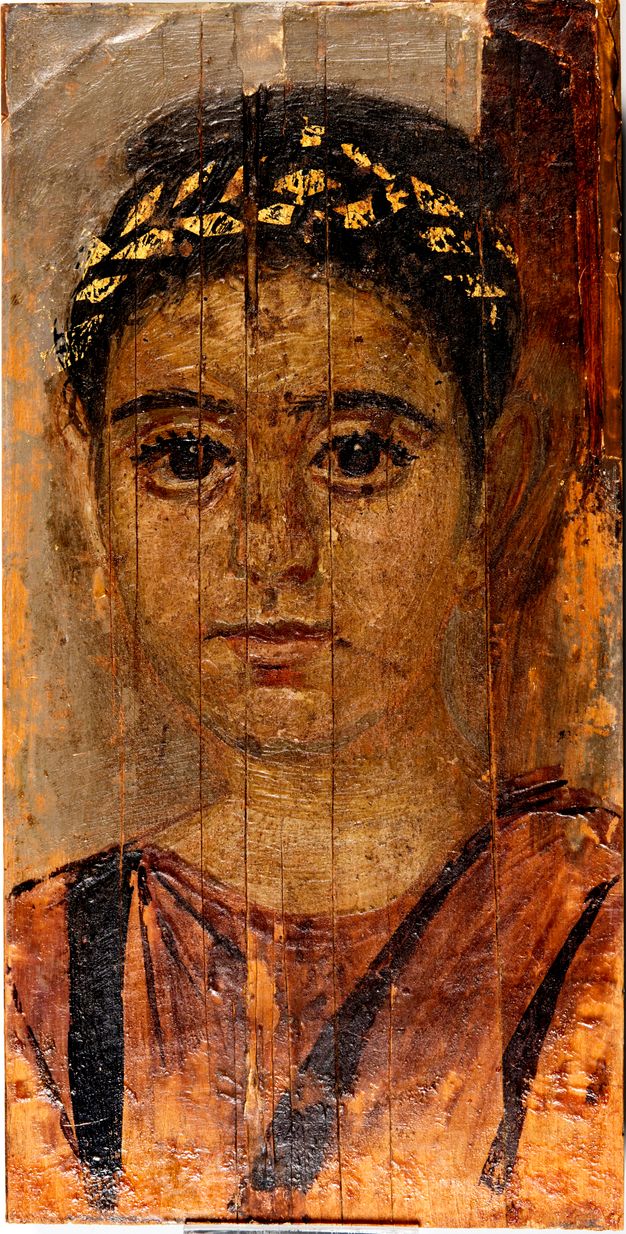

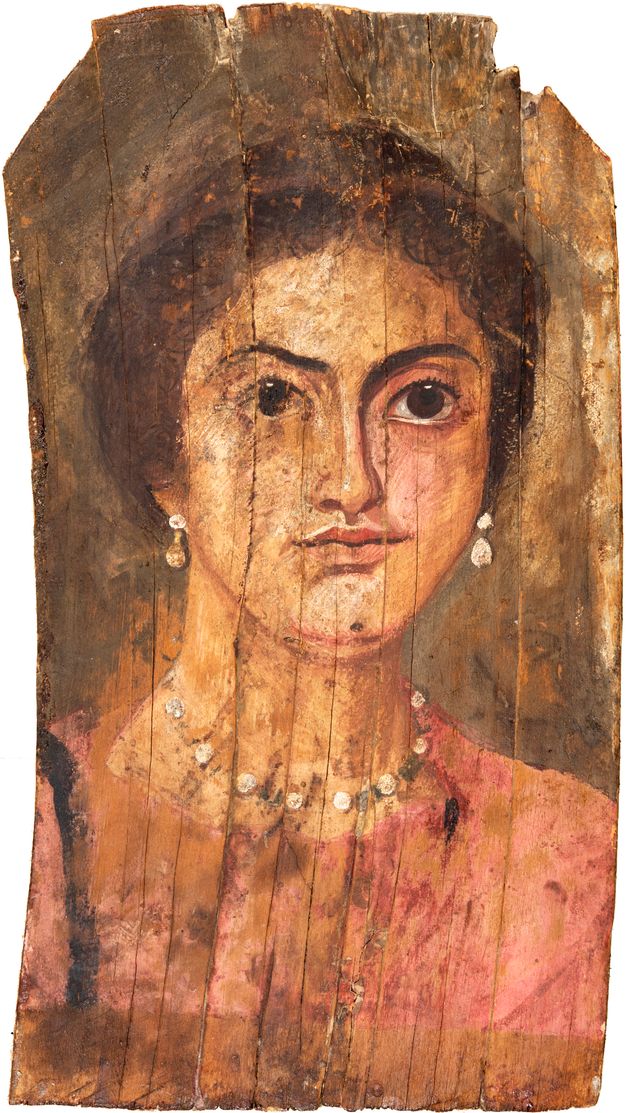
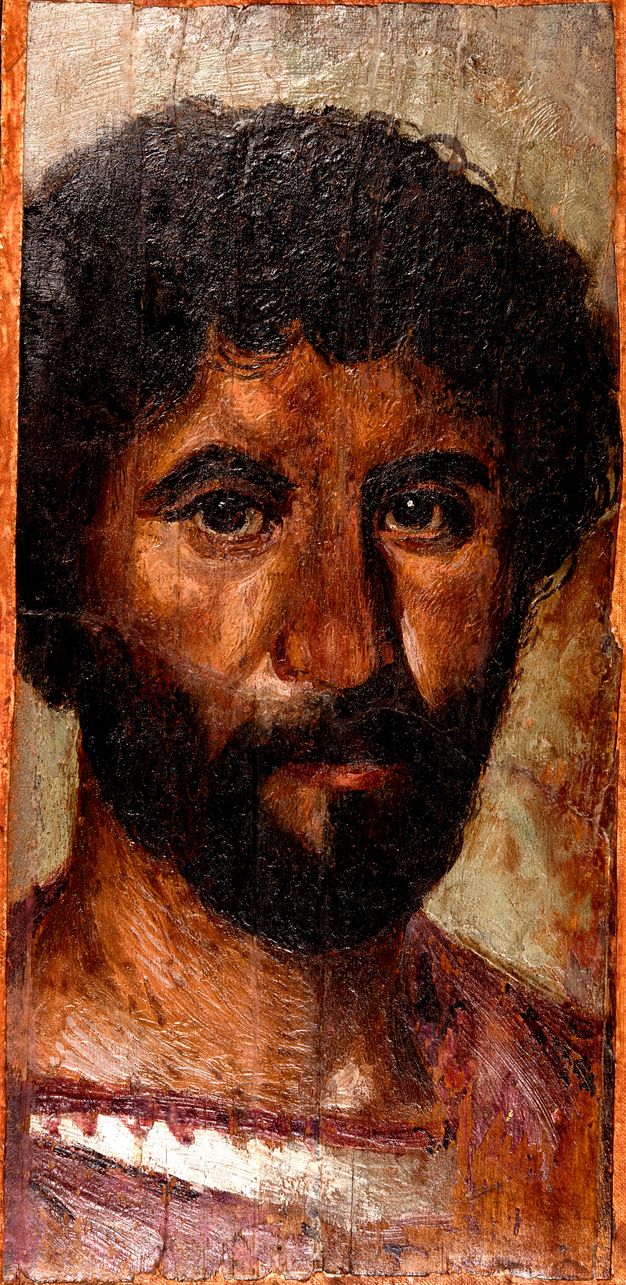
Analyses of the portraits took place at the Rijksmuseum conservation laboratories in Amsterdam. None of the portraits had undergone technical examination before. The aim of this project was broad: to characterize the ancient painter’s palette, to catalogue characteristic painterly techniques, and to understand historical conservation-restoration treatments.
The project employed a wide array of analytical and imaging techniques. Methods discussed in this paper are: digital microscopy; MA-XRF; photography using visible, infrared (IR), and ultraviolet (UV) radiation; visible-induced infrared luminescence (VIL); and X-ray diffraction spectroscopy (XRD).10
Materials: Choices and Meaning
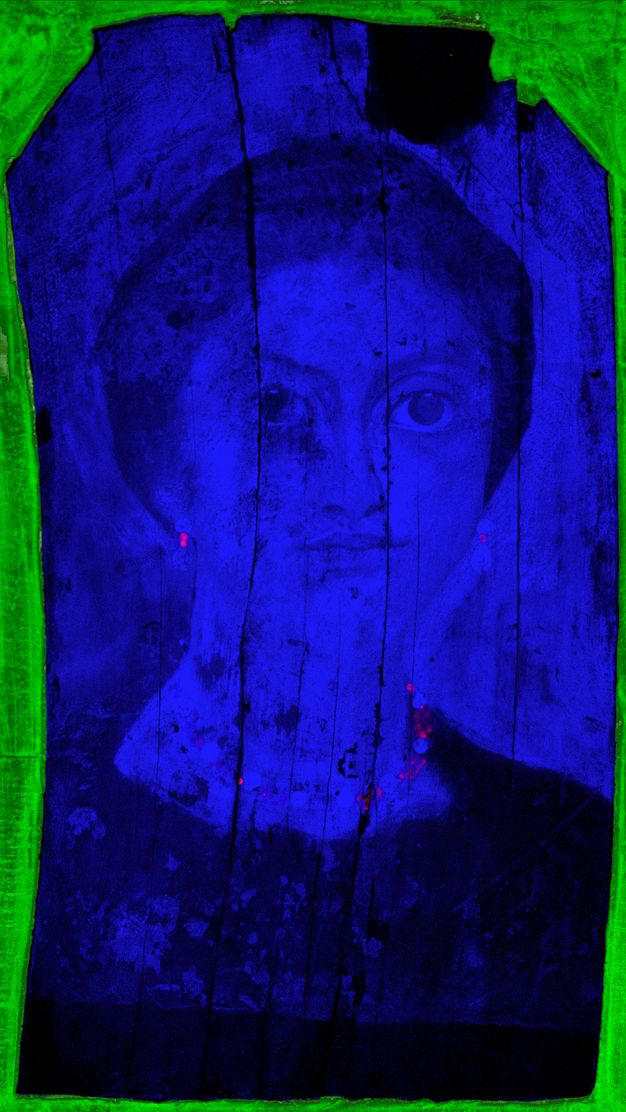
In her study on the copper-based pigment Egyptian blue (cuprorivaite, CaCuSi4O10) used in mummy portraits, Gabrielle Thiboutot argues that the way ancient artists employed Egyptian blue reveals that they understood both the material and the symbolic properties the pigment affords.11 Within the Allard Pierson group, only the Fragment (see fig. 1.2) exhibited a convincing match for Egyptian blue.12 It showed up distinctly with VIL imaging (figs. 1.5–1.6). XRD analysis in an area where Egyptian blue’s presence was expected confirmed those findings.13 Furthermore, MA-XRF yielded an elemental distribution map for copper that corresponded with the VIL results, confirming the use of Egyptian blue in the Fragment.14
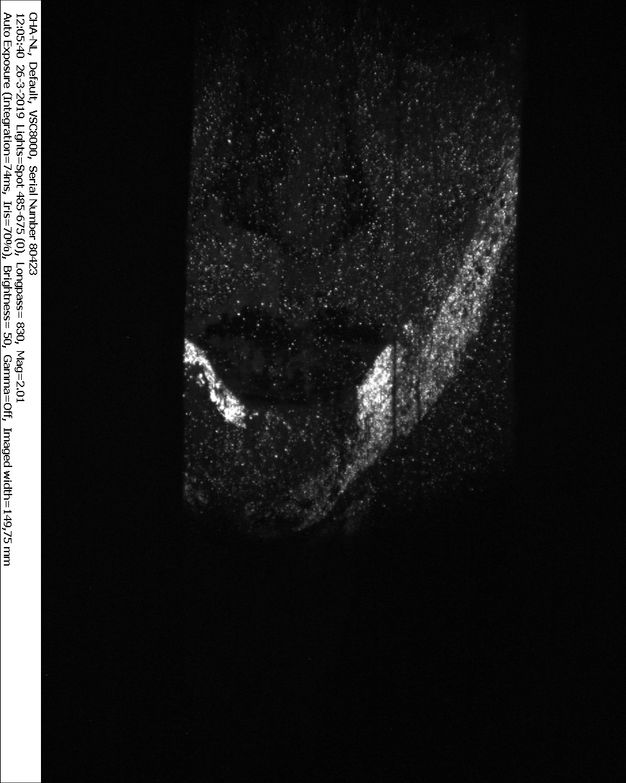
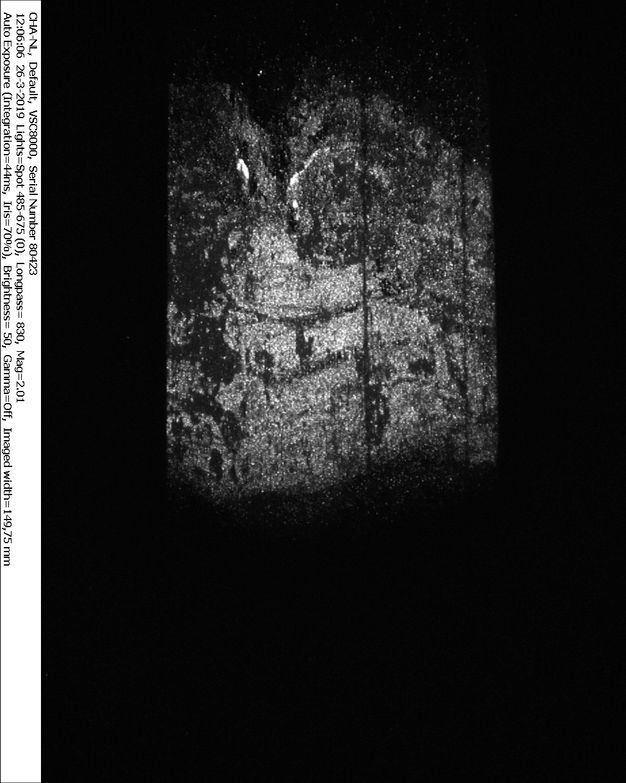
The copper map shows that Egyptian blue is present throughout the Fragment, yet blue is not visible as a distinct color. The ancient painter used Egyptian blue in the gray hair, the entire neck area, and forehead. The MA-XRF copper map and VIL images also reveal Egyptian blue in the corners of the mouth and along the jawline. The chin and the lower forehead are devoid of Egyptian blue.
A female portrait in the collection of the Phoebe A. Hearst Museum shows a similar use of Egyptian blue in the contours of the face.15 Ganio et al. interpret the function of Egyptian blue here as either an underdrawing or a modulating pigment,16 and Verri et al. in this volume argue that the use of Egyptian blue as a modulating pigment is, in fact, a key facet of artisanal practice in many mummy portraits.
The Egyptian blue in the Fragment suggests that the painter strongly grasped the modulating properties of the pigment. Both the VIL images and the copper map clearly show how the painter also varied the quantity of Egyptian blue. The corners of the mouth and the foremost lock of hair received more of the pigment than the rest of the portrait. Egyptian blue here tells the story of a skilled painter who understood how to benefit from its optical properties in a mixture with other pigments and modified the mix to produce a stronger or weaker effect.
One particular pigment in the Allard Pierson group still retains some of its original brilliance: arsenic yellow. This yellow pigment was detected only on the Lady (see fig. 1.3). The MA-XRF map for arsenic (fig. 1.7) identifies arsenic in the tiny golden bar that connects the pearls of the earrings and in the green stones of the necklace. A heightened concentration of sulfur overlaps with the arsenic map. The pigment that was used to suggest gold and to produce green is likely the yellow arsenic sulfide, orpiment (As2S3) or pararealgar (As4S4). Arsenic sulfides are notoriously toxic and not native to Egypt.
Why did the painter of the Lady choose an arsenic yellow for specific areas of the portrait? The alchemical Leyden and Stockholm papyri may provide the answer to this question.17 Written in Greek and dating to around 300 CE, they contain a wealth of information on art technology in Roman Egypt in the form of short recipes.18 The papyri mention arsenic sulfides several times. Orpiment regularly appears in recipes related to imitating or working with gold. Moreover, the adjective “golden” accompanies both orpiment and realgar to describe their color.19 A recipe in the Leyden papyrus for “writing in gold” even lists orpiment as the single colorant for this “golden” ink.20 The Stockholm papyrus also mentions orpiment as an ingredient mixed with dyes, such as high-quality Tyrian purple, sometimes referred to as “scarlet of Galatia.”21 (Galatia was a region in Anatolia adjacent to and southwest of Pontus, where arsenic sulfides were mined intensively.)
The alchemical papyri present arsenic sulfides as materials associated with gold and imported materials. This supports the idea that arsenic sulfides carried symbolic value as prestigious materials in Roman Egypt. The visual impact of orpiment, in particular, affords a conspicuous presentation of this symbolic value.
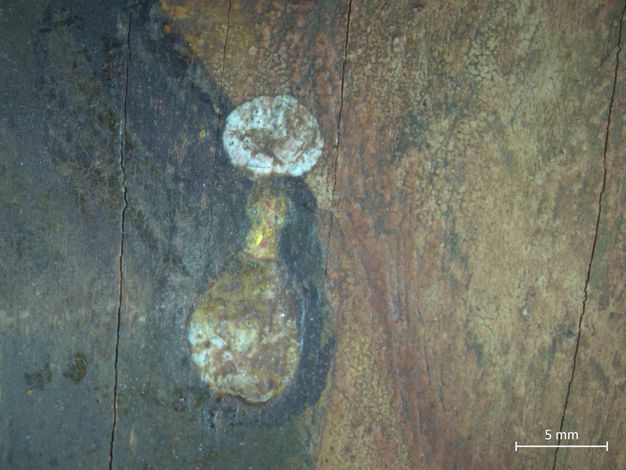
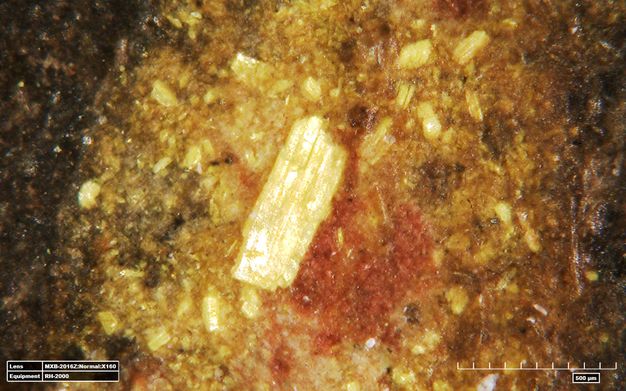
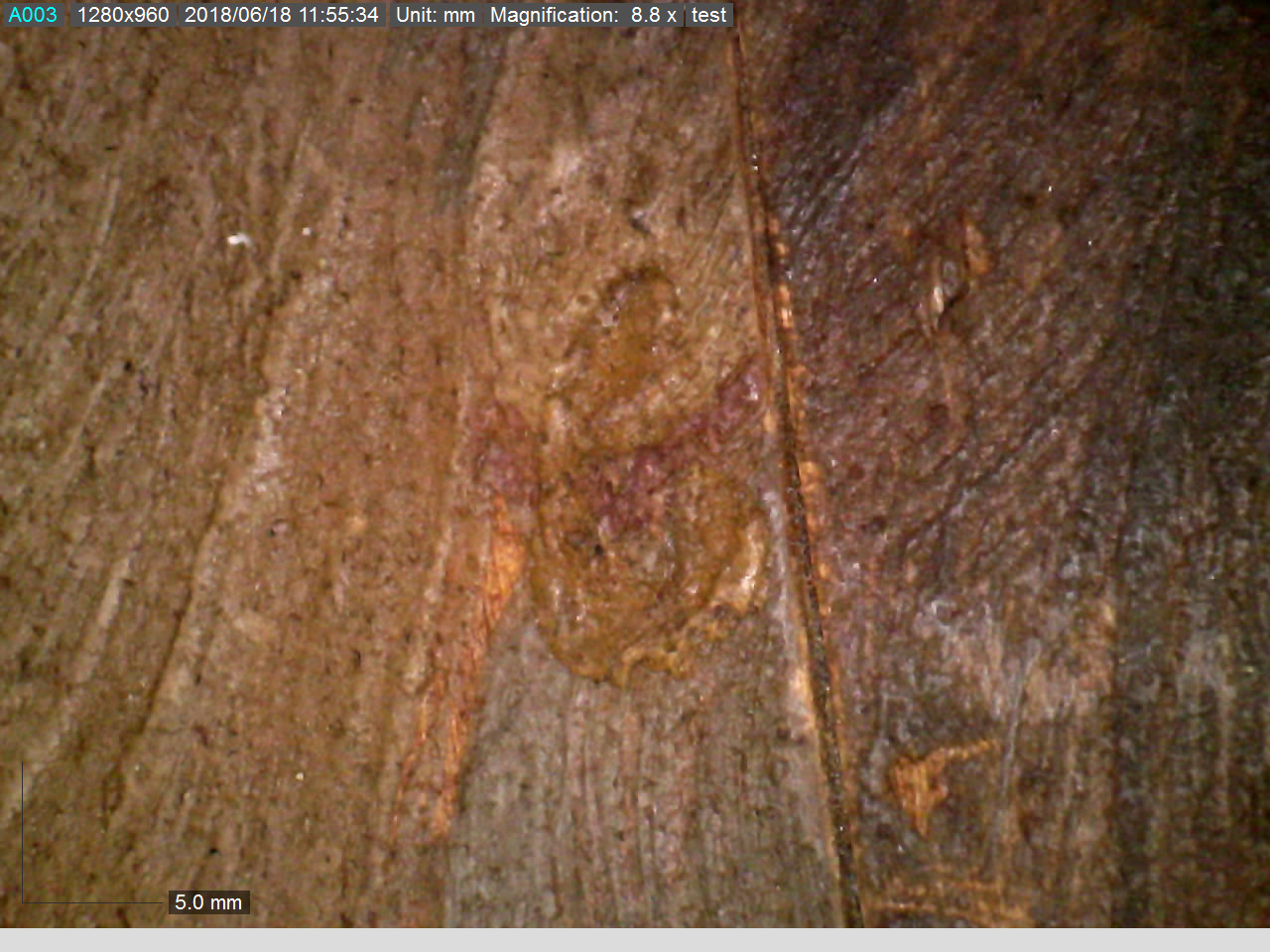
The visual impact of the orpiment in the Lady’s earrings is still perceptible with the naked eye. When viewed under magnification, the golden hue of this arsenic yellow remains vivid (fig. 1.8). Furthermore, the plate-like crystal structure of orpiment causes it to vividly sparkle in the light and thus to appear as lustrous gold on painted surfaces.22 Figure 1.9 shows these crystals in the proper right earring at high magnification. The relatively large crystals in this small area suggest that the ancient painter did not attempt to grind the pigment as fine as possible. The sparkling quality of orpiment appears to have been essential to the Lady. The painter applied the pigment thickly and unmixed with other pigments, unlike in the green stones, where they mixed the arsenic yellow with a still unidentified blue colorant.23 In the earrings, arsenic yellow was meant to be seen and emphasizes the jewelry as a focal area of prestige, with the emphasis reinforced by the use of a pigment that counted as a prestigious material in itself.
Another yellow pigment used was yellow ochre, which was also sometimes employed to depict gold. Yellow ochre was native to Roman Egypt and commercially available in large quantities, as suggested by the inventory of a pharmacist, Aurelios Neoptolemeos, preserved on a papyrus dated May 18, 259 CE,24 which lists three talents (approximately 25–30 kg) of yellow ochre.25 The painter of the Girl (see fig. 1.1) used yellow ochre to create her golden earrings (fig. 1.10), as suggested by the MA-XRF map for iron (fig. 1.11). Romano-Egyptian painters also used actual gold leaf to depict golden jewelry, and this is the case for the Girl’s wreath (see fig. 1.11). As Spence and Twilley discuss in this volume, the painter of the woman in the Nelson Atkins Museum used gold leaf for the earrings, as did the painter of the well-known portrait in the Getty collection, where gold leaf was used for the subject’s earrings, necklace, and wreath.26
The pearls in the Lady (see fig. 1.3) are one of the portrait’s defining features, not only because they have survived the test of time relatively well but also because the ancient painter depicted them so prominently, in a brilliant white (fig. 1.12). The MA‑XRF results suggest that lead white pigment is present in the pearls (see fig. 1.7). The Stockholm papyrus may have something to reveal about the aesthetic ideal that underlaid the painter’s choice of materials. The papyrus refers to pearls on numerous occasions and provides recipes for making imitation pearls and bringing out their white luster.27 One recipe is especially thought-provoking. It explains how to clean real pearls that have become dirtied through extended use, so they regain a “whiteness not inferior to the original.”28
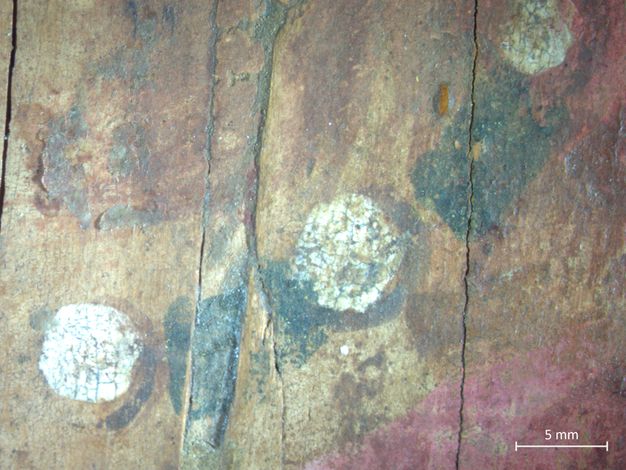
Perhaps the brilliant lead white of the Lady’s pearls and the recipe in the Stockholm papyrus reflect the aesthetics that people in Roman Egypt valued in pearls. It also raises questions of how pearls were worn in real life: how often and for how long. Like the choice of pure arsenic yellow to represent gold, this choice for pure white is a high-value detail conveying meaning in mummy portraits.29
Afterlives: Conservation and Restoration
The traces of the portraits’ post-acquisition afterlives manifest in the form of conservation-restoration treatments and aesthetic interventions. The four portraits all underwent at least one treatment following their acquisition. Documentation of this accompanies only the Fragment (see fig. 1.2), noting W. F. Meijer van Cassel as the conservator at the Allard Pierson who treated the painting in 1975. A four-page conservation report on the nature and the underlying motivation for the treatment is on file. The adhesion of the Fragment’s paint layers was in poor condition, so the painted surface required consolidation.30
The Man (see fig. 1.4) underwent treatment around the same time. The portrait is witness to a different conservation approach, however. A sticker on the back of the Man’s modern support identifies L. D. Vercouteren as the conservator and indicates that he treated the portrait in his studio in Scheveningen, the Netherlands. Vercouteren’s curriculum vitae places him in Scheveningen in the early 1970s.
Documentation of the Man’s treatment is not on file; however, interventions are clearly visible. The portrait had broken down into at least three large fragments. Vercouteren reassembled the fragments onto a cloth-covered panel with a simple wooden frame. A large, rectangular strip on the portrait’s left side has been painted to reconstruct the missing portion of the Man’s head. It is clearly distinguishable in the infrared photograph (fig. 1.13). The painting style and the direction of brushstrokes in the background of the modern addition imitate the original paint. The restored section visually produces a complete portrait. It is unknown whether Vercouteren created this infill or whether it dates from a previous intervention.
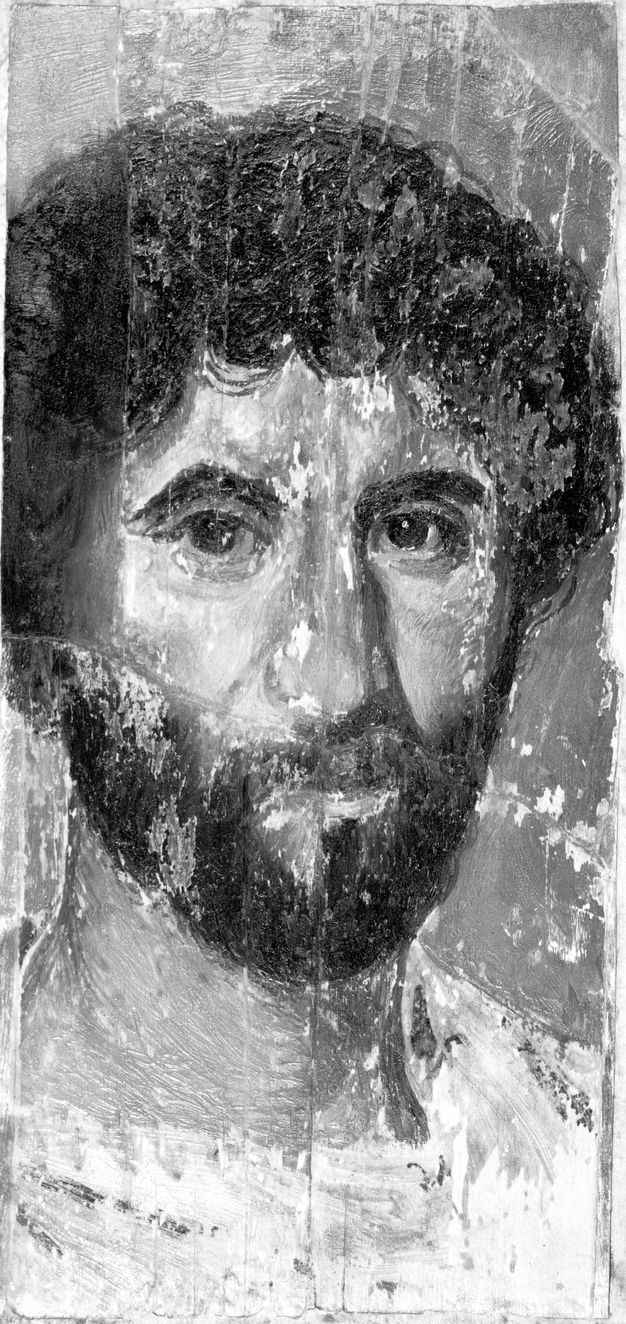
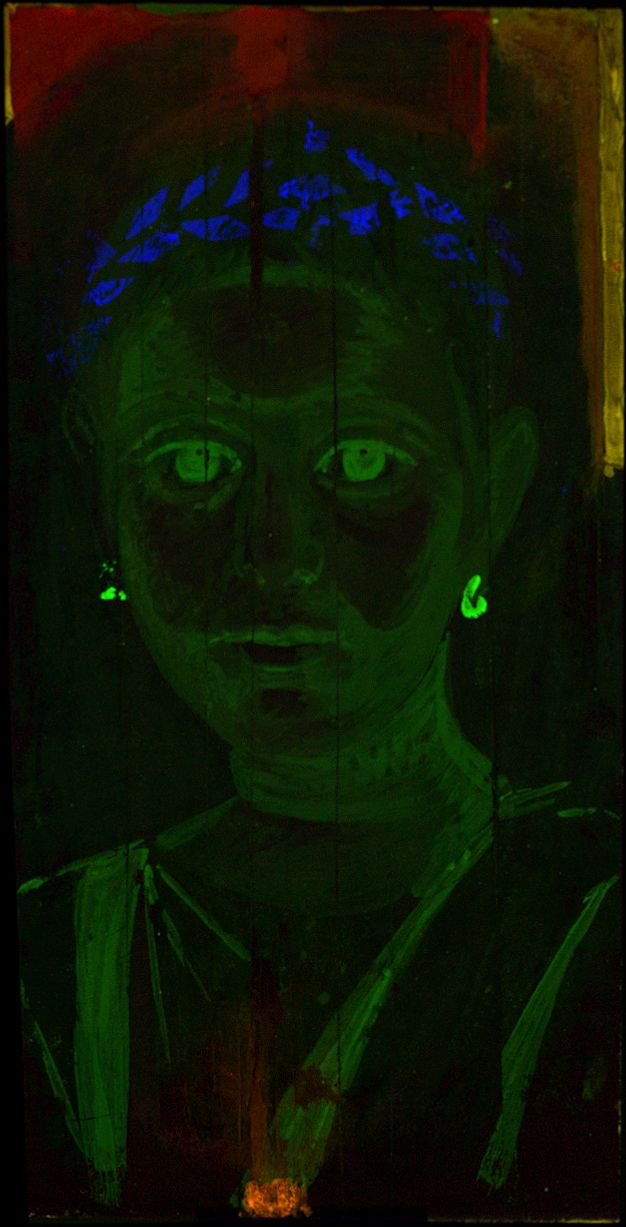
Whereas Meijer van Cassel deemed a glossy surface objectionable for a mummy portrait, Vercouteren arguably did not. A glossy varnish completely covers the Man and fluoresces strongly under UV radiation (fig. 1.14). The Girl (see fig. 1.1) was also varnished at some point in its history, and has darkened over time, giving the portrait a significant brown cast, and like the Man it was restored to look like a complete painting. Several additions to the panel serve this purpose. The oldest of these are the infills of the panel’s original angled corners; these corners were already present in the 1909 Lunsingh Scheurleer catalogue photo of the Girl.31 The Man features the same type of added corner at the top right of the panel, distinguishable from the rest of the painting in both IR and UV radiation (see figs. 1.13–1.14). The corner matches the ancient background in color but is distinct from it—and from the rectangular infill—in terms of texture.
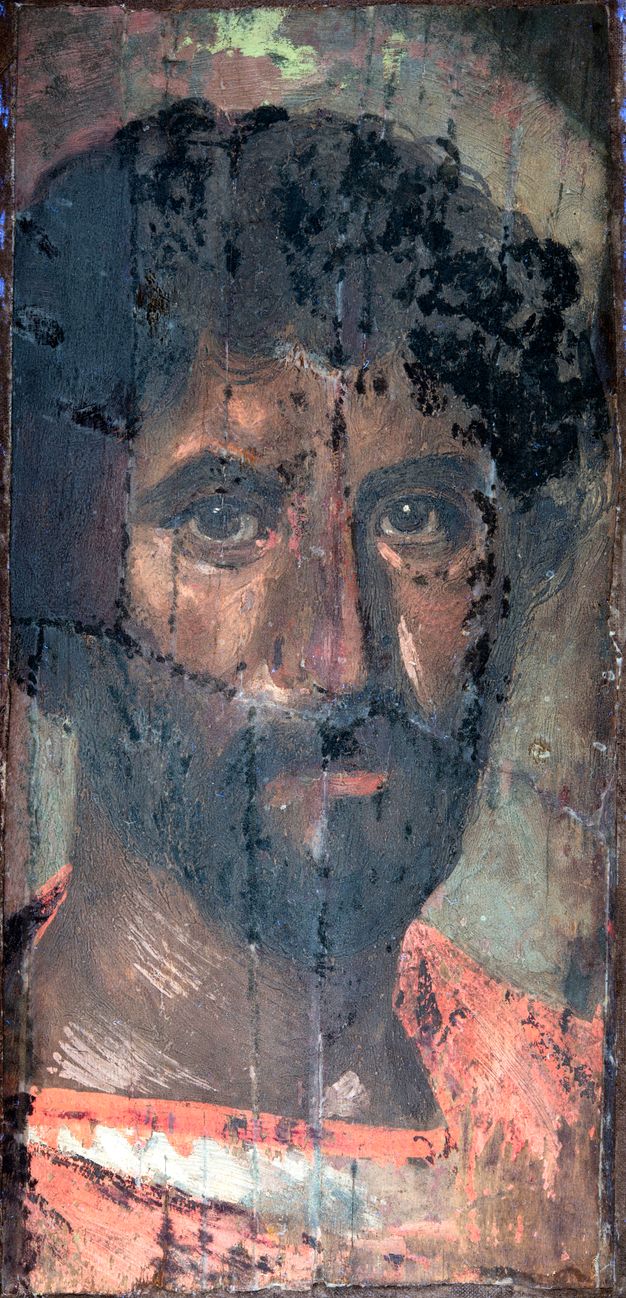
These corners in both portraits both contain manganese (see fig. 1.11). This is noteworthy, as manganese is not present in the ancient paint. Analysis of these modern materials may reveal whether similar or identical pigments are present in these added corners, and this might lead in turn to an estimated dating for these additions based on the documentary evidence of the Girl and the exact composition of the pigments used.
The dating of modern materials also tells more about the second life of the Lady (see fig. 1.3). At some point, the portrait received a modern secondary support consisting of three wooden panels with a cradle affixed to the back. On the front, these panels are painted white. MA-XRF revealed the principal pigment here to be titanium white (see fig. 1.7). Titanium white was developed in the late 1910s but became popular only in the 1930s.32 This narrows the date range for the secondary support and yields an image of how the Lady was presented before the mid-twentieth century.
The cradle itself testifies to sophisticated artisanship. The wood is smooth and the edges of the fixed vertical slats carefully beveled. The effort put into this cradle makes it clear that the secondary support was to remain affixed to the ancient panel for an extensive period of time, if not indefinitely. Rather than merely a structural aid, it was an integral part of the object. The cradle reveals two further aspects of the Lady’s afterlife: warping and deformation potentially threatened the panel, and the Lady’s custodians of the time dealt with it no differently than a European old master painting would have been treated.
These observations about past conservation treatments contribute to the stories of individual portraits’ post-acquisition lives. They illustrate how people interacted with mummy portraits; the mode of engagement reflects the value of mummy portraits to people and institutions in different locations and periods of time. Furthermore, deconstructing conservation histories makes it possible to visualize how individual mummy portraits appeared as they moved through circles of collectors and dealers.
In the first APPEAR volume, Judith Barr emphasized that studying conservation histories informs provenance studies, and vice versa.33 Indeed, as Kijowska et al. contribute in this volume, examining conservation materials and practices can yield invaluable information about the earliest selling and collecting practices in mummy portrait history. There always remains the possibility of historical conservation materials disappearing as they fall out of fashion or are deemed harmful.
Conclusion: Mummy Portraits Matter
The APPEAR project has provided an impetus to uncover stories about mummy portraits. Continuing with the metaphor of composing histories as painted pictures, modern analytical techniques provide scholars with the palette and the tools to tell those histories. This paper has shown the power of a Morellian approach for the study of mummy portraits. Examining their production may deconstruct mummy portraits into individual materials and techniques; these then serve as the anchor points for the histories that one wishes to compose.
Expanding the notion of the Morellian method to include storytelling strengthens technical examination as a way to understand the meaning of mummy portraits. The Allard Pierson portraits discussed here reveal the potential of this approach.
Acknowledgments
This kind of research can only blossom through collaboration, and a great many people made it possible for me to dive into this project. For the arrangements and infrastructure to examine the Allard Pierson portraits, I thank Branko F. van Oppen de Ruiter, Wim Hupperetz, Willem van Haarlem, Birgit Maas, Tony Jonges, and Erma Hermens. For the acquisition and interpretation of the MA-XRF data, I thank Erma Hermens, Annelies van Loon, Victor Gonzalez, and Francesca Gabrieli. For the acquisition and interpretation of the VIL and XRD data, I thank Luc Megens. Finally, I thank Marie Svoboda and Ben van den Bercken for organizing this second APPEAR conference—it proved such fertile ground to present and test my ideas.34
Notes
-
The painting presently resides in a private collection under the care of Grant Ford Ltd. ↩︎
-
The Österreichische Nationalbibliothek preserves a copy of this poster. See the Bildarchiv und Grafiksammlung, Pk 3003, 275. ↩︎
-
Schneede, Uwe M. 2021. Paula Modersohn-Becker: Die Malerin, die in die Moderne aufbrach. C. H. Beck.. Also see Stamm, Rainer, and Paula Modersohn-Becker. 2007. Paula Modersohn-Becker und die ägyptischen Mumienportraits: Eine Hommage zum 100. Todestag der Künstlerin (exhibition catalogue). Hirmer Verlag., specifically, on the connection between Modersohn-Becker and Romano-Egyptian funerary portraits. ↩︎
-
See Montserrat, Dominic. 1998. Changing Bodies, Changing Meanings: Studies on the Human Body in Antiquity. Routledge., for the late nineteenth- and early twentieth-century enthusiasm for mummy portraits. ↩︎
-
See Drimmer, Sonja. 2022. “Connoisseurship, Art History, and the Paleographical Impasse in Middle English Studies.” Speculum 97 (2): 415–68., for a concise overview of the history of the Morellian method, its connection to contemporary and analogue developments in paleography, and an extensive bibliography on Morelli. See Anderson, Jaynie. 2019. The Life of Giovanni Morelli in Risorgimento Italy. Officina Libraria. for a biography of Morelli. ↩︎
-
Anderson, Jaynie. 2019. The Life of Giovanni Morelli in Risorgimento Italy. Officina Libraria.. ↩︎
-
Anderson, Jaynie. 2019. The Life of Giovanni Morelli in Risorgimento Italy. Officina Libraria.. ↩︎
-
See Anderson, Jaynie. 2019. The Life of Giovanni Morelli in Risorgimento Italy. Officina Libraria., for examples of how Morelli balanced his activities as a connoisseur with his friendships, political convictions, and scholarly perspectives. ↩︎
-
See Barr, Judith, Clara M. ten Berge, Jan M. van Daal, and Branko F. van Oppen de Ruiter. 2019. “The Girl with the Golden Wreath: Four Perspectives on a Mummy Portrait.” Arts 8 (3): 92–122. for a study of the Girl as a core piece of the Allard Pierson collection. This publication also discusses the preliminary results of the first technical examination campaign. ↩︎
-
See van Daal, Jan. 2019. “Ancient Incarnations: Depicting Human Flesh in Mummy Portraits from Roman Egypt.” Master of Science thesis, University of Amsterdam. for an extensive account of the analytical results after the second examination campaign. ↩︎
-
Thiboutot, Gabrielle. 2020. “Egyptian Blue in Romano-Egyptian Mummy Portraits.” In Svoboda and Cartwright 2020.. For further discussions of Egyptian blue in mummy portraits, see Dyer, Joanne, and Nicola Newman. 2020. “Multispectral Imaging Techniques Applied to the Study of Romano‑Egyptian Funerary Portraits at the British Museum.” In Svoboda and Cartwright 2020.; Ganio, Monica, Johanna Salvant, Jane Williams, Lynn Lee, Oliver Cossairt, and Marc Walton. 2015. “Investigating the Use of Egyptian Blue in Roman Egyptian Portraits and Panels from Tebtunis, Egypt.” Applied Physics A 121 (3): 813–21. https://doi.org/10.1007/s00339-015-9424-5.; Mayberger, Evelyn (Eve), Jessica Arista, Marie Svoboda, and Molly Gleeson. 2020. “Invisible Brushstrokes Revealed: Technical Imaging and Research of Romano-Egyptian Mummy Portraits.” In Svoboda and Cartwright 2020.; and Vak, Bettina, Roberta Iannaccone, and Katharina Uhlir. 2020. “Nondestructive Studies of Ancient Pigments on Romano-Egyptian Funerary Portraits of the Kunsthistorisches Museum, Vienna.” In Svoboda and Cartwright 2020.. ↩︎
-
See van Daal, Jan. 2019. “Ancient Incarnations: Depicting Human Flesh in Mummy Portraits from Roman Egypt.” Master of Science thesis, University of Amsterdam., for a full discussion of Egyptian blue in this group. The question of Egyptian blue’s presence in the Lady and the Man warrants further research. ↩︎
-
van Daal, Jan. 2019. “Ancient Incarnations: Depicting Human Flesh in Mummy Portraits from Roman Egypt.” Master of Science thesis, University of Amsterdam.. ↩︎
-
van Daal, Jan. 2019. “Ancient Incarnations: Depicting Human Flesh in Mummy Portraits from Roman Egypt.” Master of Science thesis, University of Amsterdam.. ↩︎
-
Inventory number 6-21375. See Ganio, Monica, Johanna Salvant, Jane Williams, Lynn Lee, Oliver Cossairt, and Marc Walton. 2015. “Investigating the Use of Egyptian Blue in Roman Egyptian Portraits and Panels from Tebtunis, Egypt.” Applied Physics A 121 (3): 813–21. https://doi.org/10.1007/s00339-015-9424-5. for the analysis. ↩︎
-
Ganio, Monica, Johanna Salvant, Jane Williams, Lynn Lee, Oliver Cossairt, and Marc Walton. 2015. “Investigating the Use of Egyptian Blue in Roman Egyptian Portraits and Panels from Tebtunis, Egypt.” Applied Physics A 121 (3): 813–21. https://doi.org/10.1007/s00339-015-9424-5.. ↩︎
-
For the Leyden papyrus, see Rijksmuseum van Oudheden, Leiden, AMS 66. For the Stockholm papyrus, see Sveriges nationalbibliotek, Stockholm, 2013/75. ↩︎
-
See Halleux, Robert. 1981. Les alchimistes grecs. Tome I. Papyrus de Leyde. Papyrus de Stockholm. Fragments de recettes. Texte établi et traduit par Robert Halleux. Les Belles Lettres. for a Greek text edition and French translation of both papyri. ↩︎
-
Halleux, Robert. 1981. Les alchimistes grecs. Tome I. Papyrus de Leyde. Papyrus de Stockholm. Fragments de recettes. Texte établi et traduit par Robert Halleux. Les Belles Lettres.. ↩︎
-
Halleux, Robert. 1981. Les alchimistes grecs. Tome I. Papyrus de Leyde. Papyrus de Stockholm. Fragments de recettes. Texte établi et traduit par Robert Halleux. Les Belles Lettres.. ↩︎
-
Halleux, Robert. 1981. Les alchimistes grecs. Tome I. Papyrus de Leyde. Papyrus de Stockholm. Fragments de recettes. Texte établi et traduit par Robert Halleux. Les Belles Lettres.. ↩︎
-
Smith, Kevin P., and Guðmundur Ólafsson. 2023. “All That Glitters Is Not Gold: Multi-Instrumental Identification of Viking Age Orpiment (As2S3) from Surtshellir Cave, Iceland.” Journal of Archaeological Science: Reports 47: 103724. https://doi.org/10.1016/j.jasrep.2022.103724.. ↩︎
-
Identification of the blue colorant in the green stones would require further analysis. For example, VIL or false-color infrared imaging may determine whether Egyptian blue or indigo, respectively, is present. ↩︎
-
P.Oxy. 31.2567. Papyrology Rooms, Bodleian Art, Archaeology and Ancient World Library, Oxford. See Totelin, Laurence M. V. 2016. “Pharmakopōlai: A Re-Evaluation of the Sources.” In Popular Medicine in Graeco-Roman Antiquity: Explorations, edited by William V. Harris. Brill., for the Greek text edition and English translation of this papyrus. ↩︎
-
See Totelin, Laurence M. V. 2016. “Pharmakopōlai: A Re-Evaluation of the Sources.” In Popular Medicine in Graeco-Roman Antiquity: Explorations, edited by William V. Harris. Brill., for the conversion of a talent to kilograms. ↩︎
-
J. Paul Getty Museum, 81.AP.42; see https://www.getty.edu/art/collection/object/103QSW. ↩︎
-
See Halleux, Robert. 1981. Les alchimistes grecs. Tome I. Papyrus de Leyde. Papyrus de Stockholm. Fragments de recettes. Texte établi et traduit par Robert Halleux. Les Belles Lettres., for all references to pearls in the Stockholm papyrus. ↩︎
-
Halleux, Robert. 1981. Les alchimistes grecs. Tome I. Papyrus de Leyde. Papyrus de Stockholm. Fragments de recettes. Texte établi et traduit par Robert Halleux. Les Belles Lettres.. ↩︎
-
See the work of Ann-Sophie Lehmann for the notion of materials shaping meaning in art. Lehmann, Ann-Sophie. 2012. “How Materials Make Meaning.” Netherlands Yearbook for History of Art 62 (1): 6–27. https://doi.org/10.1163/22145966-06201002. and Lehmann, A. S. 2014. “Stil und Material: Ein beschraenktes Verhaeltnis.” kritische berichte – Zeitschrift für Kunst- und Kulturwissenschaften 42 (1): 127–36. are good overviews. ↩︎
-
In this report, Meijer van Cassel also expressed concerns about the treatment altering the surface of the portrait, causing it to become glossy or darkened. ↩︎
-
Barr, Judith, Clara M. ten Berge, Jan M. van Daal, and Branko F. van Oppen de Ruiter. 2019. “The Girl with the Golden Wreath: Four Perspectives on a Mummy Portrait.” Arts 8 (3): 92–122.. ↩︎
-
Eastaugh, Nicholas, Valentine Walsh, Tracey Chaplin, and Ruth Siddall. 2008. Pigment Compendium: A Dictionary and Optical Microscopy of Historical Pigments. 3rd ed. Butterworth-Heinemann.. ↩︎
-
Barr, Judith. 2020. “From All Sides: The APPEAR Project and Mummy Portrait Provenance.” In Svoboda and Cartwright 2020.. ↩︎
-
van Daal, Jan. 2019. “Ancient Incarnations: Depicting Human Flesh in Mummy Portraits from Roman Egypt.” Master of Science thesis, University of Amsterdam., presents a full list of the people who were part of this project. ↩︎