Increasingly refined scientific investigations are bringing to light the complexities of ancient painting techniques.1 Research on panel portraiture, in particular, is providing ever-growing evidence pertaining to the making of these complex objects, their provenience, and function.2 This evidence, alongside literary, art historical, and archaeological research, sheds new light on the interpretation of the elusive nature and origins of panel portraits: a blend of different, yet intertwined, customs drawing from ancient Egyptian, Greek, and Roman traditions.
Many questions on the making and meaning of panel portraiture remain unanswered, however. Some of these questions concern the choices, preparation, and uses of pigments to create the portraits. Advances in terms of pigment identification have been made, but fewer investigations have explored aspects of how these pigments are used and for what purpose. One possible reason for this deficiency is that a work of art is much more than the sum of its parts, and the painter’s skill and the intangible qualities that went into creating the work cannot so easily be quantified. Empirical observation, however, may shed some light on artists’ modi operandi and bring us closer to their intentions.
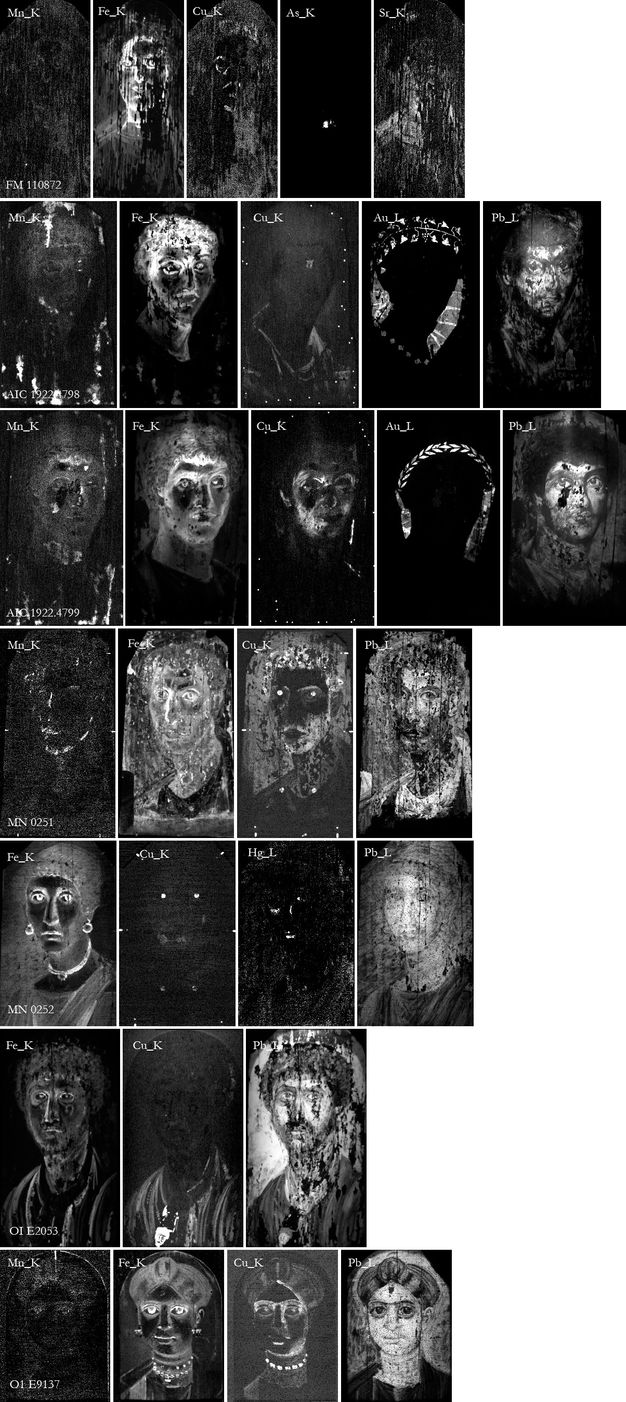
This paper investigates the making of a heterogeneous group of panel portraits held in Chicago-area collections. It draws some general conclusions on how a variety of pigments are used to achieve an array of often subtle tonal variations, beginning with insights into the ways in which Egyptian blue (EB), a pigment easily characterized by means of visible-induced luminescence imaging (VIL), is used to create a variety of hues. It continues with a discussion of other pigments, which can be visualized using infrared-reflected and visible- and ultraviolet-induced luminescence imaging (IRR, VIL, and UIL, respectively; figs. 13.1–13.7) and mapping X-ray fluorescence spectroscopy (MA-XRF; fig. 13.8).
Methodology and Case Studies
In addition to archival research, visual observations with and without magnification were conducted alongside technical imaging (VIL, UIL, and IRR) using a Nikon D850 modified camera and Nikon SB80DX flashes equipped with suitable filters.3 Hyperspectral imaging (HSI) was undertaken in the 393–892 nm range, divided into 240 spectral bands, using a Resonon Pika II pushbroom camera. MA-XRF made use of a custom-made scanner developed by Northwestern University.4 Reflected Fourier transform infrared (R-FTIR) spectroscopy was performed using a Bruker Alpha unit equipped with an external reflectance head. A select number of microscopic samples were mounted as cross sections. Raman and transmission FTIR spectroscopy were also executed using a Jobin Yvon Horiba confocal and Bruker Hyperion microscope, respectively.
Field Museum of National History (FM 110872)
Difficult to visually appreciate due to its condition, this painting depicts a woman with dark curly hair against a gray background (fig. 13.1). She wears a white tunic with dark vertical bands and a necklace with a bright yellow pendant. According to the acquisition record, the portrait is roughly dated to the end of the second century CE and was purchased from E. A. David, Long Island City, in 1945. The painting was formerly part of the T. Graf Collection.5
Art Institute of Chicago (AIC 1922.4798 and AIC 1922.4799)
Gifted by Emily Crane Chadbourne in 1922, these two paintings are dated to the first half of the second century CE. The first (AIC 1922.4798; fig. 13.2) represents a man wearing a white garment with purple vertical bands and a gilded wreath with berries and leaves. The second (AIC 1922.4799; fig. 13.3) represents a man wearing a white garment with dark bands and a gilded laurel wreath. Both figures are represented against a light gray, partially gilded background.6
Susan and Lew Manilow Collection (MN 0251 and MN 0252)
Figure 13.4 (MN 0251), dated to the second century CE, depicts a bearded man wearing a white garment with purple stripes and a mantle. Figure 13.5 (MN 0252), dated to the first century CE, shows a woman wearing a red garment with dark stripes, a mantle, necklace, and earrings. Both figures are represented against a gray background. They were purchased from Sotheby’s, New York, in 2004.7
Institute for the Study of Ancient Cultures of the University of Chicago (ISAC E2053 and ISAC E9137)
The portrait of a man, ISAC E2053 (fig. 13.6), wearing a purple garment and a scarf, was likely excavated in Fag el-Gamous by Bernard Grenfell and Arthur Hunt in 1901–1902 and is dated to the end of the second century CE. He is represented against a beige background.8 Excavated by Flinders Petrie in Hawara in 1911 and acquired in the same year, portrait ISAC E9137 (fig. 13.7), dated to the beginning of the second century CE, represents a woman with an elaborate hairstyle, a purple tunic with purple and yellow stripes, two necklaces, and pearl earrings. She is represented against a gray background.9
Results
Over the past decade or so, VIL imaging has revealed the use of EB in panel portraits for obvious functions, such as blue garments. Other intuitive uses include its mixture with organic and inorganic reds for purples or with yellows for greens. Less intuitive uses include its presence in varying concentrations for the representation of skin tones, in the whites of the eyes, and, in some instances, in the lower lips.10 This study provides additional clues to the functions and intended visual effects of the pigment in the case studies investigated (see figs. 13.1–13.7), with reference to the skin tones, drapery, and other features. Drawing particularly on MA-XRF data (fig. 13.8), the paper will also address instances where other pigments are used, sometimes in similar ways to EB. Finally, it will attempt to link the empirical findings within the broader framework of primary literary evidence. While this paper is necessarily focused on specific aspects of the portraits’ materials and techniques, the broader findings from the analytical investigation are summarized in figure 13.9.
| Portrait | Pigments | Binder |
|---|---|---|
| FM 110872 | Gypsum (FTIR); silicates/kaolinite group (FTIR);i red ochre (HSI, MA-XRF); aluniteii (FTIR, Raman); umbers (MA-XRF); carbon-based black (IRR, Raman); EB (VIL, MA-XRF); arsenic-containing yellow (MA-XRF)iii | Not determined |
| AIC 1922.4798 | Red and yellow ochres (Raman, MA-XRF); jarosite (Raman, FTIR, MA-XRF); umbers (MA-XRF); carbon-based black (Raman); hydrocerussite (FTIR, XRF); calcite (FTIR, Raman, MA-XRF); silicates/kaolinite group (FTIR); EB (Raman, VIL); red dye of plant origin, likely madder (SERS, UIL); blue dye, likely indigo or woad (HSI); gold foil (MA-XRF) | Beeswax (GC-MS) |
| AIC 1922.4799 | Red and yellow ochres (Raman, MA-XRF); jarosite (FTIR); umbers (MA-XRF); carbon-based black (Raman); hydrocerussite (FTIR, XRF); calcite (FTIR); gypsum (FTIR); silicates/kaolinite group (FTIR); indigo or woad (HSI, FTIR, GC-MS); gold foil (MA-XRF) | Beeswax (GC-MS) |
| MN 0251 | Lead-based white (MA-XRF); silicates (R-FTIR); red ochre (HSI, MA-XRF); carbon-based black (IRR); EB (VIL, MA-XRF); red dye of plant origin, likely madder (HSI, UIL); blue dye, likely indigo or woad (HSI) | Wax (R‑FTIR) |
| MN 0252 | Lead-based white (MA-XRF); silicates (R-FTIR); red and yellow ochres (HSI, MA-XRF); carbon-based black (IRR); EB (VIL, MA-XRF); cinnabar (MA-XRF); red dye of plant origin, likely madder (UIL); blue dye, likely indigo or woad (HSI) | Wax (R‑FTIR) |
| ISAC 2053 | Hydrocerussite (FTIR, MA-XRF); silicates (R-FTIR); red and yellow ochres (HSI, MA-XRF); carbon-based black (IRR); EB (VIL, MA-XRF); red dye of plant origin, likely madder lake (HSI, UIL); blue dye, likely indigo or woad (HSI) | Wax (R‑FTIR) |
| ISAC 9137 | Hydrocerussite (FTIR, MA-XRF); red and yellow ochres (HSI, MA-XRF); EB (VIL, MA-XRF); red dye of plant origin, likely madder (UIL); carbon-based black (IRR); copper-based green (MA-XRF) | Wax (R‑FTIR) |
i Clay minerals from the kaolinite group are possibly associated with the ochres and umbers.
ii Alunite is one of a group of white-yellowish minerals of formula AM3(SO4)2(OH)6, where A is normally K+ or Na+ and M is Al3+. If M is Fe3+, the mineral is jarosite. While jarosite has been found used on a number of portraits (see 1922.4798 and 1922.4799), alunite is less commonly identified (see Stenger et al. and Smith et al. in same volume). In this case, Na-rich alunite was identified with FTIR through the ν3(SO4)2- at c. 1219 and 1091 cm-1, δ(OH) at c. 1028 cm-1, and structural stretchings and water modes in the 3000-3800 cm-1 region (Bishop and Murad 2005).
iii Arsenic is only found in the yellow pendant gem hanging from the necklace (see fig. 13.8).
Skin Tones
Some questions concern the technical use of EB for the representation of skin tones: is it used only for cooler tones and shadows? Is it a “precious” pigment used in the uppermost finishing touches only? Or is it used liberally, also found beneath other paint layers? Prior to its inclusion in a paint mixture, what was the hue of the raw pigment? How was it prepared prior to mixing with other pigments and binders? Was it applied in translucent or opaque layers? The list of questions could continue to include more technical aspects related to paint application. At this stage of the research, we will mostly report on phenomenological observations aimed at understanding in more detail how technical information can supplement other means—based on style, iconography, etc.—that can help scholars in the characterization of this corpus of paintings.
FM 110872 (see fig. 13.1) shows the presence of EB in the skin tones in several locations, in two distinct concentrations, mixed with red, yellow, white, and black pigments (fig. 13.9): “low” for the shadow along the jawline and “high” elsewhere.11 Figure 13.10 shows a detail of the area around the mouth. A flesh-tinted paint mixture containing EB is found in the uppermost paint layer above the upper lip, while paint containing EB is applied underneath a darker brown paint layer by the mentolabial sulcus (below the lower lip), which is intended to stress the depth of a shadow by the chin. As observed in the MA-XRF maps, the copper K spectral lines—energetic enough to penetrate through the ochre layers—confirm that the blue pigment is in fact also present on the chin but is obscured in the VIL image by subsequent layers of paint (fig. 13.8). The presence of the blue pigment in the underlayer can be seen along the margins of the damaged edges in the VIL image (fig. 13.10). Therefore, in this example, EB-containing paint was used both as a finishing layer and as part of a more complex stratigraphy.
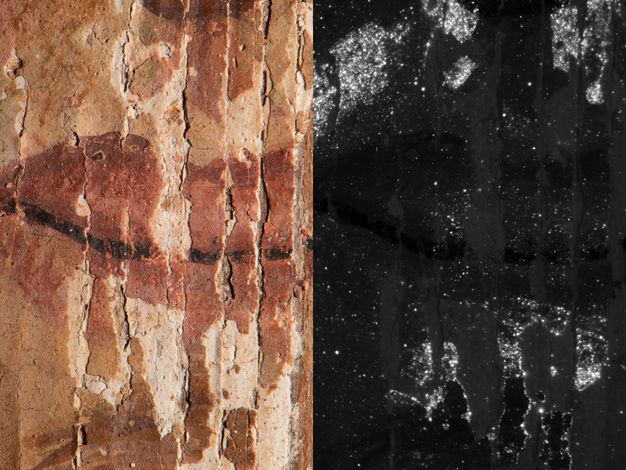
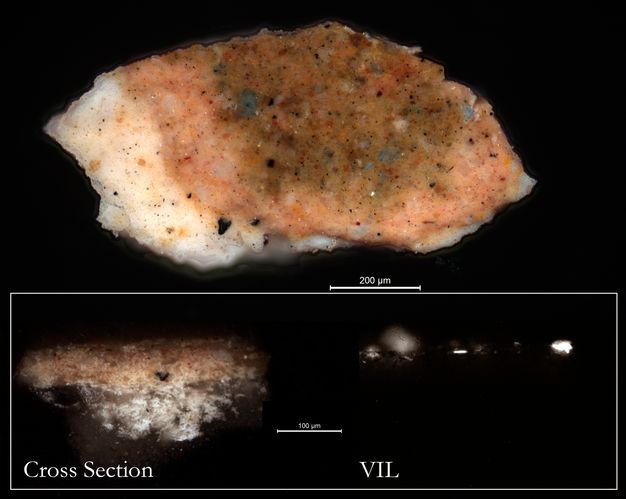
Figure 13.11 (top) shows a microscopic sample of an area of high concentration of EB from the left of the left eye of the figure, similar to that observed on the chin. Large blue grains can be seen scattered in the uppermost translucent light-brown paint layer, revealing the ruddier skin color underneath. As observed in the VIL image of the cross section (fig. 13.11, bottom right), and as one would expect from an unsorted ground pigment, the EB particles are diverse in size (10–30 μm range).12
Despite the different painting style from the Field Museum’s portrait, the skin tones of AIC 1922.4798 (fig. 13.2) also show two distinct concentrations of EB: high for the glabella (between the eyes) and above the upper lip, and low for the rest of the face, particularly in the neck and sternal area.13 In contrast to FM 110872, the EB-containing flesh paint in AIC 1922.4798 appears to have been used as the uppermost paint layer, only partially covered by very fine beige hatched lines between the eyes and black facial hairs on the upper lip. At present, this paint layer appears chalky and opaque, but this may be the result of degradation of the binding medium; calcium oxalates in the paint layers,14 as detected with FTIR, attest to processes of alteration of the binding medium.15
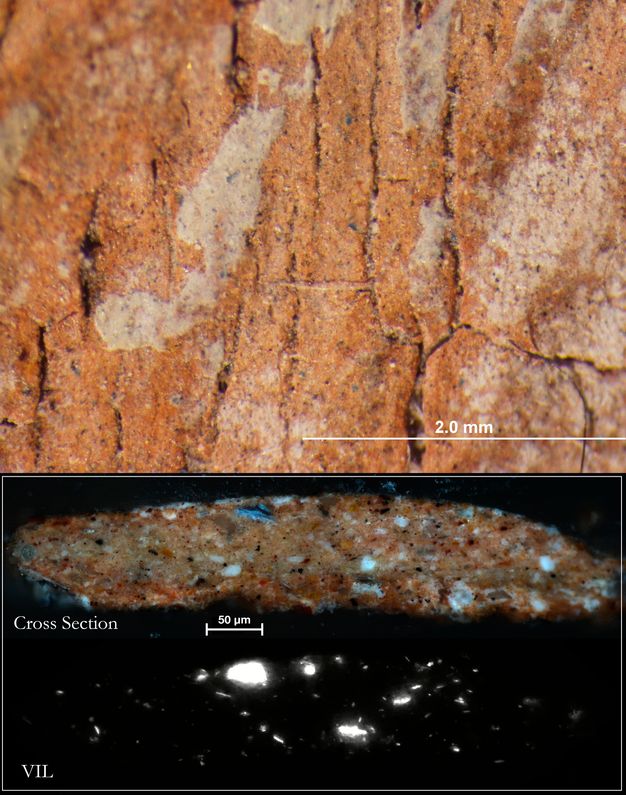
The skin tones of AIC 1922.4799 (fig. 13.3) are also created using at least two distinct concentrations of EB within complex mixtures of red, yellow, white, and black pigments (figs. 13.3 and 13.9). Both AIC paintings make use of luminous highlights executed with lead-based white paint (see the Pb_L map in fig. 13.8). EB is used more profusely, however, for the skin tones of AIC 1922.4799 than for AIC 1922.4798 (fig. 13.2),16 with the areas of highest concentration either in shadow or along the beard line. Areas where EB is least concentrated are those in which the white is used as a highlight, such as for the forehead, cheek, and chin. In these cases, therefore, EB is not mixed with white to modify the tone of white paint, as observed in other instances such as the sclera.17 The same low-level concentration is also observed on the neck. When observed under the microscope, the concentrated areas clearly show the presence of large blue particles, observable also at relatively low magnification (fig. 13.12, top). In cross section, the EB in the skin tones is well mixed with a lead-based white and ochres (see the Mn_K, Fe_K, and Pb_L maps in figure 13.8) and not applied only in the topmost layer; in the VIL image of the cross section, alongside the few large particles (> ca. 50 μm), several very small (< ca. 20 μm) particles can be seen across the entire stratigraphy (fig. 13.12, bottom).
EB is found in the beard, neck, and eye areas of MN 0251 (figs. 13.4, 13.8, and 13.9). Figure 13.13 shows how different concentrations were used for the skin tones around the left eye, including areas in shadow and in bright light, as observed on the forehead above the eyebrow. Judging from the rather homogeneous distribution within areas of similar concentration, it seems that each color was carefully mixed with varying amounts of EB prior to its application.
The use of EB in MN 0252 (fig. 13.5) appears to be highly concentrated in some of the midtones, around the mouth, glabella, and eyes, but not in the deepest shadows such as the one on the neck below the chin. Despite a highly naturalistic appearance, no EB was found in the skin tones of ISAC E2053 (fig. 13.6).18 By contrast, a profusion of the pigment was observed in the skin tones of the female portrait ISAC E9137 (fig. 13.7), where the pigment is distinctly found on the left side of the figure in a relatively homogeneous concentration. Whether these areas are meant to represent highlights, shadows, or midtones is difficult to say, because of the discoloration of the paint layers.
It appears that, in the cases analyzed with VIL for this study, the concentration of EB in paint mixtures within a particular area is relatively constant overall, with of course some exceptions (e.g. MN 0251). Most of the tonal modulation seems instead to have been executed through more nuanced distributions of other pigments, including ochres and lead-based whites, as can be observed in the elemental maps (fig. 13.8).
Whites of the Eyes: Blue, Gray, and Red
White paint containing EB has already been extensively documented for the representation of the whites of the eyes and was recently traced back to at least the fifteenth century BCE in Pharaonic Egypt.19 One explanation for the practice of adding blue to white paint is related to its possible function as an optical brightener, making off-white paint appear whiter or even distinctly bluish. Different pigment uses, however, are documented for the group investigated here, in which the whites of the eyes in most cases do not have a blue tint.20
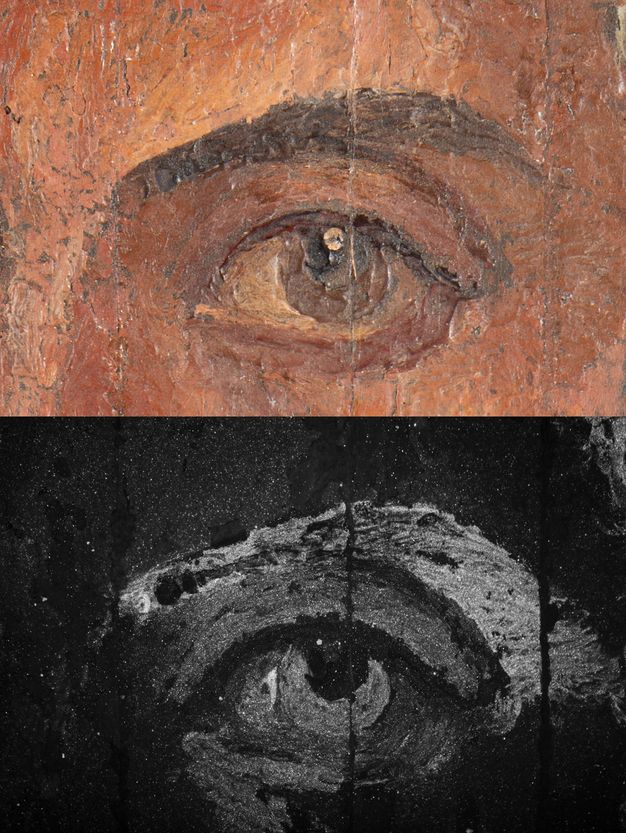
In MN 0251 and MN 0252 (figs. 13.4 and 13.5), the whites of the eyes could be described as reddish, rather than bluish, rendered with complex mixtures of EB, red ochres, and lead-based pigments in different proportions (figs. 13.8, 13.13, and 13.14). For MN 0251 (fig. 13.4), the painter has intentionally prepared different paint mixtures for the bright brushstroke in the white of the eyes—where there is a high concentration of EB—and for the white dot indicating the reflected light on the cornea, in which there is no EB. These apparently idiosyncratic uses of EB bring forward the complexities and individuality of artists’ techniques. A distinctive reddish tone also characterizes the whites of the eyes in AIC 1922.4799 (fig. 13.3), which were found to be composed of a lead-based white with small amounts of red ochre and no EB.
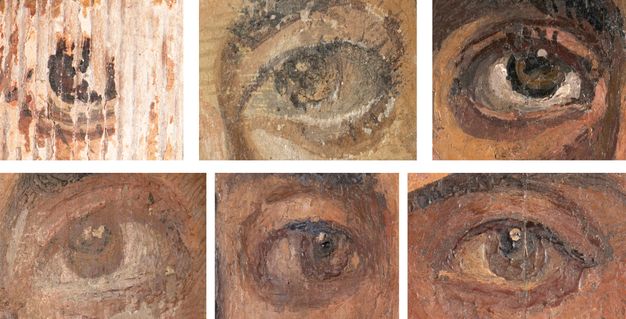
FM 110872, AIC 1922.4798, and ISAC E2053 (fig. 13.14) offer examples where a gray paint mixture was used in the white of the eye. In the IRR images, the gray paint layer absorbs infrared radiation, suggesting the likely use of a carbon-based black, as found in other parts of the figures. At this stage, it is worth noticing that EB is found elsewhere in the paintings, and was therefore clearly available, but deliberately not used for the whites of the eyes. Instead, a black pigment was used to perhaps achieve a similar effect. While the use of carbon black may create an effect reminiscent of the addition of EB to white in creating a cool tone,21 the use of red ochre may appear counterintuitive. However, it may well be that the intention of the artist was to replicate real-life hues.22 Evidence for the use of a red/pink tone in the whites of the eyes has been found in other contexts. A relevant comparative example is the first-century CE marble portrait bust of a young girl called Psyche at the Hellenic National Archaeological Museum, Athens (EAM 426), in which madder lake was used in the whites of the eyes. The implications of this choice, which could also be related to physiognomics, as in pseudo-Aristotle’s Physiognomonica,23 and have therefore moral/ethical undertones, are still being investigated.24
Drapery Shadows
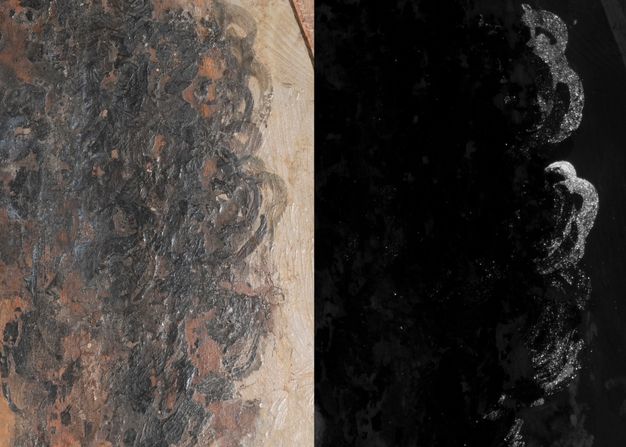
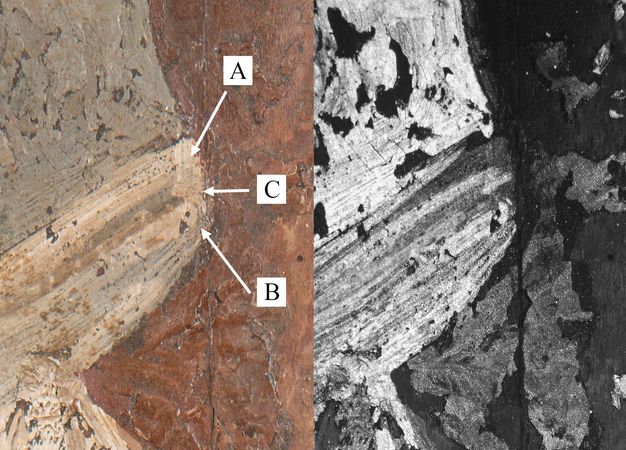
EB is frequently found in drapery renditions, especially when delineating shadows. This is true for both colored garments, as in the case of the pink cloaks in ISAC E2053 (fig. 13.6) and ISAC 9137 (fig. 13.7), where EB is found in the darker areas, and for otherwise white garments, as in the case of ISAC E2053’s scarf, MN 0251’s cloak (fig. 13.4),25 and AIC 1922.4798’s mantle (fig. 13.2). ISAC E2053’s scarf is made of hydrocerussite, EB, and likely a carbon-based black, as inferred through the high absorption in the infrared range (see IRR image, fig. 13.6C). Although visually similar, VIL imaging shows that the folds of the scarf are executed using very different concentrations of EB, creating subtly different levels of gray with thin and translucent gray brushstrokes (fig. 13.15). The same paint mixture seems also to have been used for finishing touches in the hair, likely to convey the idea of thin strands through which the background is clearly visible, adding an element of three-dimensionality to the painting. The application of these touches seems to belong to a somewhat separate (perhaps final) intervention, as EB is not otherwise found in the figure’s hair (fig. 13.16).26
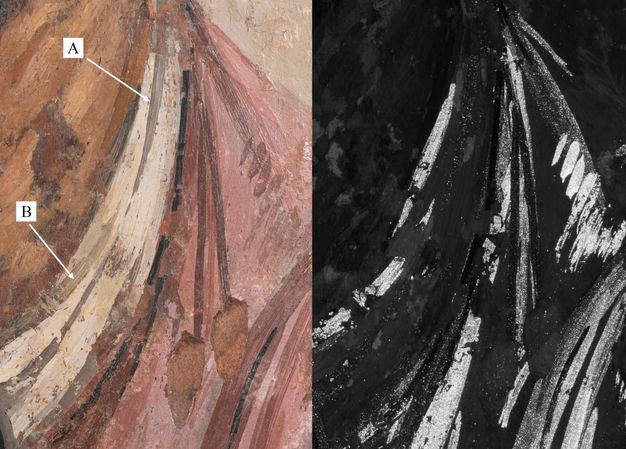
A similar approach was employed for MN 0251 (fig. 13.4), where different concentrations of ochres and EB were used with a lead-based white to execute the folds of the figure’s ensemble. In this example, EB is mixed in both the white paint and the translucent gray layer painted over the dark shadow between two highlights (fig. 13.17). This application, which will be discussed later in more detail, is rather elaborate in the way in which it blends the darks and the highlights of the folds: the translucent gray paint layer is very subtle, although clearly visualized in the VIL image.
Green, Blue, and Pink in the Hair
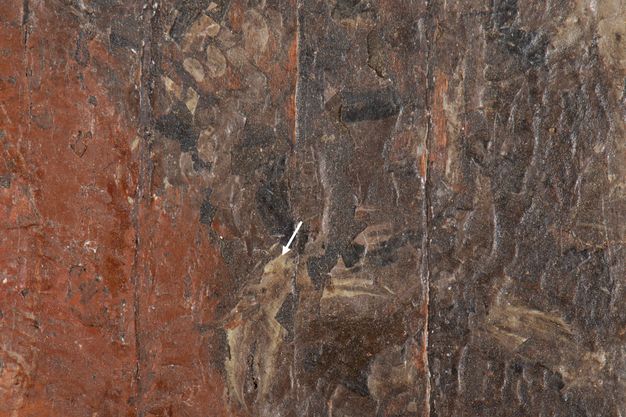
Imaging techniques other than VIL can be applied to provide insights into the uses of other pigments, which are likely to be as complex and articulated as those observed for EB. In particular, MA-XRF analysis of MN 2051 reveals that a copper-containing pigment was used for hair highlights (fig. 13.8). In other features in the portrait, there is a relatively good accordance between the copper map and the VIL image where EB is present, indicating that this pigment is used mostly at the surface.27 The unidentified pigment in the hair is green in color and not made of a mixture of EB and yellow pigment, as it does not show any luminescent properties in the infrared range. When observed at higher magnification, the pigment appears to be finely ground and poorly mixed within a white paint matrix, perhaps inhomogeneously redistributed by the melting and re-melting of the wax-based binding medium during the painting process (fig. 13.18).
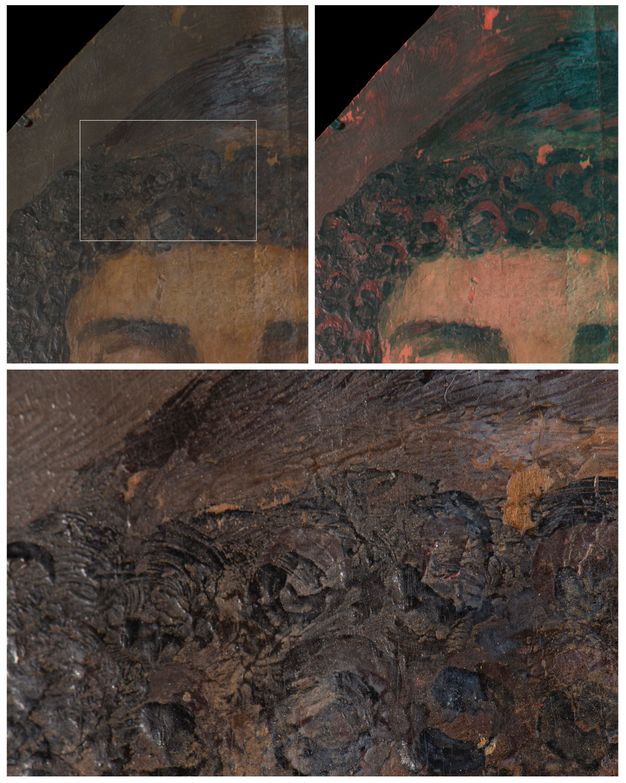
Another example of an unexpected use of pigment can be seen in MN 0252 (fig. 13.5), where a blue dye, likely indigo or woad,28 was identified in the hair. Figure 13.19 shows the infrared false-color image29 of a detail of the hair, where the distribution of the dye can be clearly seen in a red hue and is therefore distinguished from the carbon-based black likely used for the rest of the hair. Finally, a red organic colorant, likely madder lake,30 is also present in the hair of the same portrait (see figs. 13.5, 13.19, and 13.9). The very small amount of madder suggests that its presence is accidental. A similar example, where madder lake was instead used intentionally, and likely in conjunction with indigo, was found in Brooklyn Museum’s Noblewoman (86.226.18).31
Primary Sources, Analytical Evidence, and Conclusions
It is clear from this and other studies that particular pigment characteristics served specific functions, but also that similar effects could be achieved in different ways, making painting techniques more complex than just a set of recipes wherein a particular paint mixture was routinely used for a specific purpose. For example, EB appears to be used as a tone modifier for the hair of some figures examined in this study, but in one instance a green pigment was found instead, apparently used for a similar purpose. Considerable variation is found in the way in which the whites of the eyes are rendered: grays, blues, and reds are variously used to depict the whites of the eyes in the portraits studied. Are these different ways of portraying a subject the result of different schools of practice and established painting traditions or do they come from the requirements to imitate the individual physical/moral traits of the subject being represented? Or are they perhaps the idiosyncratic choices of an artist?
In considering these possibilities, it may be useful to compare the findings with the available primary literature that discusses the uses of color in antiquity and to highlight the complexities of these comparisons. For example, with the aim of explaining EB’s use in cooler skin tones, Gabrielle Thiboutot compared EB and Pliny’s anularian white,32 a mixture of creta (clay) and a pulverized vitreis gemmis (glassy gem) worn by the lower classes. This glassy gem, in the absence of further evidence, might have been a type of EB, and hence affordable by the lower classes.33 Another explanation could be found in Vitruvius, according to whom cretam anulariam (anularian clay) is dyed with vitrum (woad) to imitate indigo:34
item propter inopiam coloris indici cretam selinusiam aut anulariam vitro, quod Graeci ἰσάτιν appellant, inficientes imitationem faciunt indici coloris. 35
It should be remembered, however, that ἰσάτις, which is a Greek term for woad, is an interpolation; British Library’s Harley MS 2767 (f. 107r)36 reports in fact insallim as the Greek translation of vitrum, adding to the complication of the interpretation of the text; insallim, according to Leo Wiener,37 is of Arabic origin (عظام, transl. ‘iẓlim) and refers to the juice of a plant producing a color similar to indigo. Nonetheless, with the double meaning of vitrum—glass and woad—it could be additionally speculated that the vitrea gemma used for the portraits of women refers to dyed stones, affordable by the lower classes; a recipe for the preparation of a hyacinth-colored false gem in the Stockholm papyrus calls for indigo to dye a stone (Recipe 63).38
EB was also found—quite clearly in the case of MN 0251 (fig. 13.4 and fig. 13.17)—at the interface between highlights and shadows, through the application of subtle and barely noticeable brushstrokes. In addition, elegant and subtle ton sur ton brushwork using indigo over a carbon-based black was observed for the hair of MN 0252 (fig. 13.5) and ISAC E9137 (fig. 13.7). In a single passage, Pliny tells us two important pieces of information, as he describes one way in which artists used pigments:
Non pridem adportari et Indicum coeptum est, cuius pretium VII. ratio in pictura ad incisuras, hoc est umbras dividendas ab lumine. Est et vilissimum genus lomenti, quod tritum vocant, quinis assibus aestimatum.39
The author remarks that indigo, a very dark blue pigment, was used by artists for incisures, or the division of shadows from light. The interpretation of the precise meaning of the term incisura remains speculative. Could the thin application of indigo for the hair of MN 0252 (figs. 13.5 and 13.19) and Brooklyn’s 86.226.18 be a form of incisure? In addition, it is interesting to notice that in the same passage Pliny also tells us that there is a type of lomentum, called tritum, or “ground,” which is the most inferior quality of caeruleum (blue pigment), obtained, according to its name, through grinding.40 Lomentum is, according to Hillary Becker, a type of EB,41 but some of Pliny’s descriptions are confusing; lomentum is derived from one of the caerulea, but which one of those described by Pliny?42 While Pliny is specifically referring to indigo for incisures, there is no reason to exclude the use of other pigments for similar purposes. In addition, it would be overly simplistic to assume that all artists followed the same directives. The gray brushstroke observed on MN 0251 (figs. 13.4 and 13.17) is found on both highlights and shadows and may correspond to an incisure, but executed with EB rather than indigo, potentially suggesting an additional element of variability in these portraits.
With its low price, tritum, likely intended by Pliny as a washed-out blue pigment, might have been a good option for skin tones, whites of the eyes, incisures, and shadows, where a large-grained blue pigment might not have been strictly necessary but was perhaps best preserved for creating more intense hues of blue, as well as greens and purples.
According to the study of F. Delamare, desaturated or lighter forms of EB appear to have been privileged over darker hues on the market.43 Intriguingly, lomentum, which was a blue pigment of lighter shade, was more highly valued (10 denarii per pound) than the blue pigment from which it was made (8 denarii per pound).44 Based on the examples analyzed by Delamare, however, grinding was not the reason for the lighter color of the many blue pigments found in Pompeii, as all examples showed a nearly identical particle size distribution. Rather, admixtures with white pigments such as aragonite, calcite, and lead white, or the processing method, which can result in an incomplete reaction and therefore a lighter color, appear to have been some of the factors influencing the pigments’ hue. Particle size may play a role, but not through grinding; instead, an intentional mixture of two distinct particle sizes with different concentrations of EB could result in different tones.45 More recent studies, however, have highlighted additional different pathways for the creation of light-colored EB pigment in Greek contexts.46
Looking forward, high resolution VIL imaging (fig. 13.13) may provide a means to perform granulometry of the cuprorivaite centers, which are responsible for the emission of infrared radiation in EB. As an extension of this study, computer algorithms will be employed to measure the size of the particles from VIL images and generate frequency distributions of the granulometry. This type of analysis may provide insights into the types of EB used in Roman Egypt and beyond. As VIL imaging does not, however, provide information on associated materials, such as unreacted reagents or impurities that may have originally been part of the raw pigment, the results must also be compared with complementary analysis of pigment dispersions.
Close examination of the use of pigments in panel portraits has revealed a high level of complexity. The study of this corpus of paintings is of great importance that not only sheds light on this group of objects, but also provides a useful term of comparison for the study of related materials such as sculptural polychromy, which is less well preserved and more difficult to interpret.47 It appears reasonable to expect similar levels of complexity in works of art in diverse media, emphasizing the need for caution in the interpretation of highly fragmentary material evidence. This study revealed a variety of uses of pigments, and as more examples become available, these uses may help in distinguishing among schools of practice, practical pictorial needs, and even personal choices.
Acknowledgments
The authors are grateful to Susan Manilow, who warmly welcomed us to investigate the portraits in her collection. The authors also wish to thank William Parkinson, Jamie Kelly, J. P. Brown, and Stephanie Hornbeck for their generous support during the investigations of the portraits at the Field Museum of Natural History. Thanks are due to Joan Mertens for introducing us to the study by Elfriede R. Knauer.
Notes
-
Verri, Giovanni, and Hariclia Brecoulaki. 2023. “‘From the Face and the Expression of the Eyes’: Multidisciplinary Studies of Pigments in Ancient Greek and Roman Painted Surfaces.” Technai: An International Journal for Ancient Science and Technology 14: 51–69.. ↩︎
-
See for example Ebbinghaus, Susanne, Georgina Rayner, Kate Smith, and Jen Thum. 2022. “Funerary Portraits from Roman Egypt: Facing Forward.” Harvard Art Museums. Accessed September 2, 2022. https://harvardartmuseums.org/tour/770.; Svoboda, Marie, and Caroline R. Cartwright, eds. 2020. Mummy Portraits of Roman Egypt: Emerging Research from the APPEAR Project. J. Paul Getty Museum.; Salvant, Johanna, Jane Williams, Monica Ganio, Francesca Casidio, Céline Daher, Ken Sutherland, Letizia Monico, Frederik Vanmeert, Steven de Meyer, Koen Janssens, Caroline R. Cartwright, and Marc Walton. 2018. “A Roman Egyptian Painting Workshop: Technical Investigation of the Portraits from Tebtunis, Egypt.” Archaeometry 60 (4): 815–33. https://doi.org/10.1111/arcm.12351.; Delaney, John K., Kathryn A. Dooley, Roxanne Radpour, and Ioanna Kakoulli. 2017. “Macroscale Multimodal Imaging Reveals Ancient Painting Production Technology and the Vogue in Greco-Roman Egypt.” Scientific Reports 7 (1): 15509. https://doi.org/10.1038/s41598-017-15743-5.; Ganio, Monica, Johanna Salvant, Jane Williams, Lynn Lee, Oliver Cossairt, and Marc Walton. 2015. “Investigating the Use of Egyptian Blue in Roman Egyptian Portraits and Panels from Tebtunis, Egypt.” Applied Physics A 121 (3): 813–21. https://doi.org/10.1007/s00339-015-9424-5.; Verri, Giovanni, Thorsten Opper, and Lorenzo Lazzarini. 2014. “In picturae modum variata circumlitio? The Reconstruction of the Polychromy of a Roman Ideal Female Head (Treu Head).” In Diversamente bianco: La policromia della scultura romana, edited by Paolo Liverani and Ulderico Santamaria. Quasar.; Verri, Giovanni. 2009. “The Application of Visible-Induced Luminescence Imaging to the Examination of Museum Objects.” Proceedings SPIE 7391, O3A: Optics for Arts, Architecture, and Archaeology 2: 739105–12. https://doi.org/10.1117/12.827331.. ↩︎
-
Verri, Giovanni. 2009. “The Spatially Resolved Characterisation of Egyptian Blue, Han Blue and Han Purple by Photo-Induced Luminescence Digital Imaging.” Analytical and Bioanalytical Chemistry 394 (4): 1011–21.; Verri, Giovanni, and David Saunders. 2014. “Xenon Flash for Reflectance and Luminescence (Multispectral) Imaging in Cultural Heritage Applications.” The British Museum Technical Research Bulletin 8: 83–92.. ↩︎
-
Pouyet, Emeline, Nicholas Barbi, Henry Chopp, Owen Healy, Aggelos Katsaggelos, Sophia Moak, Rick Mott, Marc Vermeulen, and Marc Walton. 2020. “Development of a Highly Mobile and Versatile Large MA-XRF Scanner for In Situ Analyses of Painted Works of Art.” X-ray Spectrometry 50 (4): 263–71.; Verri, Giovanni. 2014. “Roman Sculpture and Colour: The ‘Treu Head’” (Ancient Greek and Roman Color/Polychromy). Video, 9 min., 6 sec. https://www.youtube.com/watch?v=gRMPYh2QdSM.. ↩︎
-
Parlasca, Klaus, and Hans G. Frenz. 2003. Vol. 4 of Repertorio d’arte dell’Egitto: Greco-Romano serie B; Ritratti di mummie. L’Erma di Bretschneider., tab. 187, fig. 8. ↩︎
-
Parlasca, Klaus. 1977. Vol. 2 of Repertorio d’arte dell’Egitto: Greco-Romano serie B; Ritratti di mummie. L’Erma di Bretschneider., tav. 90, figs. 3 and 4; Sabino, Rachel C., Ken Sutherland, Emeline Pouyet, Federica Pozzi, and Marc Walton. 2019. “Surprise Encounters with Mummy Portraits at the Art Institute of Chicago.” AIC Paintings Specialty Group Postprints 31.; Sutherland, Ken, Rachel C. Sabino, and Federica Pozzi. 2020. “Challenges in the Characterization and Categorization of Binding Media in Mummy Portraits.” In Svoboda and Cartwright 2020.. ↩︎
-
Parlasca, Klaus. 1977. Vol. 2 of Repertorio d’arte dell’Egitto: Greco-Romano serie B; Ritratti di mummie. L’Erma di Bretschneider., tab. 83, fig. 2; Parlasca, Klaus, and Hans G. Frenz. 2003. Vol. 4 of Repertorio d’arte dell’Egitto: Greco-Romano serie B; Ritratti di mummie. L’Erma di Bretschneider., tab. 1, fig. 1. ↩︎
-
Parlasca, Klaus. 1977. Vol. 2 of Repertorio d’arte dell’Egitto: Greco-Romano serie B; Ritratti di mummie. L’Erma di Bretschneider., tab. 84, fig. 2; Jensen, Bethany, and Kerry Muhlestein. 2020. “The Mummy Portraits of Fag el-Gamous.” In Excavations at the Seila Pyramid and Fag el-Gamous Cemetery, edited by Kerry Muhlestein, Bethany Jensen, and Krystal V. L. Pierce. Brill., fig. 6.5. ↩︎
-
Parlasca, Klaus. 1969. Vol. 1 of Repertorio d’arte dell’Egitto: Greco-Romano serie B; Ritratti di mummie. Banco di Sicilia Fondazione Mormino., tab. 27, fig. 6. ↩︎
-
Verri, Giovanni, and Hariclia Brecoulaki. 2023. “‘From the Face and the Expression of the Eyes’: Multidisciplinary Studies of Pigments in Ancient Greek and Roman Painted Surfaces.” Technai: An International Journal for Ancient Science and Technology 14: 51–69.; Svoboda, Marie, and Caroline R. Cartwright, eds. 2020. Mummy Portraits of Roman Egypt: Emerging Research from the APPEAR Project. J. Paul Getty Museum.; Thiboutot, Gabrielle. 2020. “Egyptian Blue in Romano-Egyptian Mummy Portraits.” In Svoboda and Cartwright 2020.; Salvant, Johanna, Jane Williams, Monica Ganio, Francesca Casidio, Céline Daher, Ken Sutherland, Letizia Monico, Frederik Vanmeert, Steven de Meyer, Koen Janssens, Caroline R. Cartwright, and Marc Walton. 2018. “A Roman Egyptian Painting Workshop: Technical Investigation of the Portraits from Tebtunis, Egypt.” Archaeometry 60 (4): 815–33. https://doi.org/10.1111/arcm.12351.; Ganio, Monica, Johanna Salvant, Jane Williams, Lynn Lee, Oliver Cossairt, and Marc Walton. 2015. “Investigating the Use of Egyptian Blue in Roman Egyptian Portraits and Panels from Tebtunis, Egypt.” Applied Physics A 121 (3): 813–21. https://doi.org/10.1007/s00339-015-9424-5.; Verri, Giovanni, Thorsten Opper, and Lorenzo Lazzarini. 2014. “In picturae modum variata circumlitio? The Reconstruction of the Polychromy of a Roman Ideal Female Head (Treu Head).” In Diversamente bianco: La policromia della scultura romana, edited by Paolo Liverani and Ulderico Santamaria. Quasar., fig. 10a–f; Verri, Giovanni. 2009. “The Application of Visible-Induced Luminescence Imaging to the Examination of Museum Objects.” Proceedings SPIE 7391, O3A: Optics for Arts, Architecture, and Archaeology 2: 739105–12. https://doi.org/10.1117/12.827331.. ↩︎
-
In most portraits, scattered grains of EB are found throughout the face, but they are difficult to interpret and may be the result of, for example, a contaminated brush or a re-deposition of loose pigment, rather than being intentional. ↩︎
-
Delamare, François, Gabriel Monge, and Monique Repoux. 2004. “À la recherche de différentes qualités marchandes dans les bleus égyptiens trouvés à Pompéi.” Rivista di Studi Pompeiani 15: 89–107. http://www.jstor.org/stable/44291046.. ↩︎
-
See note 11. ↩︎
-
The presence of calcium oxalates was detected through a νa at ca. 1645 cm-1 and another sharp band at ca. 1323 cm-1; for more details on oxalate bands, see Monico, Letizia, Francesca Rosi, Costanza Miliani, Alessia
Daveri, and Brunetto G. Brunetti. 2013. “Non-Invasive Identification of Metal-Oxalate Complexes on Polychrome Artwork Surfaces by Reflection Mid-Infrared Spectroscopy.” Spectrochimica Acta Part A: Molecular and Biomolecular Spectroscopy 116: 270–80. . ↩︎ -
The transformation of the binding medium and its enrichment with oxalates changes the chemical and physical characteristics of the paint layers, including the transparency of the binding medium. ↩︎
-
By contrast, the white drapery of AIC 1922.4799 does not contain any EB, while that of AIC 1922.4798 is rich with it. This indicates that the pigment was deliberately chosen for particular applications. ↩︎
-
Verri, Giovanni, Thorsten Opper, and Lorenzo Lazzarini. 2014. “In picturae modum variata circumlitio? The Reconstruction of the Polychromy of a Roman Ideal Female Head (Treu Head).” In Diversamente bianco: La policromia della scultura romana, edited by Paolo Liverani and Ulderico Santamaria. Quasar.. ↩︎
-
Luminescence from the skin tones is due to the presence of Cd-based pigments used during conservation treatments. ↩︎
-
Verri, Giovanni, and Hariclia Brecoulaki. 2023. “‘From the Face and the Expression of the Eyes’: Multidisciplinary Studies of Pigments in Ancient Greek and Roman Painted Surfaces.” Technai: An International Journal for Ancient Science and Technology 14: 51–69.. ↩︎
-
ISAC 9137 has undergone color change, making it very difficult to determine the original color of the eyes. ↩︎
-
Generally referred to as false or optical blue, the addition of small amounts of carbon-based blacks to white pigments can give a bluish overtone. See Brill, Thomas B. 1980. Light: Its Interaction with Art and Antiquities. Plenum.. ↩︎
-
The “naturalism” of panel portraiture occasionally addressed individuals affected by different conditions, including those of the eye. Medical conditions represented in panel portraits have been the subject of scholarly research; see Allen, James, ed. 2005. The Art of Medicine in Ancient Egypt. The Metropolitan Museum of Art., no. 32. The reasons behind the use of bluish or reddish pigments for the sclerae can be various and include painting techniques and traditions, as well as imitation of real-life hues. However, deterioration of paint layers may also result in color change (see ISAC E9137). At present, no correspondence between bluish and reddish sclerae and medical conditions can be established; every individual case would need to be assessed with painting and medical specialists. ↩︎
-
Hett, W., trans. 1936. Minor Works: On Colours, On Things Heard, Physiognomics, On Plants, On Marvelous Things Heard, Mechanical Problems, On Indivisible Lines, The Situations and Names of Words, On Melissus, Xenophanes, and Gorgia. By Aristotle. Harvard University Press.. ↩︎
-
Verri, Giovanni, and Hariclia Brecoulaki. 2023. “‘From the Face and the Expression of the Eyes’: Multidisciplinary Studies of Pigments in Ancient Greek and Roman Painted Surfaces.” Technai: An International Journal for Ancient Science and Technology 14: 51–69.; Verri, Giovanni, Hariclia Brecoulaki, Ioanna Mennenga, and Despina Ignatiadou. 2025. “Evoking Enargeia (ἐνάργεια): The Investigation and Reconstruction of the Portrait Bust of Psyche from Melos.” In Chroma: Sculpture in Color from Antiquity to Today, edited by Seán Hemingway, Vinzenz Brinkmann, and Mark B. Abbe. The Metropolitan Museum of Art.. ↩︎
-
The bottom-left corner of the panel is not original to the painting. Another drapery is visible in the Pb_L map, suggesting that a piece from another portrait panel was used for restoring the integrity of the painting (see fig. 13.8). ↩︎
-
Related findings, albeit executed likely with madder, are reported in Mayberger, Evelyn (Eve), Jessica Arista, Marie Svoboda, and Molly Gleeson. 2020. “Invisible Brushstrokes Revealed: Technical Imaging and Research of Romano-Egyptian Mummy Portraits.” In Svoboda and Cartwright 2020.. ↩︎
-
In the copper map of both MN 0251 and MN 0252, the four dots by the eyes and the neck, alongside the pins at the edges of the portrait, are related to the brass support system. ↩︎
-
The presence of a blue dye, likely indigo or woad, in the hair is inferred based on a characteristic pseudo absorption at ca. 660 nm. See Aceto, Maurizio, Angelo Agostino, Gaia Fenoglio, Ambra Idone, Monica Gulmini, Marcello Picollo, Paola Ricciardi, and John K. Delaney. 2014. “Characterisation of Colourants on Illuminated Manuscripts by Portable Fibre Optic UV-Visible-NIR Reflectance Spectrophotometry.” Analytical Methods 6 (5): 1488–1500. https://doi.org/10.1039/c3ay41904e.. ↩︎
-
For processing false-color images see Aldrovandi, Alfredo, Ezio Buzzegoli, Annette Keller, and Diane Kunzelman. 2004. “Indagini su superfici dipinte mediante immagini UV riflesse in falso colore.” OPD Restauro, no. 16, 83–87, 197–99. http://www.jstor.org/stable/24392513.. ↩︎
-
The presence of madder lake is inferred based on its UV-induced luminescence properties in the UIL image. ↩︎
-
Bradley, Lauren, Jessica Ford, Dawn Kriss, Victoria Schussler, Federica Pozzi, Elena Basso, and Lisa Bruno. 2020. “Evaluating Multiband Reflectance Image Subtraction for the Characterization of Indigo in Romano-Egyptian Funerary Portraits.” In Svoboda and Cartwright 2020., figs. 7.15 and 7.16. ↩︎
-
Pliny the Elder (Gaius Plinius Secundus). 77–79 CE. Naturalis Historia. https://la.wikisource.org/wiki/Naturalis_Historia., XXXV.XXX.48. ↩︎
-
Thiboutot, Gabrielle. 2020. “Egyptian Blue in Romano-Egyptian Mummy Portraits.” In Svoboda and Cartwright 2020.. ↩︎
-
The distinction here is between indigo, a pigment imported from India, and the less expensive color extracted from woad. Both indigo and woad produce indigoids. ↩︎
-
“Again, for want of indigo, they dye Selinusian or anularian chalk with woad, which the Greeks call ἰσάτις, and make an imitation of indigo,” (Morgan, M., trans. 1914. The Ten Books on Architecture. By Vitruvius. Harvard University Press.). The Latin text reported here follows Krohn, F., ed. On Architecture. By Vitruvius. B. G. Teubner.; Vitruvius, De Architectura 7.14.2. ↩︎
-
Dated to the early ninth century CE, it is the earliest extant version of Vitruvius’s De Architectura. On the Harleian manuscript, see also Granger, Frank, trans. 1931. On Architecture; Volume I: Books 1–5. By Vitruvius. Harvard University Press. and Granger, Frank, trans. 1934. On Architecture; Volume II: Books 6–10. By Vitruvius. Harvard University Press.. ↩︎
-
Wiener, Leo. 1921. Contributions towards a History of Arabo-Gothic Culture. Vol. 4. Innes & Sons.. ↩︎
-
Caley, Earle Radcliffe. 2008. The Leyden and Stockholm Papyri. Oesper Collections in the History of Chemistry, University of Cincinnati.; on vitrum, see also Augusti, Selim. 1967. I colori Pompeiani. De Luca., Knauer, Elfriede R. 1993. “Roman Wall Painting from Boscotrecase: Three Studies in the Relationship Between Writing and Painting.” Metropolitan Museum Journal 28: 13–46., and Cowell, M. R., and P. T. Craddock. 1995. “Addendum: Copper in the Skin of Lindow Man.” In Bog Bodies: New Discoveries and New Perspectives, edited by R. C. Turner and R. G. Scaife, 74–75. British Museum Press.. ↩︎
-
Pliny the Elder (Gaius Plinius Secundus). 77–79 CE. Naturalis Historia. https://la.wikisource.org/wiki/Naturalis_Historia., XXXIII.LVII.163: “It is not so long since that indicum began to be imported, whose price is seven denarii. Painters make use of it for incisures, that is the division of shadows from light. There is also a lomentum of very inferior quality, known to us as tritum, and valued at only five asses per pound” (Bostock, J., and H. Riley, trans. 1855. The Natural History (Naturalis Historia). By Pliny the Elder. Taylor and Francis; Henry G. Bohn.). ↩︎
-
Pliny the Elder (Gaius Plinius Secundus). 77–79 CE. Naturalis Historia. https://la.wikisource.org/wiki/Naturalis_Historia., XXXIII.LVII.162. ↩︎
-
Becker, Hilary. 2021. “Pigment Nomenclature in the Ancient Near East, Greece, and Rome.” Archaeological and Anthropological Sciences 14 (20). https://doi.org/10.1007/s12520-021-01394-1.. If lomentum is EB, or one of its derivatives, the subsequent section of the text is hard to understand, as it reports that it cannot be used with lime: usus in creta; calcis inpatiens (used for clay; intolerant to lime) (Pliny the Elder (Gaius Plinius Secundus). 77–79 CE. Naturalis Historia. https://la.wikisource.org/wiki/Naturalis_Historia., XXXIII.LVII.162). ↩︎
-
Colombo, L. 1995. I colori degli antichi. Nardini.. The confusion, as expressed by Colombo, hinges on the interpretation of the word usus (it is used/needed), and whether it refers to lomentum or caeruleum, of which there are several types. As from a syntactic standpoint it could refer to both, it generates an inevitable level of uncertainty in the interpretation. ↩︎
-
Delamare, François, Gabriel Monge, and Monique Repoux. 2004. “À la recherche de différentes qualités marchandes dans les bleus égyptiens trouvés à Pompéi.” Rivista di Studi Pompeiani 15: 89–107. http://www.jstor.org/stable/44291046., annexe. ↩︎
-
Pliny the Elder (Gaius Plinius Secundus). 77–79 CE. Naturalis Historia. https://la.wikisource.org/wiki/Naturalis_Historia., XXXIII.LVII.162. ↩︎
-
Delamare, François, Gabriel Monge, and Monique Repoux. 2004. “À la recherche de différentes qualités marchandes dans les bleus égyptiens trouvés à Pompéi.” Rivista di Studi Pompeiani 15: 89–107. http://www.jstor.org/stable/44291046.. ↩︎
-
Kostomitsopoulou Marketou, Ariadne, Fabrizio Andriulo, Calin Steindal, and Søren Handberg. 2020. “Egyptian Blue Pellets from the First Century BCE Workshop of Kos (Greece): Microanalytical Investigation by Optical Microscopy, Scanning Electron Microscopy-X-ray Energy Dispersive Spectroscopy and Micro-Raman Spectroscopy.” Minerals 10 (12): 1063. https://doi.org/10.3390/min10121063.. ↩︎
-
Verri, Giovanni, Thorsten Opper, and Lorenzo Lazzarini. 2014. “In picturae modum variata circumlitio? The Reconstruction of the Polychromy of a Roman Ideal Female Head (Treu Head).” In Diversamente bianco: La policromia della scultura romana, edited by Paolo Liverani and Ulderico Santamaria. Quasar.; Verri, Giovanni, and Hariclia Brecoulaki. 2023. “‘From the Face and the Expression of the Eyes’: Multidisciplinary Studies of Pigments in Ancient Greek and Roman Painted Surfaces.” Technai: An International Journal for Ancient Science and Technology 14: 51–69.. ↩︎