Component Details
82.DG.13.1.a–d
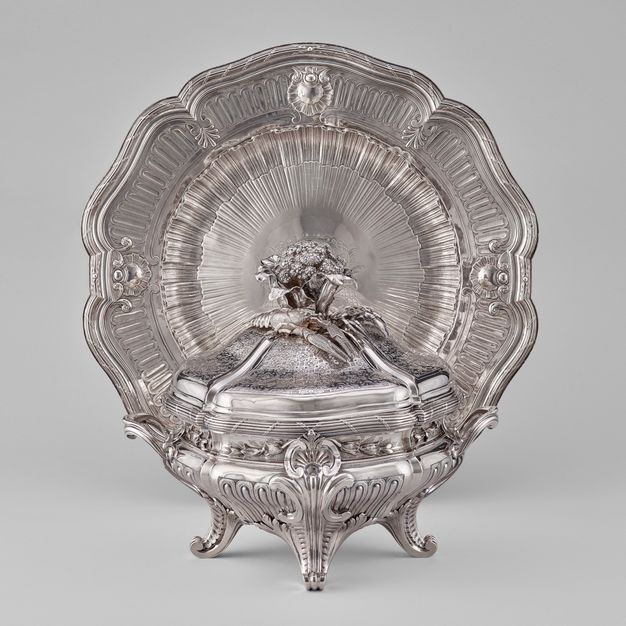
Lid (82.DG.13.1.a)
1749–50
H: 16 × Diam: 27 cm, 2,270 g (6 5/16 × 10 5/8 in., 72 ozt., 19.643 dwt.)
Marks
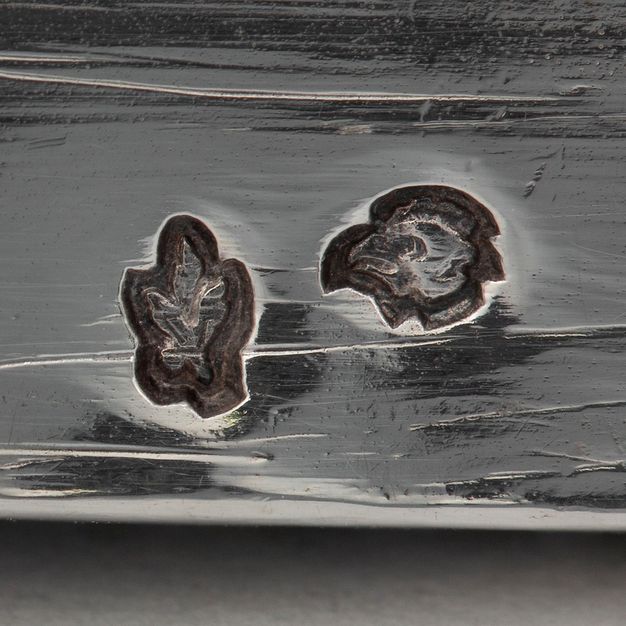
Struck, underneath, with the following stamps: six obliterated marks, one possibly a crowned I (the Paris warden’s mark used between July 15, 1749, and July 15, 1750), and one with the remains of a crown. Struck, on the exterior of the rim, with the following stamps: a hen head (the Paris discharge mark for small works of gold and silver used between October 1, 1750, and October 1, 1756, under the fermier Julien Berthe) (mark 6.1) and laurel leaves and stem (the Paris countermark for all works of gold and silver used between October 1, 1756, and October 1, 1762, under the fermiers Éloy Brichard and Étienne Somfoye) (see mark 6.1).
Inscriptions
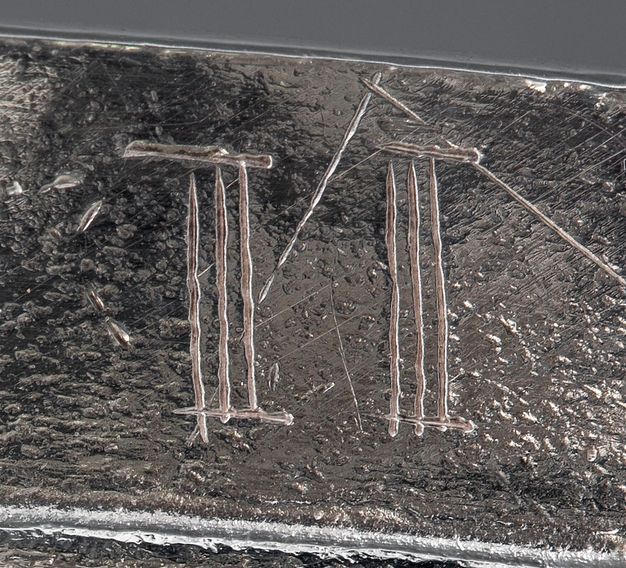
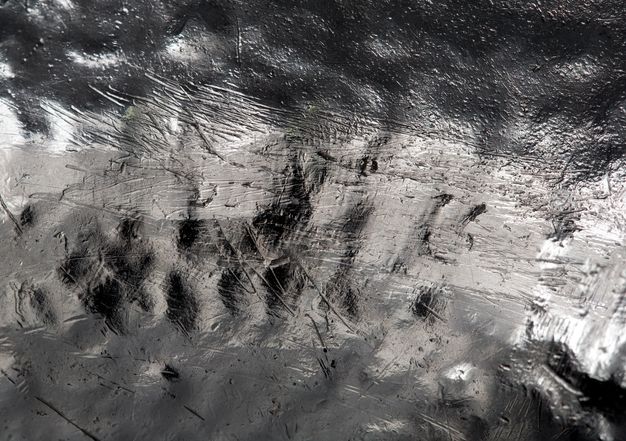
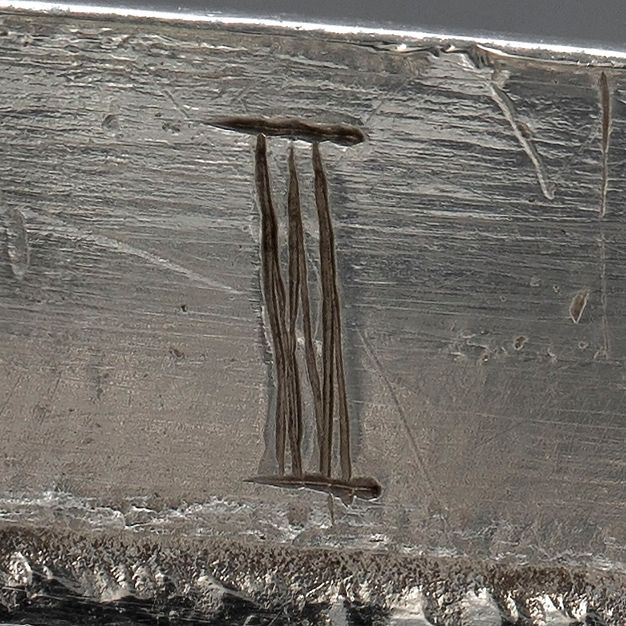
The interior of the rim is scratched with the Roman numeral “II” (inscription 6.1). Underneath is possibly incised with “DU No II” (effaced) (inscription 6.2).
Liner (82.DG.13.1.b)
1750
H: 11.7 × Diam: 26.4 cm, 732.35 g (4 5/8 × 10 3/8 in., 23 ozt., 10.911 dwt.)
Marks
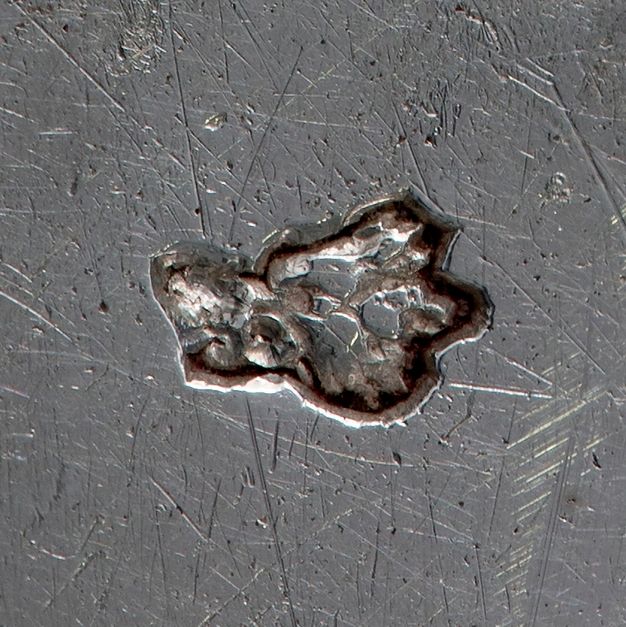
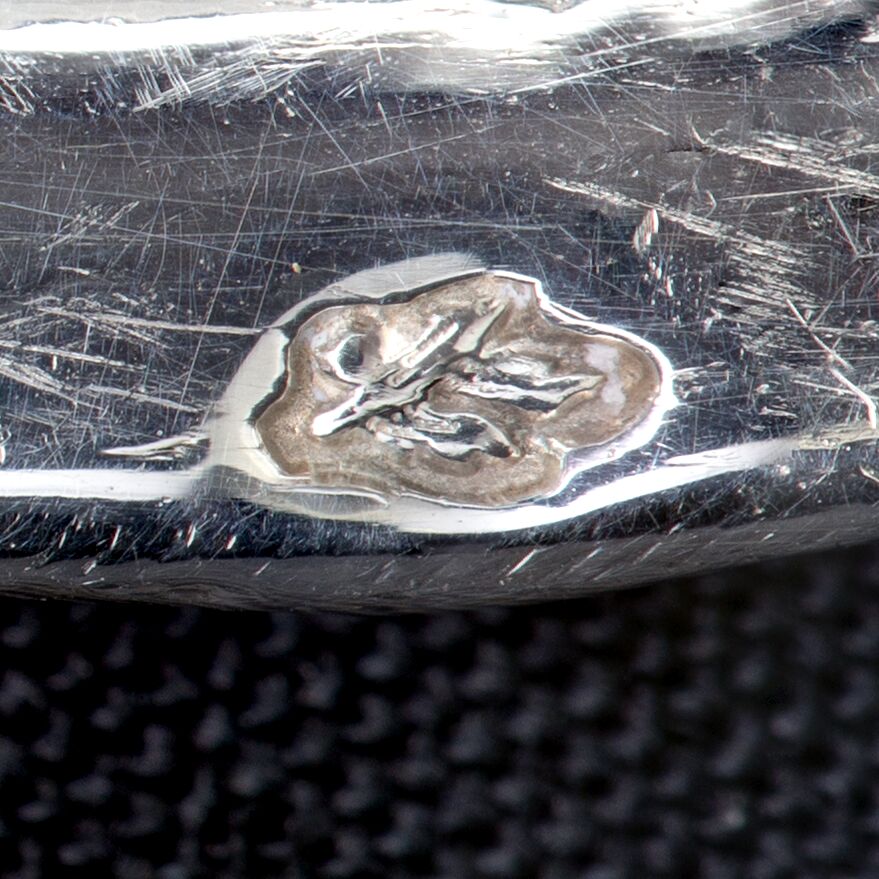
Struck, underneath, with the following stamps: possibly a crowned K (the Paris warden’s mark used between July 15, 1750, and January 22, 1752) (obliterated); possibly a crowned A (the Paris charge mark for works of silver used between October 1, 1744, and October 1, 1750, under the fermier Antoine Leschaudel) (obliterated); and a boar head (the Paris discharge mark for large works of silver used between October 1, 1750, and October 1, 1756, under the fermier Julien Berthe) (mark 6.2). Struck, on the exterior of the rim, with the following stamp: laurel leaves and stem (the Paris countermark for all works of gold and silver used between October 1, 1756, and October 1, 1762, under the fermiers Éloy Brichard and Étienne Somfoye) (mark 6.3).
Inscriptions
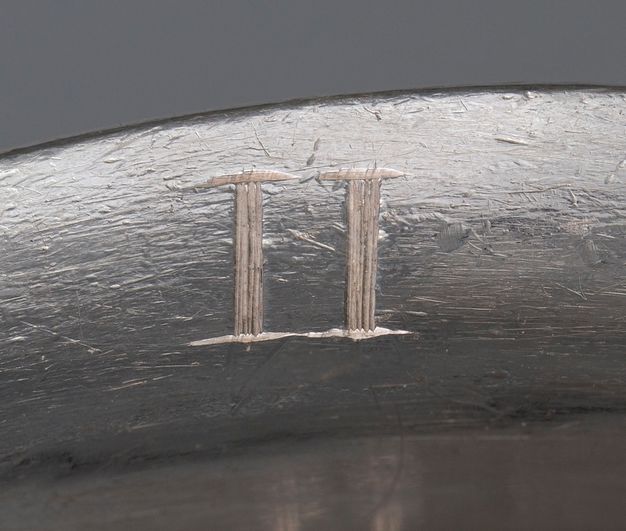
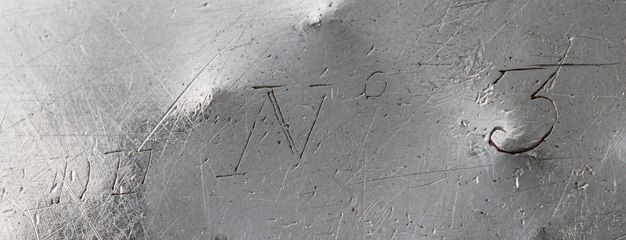
The exterior of the rim is scratched with the Roman numeral “II” (inscription 6.3). Underneath is incised “DU N° 3” (inscription 6.4).
Armorial
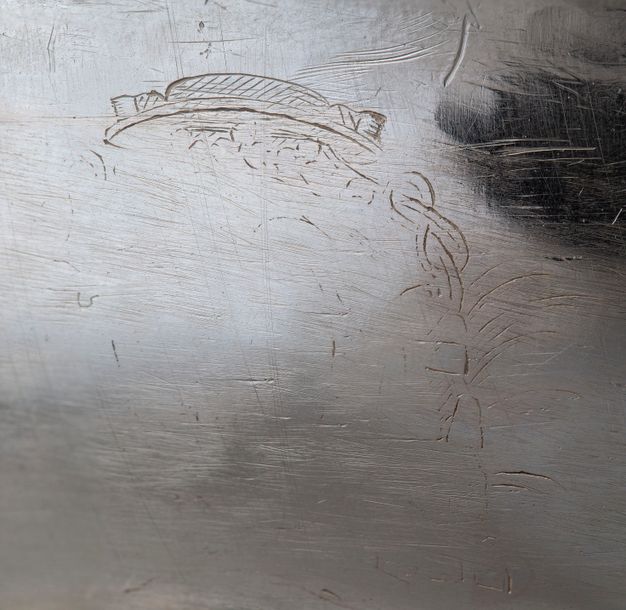
The exterior bears traces of an engraved galero (an ecclesiastical hat) and the ten tassels of an archbishop’s coat of arms (armorial 6.1).
Tureen (82.DG.13.1.c)
1749–50
H: 16.5 × W: 34.9 × D: 28.3 cm, 3,620 g (6 1/2 × 13 3/4 × 11 1/8 in., 116 ozt., 7.714 dwt.)
Marks
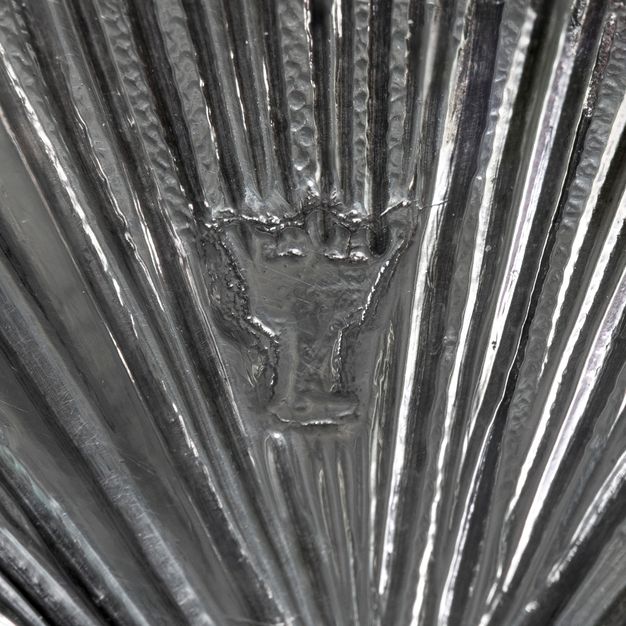
Struck, underneath, with the following stamp: a crowned I (the Paris warden’s mark used between July 15, 1749, and July 15, 1750) (mark 6.4). Struck, on the exterior of the rim, with the following stamps: a hen head (the Paris discharge mark for small works of gold and silver used between October 1, 1750, and October 1, 1756, under the fermier Julien Berthe); possibly a partially struck boar head (the Paris discharge mark for large works of silver used between October 1, 1750, and October 1, 1756, under the fermier Julien Berthe); and laurel leaves and stem (the Paris countermark for all works of gold and silver used between October 1, 1756, and October 1, 1762, under the fermiers Éloy Brichard and Étienne Somfoye).
Inscriptions
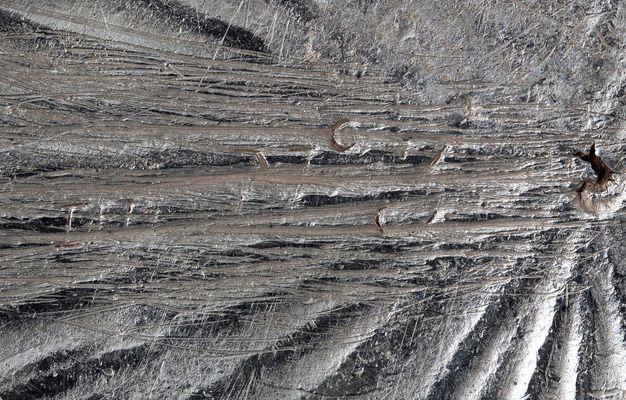
The interior, near the top, is scratched with the Roman numeral “II.” The bottom of the interior is incised “DU N° 3” (effaced) (inscription 6.5).
Stand (82.DG.13.1.d)
1749–50
H: 4.1 × W: 46.2 × D: 47.1 cm, 3,160 g (1 5/8 × 18 3/16 × 18 9/16 in., 101 ozt., 11.927 dwt.)
Marks
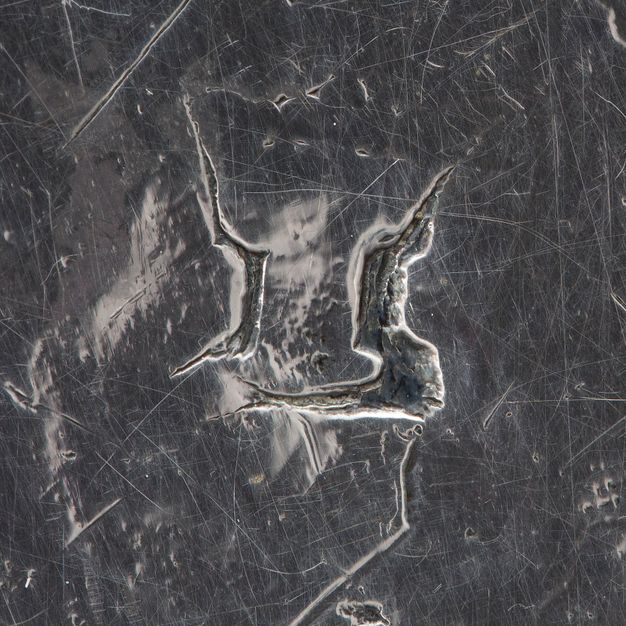
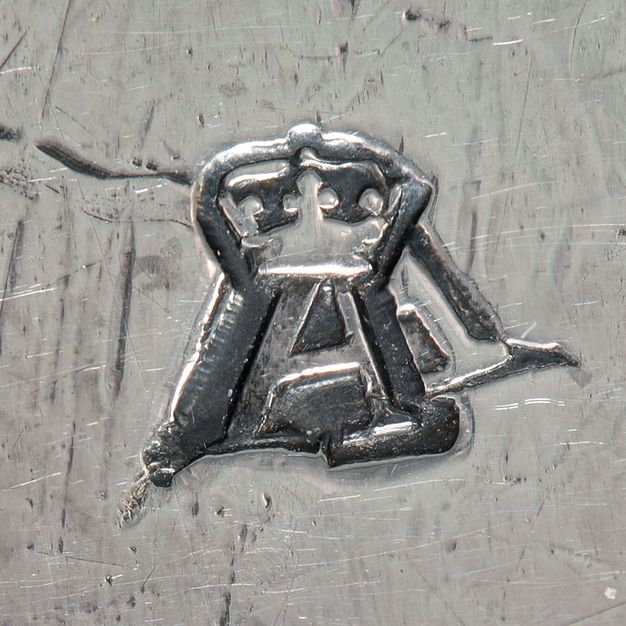
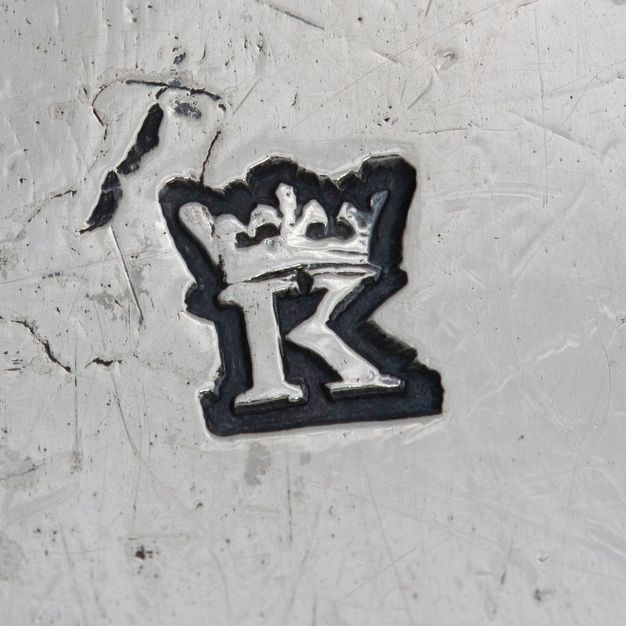
Struck, underneath, with the following stamps: a crowned I (the Paris warden’s mark used between July 15, 1749, and July 15, 1750) (mark 6.5); a crowned K (the Paris warden’s mark used between July 15, 1750, and January 22, 1752) (mark 6.6); and a crowned A, overstruck twice, (the Paris charge mark for works of silver used between October 1, 1744, and October 1, 1750, under the fermier Antoine Leschaudel) (mark 6.7). Struck, on the exterior of the rim, with the following stamps: a hen head (the Paris discharge mark used on small silver objects between October 1, 1750, and October 1, 1756, under the fermier Julien Berthe) and laurel leaves and stem (the Paris countermark for all works of gold and silver used between October 1, 1756, and October 1, 1762, under the fermiers Éloy Brichard and Étienne Somfoye).

Inscriptions
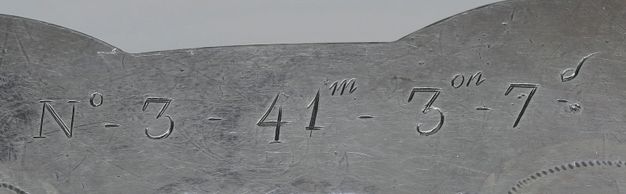
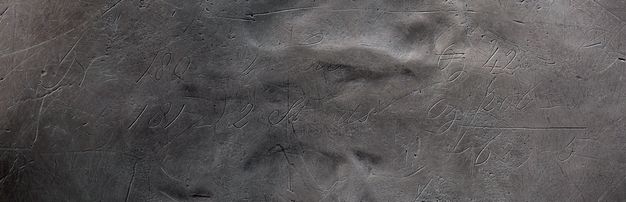
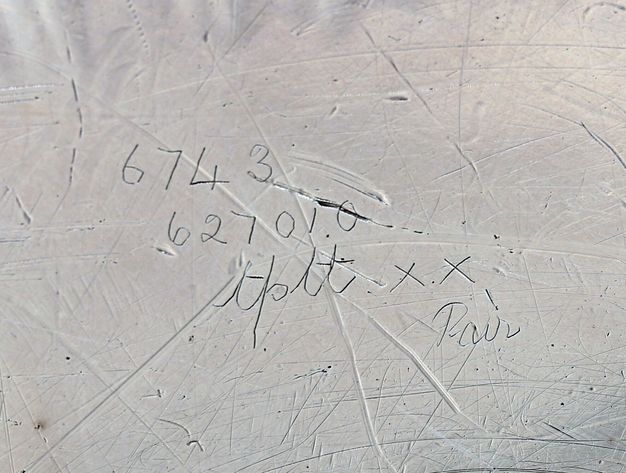
Underneath is incised with the number and weight “N° 3 - 41m - 3on - 7g-” (inscription 6.6) and scratched with the following notes in English: “No 180 2 Terrines oz 423 - 5 / 181 2 Stands oz 206 = 629 - 5” (inscription 6.7), “6743 627010 tplt xx Pair” (inscription 6.8), and other illegible notes.1
Armorial
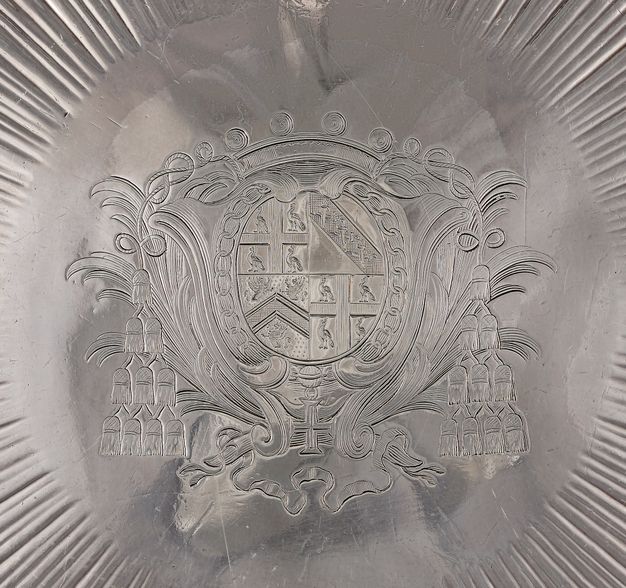
The face of the stand was originally engraved with an archbishop’s coat of arms flanked by palm fronds and surrounded by the collar and cross of the Portuguese Order of Christ, now partially effaced and replaced with a British baron’s coronet and the arms of Robert John (Smith) Carrington, second baron Carrington (armorial 6.2).
82.DG.13.2.a–d
Lid (82.DG.13.2.a)
1744?–50
H: 14.3 × Diam: 27 cm, 2,310 g (5 5/8 × 10 5/8 in., 74 ozt., 5.364 dwt.)
Marks
Struck, underneath with the following stamps: six partially obliterated marks, one possibly a crowned D (the Paris warden’s mark used between July 6, 1744, and November 27, 1745), and one probably a crowned A with entwined palm branches (the Paris charge mark for works of silver used between October 1, 1738, and October 1, 1744, under the fermier Louis Robin). Struck, on the exterior of the rim, with the following stamps: a hen head (the Paris discharge mark for small works of gold and silver used between October 1, 1750, and October 1, 1756, under the fermier Julien Berthe) and laurel leaves and stem (the Paris countermark for all works of gold and silver used between October 1, 1756, and October 1, 1762, under the fermiers Éloy Brichard and Étienne Somfoye).
Inscriptions
The interior of the rim is scratched with the Roman numeral “I” (inscription 6.9).
Liner (82.DG.13.2.b)
1744
H: 11.3 × Diam: 26.4 cm, 766.12 g (4 7/16 × 10 3/8 in., 24 ozt., 12.626 dwt.)
Marks
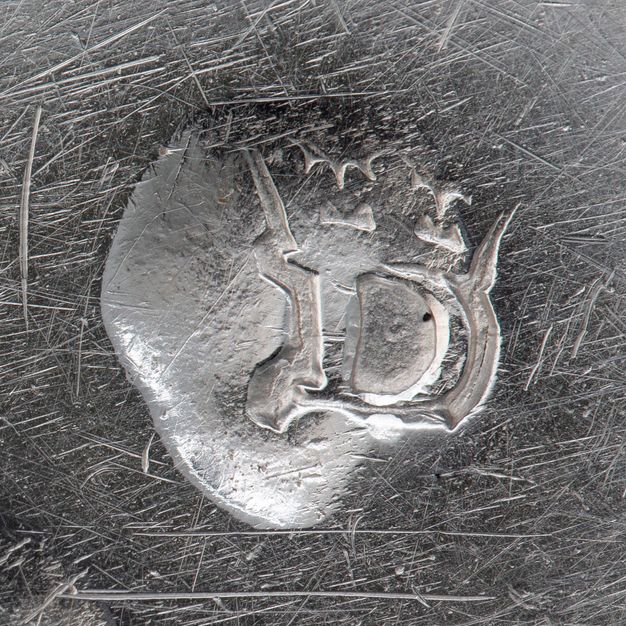
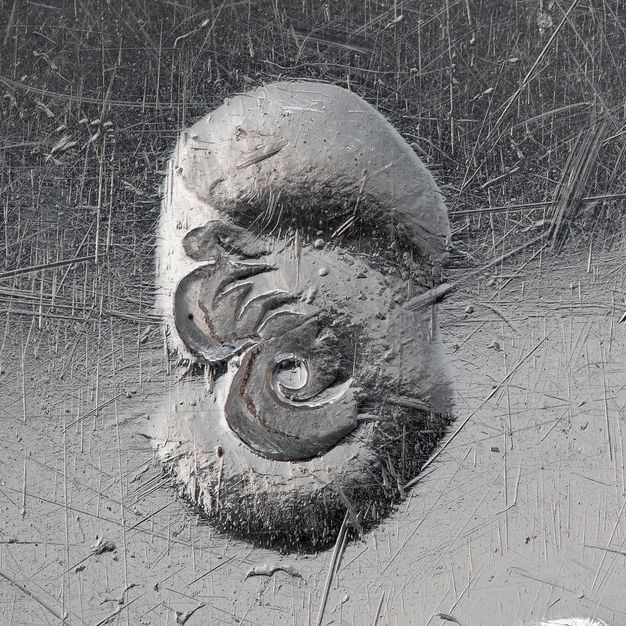
Struck, underneath, with the following stamps: a crowned D (the Paris warden’s mark used between July 6, 1744, and November 27, 1745) (mark 6.8); and a partially struck crowned A with two entwined palm branches (the Paris charge mark for works of silver used between October 1, 1738, and October 1, 1744, under the fermier Louis Robin) (mark 6.9). Struck, on the exterior of the rim, with the following stamps: a hen head (the Paris discharge mark for small works of gold and silver used between October 1, 1750, and October 1, 1756, under the fermier Julien Berthe) and laurel leaves and stem (the Paris countermark for all works of gold and silver used between October 1, 1756, and October 1, 1762, under the fermiers Éloy Brichard and Étienne Somfoye).
Inscriptions
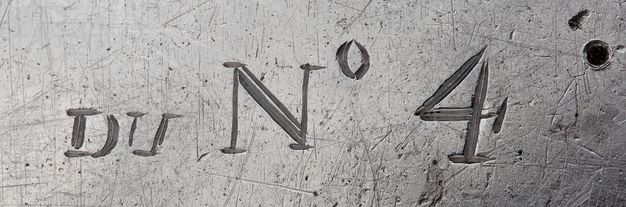
The exterior of the rim is scratched with the Roman numeral “I.” Underneath is incised “DU N° 4” (inscription 6.10).
Armorial
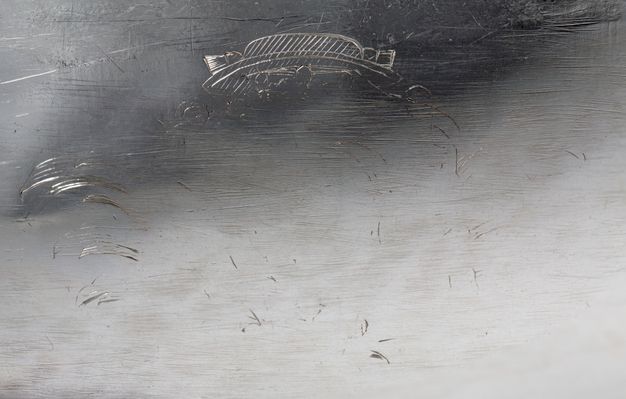
The exterior bears traces of an engraved galero (an ecclesiastical hat), palm fronds, and a Portuguese prince’s coronet (cat. 6.2).
Tureen (82.DG.13.2.c)
1749–50
H: 16.2 × W: 34.6 × D: 27.9 cm, 3,390 g (6 7/16 × 13 11/16 × 10 15/16 in., 108 ozt., 19.820 dwt.)
Marks
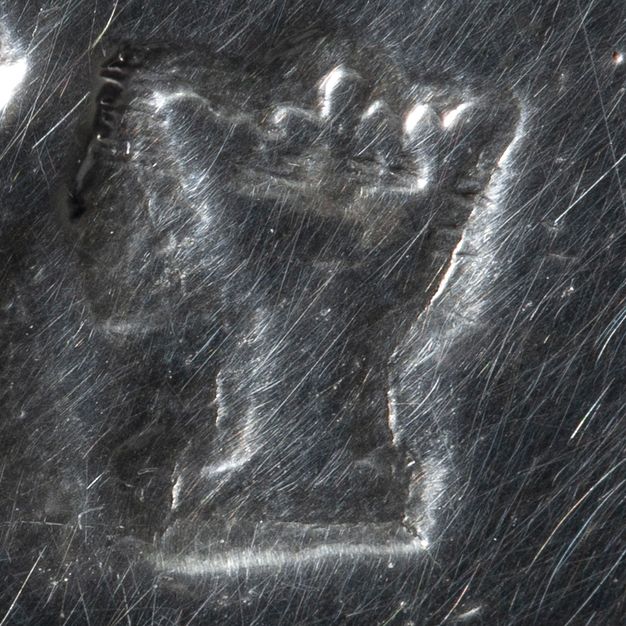
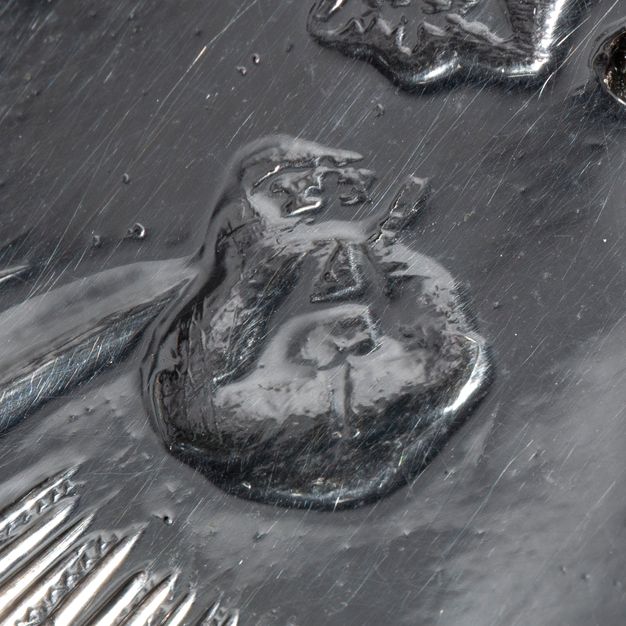
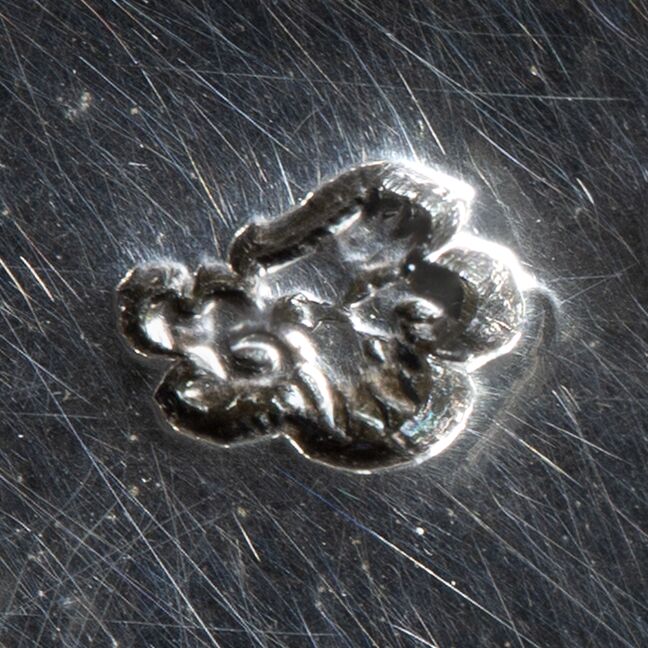
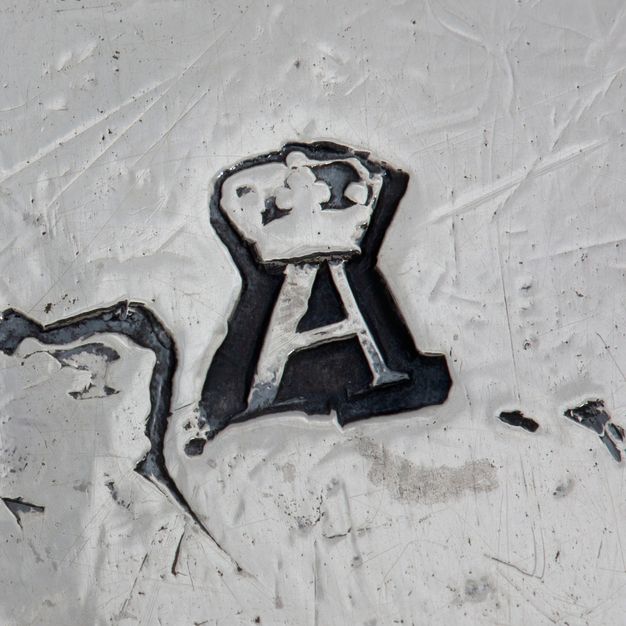
Struck, underneath, with the following stamps: a crowned I (the Paris warden’s mark used between July 15, 1749, and July 15, 1750) (mark 6.10); a crowned A (the Paris charge mark for works of silver used between October 1, 1744, and October 1, 1750, under the fermier Antoine Leschaudel) (mark 6.11); and a boar head (the Paris discharge mark for large works of silver used between October 1, 1750, and October 1, 1756, under the fermier Julien Berthe) (mark 6.12). Struck, on the exterior of the rim, with the following stamp: laurel leaves and stem (the Paris countermark for all works of gold and silver used between October 1, 1756, and October 1, 1762, under the fermiers Éloy Brichard and Étienne Somfoye).
Inscriptions
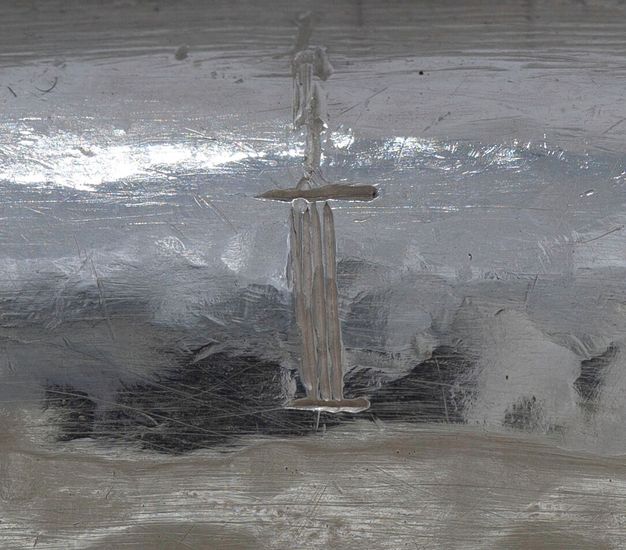
The interior, near the top, is scratched with the Roman numeral “I” (inscription 6.11). The bottom of the interior is incised “DU N° 4” (effaced) (inscription 6.12).
Stand (82.DG.13.2.d)
1749–50
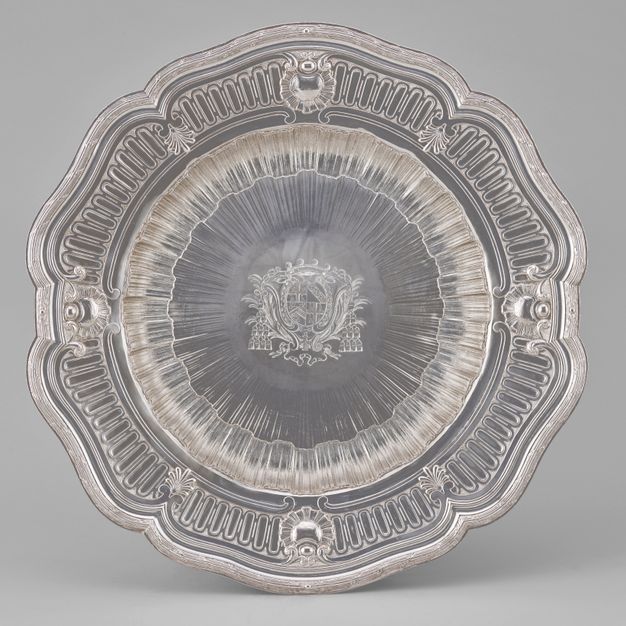
H: 4.1 × W: 46.2 × D: 47.1 cm, 3,200 g (1 5/8 × 18 3/16 × 18 9/16 in., 102 ozt., 17.648 dwt.)
Marks
Struck, underneath, with the following stamps: a crowned I (the Paris warden’s mark used between July 15, 1749, and July 15, 1750) overstruck by a crowned K (the Paris warden’s mark used between July 15, 1750, and January 22, 1752) (mark 6.13); and a crowned A (the Paris charge mark for works of silver used between October 1, 1744, and October 1, 1750, under the fermier Antoine Leschaudel) adjacent to an indistinct mark, probably another of the same but distorted (mark 6.14). Struck, on the exterior of the rim, with the following stamps: a hen head (the Paris discharge mark for small works of gold and silver used between October 1, 1750, and October 1, 1756, under the fermier Julien Berthe) and laurel leaves and stem (the Paris countermark for all works of gold and silver used between October 1, 1756, and October 1, 1762, under the fermiers Éloy Brichard and Étienne Somfoye).
Inscriptions
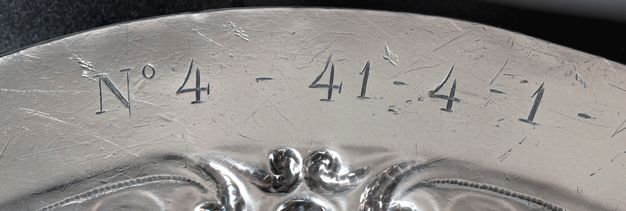
Underneath is incised with the number and weight “N° 4 - 41[m] - 4[o] - 1[g]” (inscription 6.13) and scratched with the following notes in English: “No 180 2 Terrines oz 423 - 5 / 181 2 Stands oz 206 = 629 - 5,” “6743 627010 IN / 6743 627010 tplt xx Pair,” and other indecipherable marks.2
Armorial
The face of the stand was originally engraved with an archbishop’s coat of arms flanked by palm fronds and surrounded by the collar and cross of the Portuguese Order of Christ, now partially effaced and replaced with a British baron’s coronet and the arms of Robert John (Smith) Carrington, second baron Carrington.
Description
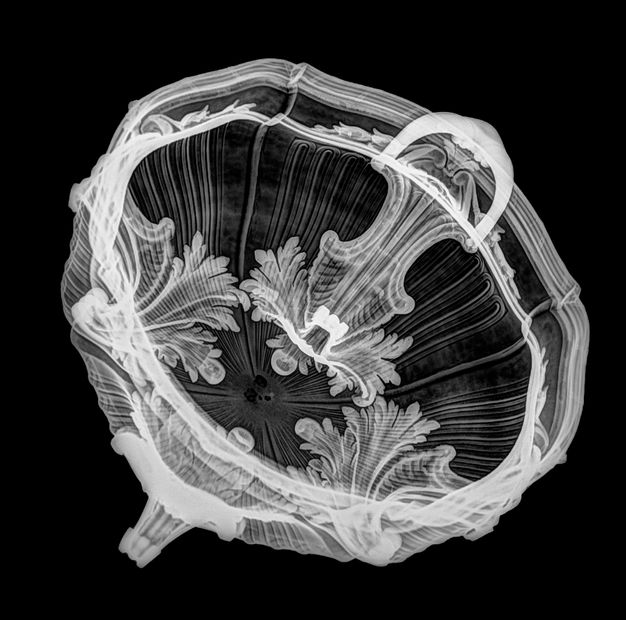
The form and ornament of this pair of round lidded tureens (pots à oille) and stands are symmetrical, with the exception of the finials. Improvements in technical X-radiographic imaging enable a better understanding of the creation of their component parts.3 The tapering lower body of each tureen rises into a concave curve before reaching the rim with its banded reed molding. The quatrefoil-shaped vessel is supported by four scroll and foliate legs positioned at the cardinal points. The vertical ribs of each leg stretch upward along the body to form addorsed C curves; these curves are, in turn, surmounted by smaller facing C curves that create a cartouche topped by a foliate. Two gracefully curved handles project from addorsed C curves on opposite sides of the vessel (cat. 6.4).4 Sectional panels of embossed vertical fluting complement the plain surfaces of the body. Applied husk festoons, in relief, flank the cartouches in the vessel’s upper convex curve.
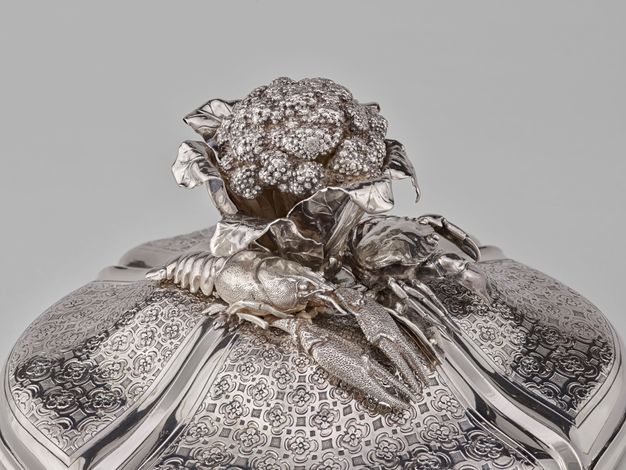
Each lid fits snugly into its corresponding tureen with its concealed, removable liner. In form and ornament, the lid conforms to the quatrefoil volume of the tureen and presents a parallel treatment of chased and plain surfaces. Sectional panels of quatrefoil diapering, in diminishing scale, follow the gentle upward swell of the lid. At the lid’s apex in the middle, a small head of cauliflower, nestled within its curling leaves, forms the finial and serves as the handle. The ungainly base of each cauliflower stem is hidden by an arrangement of creatures and plants made from molds of life castings.5 Each finial is composed of a crayfish, a crab, open pea pods, snippets of parsley, a gherkin, and a morel (cat. 6.5).6
Each circular stand has an undulating contour that is interrupted twice, at midpoint, by a short straight segment. A banded reed molding and an inner border with sections of gadrooning adorn the perimeter.7 Chased scrolls and stylized half shells overlap the gadrooning at the stand’s cardinal points, while palmettes punctuate the intervals between. The shallow well of each stand is chased with two concentric rings of abstracted ripples suggestive of lapping water. The stand’s plain center is engraved with the coat of arms of Robert John (Smith) Carrington, second baron Carrington, surrounded by the collar and cross of the Portuguese Order of Christ, above crossed palm fronds, and surmounted by a British baron’s coronet flanked by the ecclesiastical cords and tassels of an archbishop (discussed below).
Commentary
Traditionally, at the highest end of design and execution, centerpieces (surtouts du table), tureens (oval terrines and round pots à oille), condiment vessels for salt, pepper, or mustard (salières, poivrières, moutardiers), candlesticks (flambeaux), and candelabra (candélabres or girandoles) were the most sculptural vessels presented on the dining table or sideboard buffet, for they were works in the round. As experienced sculptors, bronze casters, and goldsmiths, Thomas Germain and his son François Thomas Germain excelled in creating astonishing and inventive tablewares whose forms and ornament played upon the allied themes of comestibles and cookery. Here, for example, the finial on each tureen lid is a unique three-dimensional still life of crustaceans, vegetables, and a cauliflower that alluded to the possible ingredients contained within the vessel.8 The French term pot à oille derived from the Spanish word olla (pot or saucepan) and from the recipe for olio, a highly spiced stew of meat, lard, and vegetables that was slowly simmered in a pot.9
This pair of tureens (pots à oille) and stands was made in the Germain workshop between 1744 and 1750.10 Though none of the pieces bear legible maker’s marks, the evidence of other legible or effaced marks, in combination with the group’s design and ornament, confirms their origin. Their creation over a seven-year period spans a transitional phase when the workshop passed from the control of Thomas, upon his death in 1748, to the joint management of his widow, Anne Denise Gauchelet, and son François Thomas, and on to the sole control of François Thomas after December 15, 1750. Continuity prevailed during this transitional phase and activity proceeded without interruption, as the workshop’s skilled artisans utilized the same forges, tools, models, and molds to complete unfinished orders and begin new ones.11 The long gestation of the Getty tureens and stands is consistent with workshop practices in which individual parts (lids, liners, vessels, stands) could linger in reserve, or be repurposed, pending a future sale. Since the vessels’ design does not incorporate cast or raised armorial shields for a patron’s coat of arms, Michèle Bimbenet-Privat surmises they were made on speculation rather than on commission.12
The posthumous inventory of Thomas Germain listed some vessels in stock, including a table centerpiece and two pots à oille, two terrines with their lids and stands, and one more pot à oille with its lid and stand. No weight values were given, though.13 Could parts of the Getty pair have belonged to the stock items listed in this 1748 inventory? Strictly according to the presence of legible Paris warden and Paris charge marks of 1744, only one liner (82.DG.13.2.b) was started during the lifetime of Thomas Germain. And the illegible obliterated marks on the corresponding lid (82.DG.13.2.a) allow for the possibility that it, too, might have been started by the father before the son finished it sometime in 1750. The production of the other components of the pair falls within or overlaps with the era of codirectorship by widow and son.
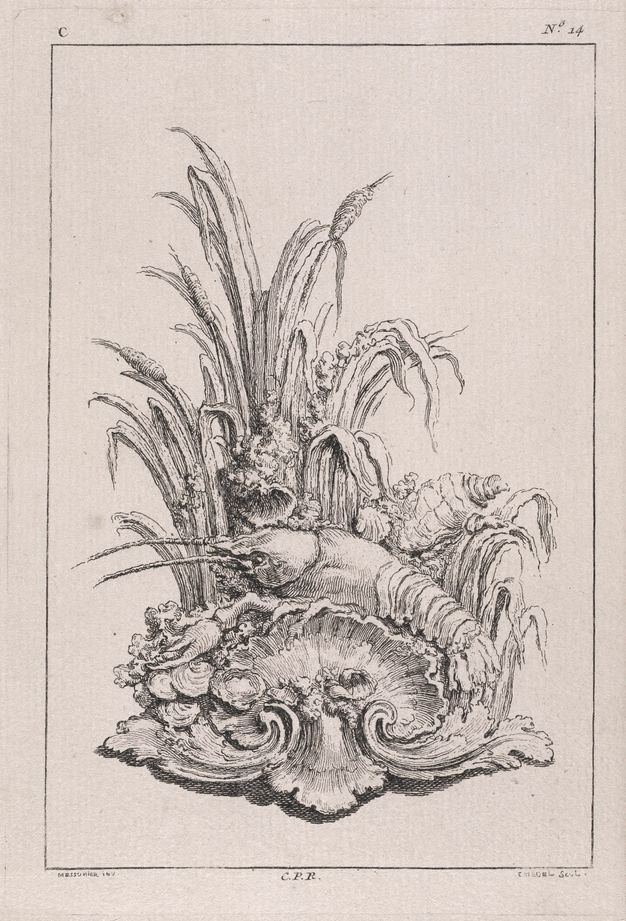
In terms of style, the shape of these lidded tureens and their finials, as well as the ornament on their stands, express the prevailing Rococo taste, with its fascination and delight in the natural world of minerals, water, crustaceans, and vegetables, as visualized in the Livre de légumes by Juste-Aurèle Meissonnier, of 1734–38 (fig. 6.1).14 Thomas Germain was aware of Meissonnier’s designs, for there was a volume of his contemporary’s work in his personal library at the time of his death.15
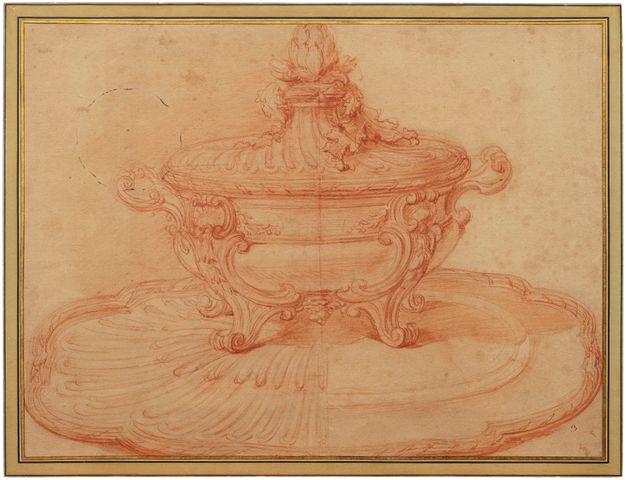
In terms of design and execution, extant drawings and documents shed light on the creation process of pots à oille in the Germain workshop. Peter Fuhring analyzed a design by Thomas Germain, dated to around 1735–40, that presents a pot à oille whose body profile and handles anticipate the Getty example, with four scrolling feet, set with husk festoons, that transform into two vertical tiers of C curves. The rendering of its stand offers two alternative design options; that on the left has a wave-like articulation of gadroons in the shallow well, while that on the right has a plain, stepped surface (fig. 6.2). Another drawing shows a large oval stand rendered to scale; it has many features in common with the Getty stands, such as borders with shaped sections of gadrooning, overlaid by cartouches at the cardinal points and with shells at the intervals between, and a banded reed molding on the rim.16 An engraved design for a lidded pot à oille published by Pierre Germain in 1748 shows a vessel whose profile and ornament align quite closely with the Getty version.17 Meanwhile, the inventory of François Thomas Germain’s premises taken in May–June 1765 lists drawings and models, some of which dated to the era of his father and had remained in the workshop after his death in 1748. Some of these may have been used in making these pots à oille: “8 sheets of designs for pots à oille, terrines, and baskets; 24 models of cauliflowers in lead; 5 cauliflower leaves in copper; 50 leaves of parsley, chervil, and pimprenelle, 43 in lead, 7 in silver; 9 pea pods in copper; 24 shells [hulls] of morels in lead; 18 shells [hulls] of gherkins in lead; and 3 whole crayfish, 1 rising up, 2 legs in copper.”18
Eighteenth-century inscriptions of numbers on these lids, liners, vessels, and stands indicate they were part of a larger set, consisting of at least four major vessels, each with its associated parts. For example, one liner, tureen, and stand (82.DG.13.1.b–d) all bear “N° 3,” while the other liner, tureen, and stand (82.DG.13.2.b–d) all bear “N° 4” (see inscriptions 6.4, 6.5, and 6.6 for “N° 3” and inscriptions 6.10, 6.12, and 6.13 for “N° 4”). The presumed vessels corresponding to “N° 1” and “N° 2” were likely two more tureens with stands, probably pots à oille, as one lid (82.DG.13.1.a) has an effaced inscription that could be read as “Du N° II” (see inscription 6.2).19 The survival and appearance of “N° 1” and “N° 2” cannot be confidently ascertained, however, and no obviously comparable examples, if indeed they were complementary, are known in public collections. Interestingly, the stands also bear incised weights tallying the combined total for each respective set of lid, liner, tureen, and stand (in the old French units of marc, once, and gros): “41m - 3on - 7g” (82.DG.13.1.d) and “41[m] - 4[o] - 1[g]” (82.DG.13.2.d). Those values equate to more than their combined present weights in grams (see inscriptions 6.6 and 6.13). Perhaps these old French measurements also included the weight of any (now lost or separated) silver serving spoons, as such accessories were customarily provided along with vessels of this caliber and quality.20
Is not known precisely when the Getty pair of tureens and stands reached England, perhaps as early as 1838 (or before) and certainly by 1868, by which time the arms of Smith quartering Carrington, for Robert John (Smith) Carrington, second baron Carrington, should have been engraved on each stand (see armorial 6.2). The presence of the baron’s coronet above his arms means the pair was in his possession from, or after, his elevation to the barony in 1838 through, probably, 1868, when he died. Both stands (82.DG.13.1.d and 82.DG.13.2.d) had additional inscriptions scratched underneath, indicating there was only one pair at that time. Their combined weights in troy ounces were repeated on each: “No 180 2 Terrines oz 423 - 5” and “181 2 Stands oz 206 = 629 - 5,” respectively (see inscription 6.7). Per the inscription, the two sets of lid, liner, tureen, and stand all together weighed 629 troy ounces, 5 pennyweights, which is nearly four troy ounces more than their modern-day combined weight. If these inscriptions date to the era of the second baron Carrington, then the tureens and stands probably served his London residence, Gower House, at 8 Whitehall, or one of his country estates, either Wycombe Abbey or later Gayhurst House, both in Buckinghamshire.21
The Carrington arms are engraved over an earlier armorial that had been partially burnished away.22 Some elements of the original coat of arms remaining on the stands do not apply to him, such as the collar and cross of the Portuguese Order of Christ (Ordem de Cristo), as well as the episcopal insignia of the cords and ten tassels of an archbishop. Moreover, there are traces of a heraldic, armigerous ecclesiastical hat, called a galero, above the fleurons of the coronet of a Portuguese infante (prince), on both liners (see armorial 6.1 and cat. 6.2). These provide clues as to the possible identity of a previous owner. Precise identification is elusive, though, because not all the devices and insignia apply to any one individual. The amalgamation of attributes likely represents more than two individuals.23 Further investigation is needed to ascertain the provenance prior to the second baron Carrington’s ownership. Nonetheless, these attributes have led to a tentative association with a Portuguese cleric, Dom Gaspar de Bragança, legitimized son of King João V of Portugal.24
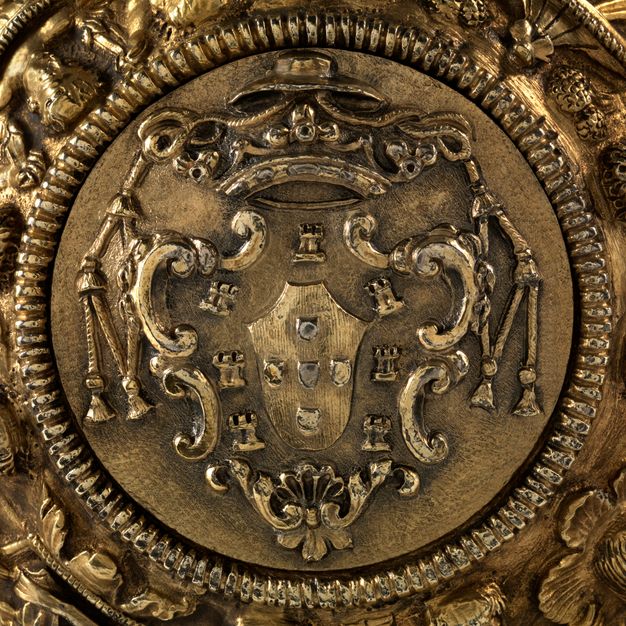
Dom Gaspar de Bragança was granted the right to surmount his coat of arms with the coronet of a Portuguese prince. The combination of the armigerous galero and prince’s coronet appear in his coat of arms that was applied into the center of a sixteenth-century gilded-silver salver on a stand and its later eighteenth-century pair (fig. 6.3). These armorials have six tassels on either side of the arms, indicating his rank then as a bishop (the innermost, lowest tassel on each side illusionistically disappears behind the armorial shield).25 They predate his elevation to archbishop of Braga in 1756, when the number of tassels increased to ten on each side, as represented in the armorials on the Getty stands. In 1758 Pope Benedict XIV appointed him archbishop-primate of Braga, which increased the tassels to fifteen on each side, as seen in his portrait of 1760.26 Dom Gaspar de Bragança was not, apparently, a knight of the Order of Christ, though his father and elder half-brother, as kings, were successive grand masters, while another elder half-brother, António de Bragança, became a knight in 1789 (the year Gaspar died).27 If Dom Gaspar did indeed acquire these tureens, he was following the precedent set by two other Portuguese clerical patrons of the Germain workshop: his predecessor, Dom João da Mota e Silva, cardinal-archbishop of Braga, and Cardinal Nuno da Cunha de Ataíde, advisor to King João V.28
Provenance
1756?–89: possibly Dom Gaspar de Bragança, Portuguese, 1716–1789 (Braga, Portugal), legitimized son of King João V of Portugal (reigned 1706–50), archbishop of Braga from 1756 and archbishop-primate of Braga from 1758; 1838 or later–1868: Robert John (Smith) Carrington, second baron Carrington (from 1838), British, 1796–1868 (England); 1920s or 30s: S. J. Phillips, Ltd., British, active 1869–present (London); by the 1930s: Meyer Sassoon, British, 1855–1924, and/or his wife, Mozelle Gubbay Sassoon, British, 1872–1964 (Pope’s Manor, Berkshire, England), sold back to S. J. Phillips, Ltd, London; 1935 or later–1948: S. J. Phillips, Ltd., British, active 1869–present (London), in partnership with Jacques Helft, French, 1891–1980 (Paris until 1940 and again from 1946, active in New York 1940–48);29 by 1954–76: José Ribeiro Espírito Santo Silva, Portuguese, 1895–1968 (Paris), and his wife, Vera Lillian Morais Sarmento Cohen Espírito Santo Silva, Portuguese, 1904–1995 [sold, Christie’s, Geneva, April 27, 1976, lot 446];30 1976–82: private collection (Geneva), sold to the J. Paul Getty Museum, 1982.
Exhibition History
Les trésors de l’orfèvrerie du Portugal, Musée des arts décoratifs (Paris), November 1954–January 1955 (no. 455, “lent from a private collection, Paris”); Casting Nature: François-Thomas Germain’s Machine d’Argent, J. Paul Getty Museum at the Getty Center (Los Angeles), July 11, 2006–March 25, 2007; Paris: Life and Luxury, J. Paul Getty Museum at the Getty Center (Los Angeles), April 26–August 7, 2011, and Museum of Fine Arts, Houston, September 18, 2011–January 2, 2012 (no. 36); The Edible Monument: The Art of Food for Festivals, Getty Research Institute at the Getty Center (Los Angeles), October 13, 2015–March 13, 2016 (82.DG.13.1 only).
Bibliography
Les trésors de l’orfèvrerie du Portugal. Exh. cat. Paris: Les presses artistiques, 1955., 91, no. 455 (“lent from a private collection, Paris”), and plates 164–65; Magnificient Silver / Magnifique orfèvrerie, sale cat., Christie’s, Geneva, April 27, 1976: 124–25, lot 446, “A Pair of Magnificent Louis XV Soup-Tureens and Stands by Thomas Germain / Magnifique paire de soupières Louis XV, leurs couvercles, leurs doublures et leur présentoirs, par Thomas Germain”; “Some Acquisitions (1981–82) in the Department of Decorative Arts, the J. Paul Getty Museum.” Burlington Magazine 125, no. 962 (May 1983): 322–26., 324, no. 115; Wilson, Gillian, Adrian Sassoon, and Charissa Bremer-David. “Acquisitions Made by the Department of Decorative Arts in 1982.” The J. Paul Getty Museum Journal 11 (1983): 13–66., 39–45, no. 7, “Pair of Tureens and Stands”; Sassoon, Adrian, and Gillian Wilson. Decorative Arts: A Handbook of the Collections of the J. Paul Getty Museum. Malibu, CA: J. Paul Getty Museum, 1986., 67–68, no. 150; Barr, Elaine. “Il Rococò.” In Storia degli Argenti, edited by Kirsten Aschengreen Piacenti, 125–40. Novara, Italy: Istituto Geografico de Agostini, 1987., 129; French Silver in the J. Paul Getty Museum, exh. brochure (Malibu, CA: J. Paul Getty Museum, 1988), 2, 7–9, fig. 5; Bremer-David, Charissa, with Peggy Fogelman, Peter Fusco, and Catherine Hess. Decorative Arts: An Illustrated Summary Catalogue of the Collections of the J. Paul Getty Museum. Malibu, CA: J. Paul Getty Museum, 1993. http://www.getty.edu/publications/virtuallibrary/0892362219.html., 114, no. 190; Wilson, Gillian, and Catherine Hess. Summary Catalogue of European Decorative Arts in the J. Paul Getty Museum. Los Angeles: J. Paul Getty Museum, 2001. http://www.getty.edu/publications/virtuallibrary/089236632X.html., 97, no. 196; Bremer-David, Charissa, ed. Paris: Life and Luxury in the Eighteenth Century. Exh. cat. Los Angeles: J. Paul Getty Museum, 2011., 6–7, 122, no. 36, fig. 3; Hellman, Mimi. “Enchanted Night: Decoration, Sociability, and Visuality after Dark.” In Paris: Life and Luxury in the Eighteenth Century, edited by Charissa Bremer-David, 91–113. Exh. cat. Los Angeles: J. Paul Getty Museum, 2011., 108–11, figs. 65a–b; Hellman, Mimi. “Elusive Temptations.” Gastronomica 11, no. 2 (2011): 7–11.; Bremer-David, Charissa. “Of Cauliflower and Crayfish: Serving Vessels to Awaken the Palate.” In The Edible Monument: The Art of Food for Festivals, edited by Marcia Reed, 124–47. Exh. cat. Los Angeles: Getty Research Institute, 2015., figs. 1–2; Murdoch, Tessa. “‘A Performance for the Service of a Table’: New Light on Eighteenth-Century Dining.” Getty Research Journal 14, no. 1 (2021): 181–90., 190n19.
Notes
-
The historic weights in the old French units of marc, once, and gros tallied the sum of all the component parts of one of the pair: lid, liner, tureen, and stand (82.DG.13.1.a–d). That combined weight was then the equivalent of 10,153.423 grams, which is 371.073 grams heavier than currently measured. Given this discrepancy, perhaps the heavier weight may have included any associated serving spoon(s).
Based on the objects’ provenance, the scratched weight in troy ounce and pennyweight was likely inscribed in the nineteenth or twentieth century. The amount given, 629 ozt., 5 dwt., was for the overall combined weight of both pairs of lids, liners, tureens, and stands. It equated then to more than 3 ozt., 16.888 dwt. (or 119.574 grams) heavier than currently measured.
Per a Record of Weight report, May 11, 2018, by Arlen Heginbotham, Decorative Arts and Sculpture Conservation, J. Paul Getty Museum, the scale used to weigh the objects was an A&D digital scale, model SK-20KWPZ, with a capacity of 20 kg and a resolution of +/- 0.01 kg.
The scratched alphanumeric string (see inscription 6.8) is consistent with a similar string on the water fountain (cat. no. 1), an object that passed through the dealer Jacques Helft in the mid-twentieth century, as did this pair of tureens on stands. ↩︎
-
As per note 1 above, the historic weights in the old French units of marc, once, and gros tallied the sum of all the component parts of one of this pair: lid, liner, tureen, and stand (82.DG.13.2.a–d). That combined weight was then the equivalent of 10,161.073 grams, which is 494.953 grams heavier than currently measured. Given this discrepancy, perhaps the heavier weight may have included any associated serving spoon(s). See note 1 above for additional information, common to both pairs, concerning other inscriptions that appear on 82.DG.13.2.d. ↩︎
-
Information concerning the process of making the component parts of this pair is based upon the technical analysis of Julie Wolfe and Arlen Heginbotham, Decorative Arts and Sculpture Conservation, J. Paul Getty Museum, and upon their interpretation of X-ray fluorescence spectroscopy, X-radiographs, and composite X-radiographs that were captured at 400 kV, 2 mA, 1000 mSec, and 60 inches, with a GE X-radiography system with digital detector array. ↩︎
-
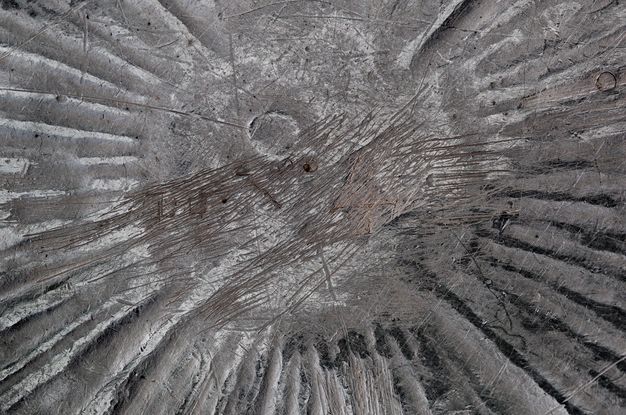
The following information derives from Technical Report, November 12, 2021, by Julie Wolfe, Decorative Arts and Sculpture Conservation, J. Paul Getty Museum: The vessel body of each tureen was raised from a circular sheet of silver. X-radiography reveals that wedges of silver were apparently cut from the circular sheet to make the quadrants of each body. These cuts were then joined, by solder, after having been raised to shape. There are slight differences in scale of the vessel bodies and in the positioning of their feet. Each support was cast as a single, hollow cast element that extends from the foot upward to a cartouche that terminates at the top rim. Each support was soldered onto the vessel and also fixed in place with at least three pins. The molded rims were cast in at least four sections and soldered onto each vessel. The handles and the husk festoons were separately cast, soldered, and pinned in place. The exteriors of the vessels were engraved and chased before the supports were pinned in place, then polished. Based on the reflectiveness of its surface and softened edges, one tureen (82.DG.13.2.c) has been heavily polished, perhaps even mechanically. The engraved and chased radiating lines in its underside have been polished away from the area around the exterior center punch point. The marks of the crowned A and crowned I have also been extremely reduced and smoothed from the overpolishing (see marks 6.10, 6.11).
Each tureen liner was made from raised sheet metal. Some punch marks on their exteriors remain from the guidelines marked by the goldsmith to aid the raising process. X-radiography reveals the uneven thickness of each hand-raised liner. Each top rim was composed of eight separately cast sections that were pinned and soldered into place. The handles were also separately cast and soldered into place, but without pins. The engraving on the handles appears to have been done after each was attached. ↩︎
-
Life casting “refers specifically to the reproduction of a once-living form (either plant or animal) that results in a cast characterized by its high realism and fine detail. Life-casts are made by encasing the form in a refractory mold and burning out the form, and are therefore generally solid, though there are some exceptions.” Definition from the CAST:ING Project’s Guidelines for the Technical Study of Cast Bronze Sculpture (November 27, 2021). See CAST:ING (website), accessed April 4, 2022, http://www.cast-ing.org/. ↩︎
-
The following information derives from Technical Report, November 12, 2021, by Julie Wolfe, Decorative Arts and Sculpture Conservation, J. Paul Getty Museum: Each lid was made by raising a silver form that was finished by repoussé and chasing techniques. On the interior, still-visible radiating punch marks show the craftsman’s measured steps in uniformly raising each one. The contour rim of each was created from strips of hammered sheet soldered together and attached to a secondary L-shape section that securely anchored the joint with the lid. Each finial cauliflower stem and its leaves appear to have been cast together. The crabs were mostly hollow and partially solid cast while at least one of the crustaceans was hollow cast. These elements were individually attached to their respective lids by threaded rods. Each of the large nuts on the rods anchoring the cauliflower stems were solid cast in the form of a berry and leaves. The gherkins, morels, and pea pods were solid cast, soldered together, and then attached onto the lids by threaded rods. The small parsley leaves on both lids were separately riveted in place and some are loose. ↩︎
-
The following information derives from Technical Report, November 12, 2021, by Julie Wolfe, Decorative Arts and Sculpture Conservation, J. Paul Getty Museum: Each stand was raised from sheet metal that was finished by repoussé and chasing techniques. Each rim was separately cast in eight sections, pinned, and soldered in place. X-radiography shows that the thickness of the sheet metal diminishes in the area where the armorial and coronet are located. This indicates that a previous engraved coat of arms has been removed by polishing and re-engraved with a subsequent armorial. ↩︎
-
Bremer-David, Charissa. “Of Cauliflower and Crayfish: Serving Vessels to Awaken the Palate.” In The Edible Monument: The Art of Food for Festivals, edited by Marcia Reed, 124–47. Exh. cat. Los Angeles: Getty Research Institute, 2015., figs. 1–2. ↩︎
-
Bapst, Germain. Études sur l’orfèvrerie française au XVIIIe siècle: Les Germain, orfèvres-sculpteurs du roy. Paris: J. Rouam et cie, 1887., 54–55n1. ↩︎
-
X-ray fluorescence spectroscopy conducted by Julie Wolfe, Decorative Arts and Sculpture Conservation, J. Paul Getty Museum, shows that the silver alloys for all parts of this pair of lidded tureens, liners, and stands are closely similar and within an acceptable degree of variation consistent with the production of a single artisanal workshop active in Paris during the eighteenth century, despite the fabrication of the parts over a span of seven years (see Appendix: Table 1). Quantitative X-ray Fluorescence Spectroscopy Report, December 10, 2021, by Arlen Heginbotham and Julie Wolfe, Decorative Arts and Sculpture Conservation, J. Paul Getty Museum. ↩︎
-
Information drawn from the postmortem inventory of Thomas Germain. Paris, Archives nationales de France, Minutier central, XXXVI, 460, August 27, 1748. An unspecified number of working models in lead, copper, and silver, valued at 1,500 livres, was inventoried in both the lodgings and the workshop at this time. See Bapst, Germain. Études sur l’orfèvrerie française au XVIIIe siècle: Les Germain, orfèvres-sculpteurs du roy. Paris: J. Rouam et cie, 1887., 89. ↩︎
-
Michèle Bimbenet-Privat, verbal communication, May 2018, notes on file in the Sculpture and Decorative Arts Department, J. Paul Getty Museum. Teresa Leonor M. Vale, though, has speculated that one liner (82.DG.13.2.b), at least, could have been intended for an unfinished commission of a Portuguese cardinal (see note 23). ↩︎
-
Paris, Archives nationales de France, Minutier central, XXXVI, 460, August 27, 1748, nos. 224, 226, 227. Stéphane Boiron summarized these entries as “un surtout et deux pots à oille, deux terrines couvertes et leur plats et un pot à oille couvert et son plat” in Boiron, Stéphane. “Jacques-Samuel Bernard et l’argenterie Melo e Castro.” In Tureen “Aux Ecrevisses” by Thomas Germain. Sale cat. Sotheby’s, New York, October 25, 2019: 44–60., 49, 60n7. See also Bapst, Germain. Études sur l’orfèvrerie française au XVIIIe siècle: Les Germain, orfèvres-sculpteurs du roy. Paris: J. Rouam et cie, 1887., 89. ↩︎
-
See Fuhring, Peter. “Le style Louis XV: Ou le [t]riomphe de la rocaille.” In Orfèvrerie française: La collection Jourdan-Barry, edited by Peter Fuhring, Michèle Bimbenet-Privat, and Alexis Kugel, vol. 1, 150–53. Paris: J. Kugel, 2005.. ↩︎
-
Thomas Germain’s personal library included a volume by Meissonnier, valued at 60 livres, when inventoried in 1748. See Bapst, Germain. Études sur l’orfèvrerie française au XVIIIe siècle: Les Germain, orfèvres-sculpteurs du roy. Paris: J. Rouam et cie, 1887., 70n3. ↩︎
-
The drawings are in a private collection. One, showing a pot à oille and stand, is analyzed in Fuhring, Peter. Designing the Décor: French Drawings from the Eighteenth Century. Exh. cat. Lisbon: Calouste Gulbenkian Foundation, 2005., 132–33, no. 40, and 327, no. 40nn1–5. Access to the drawings was kindly facilitated by the private collector and Peter Fuhring. ↩︎
-
Thomas Germain employed the goldsmith Pierre Germain (called le Romain) in the 1720s. The etching by Jacques Jean Pasquier after Pierre Germain was published in Germain, Pierre. Elements d’orfèvrerie divisés en deux parties de cinquante feuilles chacune compose par Pierre Germain, Marchand Orfevre Joaillier. 2 parts. Paris: Chez l’auteur, place du Carousel a l’Orfèvrerie du roy, 1748., part 2, plate 76. ↩︎
-
“Etat des desseins de sceaux, pots à oille, terrines, corbeilles: [première boîte] 8 [feuilles de dessin] de pots à oilles, terrines, et corbeilles. N.9 Etat générale des modeles en cuivre et étain concernent l’Orfèvrerie: [boîte] 23: no. 1, 24 plombs chouxfleurs; no.2, 5 cuivres feuilles de chouxfleurs. [boîte] 24: no. 5, 50 feuilles de persil, cerfeuil, pimprenelle, 43 plombs, 7 argent. [boîte] 25: no. 5, 9 gousses de petites pois cuivres; no. 10, 24 coquilles de morilles plombs; no. 11, 18 coquilles de cornichons. [boîte] 28: différens poissons: no. 9, 3 écrevisses entières, 1 relevée, 2 pates, cuivres.” Paris, Archives nationales de France, Minutier central, LXXXIII, 511, May 22, 1765. Délivrance de mobilier par François Thomas Germain, sculpteur orfèvre du roi (author’s translation). Images of the document were kindly shared by Peter Fuhring. ↩︎
-
In the monograph on François Thomas Germain, Christiane Perrin noted that terrines and pots à oille were, incontestably, the wares most in demand, as they were essential vessels for meals served à la française (Perrin, Christiane. François Thomas Germain: Orfèvre des rois. Saint-Rémy-en-l’Eau: Éditions d’art Monelle Hayot, 1993., 86). ↩︎
-
The second baron Carrington owned several properties that were significantly renovated or refurbished during his lifetime. See Harris, John. Moving Rooms: The Trade in Architectural Salvages. New Haven, CT, and London: Paul Mellon Centre for Studies in British Art in association with Yale University Press, 2007., 72–74, and Morris, Francis Orpen, ed. A Series of Picturesque Views: Seats of the Noblemen and Gentlemen of Great Britain and Ireland. Vol. 6. London: William Mackenzie, 1880., vol. 6, 5–6, ill. Thus far, provenance research has not found the Getty vessels among the Carrington family possessions sold at auction by lord Carrington’s son and heir, the marquess of Lincolnshire, nor by his descendants. “Carrington, Baron (l, 1796),” Cracroft’s Peerage: The Complete Guide to the British Peerage and Baronetage, updated July 1, 2019, http://www.cracroftspeerage.co.uk/carrington1796.htm. ↩︎
-
Identification is complicated by the engraver’s directional hatching in the galero on the Getty liners. According to the conventions of heraldic tincture, a code of directional hatching indicates color. Lines slanting from lower left to upper right, as seen in the galero on one Getty liner (82.DG.13.2.b), indicate the color purple, which could correspond to the alternate scarlet color—rather than the usual red—used by a cardinal. Hatching in the opposite direction, from upper left to lower right, would indicate the color green, as used by bishops and bishop-primates. As this liner bears the Paris warden’s mark and the Paris charge mark for the year 1744, Teresa Leonor M. Vale proposed that the Portuguese cardinal Dom João da Mota e Silva may have been the original patron to commission this piece from Thomas Germain. He actively patronized Germain from the mid-1730s until his death in 1747. His death perhaps interrupted further work on the related pieces, which bear marks for the years 1749–50. Admittedly, the cardinal was neither a prince nor a knight of the Order of Christ. ↩︎
-
This identification was first proposed in 1986 by Ole Rostock, of the Societas Heraldica Scandinavica, and independently repeated in 1990 by Paulo Lowndes Marques, who was then chairman of the British Historical Society of Portugal. Ole Rostock, letter to Gillian Wilson, November 18, 1986, and Paulo Lowndes Marques, letter to Gillian Wilson, November 29, 1990, both on file in the Sculpture and Decorative Arts Department, J. Paul Getty Museum. ↩︎
-
The salvers on stands are in the Palácio Nacional da Ajuda, Lisbon, inv. 5157 (dating to 1550–1600 and 1700–25) and 5158 (dating to 1700–25). See Godinho, Isabel Silveira, ed. Royal Treasures. Exh. cat. Lisbon: Palácio Nacional da Ajuda in association with Instituto Português do Património Cultural, 1992., 226–27, nos. 335–36, “Salver on Stand.” ↩︎
-
The portrait of 1760, by an unidentified painter, is in the Museu Pio XII, Braga, Portugal. For a concise biography of Dom Gaspar de Bragança and his art patronage, see Vale, Teresa Leonor M. “D. Gaspar de Bragança, Menino de Palhavã e Arcebispo de Braga, síntese biográfica.” In Ourivesaria barroca italiana em Portugal: Presença e influência, 347–75. Lisbon: Scribe, 2016., 353–59, 374–75nn6–20, 404, figs. 46–47, 418–19, figs. 87–89. See also Mendonça, Isabel Mayer Godinho. “As exéquias de D. Gaspar de Bragança na Sé de Braga (um desenho inédito de Carlos Amarante).” Revista da Faculdade de Letras: Cięncias e Técnicas do Patrimônio, ser. (2004): 255–70.. ↩︎
-
Lencastre, Isabel. “Os meninos de D. João V.” In Bastardos reais: Os filhos ilegítimos dos reis de Portugal, 159–73 and 240–41nn246–69. Alfagide, Portugal: Oficina do Livro, 2012., 160–66, 177, 240nn249–56, and 241n267. For a partial list of the knights of the Order of Christ (cavaleiros da Ordem de Cristo), see “Cavaleiros da Ordem de Cristo,” Geneall, accessed June 10, 2020, https://geneall.net/pt/titulo/6160/cavaleiros-da-ordem-de-cristo/. Concerning the Order’s rules of membership, see Dutra, Francis A. “Membership in the Order of Christ in the Seventeenth Century: Its Rights, Privileges, and Obligations.” The Americas 27, no. 1 (July 1970): 3–25.. ↩︎
-
Vale, Teresa Leonor M. “‘Que ce soit la chose la plus parfaite que l’on puisse exécuter’: Les oeuvres créées par l’orfèvre Thomas Germain pour deux cardinaux portugais conservées au Louvre.” La revue des Musées de France—Revue du Louvre 5 (2016): 48–57.. Dom Gaspar’s elder half-brother King José I, like their father João V, also patronized the Germain workshop. See the royal arms engraved on the contemporary gilded-silver salvers supplied by François Thomas Germain in 1756-57 and presently in the Musée du Louvre, Paris, inv. OA 9652, https://collections.louvre.fr/en/ark:/53355/cl010104564. Aspects of the armorials on the Getty tureen liners and stands (specifically, the shape of the shield, the collar and cross of the Order of Christ, and the crossed palm branches) align closely with those of José I. ↩︎
-
Martin Norton of S. J. Phillips, letter to Gillian Wilson, September 4, 2000, on file in the Sculpture and Decorative Arts Department, J. Paul Getty Museum. ↩︎
-
Magnificient Silver / Magnifique orfèvrerie, sale cat., Christie’s, Geneva, April 27, 1976: 124–25, lot 446, “A Pair of Magnificent Louis XV Soup-Tureens and Stands by Thomas Germain / Magnifique paire de soupières Louis XV, leurs couvercles, leurs doublures et leur présentoirs, par Thomas Germain.” Concerning the historical context that brought these tureens to auction in 1976, see Vanessa Rato, “O magnífica leilão do PREC em Genebra,” Série Portugal em Fuga (II), Público, Edição Lisboa XXX, no. 10.882 (February 9, 2020): 18–23, https://gulbenkian.pt/wp-content/uploads/2020/10/VRato_PublicoIII_20200216_web.pdf. ↩︎