Component Details
82.DG.12.1.a–c
Liner (82.DG.12.1.a)
1728–29
H: 12.3 × W: 31.9 × D: 20.7 cm, 906.69 g (4 13/16 × 12 9/16 × 8 1/8 in., 27 ozt., 3.003 dwt.)
Marks
Struck, underneath, with the following stamps: a crowned M (the Paris warden’s mark used between August 12, 1728, and August 26, 1729) (mark 3.1); and an A with a crown at its side (the Paris charge mark for works of silver used between December 1, 1726, and October 15, 1732, under the fermiers Jacques Cottin and Louis Gervais) (mark 3.2). Struck, on the exterior, above the armorial, with the following stamp: a crowned chancellor’s mace (the Paris discharge mark for small works used between December 1, 1726, and October 15, 1732, under the fermiers Jacques Cottin and Louis Gervais) (mark 3.3).
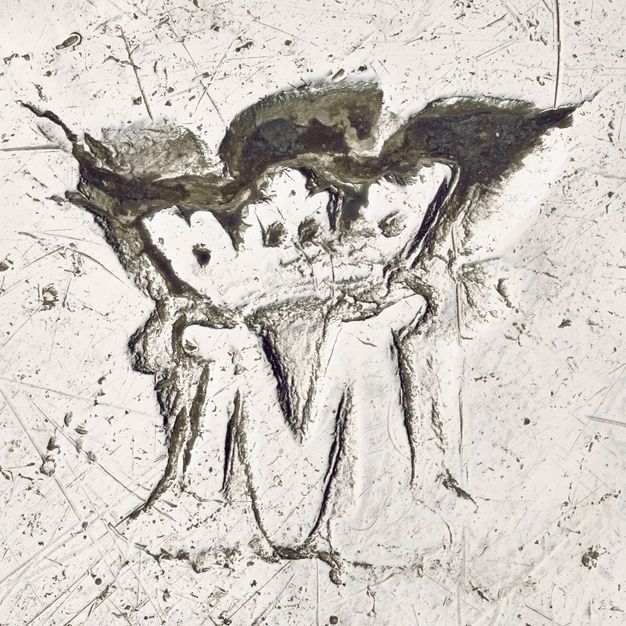
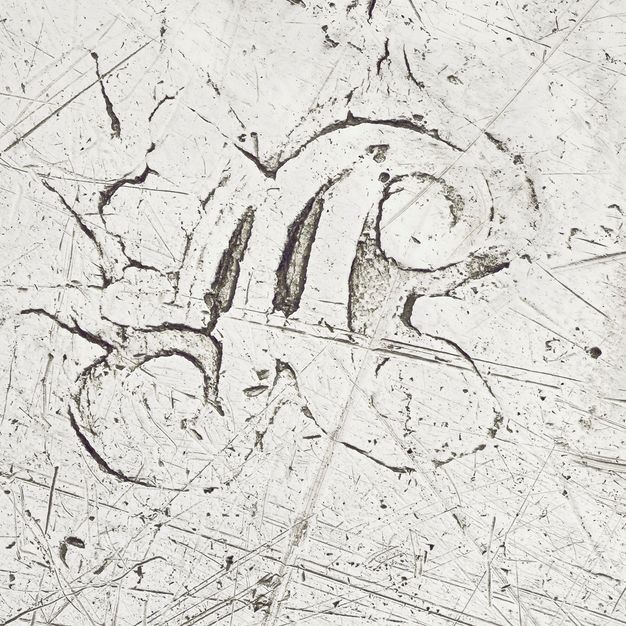
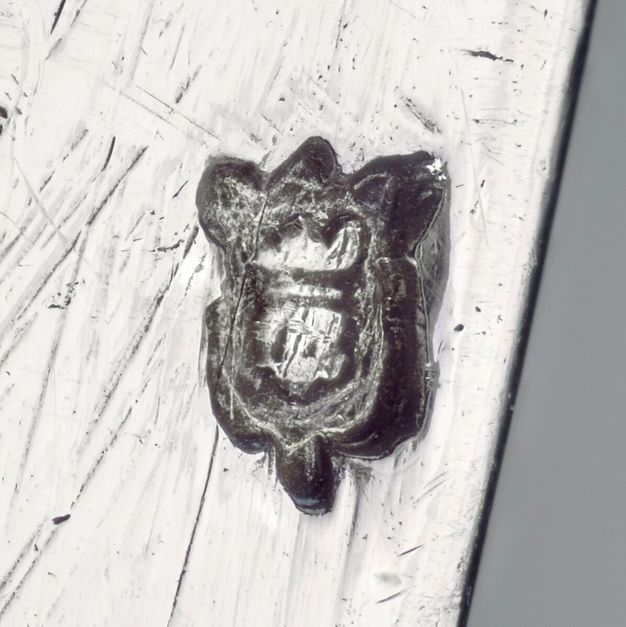
Inscriptions
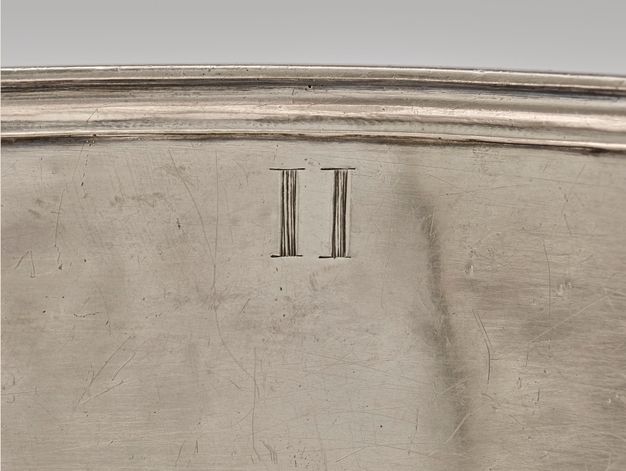
The exterior, opposite the side with the armorial, is incised with “DU - N° - II” (inscription 3.1), and the interior is scratched with the Roman numeral “II” (inscription 3.2).
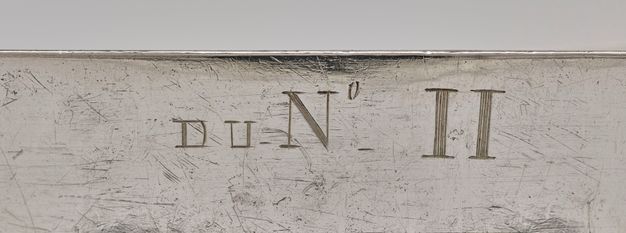
Armorial
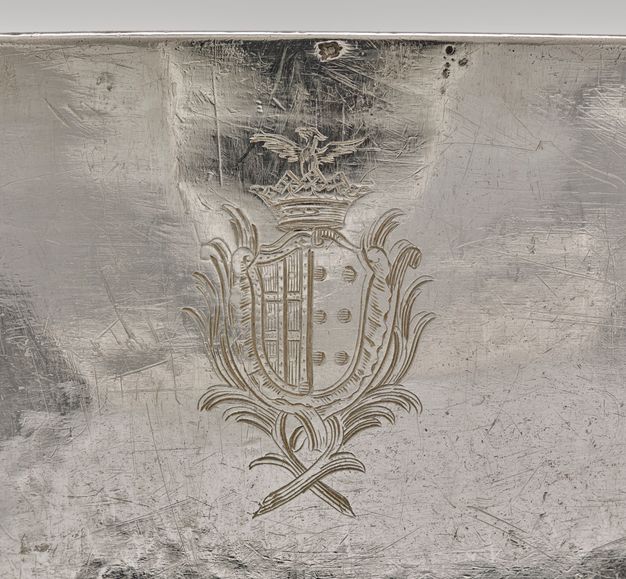
The exterior is engraved with the coat of arms of the Melo e Castro family, surmounted by a Portuguese ducal coronet and the family crest of an eagle with spread wings (armorial 3.1).1
Tureen (82.DG.12.1.b)
1726
H: 17.1 × W: 46.7 × D: 25.7 cm, 4,480 g (6 3/4 × 18 3/8 × 10 1/8 in., 144 ozt., 0.706 dwt.)
Marks
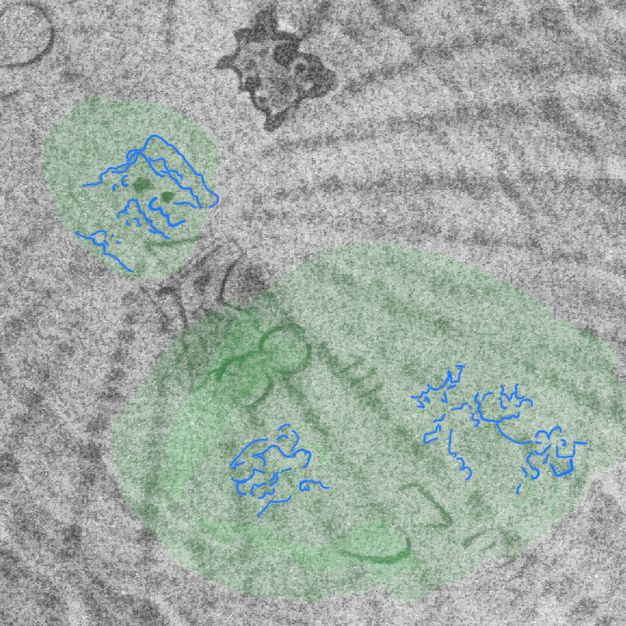
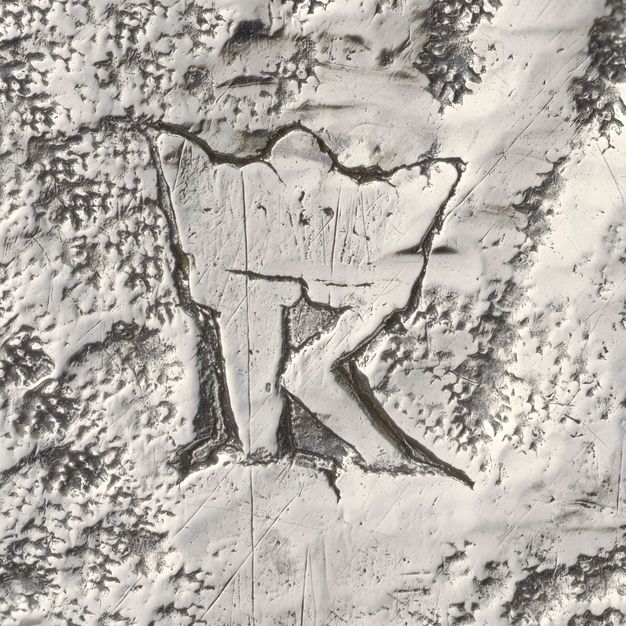
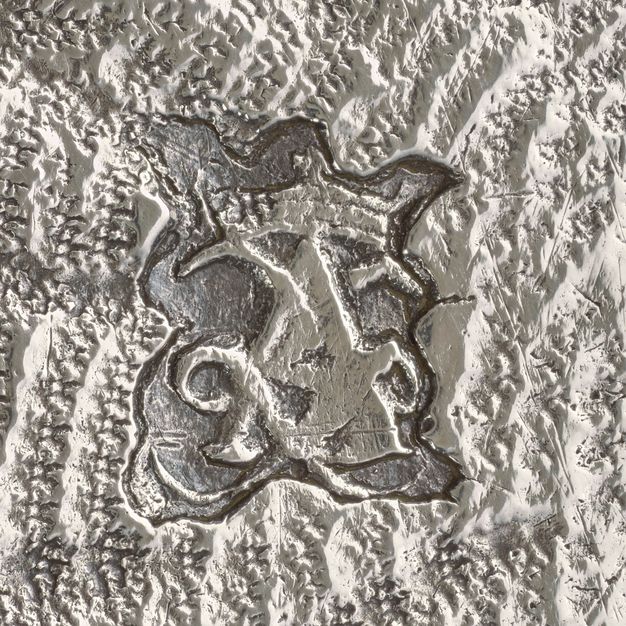
Struck, underneath, with the following stamps: three indecipherable marks (mark 3.4), one possibly the maker’s mark;2 a crowned K (the Paris warden’s mark used between August 13, 1726, and August 13, 1727) (mark 3.5); and a crowned A overlaid with facing and interlaced Ls (the Paris charge mark for works of silver used between February 15, 1722, and December 1, 1726, under the fermier Charles Cordier) (mark 3.6). Struck, on the exterior rim, with the following mark: a partially struck caduceus (the Paris discharge mark for works of medium size used between February 15, 1722, and December 1, 1726, under the fermier Charles Cordier).
Inscriptions
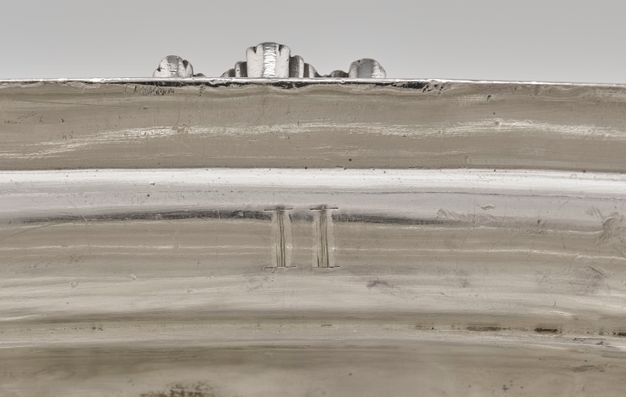
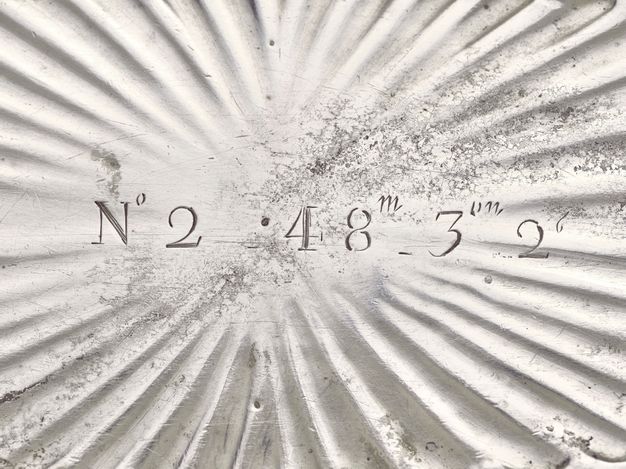
The interior, below the rim, is scratched with the Roman numeral “II” (inscription 3.3). The bottom of the interior is incised with the numeral and weight “N° 2 48m_ 3on. 2g” (inscription 3.4).3
Armorials
Each side bears a cartouche chased and engraved with the coat of arms of the Melo e Castro family, surmounted by a Portuguese ducal coronet.
Stand (82.DG.12.1.c)
1728–29
H: 3.5 × W: 56.7 × D: 40.6 cm, 3,230 g (1 3/8 × 22 5/16 × 16 in., 103 ozt., 16.938 dwt.)
Marks
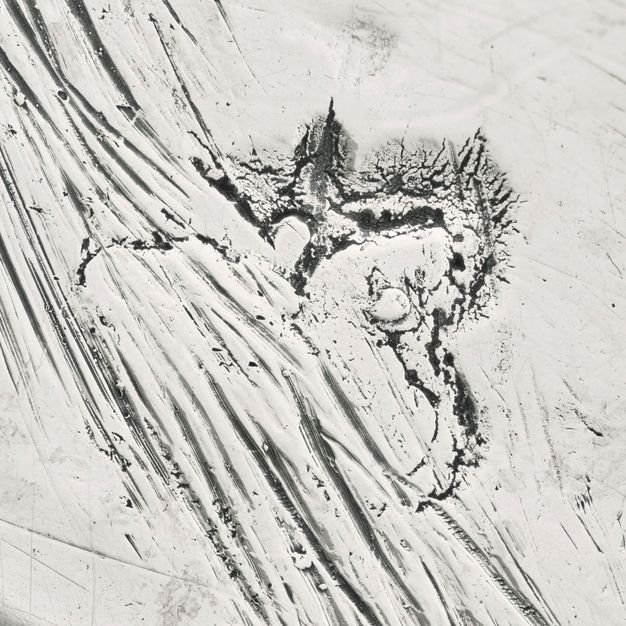
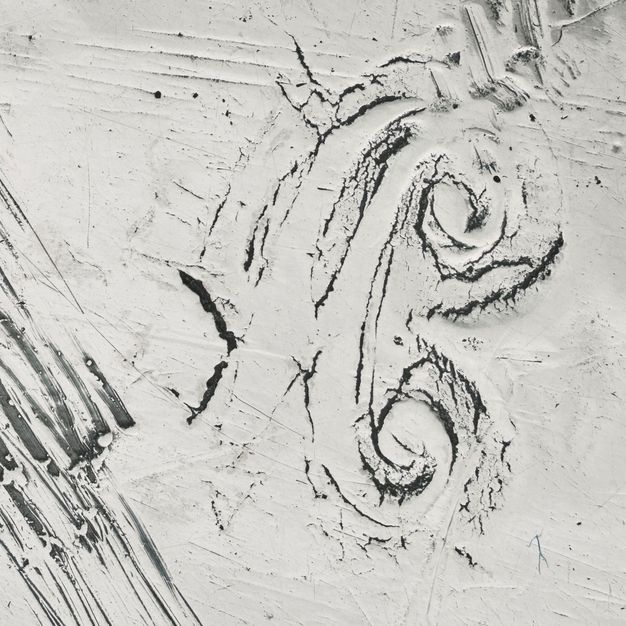
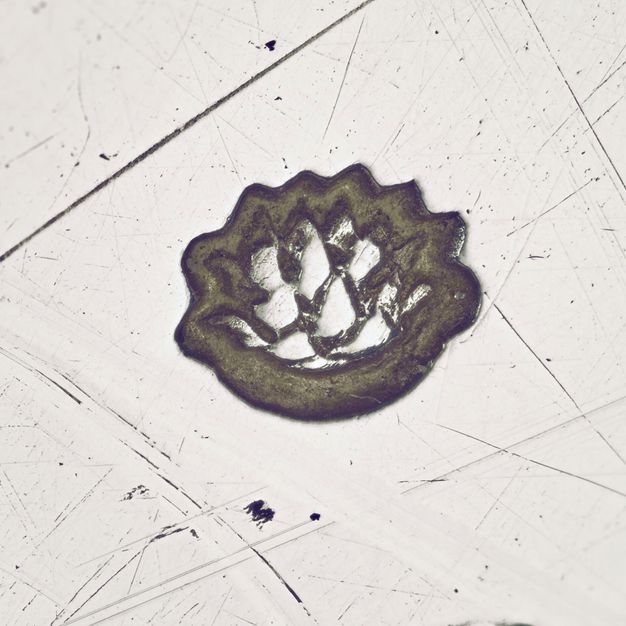
Struck, underneath, with the following stamps: an indecipherable mark, probably a crowned M (the Paris warden’s mark used between August 12, 1728, and August 26, 1729) (mark 3.7); an A with a crown at its side (the Paris charge mark for works of silver used between December 1, 1726, and October 15, 1732, under the fermiers Jacques Cottin and Louis Gervais) (mark 3.8); and an artichoke mark (the Paris mark for large, old works in silver to which new parts have been added, used between October 1, 1762, and October 1, 1768, under the fermier Jean-Jacques Prévost) (mark 3.9).
Inscriptions
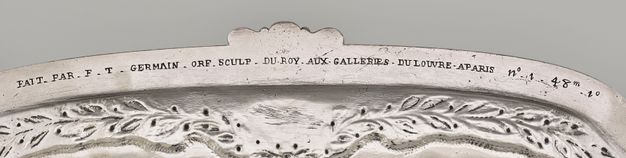
Incised, underneath, with “FAIT.PAR.F.T.GERMAIN.ORF.SCULP.DU.ROY.AUX GALLERIES.DU LOUVRE.APARIS” (“MADE.BY.F.T.GERMAIN.GOLDS[MITH].SCULP[TOR].OF THE.KING.AT THE GALLERIES.OF THE LOUVRE.IN PARIS”), with the numeral and weight “n°. 1 .48m . 1o ” (inscription 3.5), and scratched with the Roman numeral “DU - N - I.”4
Armorial
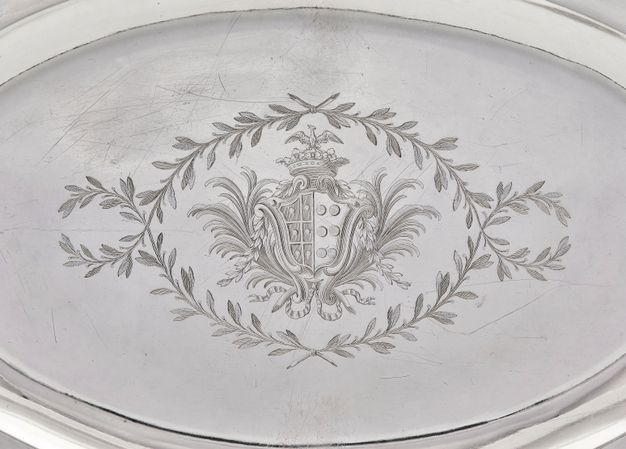
The surface of the stand is engraved with the coat of arms of the Melo e Castro family, above crossed palm branches, flanked by husk festoons, and surmounted by a Portuguese ducal coronet and the family crest of an eagle with spread wings, all within tied laurel branches.
82.DG.12.2.a–c
Liner (82.DG.12.2.a)
1728–29
H: 12.3 × W: 31.5 × D: 21 cm, 1,024.97 g (4 13/16 × 12 3/8 × 8 1/4 in., 32 ozt., 19.071 dwt.)
Marks
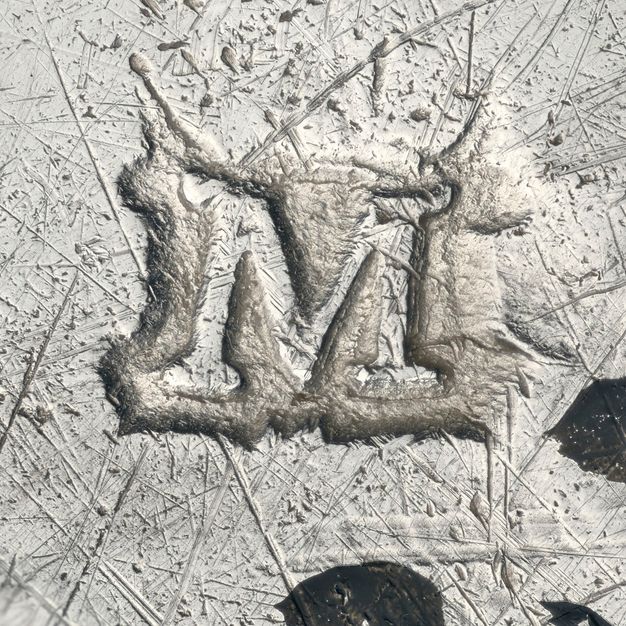
Struck, underneath, with the following stamps: a crowned M (the Paris warden’s mark used between August 12, 1728, and August 26, 1729) (mark 3.10); and an A with a crown at its side (the Paris charge mark for works of silver used between December 1, 1726, and October 15, 1732, under the fermiers Jacques Cottin and Louis Gervais) (mark 3.11). Struck, on the exterior, above the incised inscription, with the following stamp: a crowned chancellor’s mace (the Paris discharge mark for small works used between December 1, 1726, and October 15, 1732, under the fermiers Jacques Cottin and Louis Gervais) (mark 3.12).
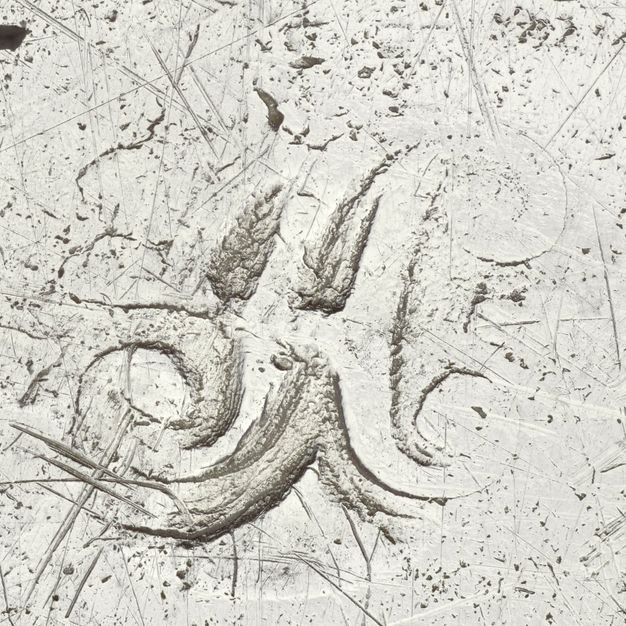
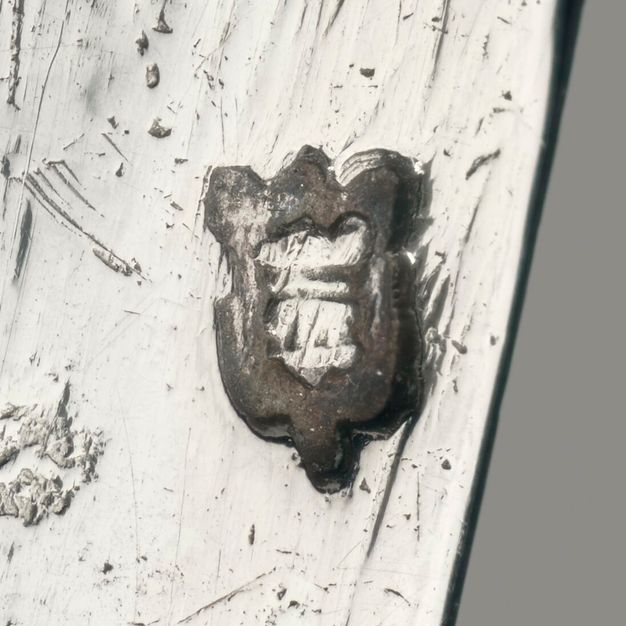
Inscriptions
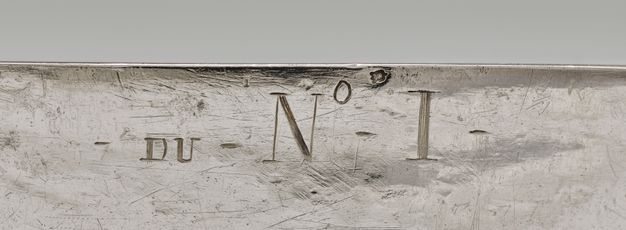
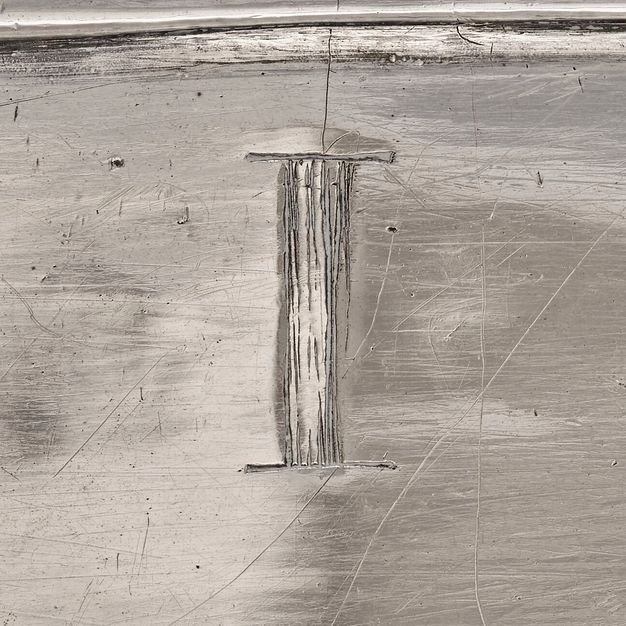
The exterior surface, opposite the side with the armorial, is incised with “- DU - N° - I” (inscription 3.6), and the interior is scratched with the Roman numeral “I” (inscription 3.7).
Armorial
The exterior is engraved with the coat of arms of the Melo e Castro family, above crossed palm branches surmounted by a Portuguese ducal coronet and the family crest of an eagle with spread wings.
Tureen (82.DG.12.2.b)
1726
H: 17.5 × W: 47 × D: 26 cm, 4,370 g (6 7/8 × 18 1/2 × 10 1/4 in., 140 ozt., 9.976 dwt.)
Marks
Struck, underneath, with the following stamps: a crowned K (the Paris warden’s mark used between August 13, 1726, and August 13, 1727) (mark 3.13); and a crowned A overlaid with facing and interlaced Ls (the Paris charge mark for works of silver used between February 15, 1722, and December 1, 1726, under the fermier Charles Cordier) (mark 3.14).
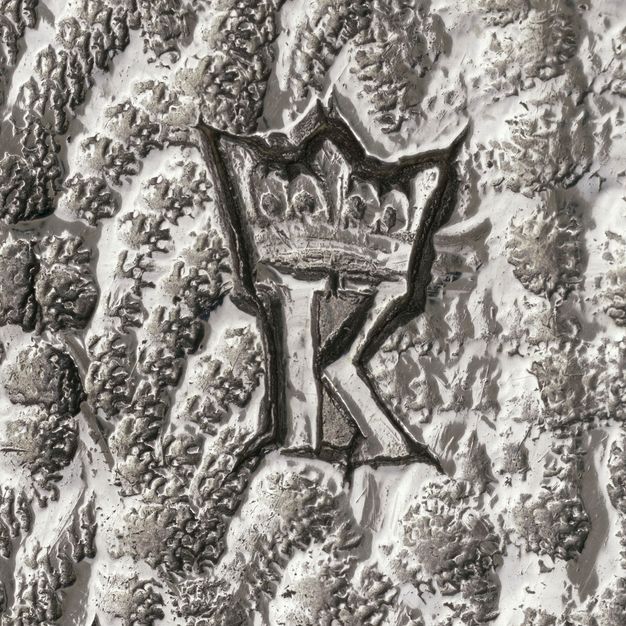
Inscriptions
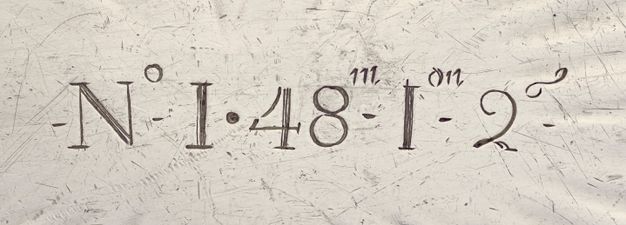
The interior, below the rim, is scratched with the Roman numeral “I” (inscription 3.8). The bottom of the interior is incised with the numeral and weight “N° I . 48m - Ion - 2g -” (inscription 3.9).5
Armorials
Each side bears a cartouche chased and engraved with the coat of arms of the Melo e Castro family, surmounted by a Portuguese ducal coronet (see cat. 3.6).
Stand (82.DG.12.2.c)
1728–29
H: 3.7 × W: 57 × D: 40.6 cm, 3,320 g (1 7/16 × 22 7/16 × 16 in., 106 ozt., 14.810 dwt.)
Marks
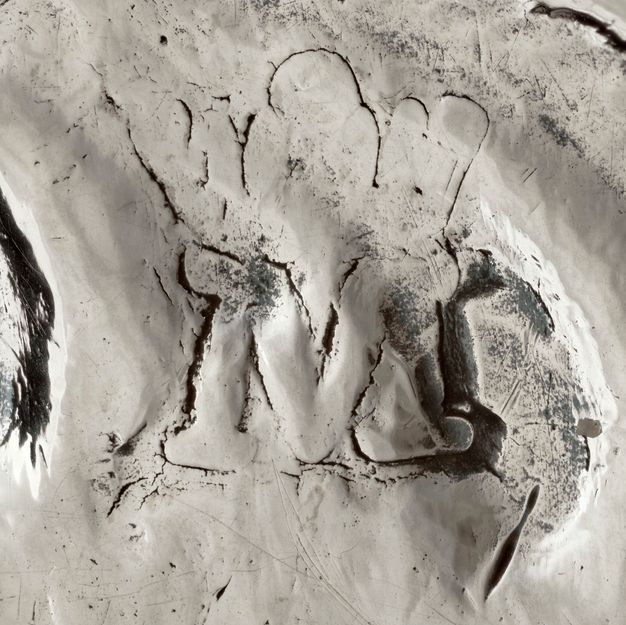
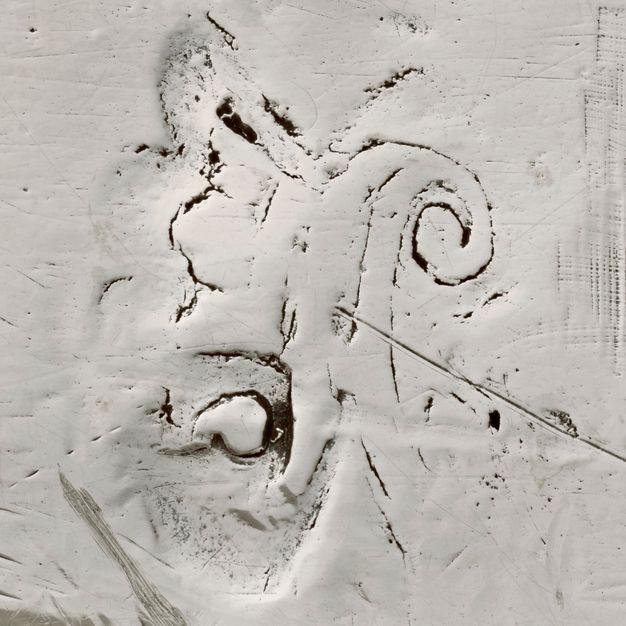
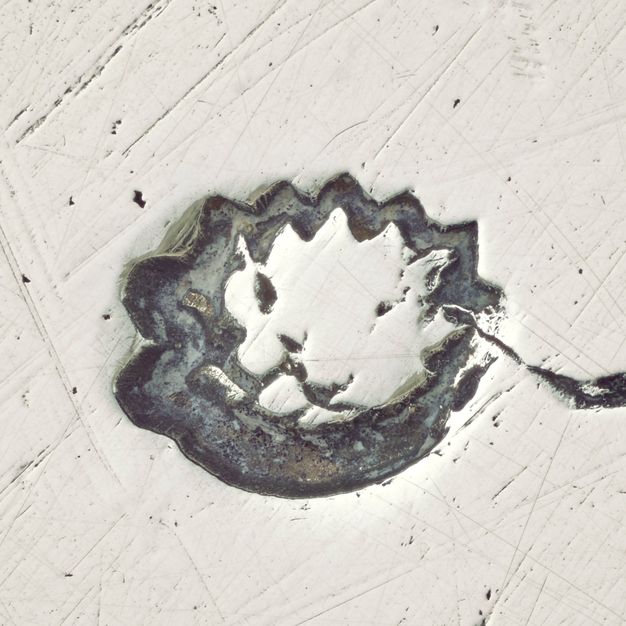
Struck, underneath, with the following stamps: a crowned M (the Paris warden’s mark used between August 12, 1728, and August 26, 1729) (mark 3.15); an A with a crown at its side (the Paris charge mark for works of silver used between December 1, 1726, and October 15, 1732, under the fermiers Jacques Cottin and Louis Gervais) (mark 3.16); and an artichoke mark (the Paris mark for large, old works in silver to which new parts have been added, used between October 1, 1762, and October 1, 1768, under the fermier Jean-Jacques Prévost) (mark 3.17).
Inscriptions
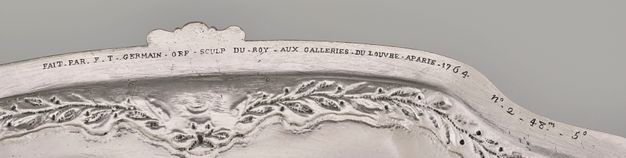
Incised, underneath, with “FAIT.PAR.F.T.GERMAIN.ORF.SCULP.DU.ROY.AUX GALLERIES.DU LOUVRE.APARIS. 1764” (“MADE.BY.F.T.GERMAIN.GOLDS[MITH].SCULP[TOR].OF THE.KING.AT THE GALLERIES. OF THE LOUVRE.IN PARIS”) and with the numeral and weight “n° - 2 - 48m - 5o” (cat. 3.1).6
Armorials
The surface of the stand is engraved with the coat of arms of the Melo e Castro family, above crossed palm branches, flanked by a leafy garland, and surmounted by a Portuguese ducal coronet and the family crest of an eagle with spread wings, all within tied laurel branches (armorial 3.2).
Description
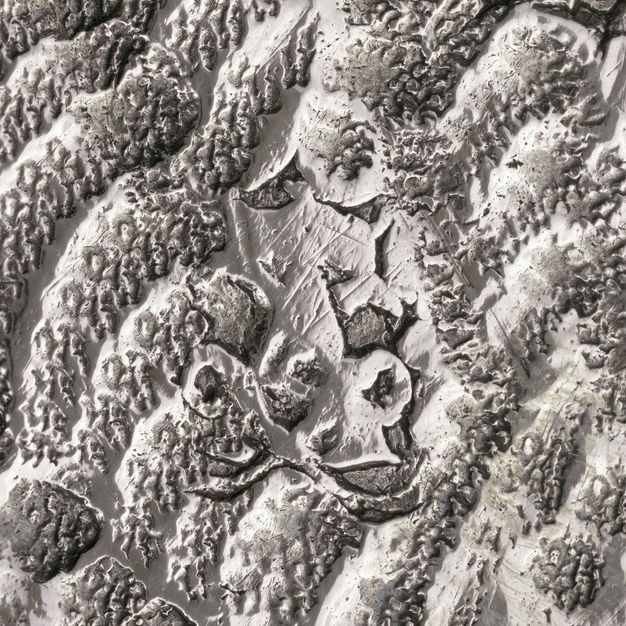
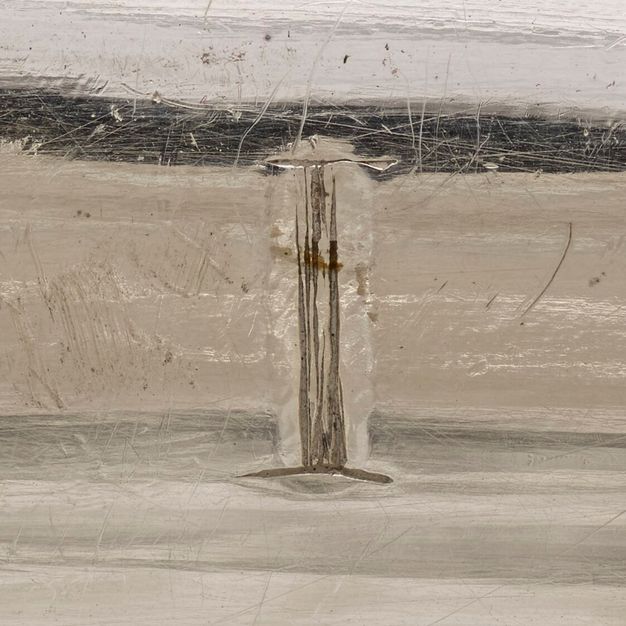
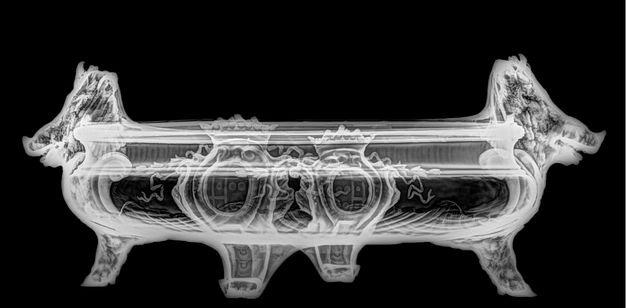
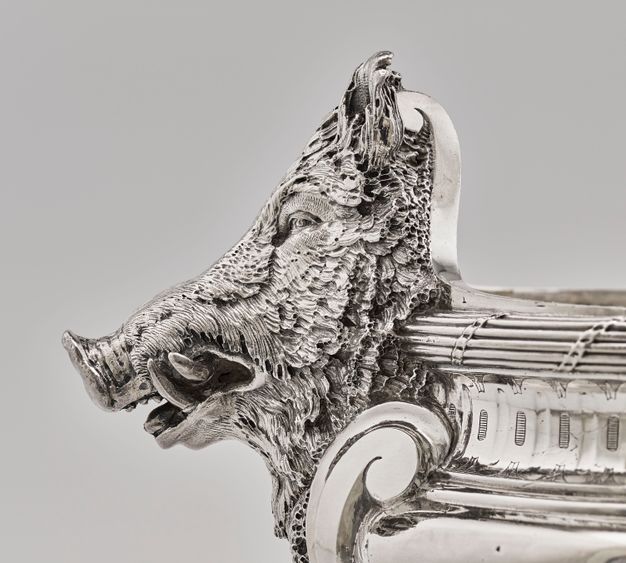
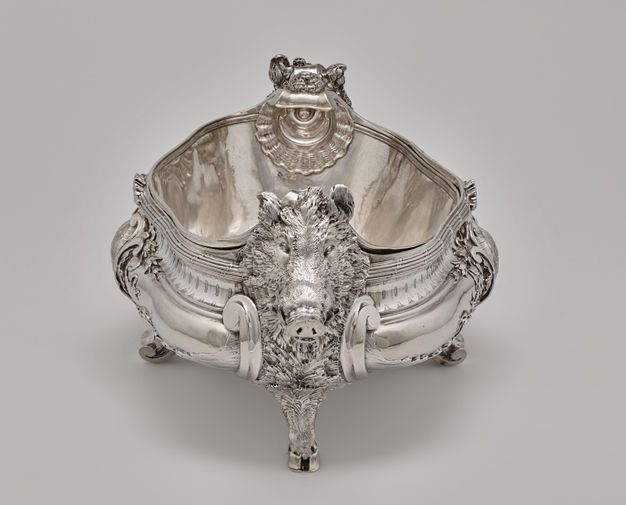
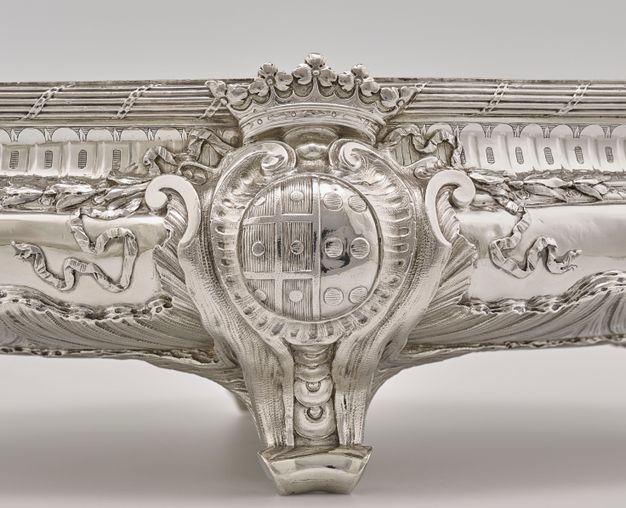
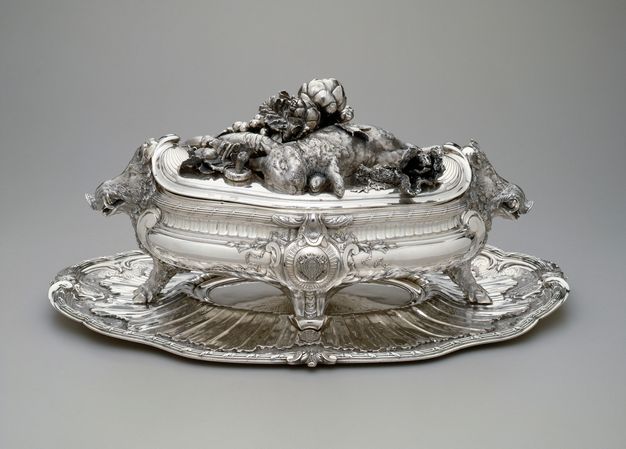
This pair of oval tureens, with liners and stands, is characterized by its distinctive boar heads and hooves (cat. 3.2). Improvements in technical X-radiographic imaging enable a better understanding of the creation of these complex tureens.7 Each tureen has a slightly bulging convex lower body that rises into a concave curve before reaching the rim with its banded reed molding.8 The body has four supports positioned at the cardinal points. The sculptural ornament is symmetrical and was composed of cast parts attached to the body with pins and solder (cat. 3.3). A highly naturalistic boar head, nearly in the round, projects from the narrow ends of each tureen, with upper and lower tusks flaring out the open jaw and around the snout (cat. 3.4).9 The top of the head and ears rise above the rim. Coarse hair bristles from cheek to chest, which merges into the vessel’s body, and continues down the creature’s leg to its cloven hoof, which becomes one of the vessel’s supports (cat. 3.5). The bottom of the vessel is chased with coarsely textured hair in an abstracted imitation of a boar’s belly (a feature that can be readily observed when the tureen rests on the reflective surface of the stand). Burnished scrolls separate the animal’s form from the vessel’s plain lower body. A substantial volute supports the vessel at the center of each long side. Adorned with imbricated dimpled discs on its front, the volute rises up the swelling body to bear an armorial cartouche. The oval shield carries the arms of the Portuguese family Melo e Castro beneath a Portuguese ducal coronet (cat. 3.6).10 Applied husk festoons and meandering ribbons spread laterally. The liner of each tureen fits snugly into the well of the vessel. Its plain surface rises to meet the back of the boar’s head. There, the rim of the liner extends upward into a burnished scroll, amidst which are chased tufts of boar hair. Below, in low relief, a stylized half-shell motif adorns the interior of the liner.
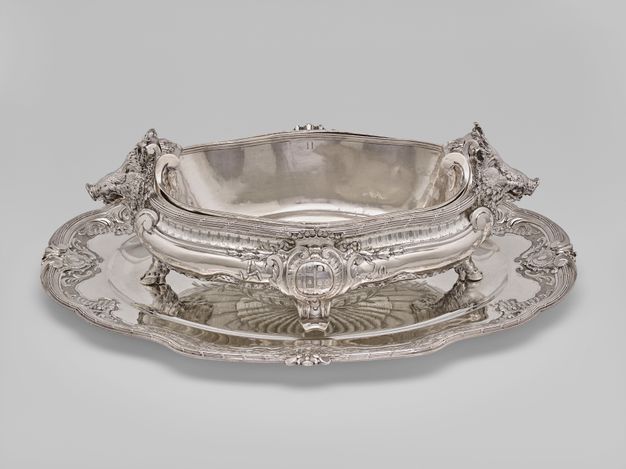
The oval-shaped stand has a banded reed molding along its rim. Symmetrical curving scrolls and foliates articulate the cardinal points of its rim, each marked by either an oval, radiated disc or a quatrefoil clasp. A flat chased border follows the inner contour of the trim. It contains chased branches of berried laurel and irregularly shaped gadrooned segments. The plain central surface of the stand is engraved with the coat of arms of the Melo e Castro family, above crossed palm branches, flanked by husk festoons, and surmounted by a Portuguese ducal coronet and the family crest of an eagle with spread wings, all within tied laurel branches (see plate 3.1 and armorial 3.2).
Commentary
Traditionally, at the highest end of design and execution, centerpieces (surtouts du table), tureens (oval terrines and round pots à oille), condiment vessels for salt, pepper, or mustard (salières, poivrières, moutardiers), candlesticks (flambeaux), and candelabra (candélabres or girandoles) were the most sculptural vessels presented on the dining table or sideboard buffet, for they were works in the round. Their fabrication required sophisticated skills beyond those needed to make the shallower forms of trays, salvers, dishes, bowls, and cutlery. As an experienced sculptor, bronze caster, and goldsmith, Thomas Germain excelled in creating astonishing and inventive three-dimensional tablewares whose forms and ornament played upon the allied themes of food procurement and cookery: hunting, fishing, vegetable gardening, fruit cultivation, and mushroom picking. The fame of his talent grew after his appointment as goldsmith-sculptor to the king (orfèvre-sculpteur du roi) in September 1723. Made in 1726–29, this pair of tureens, with boar heads, is his earliest extant commission in a public collection alluding to the hunt and its catch of game.
Originally, these tureens had lids elaborately formed as sculptural still-life tableaux of game and vegetables. The lids disappeared in the early nineteenth century, but their weight can be calculated to approximately 3,066 and 3,227 grams respectively, which is consistent with an elaborate assembly of raised and cast elements.11 Essential elements of their ornament were recorded in two inventory descriptions from the eighteenth century (see the excerpt below). They bore trophies of animals, birds, and crustaceans, with a cauliflower on one and an artichoke on the other (as discussed below). Their ornament of game, shellfish, and foodstuffs evoked the possible ingredients that would have been contained in the vessel.12 The French term for this shape of vessel was terrine, a type traditionally used to serve a slow-simmered pungent stew, or ragout. The recipe was hearty, calling for meat, vegetables, and seasonings. Normally, such vessels and their lids had clearly defined handles to facilitate serving, but these examples do not.13
In his seminal article of 1990, Bruno Pons first identified this pair of tureens as probably that delivered by Thomas Germain to Samuel Jacques Bernard, future comte de Coubert, at his Parisian townhouse, located at 46 rue du Bac, on the left bank of the Seine, just south of the Galeries du Louvre (where Germain lived).14 Eldest son of the vastly wealthy banker Samuel Bernard, Samuel Jacques pursued a career in law with the Parlement de Paris before acquiring in 1725 the post of financial superintendent of the queen’s household (surintendant des finances de la Maison de la Reine). Perhaps arriving at this elevated position prompted him to order new silver vessels from the same court goldsmith-sculptor who in 1726 supplied a large gold toilette service of thirty-five pieces to his patroness, Marie Leczinska, queen of France.15 Date marks on the boar-head tureens correspond to the years 1726–29 and support this hypothesis.
When delivered in 1729, the tureens had remarkable lids whose ornament complemented the boar heads on the vessels. The inventory compiled on August 13, 1753, following the death of Samuel Jacques Bernard, described them as:
Silver Plate. No 802: Two large tureens supported by wild boars. On the covers are different animals and fruits. Two large oval dishes with chased contours serve [as stands] for the tureens. Two large spoons for these.16
The 1796 posthumous inventory of their subsequent owner, Martinho de Melo e Castro, gave further details about the tureens with boar heads (cabeças de javalis). Their lids were topped with an artichoke on one of them, and on the other a cauliflower, and both were decorated with birds, seafood, and crayfish.17
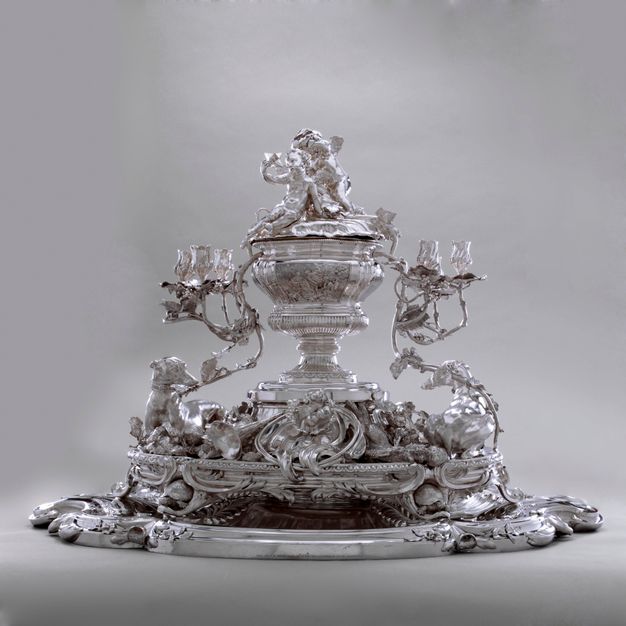
In subject, the game theme of Samuel Jacques Bernard’s tureens coincided with his father’s passion for the hunt, as expressed by the elder Bernard’s parallel commission to the Germain workshop for an ambitious and astounding table centerpiece in silver. Though not yet completed by the death of Samuel Bernard in 1739, nor by the death of Thomas Germain himself in 1748, its final composition was achieved by the goldsmith’s son, François Thomas Germain. The massive piece consisted of a stand, a tiered tray set with two greyhounds, furling foliage, a hunting horn, and dead game all rising to support a covered urn whose lid bore three putti, cavorting with stars, and two twiggy branches that transformed into candelabra (stars and greyhounds, or levrettes, were heraldic symbols of the comtes de Coubert). This tour-de-force never graced the Bernard household, as payment remained outstanding upon the death of Samuel Jacques in 1753, and so it remained in the Germain workshop.18 In 1757 François Thomas Germain finished and sold the piece to a Portuguese client, the eighth duque d’Aveiro, who was forced to relinquish it to his king, José I (fig. 3.1).19
The overarching theme of the hunt played into a major plan to aggrandize Samuel Jacques Bernard’s residence in the rue du Bac. That plan ultimately provided a harmonious context for his growing collection of silver tablewares in general and the boar-head tureens and their lids in particular. Having purchased an adjoining townhouse on the rue Saint-Dominique, Samuel Jacques initiated a project in 1730 to join it to his existing residence and, in so doing, create a new grand salon and gallery off the garden. The new salon was intended to also serve as a dining room; it was fitted with fine paneling (carved with allegorical figures), large mirrors, and two large still-life paintings by Jean-Baptiste Oudry of outdoor scenes with hunting dogs, water fowl, and exotic birds.20 The subjects of Oudry’s paintings complemented the ornament of Germain’s tureens.21
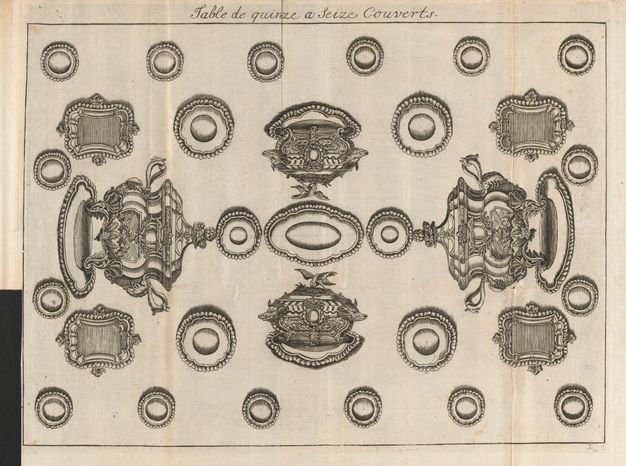
Once the decoration of the grand salon was fully achieved around 1740–42, Bernard commissioned more serving vessels from Thomas Germain. This time he ordered a pair of round tureens (pots à oille), whose lids bore crayfish and artichokes in allusion to the ingredients of the Spanish recipe for olio.22 When laid for the first course, the Bernard dining table must have resembled the engraved arrangement titled Table de quinze a seize couverts (Table of Fifteen to Sixteen Place Settings) that accompanied the 1742 French edition of the cookbook Le cuisinier moderne, by Vincent La Chapelle.23 This two-dimensional rendering clearly distinguished the sculptural forms of the terrines and pots à oille from the shallower dishes and plates. The absence of a centerpiece (surtout de table) in this engraving is striking, the more so since Bernard’s own dining table lacked the centerpiece commissioned by his father from Germain (as it was not to be finished until after the deaths of both father and son) (fig. 3.2).
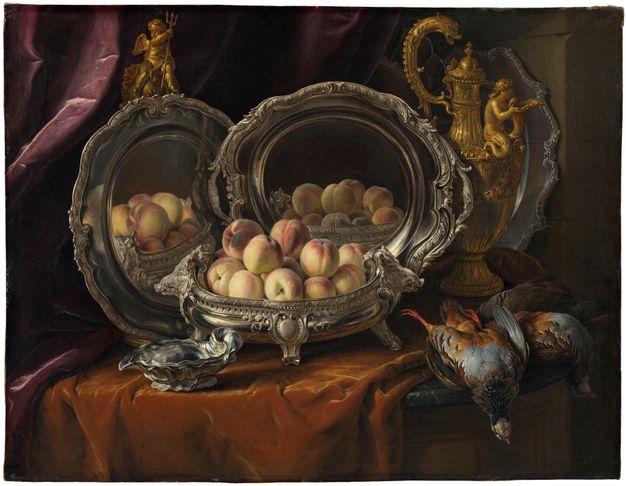
Thomas Germain made a nearly identical second pair of boar-head tureens in 1733–34 that passed through the collections of the comte d’Eu, the duc de Penthièvre, and Henry Janssen, a naturalized Englishman living in Paris.24 They survive with their lids; one is in the Detroit Institute of Arts and the other in a private collection. The lid of the former bears a rabbit, a crayfish, oysters on the half-shell, artichokes, leafy greens, and a mushroom (fig. 3.3). The lid of the latter has a snipe, a cauliflower, an onion, an open pea pod, a turnip, and mushrooms. Their appearance gives the closest possible visualization of the lids lost from the Getty pair. One notable distinction, however, concerns the boar-leg supports on the Janssen tureens; each support consists of two boar legs and hooves, paired side by side. In this regard, they differ from the Bernard/Getty versions, whose supports each have only one boar leg and hoof. Paired boar-leg supports are clearly visible in the still life of a boar-head tureen, filled with peaches, painted around 1739–40 by François Desportes, a neighbor of the Germain family in the Galeries du Louvre (fig. 3.4). The painting was brought from Paris to Stockholm around 1739–41 by the Swedish diplomat and art collector Carl Gustav Tessin.25
Sometime after the death of Samuel Jacques Bernard in 1753 and the protracted settlement of his estate, which had outstanding debts, François Thomas Germain acquired the Bernard pairs of boar-head tureens and pots à oille. He, in turn, sold both pairs in 1764 to Martinho de Melo e Castro, changing their armorials accordingly and engraving his signature on the stands (see inscription 3.5 and cats. 3.1 and 3.6).26 Melo e Castro was the Portuguese representative at the peace negotiations to end the Seven Years’ War. The first phase of negotiations was held in Fontainebleau in 1762 and the second phase in Paris in 1763. Coincidentally, while in Paris for a few months in 1761, Melo e Castro resided in the Hôtel Bernard, 46 rue du Bac, as had his predecessor in the proceedings, the Portuguese abbot Salema.27 Melo e Castro bought the tureens and other silver to grace his table as befitting his stature as the Portuguese ambassador to France. The tureens remained in his possession until the end of his life and were listed in his posthumous inventory of September 14, 1796.28
In terms of design and execution, drawings and documents shed light on Thomas Germain’s inventive creation of the boar-head tureen model. Peter Fuhring analyzed his extant working drawings for tureens to reveal his design process.29 Aspects of one design in particular, dated to around 1725–30, evolved and took on three-dimensional form. The vessel in the sanguine drawing has a cow head under each handle. The chest, leg, and hoof of each merge to become the lateral supports for the tureen, in a manner analogous to the boar version. Moreover, the central support of the drawn vessel parallels those on the actual Bernard/Getty tureens, in that the drawn volute support, adorned with imbricated fleurons, rises up to carry the armorial shield. Another drawing attributed to Thomas Germain’s workshop shows designs for ten tablewares arranged on a single sheet.30 It is a working drawing, of pen and wash, with linear markings at the bottom left corner to indicate the incremental measurement of twelve pouces (equivalent to 32.4 cm, 12 3/4 in.). Each vessel’s relevant measurements are also indicated, with the exception of the most detailed of the renderings. That portrays a lidded boar-head tureen very much like the Janssen version of 1733–34. Meanwhile, the inventory of François Thomas Germain’s premises taken in May–June 1765 lists models in lead from which the tureens were made for “M[onsieur] de Janssin [sic].”31 Clearly the models dated to the era of his father and had remained in the workshop after his death in 1748. Given the close similarity of the 1733–34 Janssen tureens to the 1726–29 Bernard versions, it is probable that some of these models were originally created for the earlier commission: “4 boar feet, 2 boar head, 1 end knot and lid, 1 handle [knot] at back of the liner, the bundle of herbs on top of the lid and among the vegetables.”32 Lastly, among the models listed for coats of arms, monograms, and escutcheons, there was a lead “group of branches and palms and an eagle, attributes of the arms Mello,” which were created in 1764 on the occasion when Martinho Melo e Castro purchased both the terrines and the pots à oille.33
Provenance
1729–53: Samuel Jacques Bernard, comte de Coubert, French, 1686–1753 (in the salle à manger of his hôtel, 46 rue du Bac, Paris); by 1764: François Thomas Germain, French, 1726–1791, when the Melo e Castro coats of arms were applied; 1764–95: Martinho de Melo e Castro, Portuguese, 1716–1795, secretary of state to King José I (reigned 1750–77), Portuguese representative at the peace negotiations to end the Seven Years’ War, held in Paris in 1763 (and temporary resident of the Hôtel Bernard, 46 rue du Bac, in 1761), by inheritance to his nephew, Dom Francisco de Almeida de Melo e Castro; 1795–1819: Dom Francisco de Almeida de Melo e Castro, sixth conde das Galveias, Portuguese, 1758–1819, by inheritance to his son, Dom António Francisco Lobo Almeida de Melo e Castro de Saldanha e Beja;34 1819–71: Dom António Francisco Lobo Almeida de Melo e Castro de Saldanha e Beja, seventh conde das Galveias, Portuguese, 1795–1871, by inheritance to his son, Dom Francisco Xavier Lobo de Almeida de Melo e Castro; 1871–92: Dom Francisco Xavier Lobo de Almeida de Melo e Castro, eighth conde das Galveias, Portuguese, 1824–1892, by inheritance within the family to his half sister, Teresa (alternatively Thereza) Lobo de Almeida de Melo e Castro de Vilhena (Galveias); by 1934–56 dona Teresa Lobo de Almeida de Melo e Castro de Vilhena (Galveias), Portuguese, 1864–1956, by inheritance within the family to Dom José Lobo de Almeida Melo e Castro; –1975: Dom José Lobo de Almeida Melo e Castro, eleventh Conde das Galveias, Portuguese, 1923–1998 (Cascais, Portugal) [sold, Christie’s, Geneva, November 11, 1975, lot 230 A and B, to Jean Rossignol];35 1975–82: Jean Rossignol, French, 1908–1984 (Geneva), sold to the J. Paul Getty Museum, 1982.
Exhibition History
Exposição de Arte Francesa, Especialmente de Ourivesaria do Século XVIII, Museu Nacional de Arte Antiga (Lisbon), May–June 1934 (nos. 230–231, lent by Ex.ma Sr.a D. Thereza Lobo de Almeida de Melo e Castro de Vilhena); Les trésors de l’orfèvrerie du Portugal, Musée des arts décoratifs (Paris), November 1954–January 1955 (no. 453, lent by Mme T. de Melo de Castro de Vilhena [Galveias]); Casting Nature: François Thomas Germain’s Machine d’Argent, J. Paul Getty Museum at the Getty Center (Los Angeles), July 11, 2006–March 25, 2007; Wild Boars and Peaches: A Reunion of Two French 18th-Century Artists, Nationalmuseum (Stockholm), May 4, 2007–January 6, 2008 (82.DG.12.1 only); The Edible Monument: The Art of Food for Festivals, Getty Research Institute at the Getty Center (Los Angeles), October 13, 2015–March 13, 2016 (82.DG.12.1 only); Sfida al Barocco Roma, Torino, Parigi, 1680–1750, Cintroniera Juvarriana della Venaria Reale (Turin), May 30–September 20, 2020 (no. 128, 82.DG.12.1 only).
Bibliography
Exposição de Arte Francesa, Especialmente de Ourivesaria do Século XVIII. Exh. cat. Lisbon: Museu Nacional de Arte Antiga, 1934., 64–65, 80–83, nos. 230–31, “Duas Terrinas,” pl. 75 (lent by Ex.ma Sr.a D. Thereza Lobo de Almeida de Melo e Castro de Vilhena, entry by Luis Keil); Les trésors de l’orfèvrerie du Portugal. Exh. cat. Paris: Les presses artistiques, 1955., 90–91, no. 453 (lent by Mme T. de Melo de Castro de Vilhena [Galveias]); Frégnac, Claude. Les grands orfèvres de Louis XIII à Charles X: Collection connaissance des arts “Grands artisans d’autrefois.” Paris: Hachette, 1965., 121; Louis XV 1974, 358, no. 484 (entry by Daniel Alcouffe); Highly Important European Silver/Importantes pièces d’orfèvrerie européenne, sale cat., Christie’s, Geneva, November 11, 1975: 74–75, lot 230 A and B, “A Pair of Magnificent Louis XV Jardinieres and Stands/Magnifique paire de jardinieres dite ‘aux sangliers’ et leur presentoirs”; Milnes-Gaskell, Thomas. “Thomas Germain.” In Christie’s Review of the Season, 220–25. London: Hutchinson; New York: St. Martin’s Press, 1976.; Wilson, Gillian, Adrian Sassoon, and Charissa Bremer-David. “Acquisitions Made by the Department of Decorative Arts in 1982.” The J. Paul Getty Museum Journal 11 (1983): 13–66., 24–28, no. 3, “Pair of Tureens and Stands”; Sassoon, Adrian, and Gillian Wilson. Decorative Arts: A Handbook of the Collections of the J. Paul Getty Museum. Malibu, CA: J. Paul Getty Museum, 1986., 66–67, no. 148; Fuhring, Peter, ed. An Exhibition of Ornamental Drawings, 1520–1920. Exh. cat. New York: Armin B. Allen, Inc., with Hobhouse Ltd., 1987., no. 53; French Silver in the J. Paul Getty Museum, exh. brochure (Malibu, CA: J. Paul Getty Museum, 1988), 2, 7–8, fig. 4; Pons, Bruno. “Hôtel Jacques-Samuel Bernard.” In Le Faubourg Saint-Germain: La Rue du Bac, edited by Bruno Pons and Anne Forray-Carlier, 126–53. Paris: Délégation à l’action artistique de la ville de Paris, 1990., 132, 136, 152n23, 153n50; D’Orey, Léonor. The Silver Service of the Portuguese Crown. Lisbon: Edições Inapa, [1991]., 24–25; Bremer-David, Charissa, with Peggy Fogelman, Peter Fusco, and Catherine Hess. Decorative Arts: An Illustrated Summary Catalogue of the Collections of the J. Paul Getty Museum. Malibu, CA: J. Paul Getty Museum, 1993. http://www.getty.edu/publications/virtuallibrary/0892362219.html., 111–12, no. 186; Perrin, Christiane. François Thomas Germain: Orfèvre des rois. Saint-Rémy-en-l’Eau: Éditions d’art Monelle Hayot, 1993., 58, 96–97, 268nn146–147, 275n69; Wilson, Gillian, and Catherine Hess. Summary Catalogue of European Decorative Arts in the J. Paul Getty Museum. Los Angeles: J. Paul Getty Museum, 2001. http://www.getty.edu/publications/virtuallibrary/089236632X.html., 94–95, no. 192; Fuhring, Peter. Designing the Décor: French Drawings from the Eighteenth Century. Exh. cat. Lisbon: Calouste Gulbenkian Foundation, 2005., 102–3, no. 27, 327, no. 27n3, 132–33, no. 40, and 327, no. 40n3; Baillio, Joseph, with Odile Poncet, Chloe Chelz, and Guy Wildenstein. The Arts of France from François Ier to Napoléon Ier: A Centennial Celebration of Wildenstein’s Presence in New York. Exh. cat. New York: Wildenstein and Company, 2005., 177, 178n2; Ahlund, Mikael, and Lisa Skogh. “Wild Boars and Peaches: A Reunion of Two French 18th-Century Artists.” Art Bulletin of Nationalmuseum Stockholm 14 (2007): 73–74., 73–74; Seelig, Lorenz. “Das Silberservice König Georgs III. von Robert-Joseph Auguste und Frantz-Peter Bundsen: Zur Goldschmiedekunst des frühen Klassizismus in Paris, London und Hannover.” Münchner Jahrbuch der bildenden Kunst, 3rd series, LVIII (2007): 141–207., 185n142; Wilson, Gillian, with Charissa Bremer-David, Jeffrey Weaver, Brian Considine, Arlen Heginbotham, Katrina Posner, and Julie Wolfe. French Furniture and Gilt Bronzes: Baroque and Régence; Catalogue of the J. Paul Getty Museum Collection. Los Angeles: J. Paul Getty Museum, 2008., 373, fig. 18; Bremer-David, Charissa. “Of Cauliflower and Crayfish: Serving Vessels to Awaken the Palate.” In The Edible Monument: The Art of Food for Festivals, edited by Marcia Reed, 124–47. Exh. cat. Los Angeles: Getty Research Institute, 2015., fig. 8; Boiron, Stéphane. “Jacques-Samuel Bernard et l’argenterie Melo e Castro.” In Tureen “Aux Ecrevisses” by Thomas Germain. Sale cat. Sotheby’s, New York, October 25, 2019: 44–60.; Magalhães, João. “The Portuguese History of the Melo e Castro Pots à Oille.” In Tureen “Aux Ecrevisses” by Thomas Germain. Sale cat. Sotheby’s, New York, October 25, 2019: 71–81., 73; Ward, John D. “Evolution of a Form: Getting to Thomas Germain’s 1740 Tureen ‘Aux Ecrevisses.’” In Tureen “Aux Ecrevisses” by Thomas Germain. Sale cat. Sotheby’s, New York, October 25, 2019: 19–29., 24; Vassallo e Silva, Nuno. “Thomas Germain and the Portuguese Court.” In Tureen “Aux Ecrevisses” by Thomas Germain. Sale cat. Sotheby’s, New York, October 25, 2019: 65–68., 68; Marco, Michela di, Giuseppe Dardanello, and Chiara Gauna, eds. Sfida al Barocco Roma, Torino, Parigi, 1680–1750. Exh. cat. Genoa: Sagep Editori, 2020., 387–88, no. 128 (82.DG.12.1 only, entry by Peter Fuhring); Murdoch, Tessa. “‘A Performance for the Service of a Table’: New Light on Eighteenth-Century Dining.” Getty Research Journal 14, no. 1 (2021): 181–90., 185, 190n19.
Notes
-
Luis Keil identified the coronet as that of a marquess. See Exposição de Arte Francesa, Especialmente de Ourivesaria do Século XVIII. Exh. cat. Lisbon: Museu Nacional de Arte Antiga, 1934., 64, nos. 230–31, “Duas Terrinas.” ↩︎
-
Technical Report, October 13, 2021, by Julie Wolfe, Decorative Arts and Sculpture Conservation, J. Paul Getty Museum. The report notes that traces of three obliterated marks are discernible through the bottom of the vessel (82.DG.12.1.b) in a detail from an X-radiograph. These marks were hidden when a subsequent application of solder covered targeted areas of the bottom surface, near the center punch points, and also filled the original chasing work. One mark was located at the center punch point and two others were in the vicinity of the legible crowned K (the Paris warden’s mark used between August 13, 1726, and August 13, 1727). Two center punch points, one in the interior of the vessel and the other on its exterior, are visible in the X-radiograph. The top and bottom center punch points did not perfectly align and are adjacent to each other. The purpose of the center punch point was to guide the goldsmith’s raising hammer as he shaped the vessel from a flat sheet and controlled the thickness of its walls. See also cat. no. 1, note 39. For further analytical information on 82.DG.12.1.b, see Appendix: Table 1.
The X-radiograph was taken with a Carestream at 300 kV, 3 mA, 6 minutes at 60-inch distance, and was annotated by Julie Wolfe, Decorative Arts and Sculpture Conservation, J. Paul Getty Museum, to show the contour outlines of the obliterated marks. ↩︎
-
According to the historic numeral and weight, in the old French units of marc, once, and gros, on this tureen (82.DG.12.1.b), the original component parts of “No 2” all together equated to 11,847.574 grams. Normally, such a weight would have tallied together the four component parts of one part of the pair: lid (now lost), liner, tureen, and stand, plus, possibly, the corresponding serving spoon. However, the lid for this tureen no longer exists and its stand (82.DG.12.1.c) originally belonged to the pair 82.DG.12.2. The stands of the pairs were interchanged at an unknown date, perhaps when acquired by the Getty. The current overall weight of this pair (82.DG.12.1.a–c), with its three parts, is 8,620 grams.
A Record of Weight report, May 11, 2018, by Arlen Heginbotham, Decorative Arts and Sculpture Conservation, J. Paul Getty Museum, recorded the type of scale used to weigh these objects on August 4, 2017. It was an A & D Weighing Scale, model SK-2KWPZ, serial number P165348, with a capacity of 20 kg that reads to the nearest 0.01 kg (10 g). It was calibrated on July 19, 2017, and was accurate to within 0.01 kg over the range of 0–20 kg. ↩︎
-
The historic weight, in the old French units of marc, once, and gros, on this stand (82.DG.12.1.c) equates to 11,778.738 grams, which clearly tabulated more parts of the original “No 1” than the stand alone, whose weight is 3,230 grams. ↩︎
-
The weight, in the old French units of marc, once, and gros, on this tureen (82.DG.12.2.b) equates to 11,786.386 grams, suggesting the tally of the original parts of “No 1” combined the weights of the (now lost) lid, liner, tureen, and stand plus, possibly, the corresponding serving spoon. However, the lid for this tureen no longer exists and its stand (82.DG.12.2.c) originally belonged to the pair (82.DG.12.1). The stands of the pairs were interchanged at an unknown date, perhaps when acquired by the Getty. The current overall weight of this pair (82.DG.12.2.a–c), with its three parts, is 8,720 grams. See note 3 above. ↩︎
-
The historic weight, in the old French units of marc, once, and gros, on this stand (82.DG.12.2.c) equates to 11,901.114 grams, which clearly tabulated more parts of the original pair “No 2” than the stand alone, whose weight is 3,320 grams. See note 4 above. ↩︎
-
Information concerning the process of making of the tureens is based upon the technical analysis of Julie Wolfe, Decorative Arts and Sculpture Conservation, J. Paul Getty Museum, and upon her interpretation of a composite X-radiograph of one tureen (82.DG.12.1.b) that was captured at 350 kV, 10 mA, 1000 mSec, and 96 inches with a GE X-radiography system with digital detector array. ↩︎
-
Technical Report, October 13, 2021, by Julie Wolfe, Decorative Arts and Sculpture Conservation, J. Paul Getty Museum. Wolfe notes: “The body of the tureen [82.DG.12.1.b] was raised from sheet metal and first scalloped by repoussé followed by chasing the exterior surface to create the hair pattern. The raised bowl ended 3.5 cm from the finished rim where another raised and chased band was soldered concave to the lower body. The banded reed molding was cast and soldered onto the entire perimeter.” ↩︎
-
Technical Report, October 13, 2021, by Julie Wolfe, Decorative Arts and Sculpture Conservation, J. Paul Getty Museum. Wolfe notes: “The boar head and neck were hollow cast and soldered to the [vessel, 82.DG.12.1.b]. Since the back of the boar head where it extends above the rim would have been exposed, a raised scallop section was soldered onto the interior of the [vessel] and covers the back of the boar’s head. In other words, the boar head and scalloped backing sandwich the rim of the [vessel]. The chest and burnished scrolls on either side of the boar are cast together and attached with pins and solder. The boar’s hoof is cast hollow and soldered onto the base.” ↩︎
-
Technical Report, October 13, 2021, by Julie Wolfe, Decorative Arts and Sculpture Conservation, J. Paul Getty Museum. Wolfe notes: “The cartouche and volute foot elements are composed of three or four cast parts soldered together. The bottom 3 cm of the foot is hollow and joins the mid-section that curves onto the bottom of the [vessel, 82.DG.12.1.b] and extends over the sides to make the cartouche. Pins were used to hold this section during soldering. After assembly, the bottom of this middle volute section was chased to blend in with the hair texture on the bottom [of the vessel]. The original shield was removed and the existing one has been soldered in place. It appears that the coronet is a separate element soldered to the frame of the cartouche.” ↩︎
-
The estimated weights of the lost lids were deduced from the historic weights incised on the tureens, per notes 3 and 5 above. Luis Keil surmised the lids were lost when the Portuguese court fled in exile to Brazil, from 1808 to 1821, rather than during the 1807 occupation of Portugal by French troops. Every inventory after 1796 of the Melo e Castro family, as the condes das Galveias, identified the lidless tureens as jardinieres or flower boxes (jardineiras or floreiras). See Exposição de Arte Francesa, Especialmente de Ourivesaria do Século XVIII. Exh. cat. Lisbon: Museu Nacional de Arte Antiga, 1934., 82. Indeed, the vessels were still called jardinieres when sold in Highly Important European Silver/Importantes pièces d’orfèvrerie européenne, sale cat., Christie’s, Geneva, November 11, 1975: 74–75, lot 230 A and B, “A Pair of Magnificent Louis XV Jardinieres and Stands/Magnifique paire de jardinieres dite ‘aux sangliers’ et leur presentoirs.” The overall historic weights of each original pair are somewhat less than an extant comparable—yet heavier—example of a close model, also by Thomas Germain, that retains its original lid, and whose overall weight is 14,432 grams. This example is now in the Detroit Institute of Arts, inv. 59.18.a–d, https://www.dia.org/art/collection/object/tureen-lid-liner-and-stand-45774. See Albainy, Tracey. “Eighteenth-Century French Silver in the Elizabeth Parke Firestone Collection.” Bulletin of the Detroit Institute of Arts 73, no. 1/2 (1999): 8–29., 11–12, 21, no. 3. See also fig. 3.3 and note 24 below. ↩︎
-
Bremer-David, Charissa. “Of Cauliflower and Crayfish: Serving Vessels to Awaken the Palate.” In The Edible Monument: The Art of Food for Festivals, edited by Marcia Reed, 124–47. Exh. cat. Los Angeles: Getty Research Institute, 2015., fig. 8. ↩︎
-
See, for example, two designs for tureens with handles by Thomas Germain in Fuhring, Peter. Designing the Décor: French Drawings from the Eighteenth Century. Exh. cat. Lisbon: Calouste Gulbenkian Foundation, 2005., 102–3, no. 27, 327, no. 27n3; 132–33, no. 40, 327, no. 40n3. ↩︎
-
Pons, Bruno. “Hôtel Jacques-Samuel Bernard.” In Le Faubourg Saint-Germain: La Rue du Bac, edited by Bruno Pons and Anne Forray-Carlier, 126–53. Paris: Délégation à l’action artistique de la ville de Paris, 1990., 132, 136, 152n23, 153n50. ↩︎
-
The toilette service is known by description only, as it does not survive. See Bapst, Germain. Études sur l’orfèvrerie française au XVIIIe siècle: Les Germain, orfèvres-sculpteurs du roy. Paris: J. Rouam et cie, 1887., 39–44; and Perrin, Christiane. François Thomas Germain: Orfèvre des rois. Saint-Rémy-en-l’Eau: Éditions d’art Monelle Hayot, 1993., 37, 263n19. ↩︎
-
The tureens were described in the posthumous inventory of Samuel Jacques Bernard as “Vaisselle d’argent. No 802: Deux grandes terrines portées par des sangliers. Sur les couvercles sont différents animaux et fruits. Deux grandes plats ovales à contours cizelés servant aux terrines. Deux grandes cuillers pour icelles” (author’s translation). Paris, Archives nationales de France, Minutier central, LXXXVIII, 629, August 13, 1753. Relevant pages were reproduced in Boiron, Stéphane. “Jacques-Samuel Bernard et l’argenterie Melo e Castro.” In Tureen “Aux Ecrevisses” by Thomas Germain. Sale cat. Sotheby’s, New York, October 25, 2019: 44–60., 54–55, and transcribed in Perrin, Christiane. François Thomas Germain: Orfèvre des rois. Saint-Rémy-en-l’Eau: Éditions d’art Monelle Hayot, 1993., 268n146. ↩︎
-
Luis Keil paraphrased their description in the posthumous inventory of Martinho de Melo e Castro, dated September 14, 1796, as “As tampas tinham como remate, una alcachofra emu ma delas, e na outra uma couve flor, e todas eram ornamentadas com aves, mariscos e camarões” (“The lids were topped with an artichoke on one of them, and on the other a cauliflower, and all were decorated with birds, seafood and shrimp [sic, meaning crayfish],” author’s translation). Cascais, Portugal, Private Arquivo Casa Calveias, box 13. Exposição de Arte Francesa, Especialmente de Ourivesaria do Século XVIII. Exh. cat. Lisbon: Museu Nacional de Arte Antiga, 1934., 64–65, nos. 230–31, “Duas Terrinas,” 80–83. See also Magalhães, João. “The Portuguese History of the Melo e Castro Pots à Oille.” In Tureen “Aux Ecrevisses” by Thomas Germain. Sale cat. Sotheby’s, New York, October 25, 2019: 71–81., 75. ↩︎
-
Pons, Bruno. “Hôtel Jacques-Samuel Bernard.” In Le Faubourg Saint-Germain: La Rue du Bac, edited by Bruno Pons and Anne Forray-Carlier, 126–53. Paris: Délégation à l’action artistique de la ville de Paris, 1990., 132, 136, 152n24. ↩︎
-
The object is now in the Museu Nacional de Arte Antiga, Lisbon, inv. 1827 Our. See D’Orey, Léonor. The Silver Service of the Portuguese Crown. Lisbon: Edições Inapa, [1991]., 68–81, 194, no. 2; and D’Orey, Léonor. “Le service en argent et vermeil de D. José 1er, Roi du Portugal.” In Versailles et les tables royales en Europe XVIIème–XIXème siècles, edited by Jean-Pierre Babelon, Zeev Gouranier, Catherine Arminjin, Béatrix Saule et al., 303–10. Exh. cat. Paris: Réunion des musées nationaux, 1993., 303–5, no. 145. The widow of Thomas Germain was personally involved in the payment settlement eventually reached in 1757 with the estate of Samuel Jacques Bernard. See Boiron, Stéphane. “Jacques-Samuel Bernard et l’argenterie Melo e Castro.” In Tureen “Aux Ecrevisses” by Thomas Germain. Sale cat. Sotheby’s, New York, October 25, 2019: 44–60., 53, 57–58, 60nn33–44; and Perrin, Christiane. François Thomas Germain: Orfèvre des rois. Saint-Rémy-en-l’Eau: Éditions d’art Monelle Hayot, 1993., 56, 82, 85, 268n142. ↩︎
-
The paneling is now installed in the Israel Museum, Jerusalem, https://www.imj.org.il/en/collections/202145. For a summary of the aggrandizement of the townhouse at 46 rue du Bac and a period floor plan indicating the new grand salon and gallery, see Boiron, Stéphane. “Jacques-Samuel Bernard et l’argenterie Melo e Castro.” In Tureen “Aux Ecrevisses” by Thomas Germain. Sale cat. Sotheby’s, New York, October 25, 2019: 44–60.. On the relationship between Jean-Baptiste Oudry and the Germain workshop, see cat. no. 8 in this catalogue. ↩︎
-
These paintings, in their original frames, now hang in the Palais Rohan, Strasbourg; they form part of the collections of the Musée des beaux-arts, Strasbourg, inv. 1668. See Opperman, Hal. J.-B. Oudry, 1686–1755. Exh. cat. Paris: Ministère de la culture, Éditions de la Réunion des musées nationaux, 1982., 208–10, no. 113, “Panneau décoratif avec chiens, oiseaux exotiques, instruments de musique et motifs architecturaux dans un paysage”; Pons, Bruno. “Hôtel Jacques-Samuel Bernard.” In Le Faubourg Saint-Germain: La Rue du Bac, edited by Bruno Pons and Anne Forray-Carlier, 126–53. Paris: Délégation à l’action artistique de la ville de Paris, 1990., 129, fig. 170; 131, fig. 169; 132; 152n20; and Martin, Étienne, and Marc Walter. Le Palais Rohan. Strasbourg: Musées de la ville de Strasbourg, 2012., 120–21. ↩︎
-
These vessels survive in private collections. Until the first decades of the nineteenth century, they shared a common provenance with the boar-head tureens. See The Tureen “Aux Ecrevisses” by Thomas Germain, sale cat., Sotheby’s, New York, October 25, 2019: 32–43, lot 690, “A Louis XV Silver Pot-à-Oille, Cover, Liner, and Stand, Thomas Germain, Paris, 1740–42, The Arms Changed by His Son François-Thomas Germain c. 1764”; and Magalhães, João. “The Portuguese History of the Melo e Castro Pots à Oille.” In Tureen “Aux Ecrevisses” by Thomas Germain. Sale cat. Sotheby’s, New York, October 25, 2019: 71–81., 75. ↩︎
-
Vincent La Chapelle, Le cuisinier moderne (The Hague: L’auteur, 1742), vol. 6, loose plate, Table de quinze a seize couverts (Table of Fifteen to Sixteen Place Settings), Schlesinger Library, Radcliffe Institute, Harvard University, Cambridge, MA, inv. 641.64 L13cv.6_table, http://id.lib.harvard.edu/images/olvwork372452/catalog. See Murdoch, Tessa. “‘A Performance for the Service of a Table’: New Light on Eighteenth-Century Dining.” Getty Research Journal 14, no. 1 (2021): 181–90.. ↩︎
-
One of the pair is in the Detroit Institute of Arts, inv. 59.18.a–d, (see note 11 above). See Perrin, Christiane. François Thomas Germain: Orfèvre des rois. Saint-Rémy-en-l’Eau: Éditions d’art Monelle Hayot, 1993., 58–59. The other is in a private collection. See French Royal Silver: The Property of George Ortiz, sale cat., Sotheby’s, New York, November 13, 1996: 58–64, lot 3, “Penthièvre-Orléans Service. A Louis XV Royal Silver Tureen, Cover, Liner and Stand, Thomas Germain, Paris, 1733–34.” The provenance of this pair warrants further investigation. Henry Janssen, who from 1738 rented the Hôtel de Lassay, located at 140 rue du Bac, is thought to have been the original owner before they passed into the possession of the comte d’Eu and then the duc de Penthièvre, as succinctly summarized in Treasures, sale cat., Sotheby’s, London, July 6, 2016: 132–41, lot 25, “A French Royal Silver Tureen and Cover from the Penthièvre-Orléans Service: The Cover, Antoine Sebastien Durant, Paris 1752–1753; The Tureen, Jean-Baptiste Claude Odiot, Paris, Circa 1821.” Based on the fact that the heraldic symbols of the Janssen family, swans and reeds, were applied to the preexisting cartouches on the stand, however, Michèle Bimbenet-Privat believes Janssen purchased the pair of tureens from François Thomas Germain, after they had been in the possession of d’Eu and Penthièvre. Michèle Bimbenet-Privat, comments to author, August 2021. Either this pair, or yet a third pair of boar-head tureens, was in the possession of François Joly de Fleury, a fermier général, and then Count Brühl, the Saxon minister in Dresden. See Cassidy-Geiger, Maureen. “Ein neues silbern Französisches Tafel Service: Linking the Penthièvre-Orléans Service to Dresden.” Silver Studies: The Journal of the Silver Society 22 (2007): 123–52.. ↩︎
-
The painting is now in the Nationalmuseum, Stockholm, inv. MN 800. See Marco, Michela di, Giuseppe Dardanello, and Chiara Gauna, eds. Sfida al Barocco Roma, Torino, Parigi, 1680–1750. Exh. cat. Genoa: Sagep Editori, 2020., 388–89, no. 129 (entry by Guillaume Faroult); Ahlund, Mikael, and Lisa Skogh. “Wild Boars and Peaches: A Reunion of Two French 18th-Century Artists.” Art Bulletin of Nationalmuseum Stockholm 14 (2007): 73–74., 73–74; and Lastic, Georges de, and Pierre Jacky. Desportes. 2 vols. Saint-Rémy-en-l’Eau: Éditions Monelle Hayot, 2010., vol. 2, 227–28, no. P817. On the relationship between Germain and Desportes, see Duclaux, Lise, and Tamara Préaud, eds. L’atelier de Desportes: Dessins et esquisses conservées par la manufacture nationale de Sèvres: LXXVIIe exposition du Cabinet des dessins, Musée du Louvre. Exh. cat. Paris: Réunion des musées nationaux, 1982.. ↩︎
-
Perrin, Christiane. François Thomas Germain: Orfèvre des rois. Saint-Rémy-en-l’Eau: Éditions d’art Monelle Hayot, 1993., 58, 97–98, 268nn146, 147, 275n69. Regarding the change of armorials, see note 10 above. ↩︎
-
Pons, Bruno. “Hôtel Jacques-Samuel Bernard.” In Le Faubourg Saint-Germain: La Rue du Bac, edited by Bruno Pons and Anne Forray-Carlier, 126–53. Paris: Délégation à l’action artistique de la ville de Paris, 1990., 153n49–50; D’Orey, Léonor. The Silver Service of the Portuguese Crown. Lisbon: Edições Inapa, [1991]., 24–25; and Boiron, Stéphane. “Jacques-Samuel Bernard et l’argenterie Melo e Castro.” In Tureen “Aux Ecrevisses” by Thomas Germain. Sale cat. Sotheby’s, New York, October 25, 2019: 44–60., 53–58. ↩︎
-
Magalhães, João. “The Portuguese History of the Melo e Castro Pots à Oille.” In Tureen “Aux Ecrevisses” by Thomas Germain. Sale cat. Sotheby’s, New York, October 25, 2019: 71–81., 71–72, 75. See note 17 above. ↩︎
-
The drawings are in private collections. See Fuhring, Peter. Designing the Décor: French Drawings from the Eighteenth Century. Exh. cat. Lisbon: Calouste Gulbenkian Foundation, 2005., 102–3, no. 27, 327, no. 27n3; 132–33, no. 40, 327, no. 40n3. Access to one drawing was kindly facilitated by the collector and Peter Fuhring. ↩︎
-
Dessins et tableaux, sale cat., Sotheby Parke Bernet Monaco S.A., Monte Carlo, November 26, 1975: lot 583, “Attribué à Thomas Germain: Projet de soupières.” ↩︎
-
Paris, Archives nationales de France, Minutier central, LXXXIII, 511, May 22, 1765, Délivrance de mobilier par François Thomas Germain, sculpteur orfèvre du roi. Images of the document were kindly shared by Peter Fuhring. ↩︎
-
Ibid., author’s translation. ↩︎
-
Ibid. The excerpted text read: “N.9 Etat générale des Modeles en Cuivre et Etain Concernent l’Orfèvrerie: [No] 4 Pour M. de Janssin plombe 4 pieds de sanglier, 2 tete de sanglier, 1 noeud du bout de couvercle, 1 anse de doublure, Le Bouquet au dessus le couvercle et dans la boëtes aux legumes. [No] 30 attributes d’armes, chiffres … et different Ecussons: Grouppes de Branches et palms et un aigle, attributes d’armes Mello. 3 plombes.” The inventory also counted eight models for different and various tureens. ↩︎
-
The tureens were valued in Portuguese réis at 645$443 and the stands at 236$310 in 1795. See Magalhães, João. “The Portuguese History of the Melo e Castro Pots à Oille.” In Tureen “Aux Ecrevisses” by Thomas Germain. Sale cat. Sotheby’s, New York, October 25, 2019: 71–81., 75. ↩︎
-
Highly Important European Silver, lot 230 A and B, “A Pair of Magnificent Louis XV Jardinieres and Stands / Magnifique Paire de Jardinieres dite ‘aux sangliers’ et leur presentoirs”; Magalhães, João. “The Portuguese History of the Melo e Castro Pots à Oille.” In Tureen “Aux Ecrevisses” by Thomas Germain. Sale cat. Sotheby’s, New York, October 25, 2019: 71–81., 75. Concerning the historical context that brought these tureens to auction in 1975, see Vanessa Rato, “O magnífica leilão do PREC em Genebra,” Série Portugal em Fuga (II). In Público, Edição Lisboa XXX, no. 10.882 (February 9, 2020): 18–23, https://gulbenkian.pt/wp-content/uploads/2020/10/VRato_PublicoII_20200209_web.pdf. ↩︎