How the Getty Logo Started and Where It’s Going
As Getty’s new digital-friendly logo and first-ever tagline debut, we also look back to the 1980s, when typographer Larry Brady created Getty’s initial commissioned logo and typeface

The new Getty logo, 2026, Fred & Farid, with Dance before a Fountain, by 1724, Nicolas Lancret. Oil on canvas. Getty Museum
Body Content
Can you imagine a Getty logo that looked like the Nintendo “racetrack” that launched in 1982? Or the psychedelic Mexico 1968 Summer Olympics logo, beloved by graphic design nerds?

Early logo sketches by Larry Brady

The iconic Nintendo logo, via Wikimedia Commons
Early explorations by typographer Larry Brady for Getty’s first commissioned logo—recently acquired by Getty and shown by Jennifer Thompson, archivist for Getty’s Institutional Records and Archives department—uncannily resemble these other iconic logos of the time and underscore how Getty’s visual identity could have looked completely different. “It’s so mind-blowing to think what would have been if another typeface and logo type had been chosen,” says Thompson.

An early Getty logo study by Larry Brady

Mexico 1968 Summer Olympics logo. Image © International Olympic Committee. All rights reserved
Thanks to Getty’s Lawrence “Larry” Brady records—a collection of his drawings, tracings, and other materials—anyone can study the development of those early logos and gain a deeper appreciation for or understanding of the branding Getty uses today.
During Brady’s explorations, his sketches evolved into a more elegant logo and custom typeface that felt more like they came from his extensive background in calligraphy. They matched Getty’s then identity as an art museum-turned-trust with expansion plans for research, conservation, and philanthropic programs.

The original Getty Museum logo, 1974
Analog roots
In 1974 the J. Paul Getty Museum debuted a simple logo created in what is believed to be the Sabon typeface. That visual identity lasted until 1983, when the J. Paul Getty Trust hired Los Angeles–based Saul Bass/Herb Yeager & Associates to conduct a branding study.
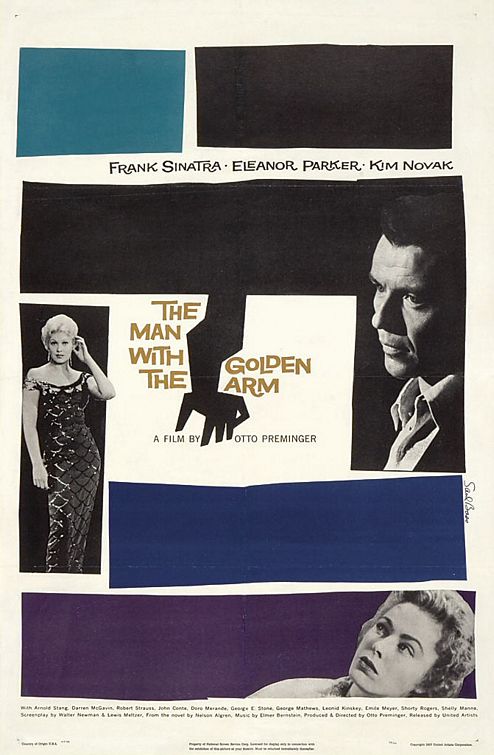
Bass—you may know his iconic movie poster designs like that for The Man with the Golden Arm—was busy creating logos for General Foods, Kleenex, and AT&T and brought in Brady to help develop Getty’s new look. Brady’s explorations took place over the course of about seven months between 1983 and 1984, all before the time of computer-aided typesetting. His meticulous letterforms were all done in pencil and ink.

The Man With the Golden Arm movie poster, 1955, Saul Bass. Public domain, via Wikimedia Commons

AT&T logo, 1983, Saul Bass, via Wikimedia Commons
“Everything is hand drawn and inked, and it’s all so perfect,” says Thompson, looking at Brady’s alphabets and letterforms, thatched with tiny penciled measurements and notes regarding spacing and stroke weights. “There are no mistakes. The man just had such a steady hand.”

Jennifer Thompson studies early logo sketches by Larry Brady.

The finalized J. Paul Getty Trust logo, approved in 1984
In 1984 the Trust received and approved a logo from Brady composed of stacked words—with variations for the Museum, the Getty Conservation Institute, and several now-realigned programs, like the Getty Center for the History of Art and the Humanities—made from the custom typeface Brady also created (which can be seen on Getty signage to this day).

Larry Brady’s custom-designed typeface is still in use at Getty today.
An Icon Emerges
In 1992, Saul Bass/Herb Yeager & Associates were brought back to update Getty’s visual identity for the opening of the Getty Center—a pivotal time for the organization and for LA, which was growing into a renowned art city. Bass broke the Brady logo apart and playfully rearranged the letters into a square form.
When the resulting logo debuted in 1995, Harold M. Williams, the Trust’s founding president, said that the letters stood independently but referred to each other, enriching an understanding of the whole: “The letters bleed out of the box, making reference to the relationship of the programs to its audiences and constituencies, welcoming interplay with outside areas.”

The 1995 Getty logo, designed by Saul Bass
The logo was paired with the titles of the eight Getty programs at the time, which used Brady’s letterforms (in the graphic design lexicon, this treatment of text and logo together is called a lockup). Getty also received its first corporate color, Pantone 542C, a powdery sky blue. The lockup was used in signage and marketing materials when the Getty Center opened to the public on December 16, 1997.

The Getty logo from 2019 to 2025, designed by Laura Scott of San Francisco’s Studio Scott
The logo received a light refresh in 2002, and another new design was created by Laura Scott of San Francisco’s Studio Scott in 2019. This one was created to unify all the Getty programs and initiatives. It had echoes of the original Brady typeface, with similarly weighted letters and a strikingly related G.
Thinking inside the box
In 2022, Katherine E. Fleming arrived as the Getty president and CEO, and Getty’s presence became even more internationally focused. It was time for another evolution; one that nodded to Getty’s open-access and advancing art philosophy—including the 2024 announcement that nearly 88,000 artwork images could be downloaded for free and used by anyone—and was playful enough for today’s digital, social media-forward world.
In 2025, Getty hired New York City–based Fred & Farid to create a new logo and tagline. Laurent Leccia, creative director at the agency, says that the new deconstructed G draws from the bold, geometric forms woven throughout Getty’s brand story: Bass’s logo, the grid system, and the monumental travertine architecture. As with past iterations, it was also inspired by the four current Getty programs coming together as one.
Yasmine Vatere, Assistant Director, Brand Management & Marketing, remembers the first time she saw the animated version of the new G: breaking apart, having art come through it, rotating on itself, and coming back together. “This was super important,” she says, “because we’re in a digital age and constantly on social media and YouTube now.”
The ability to have art come through the logo symbolizes Getty’s commitment to make art accessible to all, or as Leccia describes it, “an invitation into the world of Getty; a passage between art and audience."

The new Getty logo with The Promenade, 1870, Pierre-Auguste Renoir, oil on canvas, Getty Museum
All for art
For the tagline, the challenge was to create a statement that each Getty employee could stand behind and feel proud of, but it would also need to appeal to a global audience and further convey Getty’s open-access philosophy. Fred & Farid eventually presented “All for Art.”
Fleming says, “As we look ahead, this identity helps us tell a more unified story about who we are and the impact we hope to have.”