The Climate Impact Program (CIP) was a catalyst for change in participating organizations. While quantitative information is detailed in the Data Insights & Analysis portion of the report, this section highlights key impact areas with more qualitative summaries from partners’ Climate Impact Reports (CIRs).
1 Participating partners reduced the climate impact of PST ART exhibitions
The CIP inspired partners to rethink strategies from the ground up. Participants reported greater awareness of the climate repercussions of all the decisions that go into planning and implementing exhibitions, which in turn deepened their sustainability commitments. At the Wende Museum, the team shared that “the CIP has actually improved the efficiency in how our exhibition builds operate. Consolidating shipments, reusing previous walls from older exhibitions, reusing vitrines in storage, and creating a new reusable object label design actually made our PST ART exhibition cost less than previous exhibitions.”
Across the program, teams made intentional choices to pursue alternative methods of exhibition-making to improve the climate impact of their work. LACMA (Los Angeles County Museum of Art) chose to extend exhibition length, “reducing the overall carbon footprint of the museum operations through less travel, shipments, materials, and waste.” At Getty, direct actions ranged from taking the train instead of flying during research travel and negotiating fewer people traveling from lending institutions, to reusing exhibition seating and presenting an in-gallery film through a QR code rather than buying a new video monitor to play the clip in the gallery. Other decisions made by teams included borrowing works from fewer geographic regions and lending institutions to facilitate bundled shipping, negotiating virtual versus physical couriers for loans, and serving plant-based food at receptions.
Multiple partners reported that participation in the CIP drove shipping decisions, resulting in key works being shipped via sea freight instead of the more emissions-intensive method of airfreight. Teams also invested time into finding innovative solutions to common pain points, including wall vinyl. “Using conventional materials like PVC vinyl would have been quicker, but we deliberately made time to explore better options,” said the team at University of California, San Diego and the Birch Aquarium at Scripps. “In doing so, we scaled up our knowledge, tools, and team, adding new expertise and fostering flexibility.”
“We scrapped the use of all vinyl materials and switched to paper didactics; we saved over $10,000. Although, experimenting with mounting methods was a new, time-consuming challenge, it will be worth it in the long run.” —Craft Contemporary
SPOTLIGHT: Wall Vinyl Alternatives
Learn more …
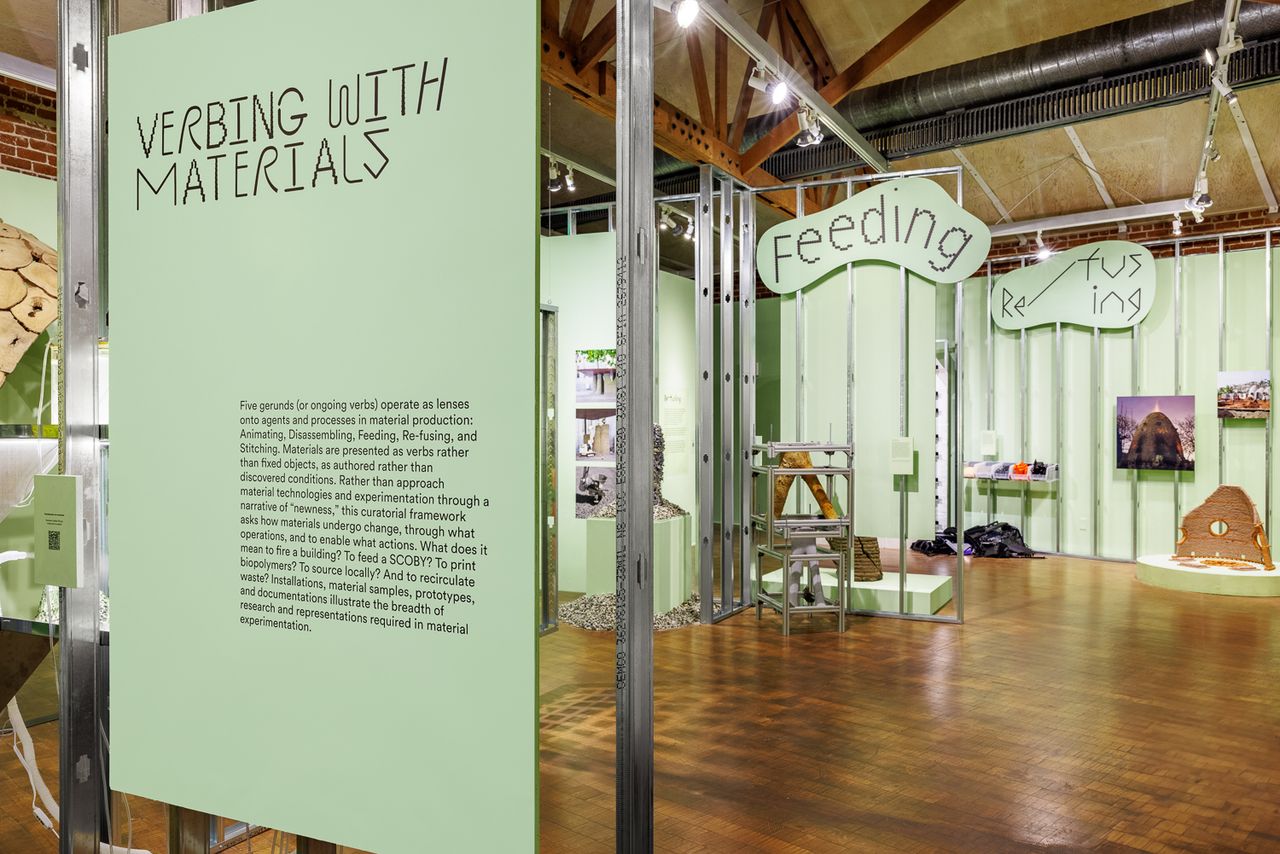
PST ART Projects studied and implemented alternative solutions to wall vinyl. Craft Contemporary switched to paper didactics. They attempt to adhere them with an eco-friendly paste but were unsuccessful. Instead, they used double-sided tape along the perimeter of the paper pages to adhere them. After the show, the double-sided tape areas were discarded, and the remaining images and didactics were rolled up and saved for school visits to use as collage material. Compared to previous vinyl use, they saved approximately $10,000.
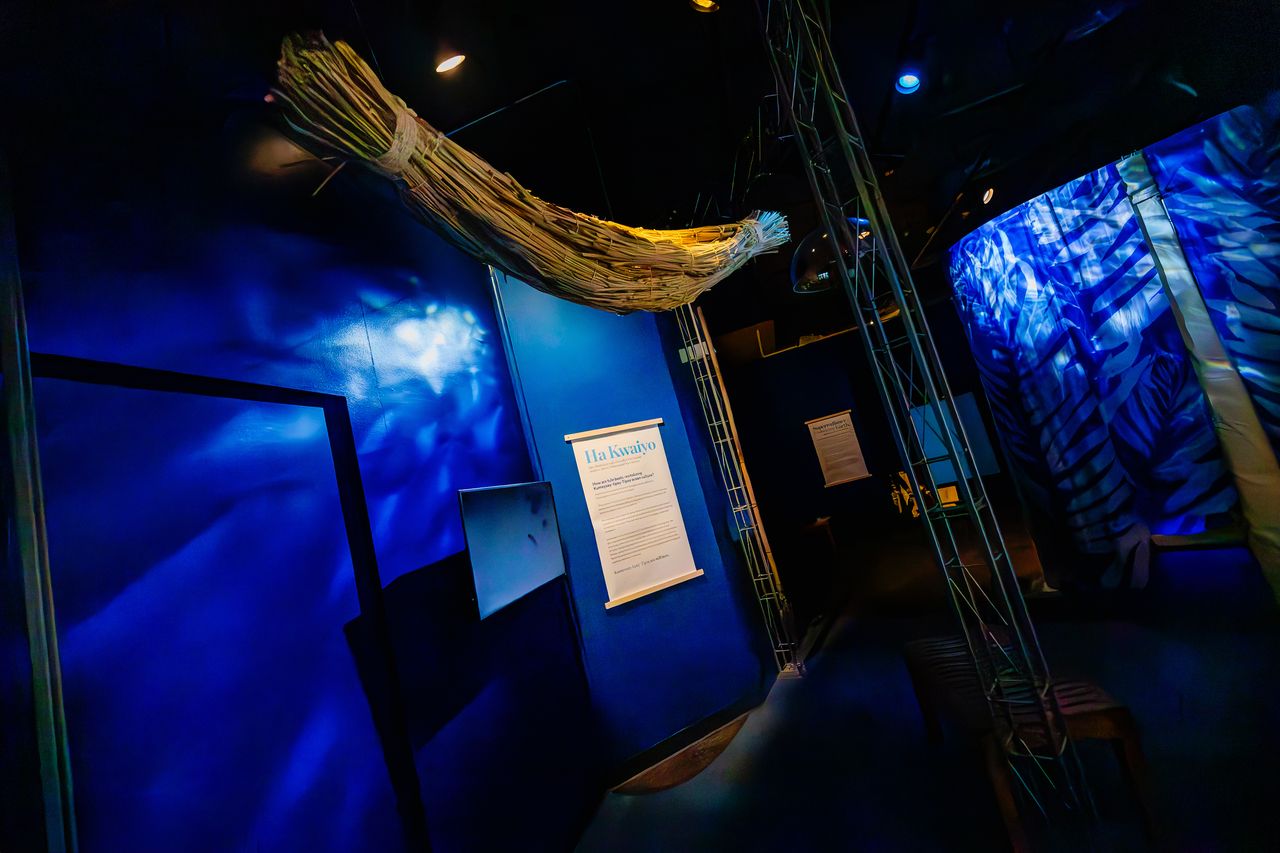
Birch Aquarium at UCSD experimented with alternative methods of transitioning away from using PVC-based adhesive graphics. Instead they sourced sustainable, non-PVC wall coverings (DreamScape Printable Non-PVC Wall Covering), which were applied using cornstarch-based wallpaper paste. Other exhibition graphics were hand-painted directly onto surfaces or projected digitally, reducing the reliance on printed material. These alternatives helped the team build new skills, such as using new projector software and CNC machines.
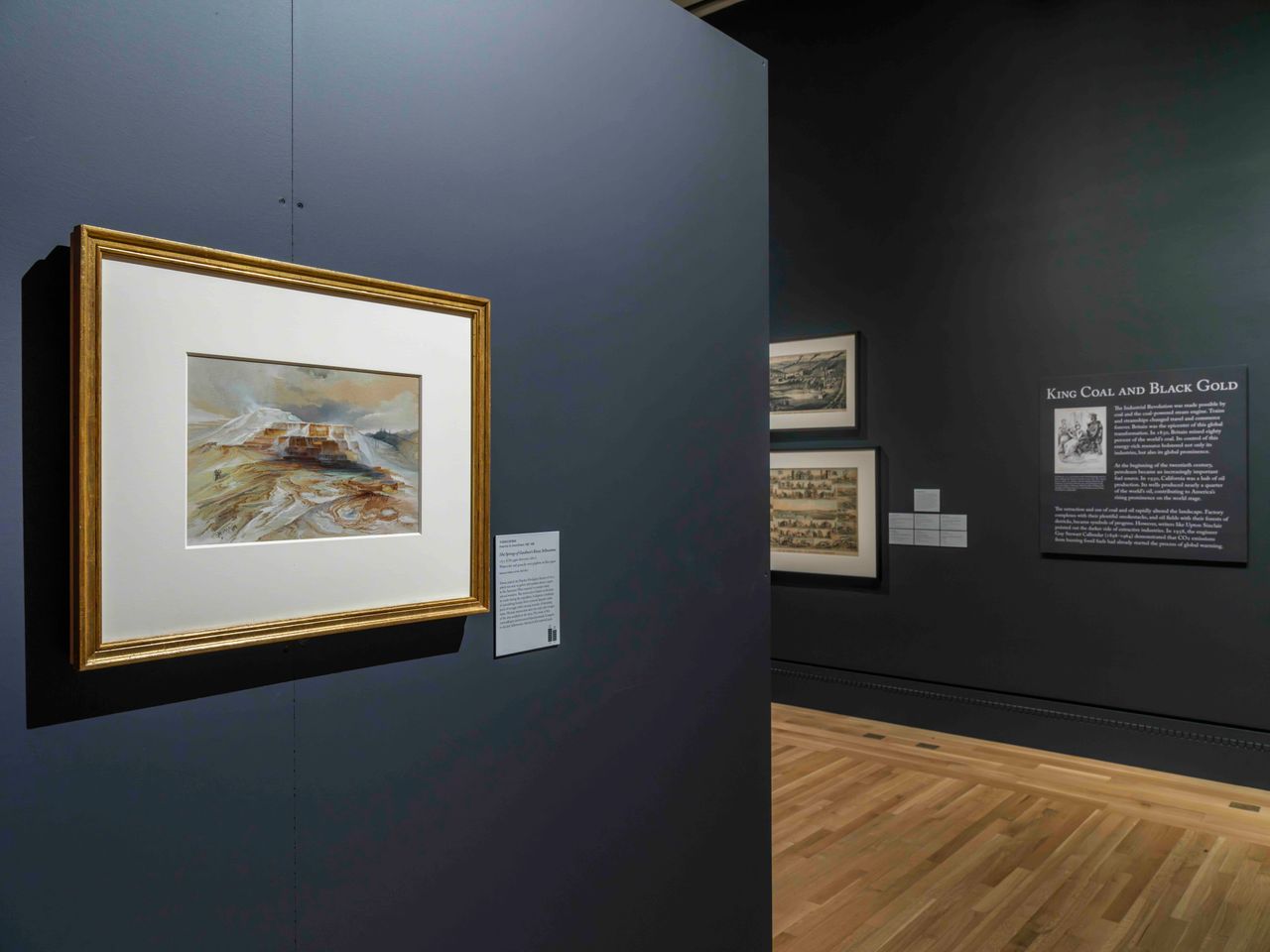
The Huntington used existing gatorboard for section-text panels and covered these with eco-cloth instead of vinyl. They printed labels in-house on colored paper. These strategies greatly reduced the overall amount of wall vinyl used in their exhibition.
Climate-conscious material choices became an essential part of the exhibition experience for multiple partners. For example, Craft Contemporary chose to display all the shipping crates and other materials accumulated during their exhibition in the museum entryway, making visitors directly aware of the packaging used in exhibition preparation. Teams also put in active effort to responsibly distribute exhibition materials such as mount materials, plywood, and sand after their shows closed. The Armory Center for the Arts donated to neighbors, community organizations, and other people in their network after deinstallation. “Our team learned that waste is an abundance of materials that can be easily shared, especially with the use of technology and community.”
“The ‘skeleton’ design of [our exhibition] plinths, made entirely from reclaimed materials, eliminated the need for plywood. We estimate that this choice saved approximately 160 square feet of virgin plywood, plus the additional framing wood typically required. Though the initial expense was significantly higher, the long-term reusability of these plinths provides better value.” —California State University, Dominguez Hills
PST ART projects became a mechanism for partners to contribute positively to real-world climate solutions beyond their institutions. The exhibition Sinks: Places We Call Home at Self Help Graphics & Art explored the environmental contamination of soil in two Los Angeles County neighborhoods located along a historic toxic corridor that is home to predominantly low-income communities of color. Artworks by Beatriz H. Jaramillo and Maru García and the related, collaborative partnerships that extended beyond the gallery walls presented alternative solutions for healing the soil and moving towards a more sustainable future. Artist Carolina Caycedo with the team at the Vincent Price Art Museum provided funding to several organizations as part of an ‘ecological balancing’ process. This choice reflects their belief in supporting the work of Indigenous communities and environmental justice organizations instead of “economic-driven carbon offset initiatives such as buying carbon credits in the market.”
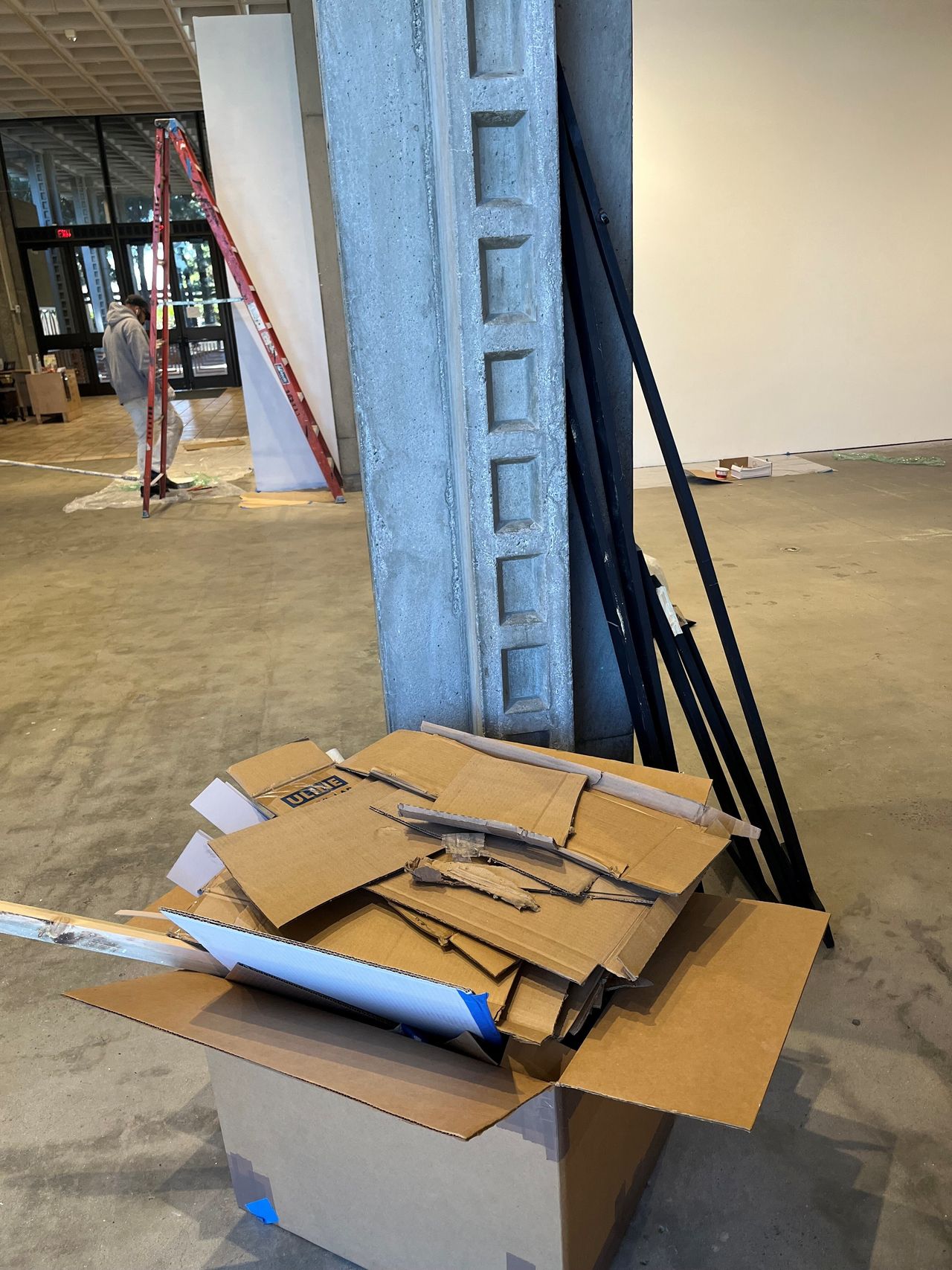
SPOTLIGHT: Empty Dumpsters
Learn more …
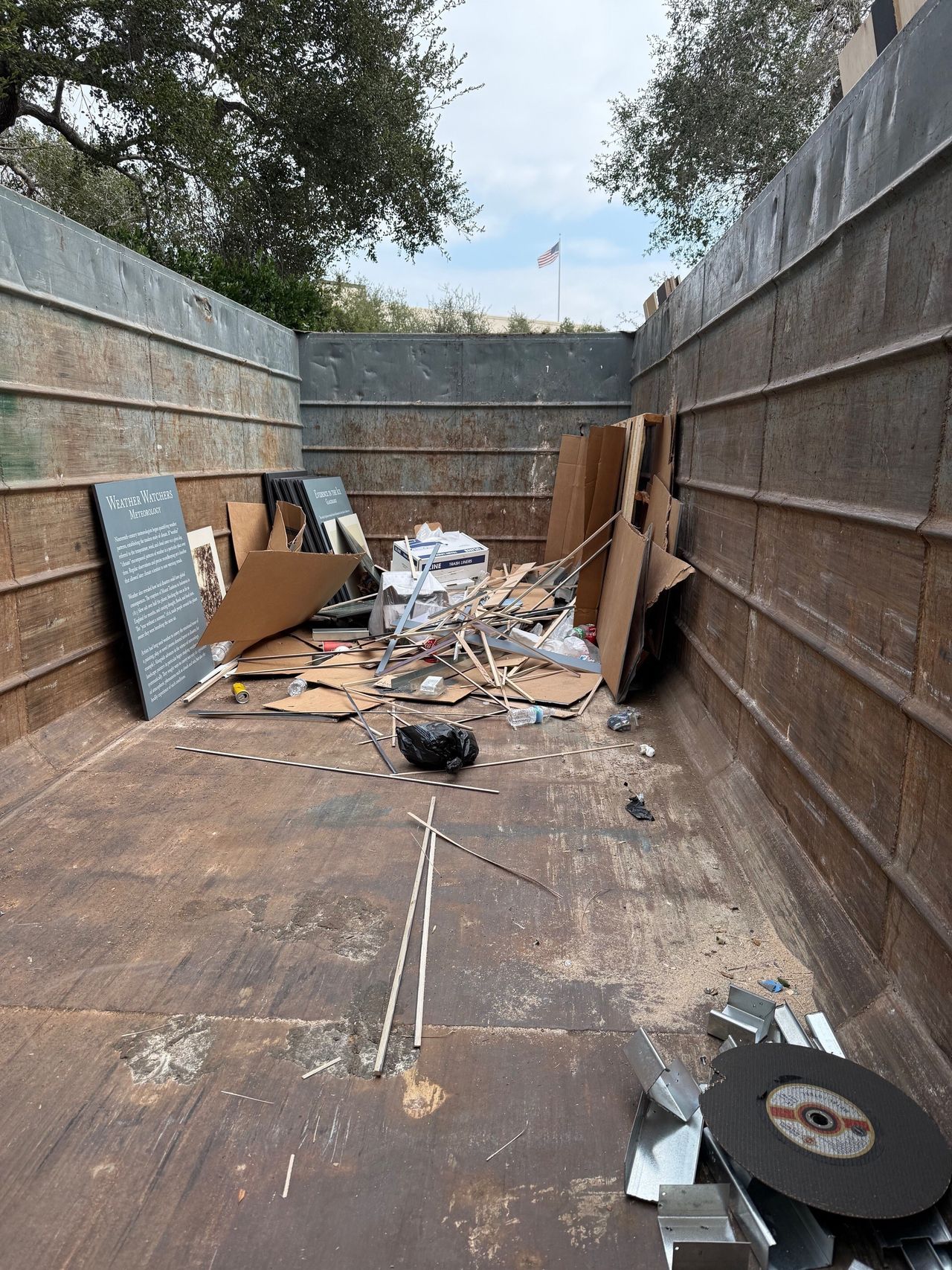
Choosing alternative materials and recycling exhibition components resulted in dramatic waste reduction at several institutions. At LACE, the team embraced the environmental activism of the artist featured in their exhibition, Beatriz da Costa, to limit the use of new materials and recycle as much as possible. The Huntington team replaced drywall with reusable plywood panels for exhibition walls. They also repurposed frames and exhibition cases. “Because we reused so much of the buildout material, this was all the waste we had,” reported the Huntington referring to the empty dumpster photograph above left. “Typically a dumpster of this size would be filled to the brim after deinstall, so this is delightfully bare.”
Altogether, these decisions added up, resulting in less waste, less carbon, more positive contributions to local communities, and inspiration among the PST ART teams. As the Los Angeles Public Library team remarked, “the organized effort, shared resources, and thorough training allowed us to think about our actions with greater intention, and to communicate these priorities with lenders, artists, and other project partners.”
2 The program initiated a ripple of lasting climate action across Southern California art spaces
By virtue of PST ART’s regionwide scale, participating organizations were engaged in a cross-institutional conversation about climate impact. LHL facilitated the sharing of anecdotal accomplishments among partners through drop-in consultation sessions, webinars, and a Show & Tell program that brought participating organizations together to talk about their exhibitions. Multiple teams reported that everyone involved with the exhibition—and everyone on staff in smaller organizations—was involved in the climate work in some way.
Participation in the program resulted in ongoing dedicated conversations within teams that served to build trust and collaboration. This ranged from holding weekly check-ins on climate action to coordinating decision-making across all museum departments to surface high-impact ways to minimize emissions. The resounding response was that people appreciated this collective effort since it “kept our team conscious of our decisions,” observed the UCLA Film & Television Archive.
Partners also reported that the CIP helped institutional partners expand the impact of existing sustainability initiatives. For example, participation in the program at ArtCenter College of Art and Design “galvanized efforts of the College’s sustainability director, who was able to engage her colleagues in the field to visit our exhibition for the purposes of discussing sustainability issues.”
Collective participation in the CIP coincided with four PST ART partners adopting the new Bizot Green Protocols endorsed by the international museum community to lower in-gallery energy use. The protocols recommend expanding the standard climate settings for exhibitions spaces from approximately 72°F ±2°F and 50% relative humidity ±5%, to a broader range of ±6°F and ±10% relative humidity, respectively. Getty, the Hammer Museum, MOCA (the Museum of Contemporary Art), and the Academy Museum implemented the revised protocols for the first time with their PST ART exhibitions.
“MOCA’s energy consumption at the Geffen fell by the equivalent of nearly 7 homes’ average energy consumption footprint in the United States since adopting the Bizot Green protocols, saving at least $8,000 so far.” —Museum of Contemporary Art
Major institutions adopting the Bizot Green Protocol had an influence across the sector on extended collaborators of PST ART. The Hammer Museum shared that their exhibition “introduced lenders, artists, and other museums to the international Bizot Green Guidelines. When the exhibition travels to Houston and Davis, both institutions will [also] adopt these standards for the first time.”
Teams reported that practices established during the CIP are now becoming a regular part of exhibition planning, including at The Huntington, Natural History Museum of Los Angeles County, San Diego Museum of Art, and the Wende Museum. Participants are also exploring continued sustainability data tracking going forward. LACE (Los Angeles Contemporary Exhibitions) shared that staff intend to use CIP data collection templates for each exhibition or major project going forward.
Several institutions that participated in the CIP launched permanent employee programs for climate action. For example, ICA LA (the Institute of Contemporary Art, Los Angeles) “formed an internal Green Team and participated in monthly meetings with a cohort of institutions from Southern California.” The Huntington team shared that the museum’s human resources department is launching an employee resource group for sustainability at their request.
The CIP network also built new collaboration among PST ART partner venues. Organizers identified and convened representatives from a dozen institutions with some form of existing sustainability initiatives. This informal network is currently known as the Climate Collective of Los Angeles Area Museums and includes representatives from the Academy Museum, the Armory, Birch Aquarium, Getty, Hammer, the Huntington, ICA LA, LACMA, MOCA, and more. The group met regularly during PST ART and plans to continue with an open invitation to other LA area institutions to join them.
3 The impact of the CIP expanded beyond partner institutions to their extended communities and networks
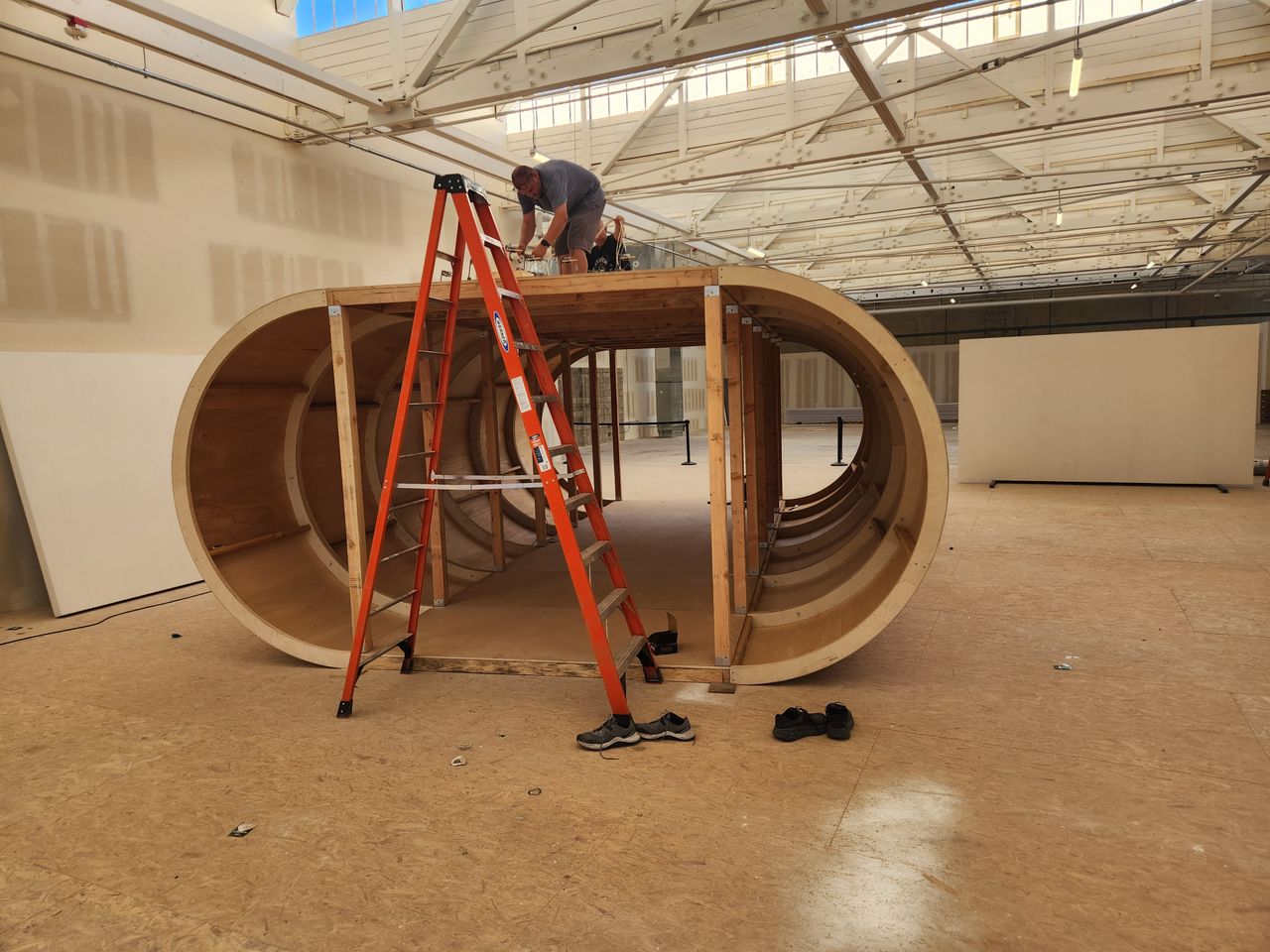
Participating organizations increased the influence of their work by including vendors and fabricators in the CIP. Fulcrum Arts invited their fabricator, Studio Sereno, to lead their sustainability work. Studio Sereno shared that the effort was “enriching, educational, inspirational, and door opening because it broke down all the components of construction, travel, installation, and materials repurposing in a way that was new to us.” The firm reported that they are continuing to apply the work to other professional projects. At the Fowler Museum, the PST ART lead project manager created “an email signature that staff could include in emails to signal to vendors and other partners that we are an institution that places importance on sustainability.”
SPOTLIGHT: Vendor Collaboration
Learn more …
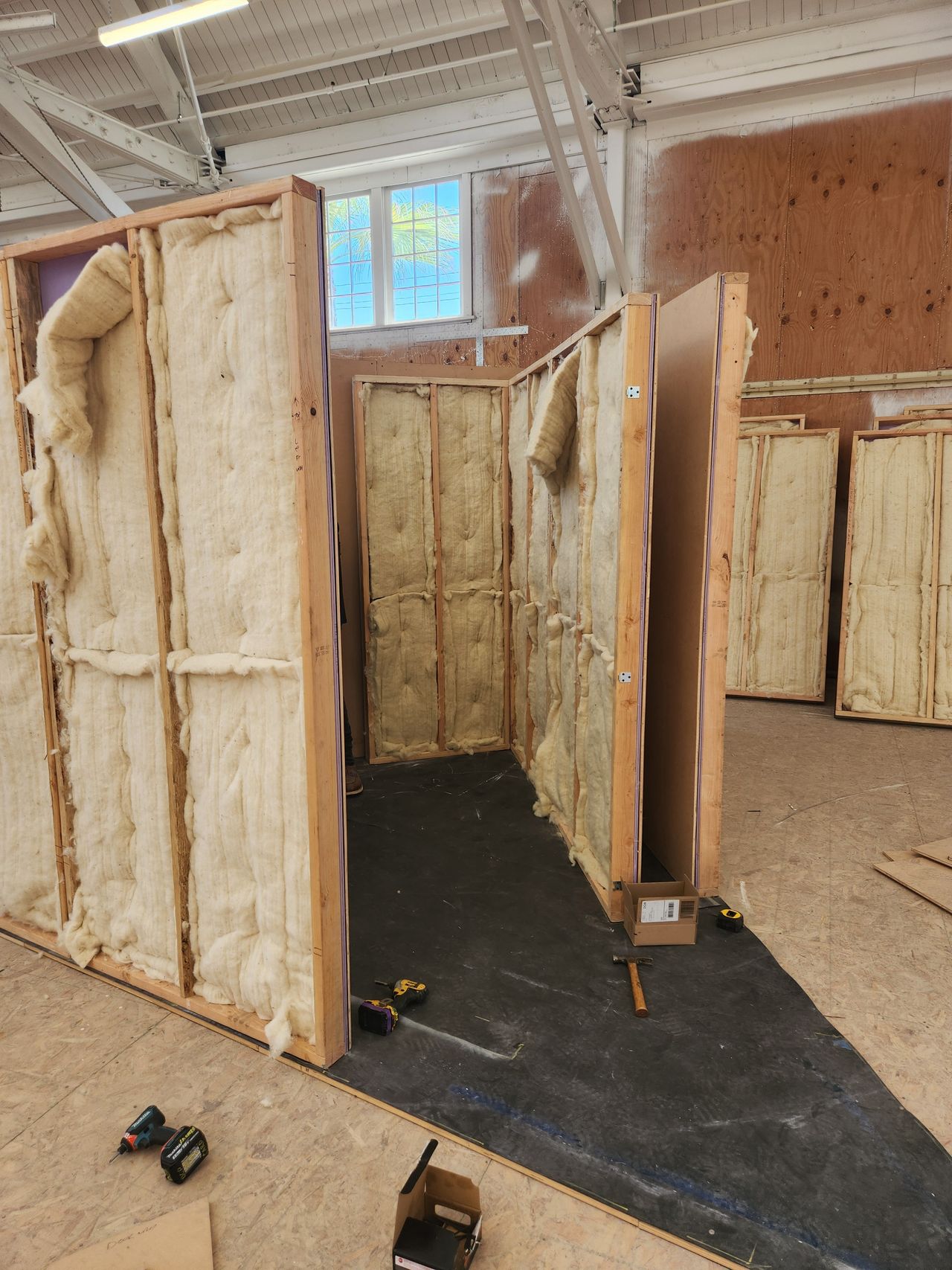
Studio Sereno fabricated two major pieces included in Fulcrum Arts exhibition Energy Fields: Vibrations of the Pacific. Fulcrum invited Studio Sereno to participate in the Climate Impact Program with them, resulting in a reconsideration of production methodology.
Studio Sereno used the vetted material list provided to CIP participants by LHL Consulting to identify plywood alternative solutions and more eco-friendly sheep wool insulation. When that eco-friendly insulation proved to be more expensive, they successfully applied for an Artists Commit material stipend to cover the added cost of the more sustainable option. By implementing intentional design strategies, like planning ahead and using hardware attachments instead of adhesives, they were able to fully disassemble and donate all components parts to be reused by other community members after the exhibition closed. The project transformed Studio Sereno’s approach to fabrication for the future.
PST ART teams found that involving vendors in the conversations spurred new approaches to common practices, such as more sustainable catalogue production. For example, as a result of discussing sustainability concerns with their catalogue designers (Polymode), Oceanside Museum of Art “decided to partner with Conti Tipocolor as our printer because of their shared commitment to sustainable practices in the printing industry.”
Teams reached out to community stakeholders in their neighborhoods, on their campuses, and in their wider networks. At the Armory, the team “connected with external communities by sharing resources locally, programming with local collectives, organizers, and groups, and developing an internal informal green team.” Self Help Graphics also partnered with grassroots organizations focused on environmental and food sustainability. At California State University Dominguez Hills, the team observed that “what stood out most was the collaboration with both the campus community and neighboring communities, which brought diverse perspectives and solutions to the table.”
Exhibition audiences were brought into the conversation as well, with green sundials appearing on title walls, catalogs, and didactics. The Huntington’s exhibition Storm Cloud: Picturing the Origins of Our Climate Crisis included wall text about the CIP and created “a Storm Cloud Library in the same space with books about the natural world, the planetary crisis, and mitigation efforts, which have been recommended to us by consulting climate activists, scientists, and scholars.” The ArtCenter team also included a discussion of the green sundial logo in its curatorial tours with students, board members, and visitors from other colleges and universities.
Participants also shared examples of audience engagement that made real-world difference. An artist workshop at Oceanside Museum of Art focused on debate around the decommissioning of oil rigs off the Santa Barbara Coast resulted in ongoing dialogue and the active engagement of local lawmakers.
SPOTLIGHT: Effective Messaging
Learn more …
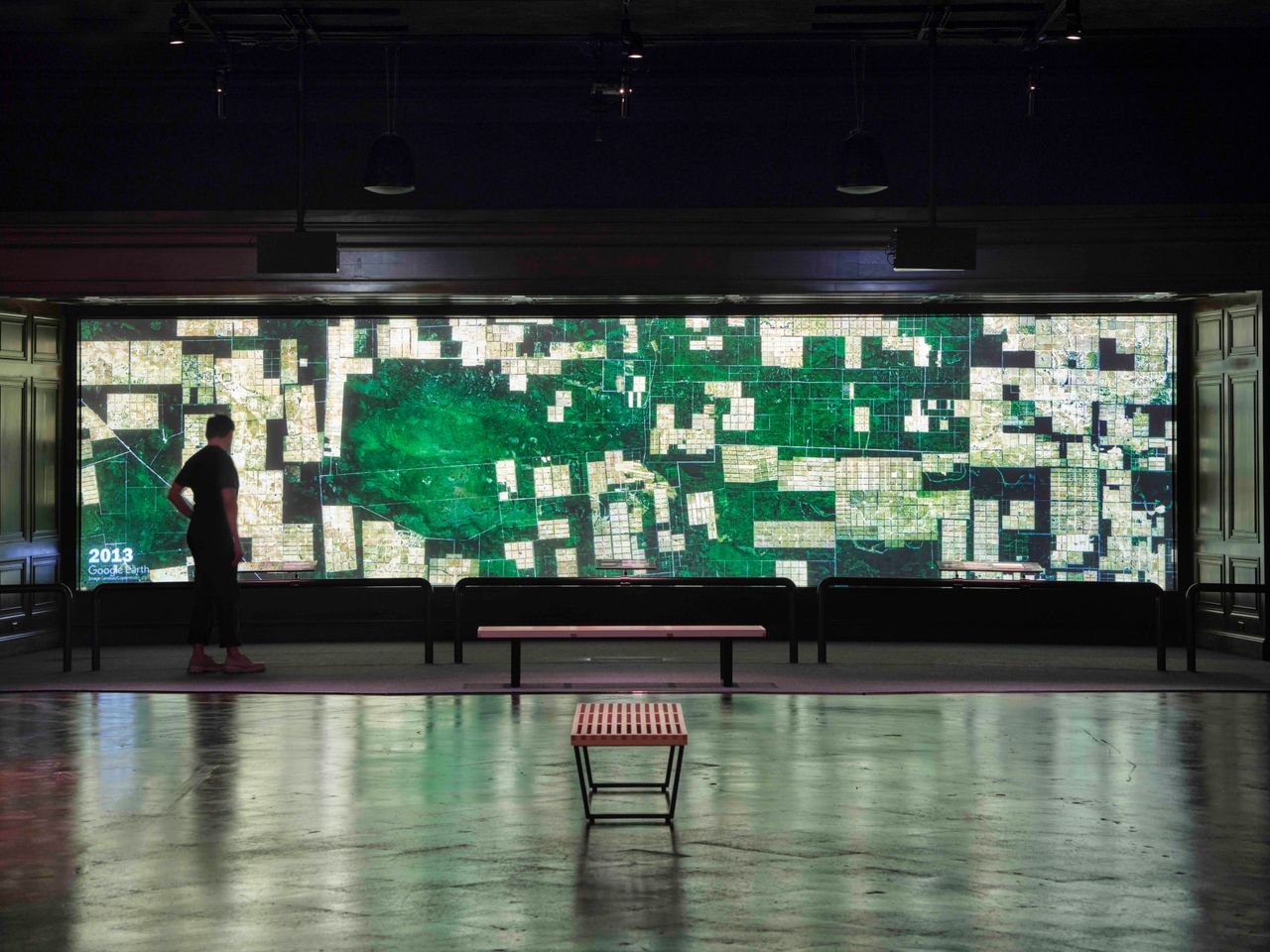
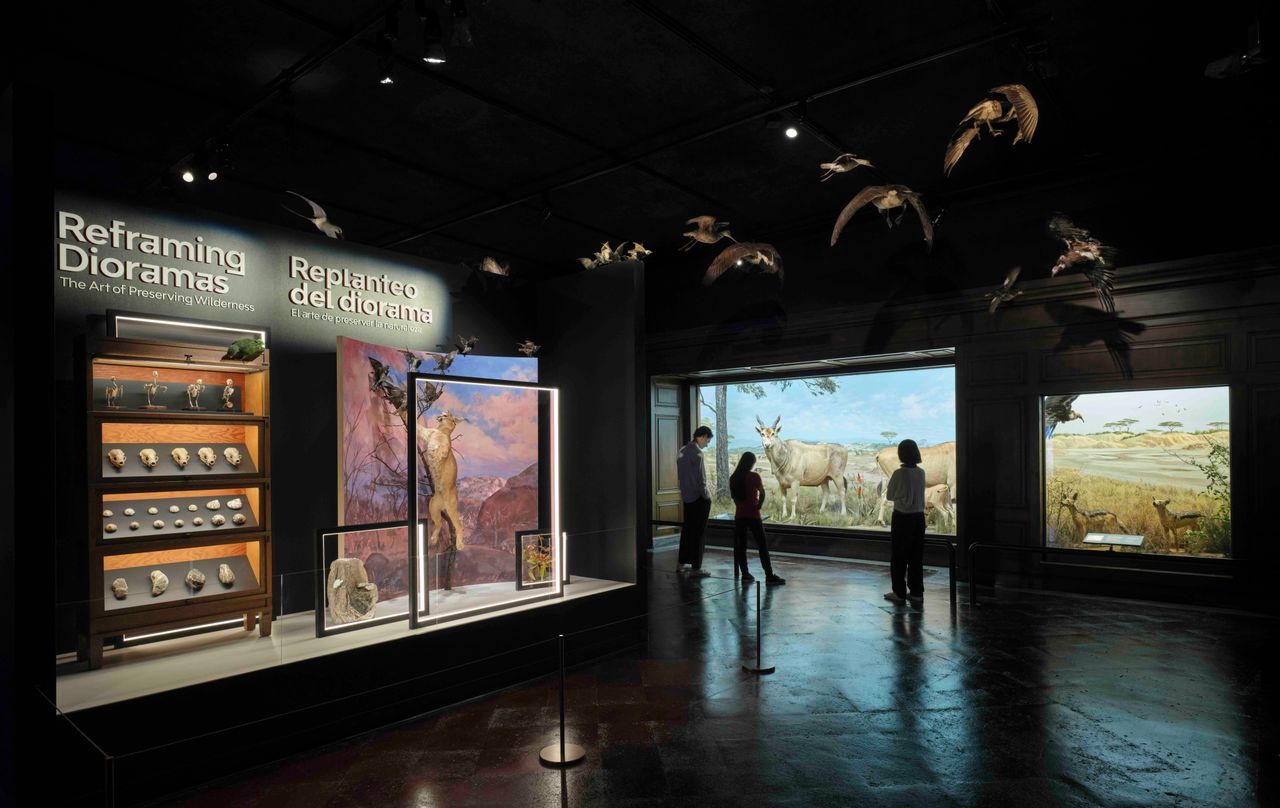
At the Natural History Museum of Los Angeles County (NHM), Reframing Dioramas presented a display demonstrating how habitat loss threatens various species. Through a timelapse of satellite images, the Gran Chaco forest of South America is replaced by animal agriculture, revealing that dietary choices have real-world impacts. While visitors often ask how they can help the endangered species shown in dioramas, research shows that direct messages like “Eat less meat!” can backfire, increasing resistance and climate skepticism. Reframing Dioramas instead presented clear data and artistic, emotional displays without making demands on viewer behavior.
Using the Dimensions of Visitor Experience (DoVE) checklist1, NHM was able to assess how this strategy impacted visitors to the exhibition. Compared to traditional diorama halls, visitors leaving Reframing Dioramas were twice as likely to report being worried about the state of the world. More surprisingly, they were also twice as likely to report that they “felt moved to take action” and “wanted to do something to help.” Visitors wrote comments like, “the back wall display of disappearing forest gave me chills and a consideration to eat less meat” and “the livestock mass data and satellite images compel me to turn vegan.”
- Packer, J. [in press] Issues in measuring visitor experiences: Refining the DoVE adjective checklist. Visitor Studies DOI – 10.1080/10645578.2025.2480497
With Getty’s support, partners created the largest dataset of exhibition-based Climate Impact Reports for comparative analysis to date.
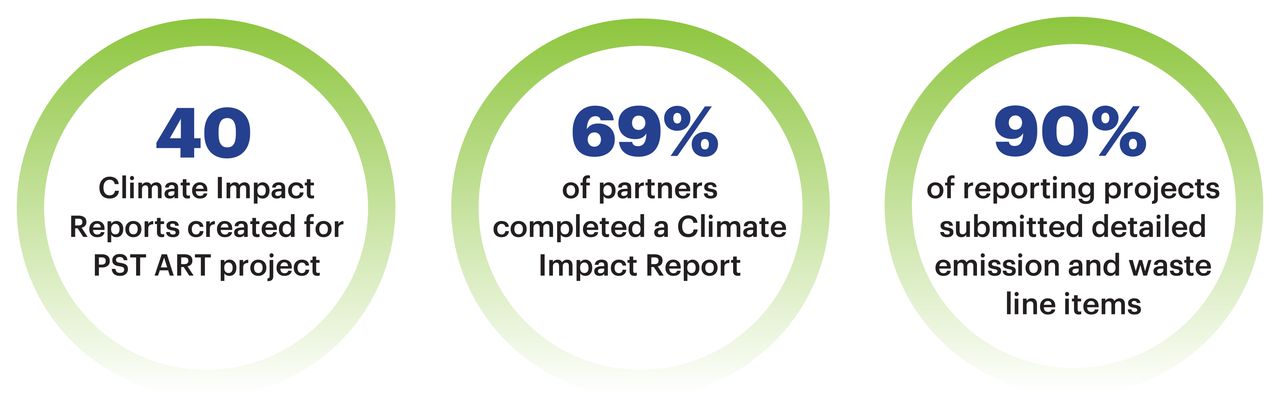
Forty PST ART projects completed a CIR, sharing key data on their travel, shipping, waste, engagement, and climate action decisions. These projects all followed a consistent reporting framework that allows for direct comparative analysis. Never before has there been such a comprehensive dataset of exhibition CIRs for a single art exhibition series.
This dataset has enabled the creation of intensity metrics and key performance indicators that will allow Getty and its partners to establish benchmarks and set emissions targets for themselves and for future editions of PST ART. All the details are included in the Data Insights & Analysis section of this report.