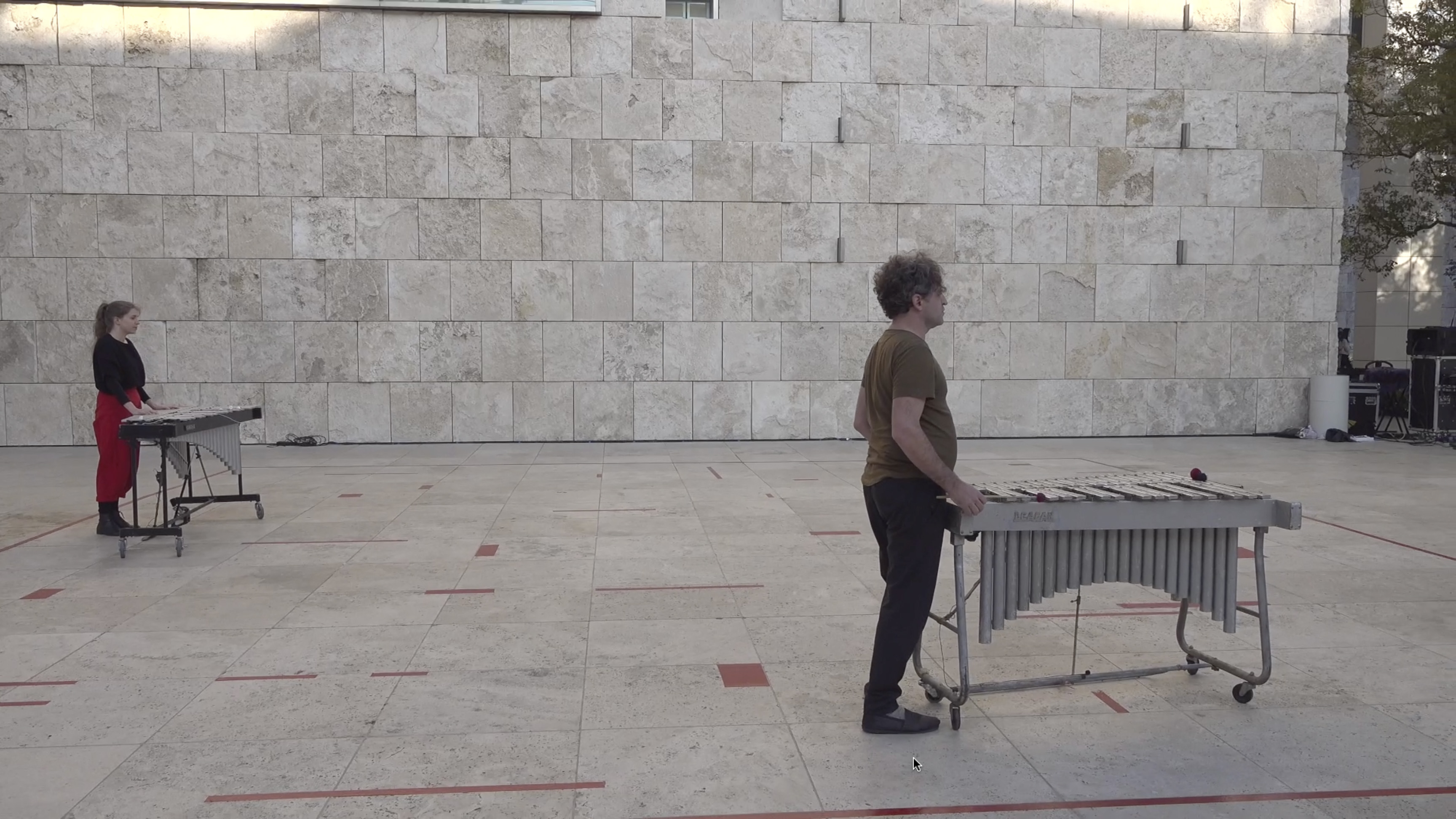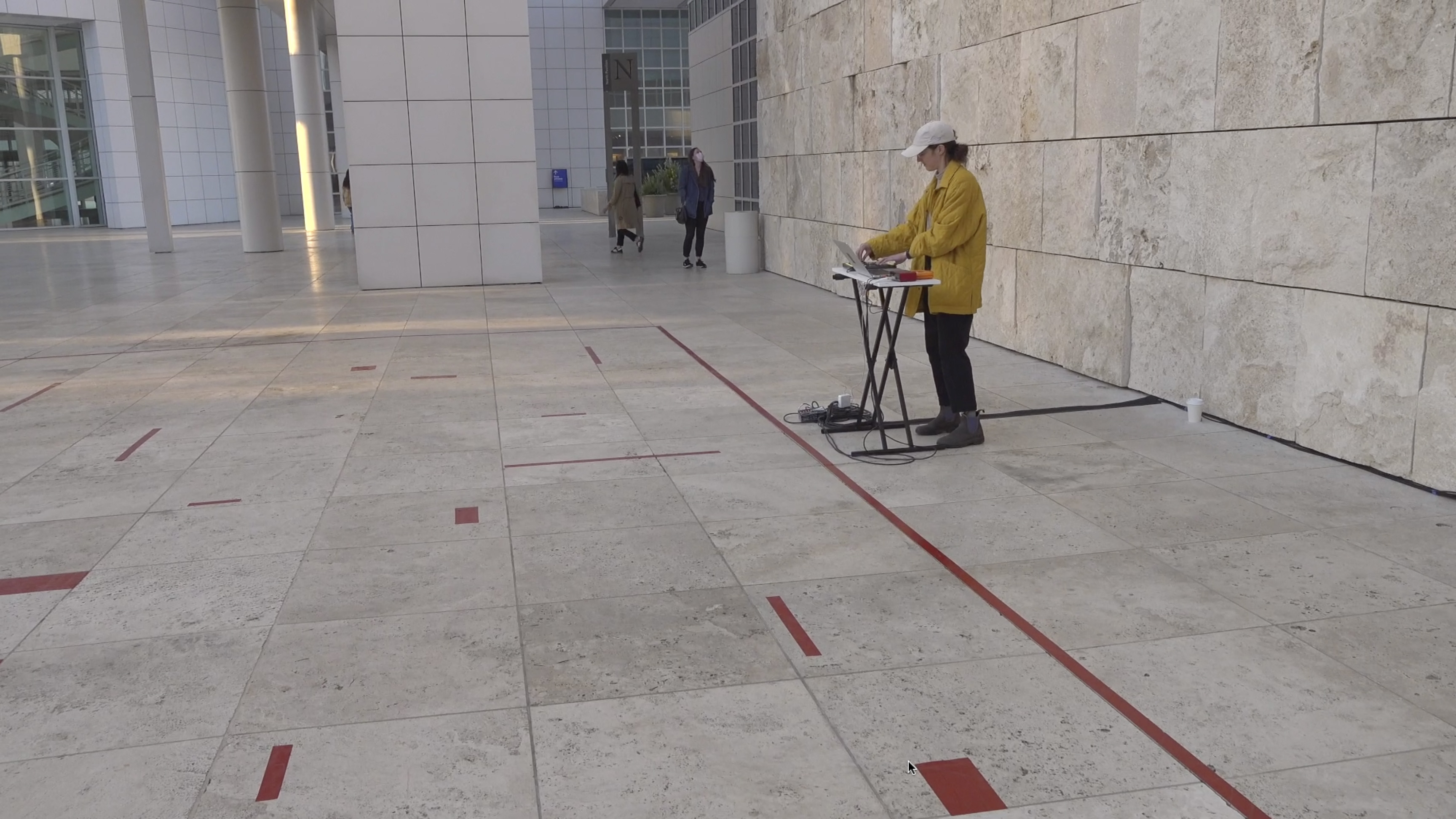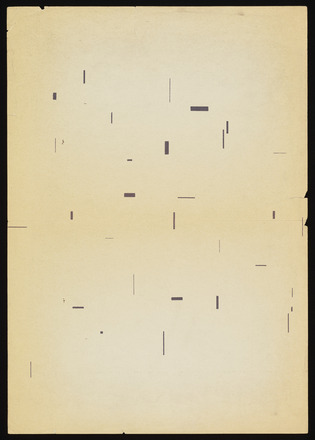

The score for Earle Brown’s December 1952 is
little more than a series of horizontally and vertically
oriented black rectangles spread out on a square piece of
paper. One of the earliest instances of graphic notation,
December 1952 is largely open to the choices of
the performer: the page may be
oriented in any direction, while the shapes represent sound events in time, with
various intensities, aggregates of pitches, or durations
(though no key is supplied as to how that might work).
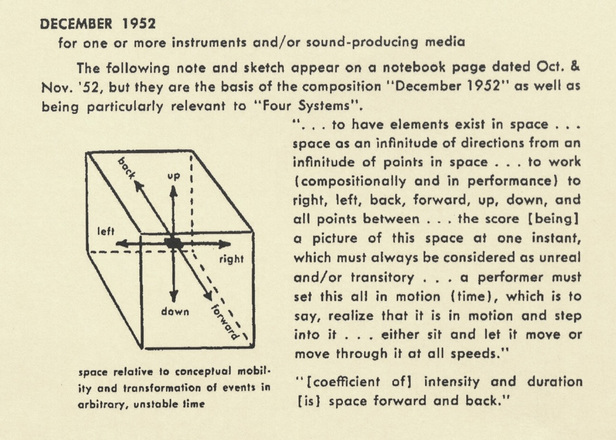
Influenced by the delicately twisting mobiles of Alexander
Calder, the spontaneity of Jackson Pollock’s abstract
expressionism, and the Afromodernist traditions of jazz
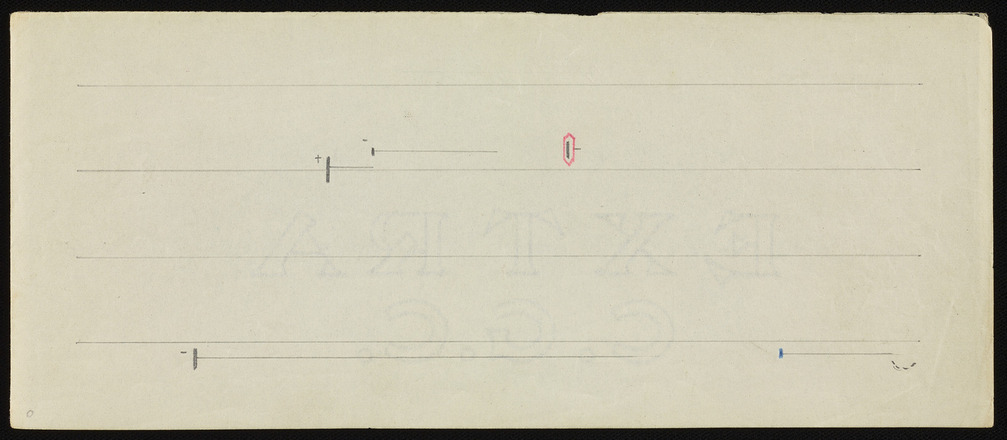
improvisation, Brown’s early drafts of
December 1952 proposed a physical
three-dimensional mobile of ever-changing rectangular
shapes that would inspire a performer (he originally
imagined a pianist) to be similarly spontaneous in
“reading” the notation. The published version of the
score, which he produced with the aid of random number
tables, was intended as a snapshot of these mobile forms,
in what Brown came to call a “conceptual mobile.” Unlike
John Cage’s chance-based works of the period, which
required a disciplined execution detached from expressive
choices, Brown’s works were known for their openness to
improvisation.
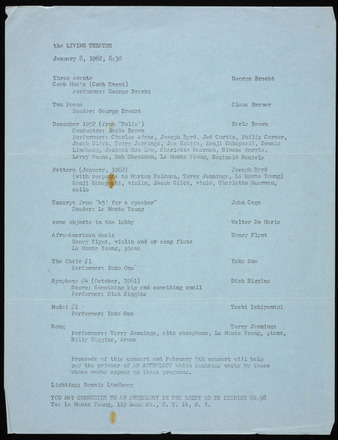
This score also appears in the
Getty Research Institute’s unique copy of
An Anthology of Chance Operations
(1962), published by Jackson Mac Low and George Maciunas
and edited by La Monte Young.
Earle Brown Estate.