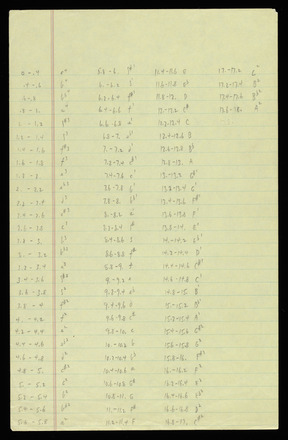
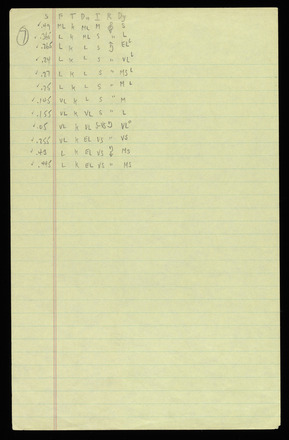
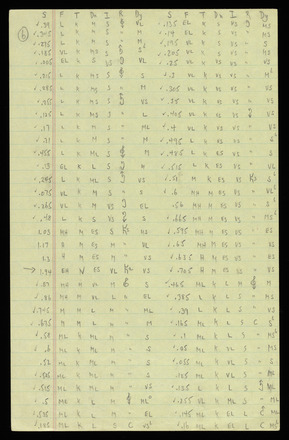
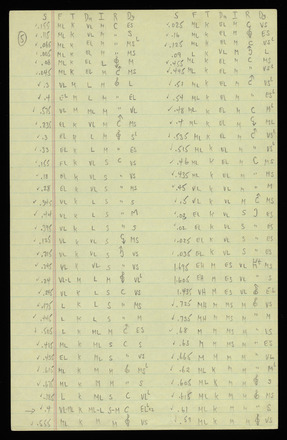
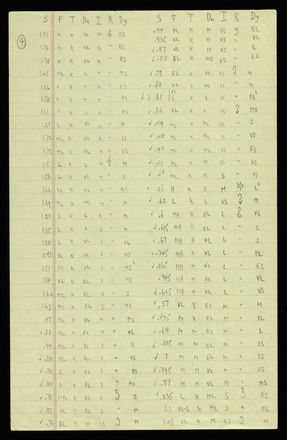
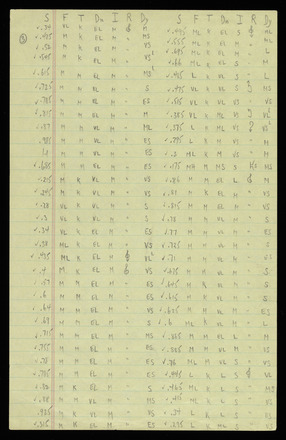
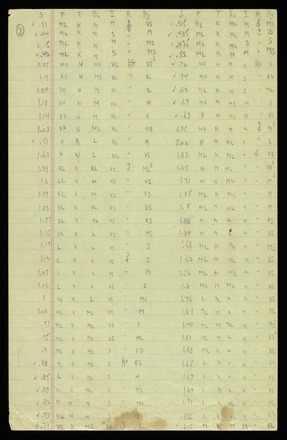
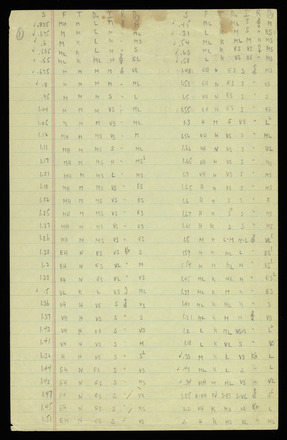
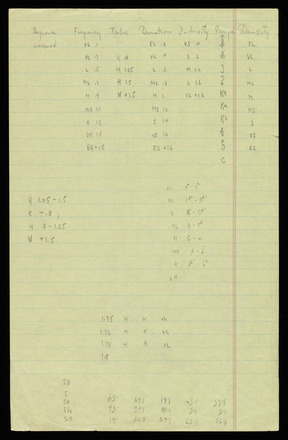
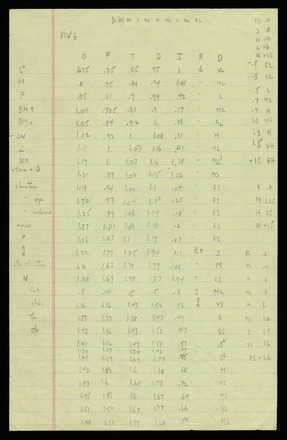
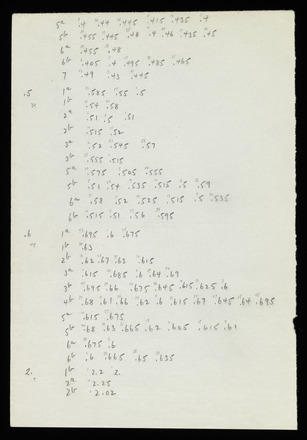
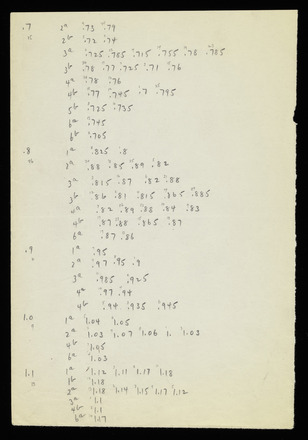
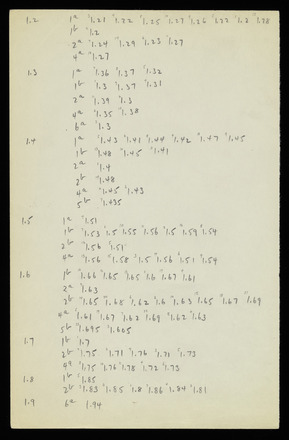
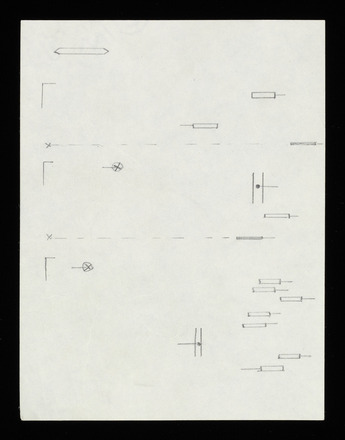
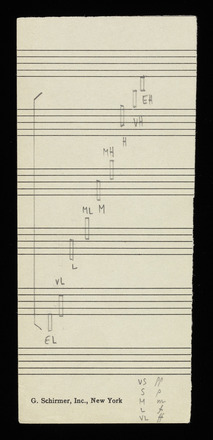
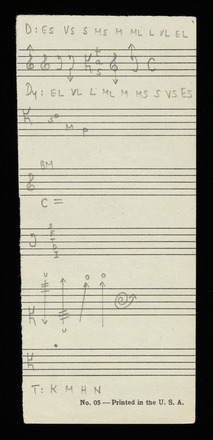
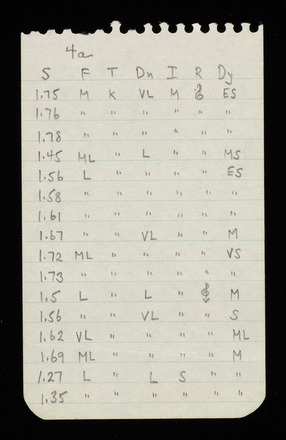
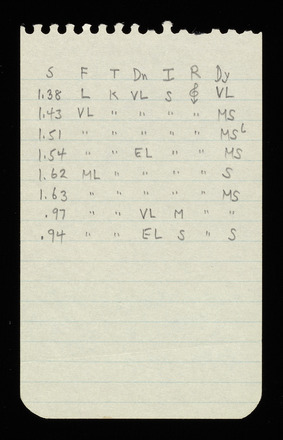
In a mirror of his practice for performing John Cage’s Solo for Piano and Variations I, David Tudor interprets Bussotti’s drawing in No. 4 as generative of a series of discrete musical events with specific values attached to them. Tudor takes precise measurements between more than one hundred “blobs and dots” in the scribble of the score, from five rising and falling lines that originate in staff 3. Each of these five lines corresponds to one of five parameters for a musical attack: sequence measured, frequency, timbre, duration, and intensity. Two further parameters—range and density—are based not in precise calculations, but in rough distributions of the events visually on the page. In this folder one can also find keys to Tudor’s customized notation for his realization (related to clef, register, volume, etc.).
Used by permission of Hal Leonard.