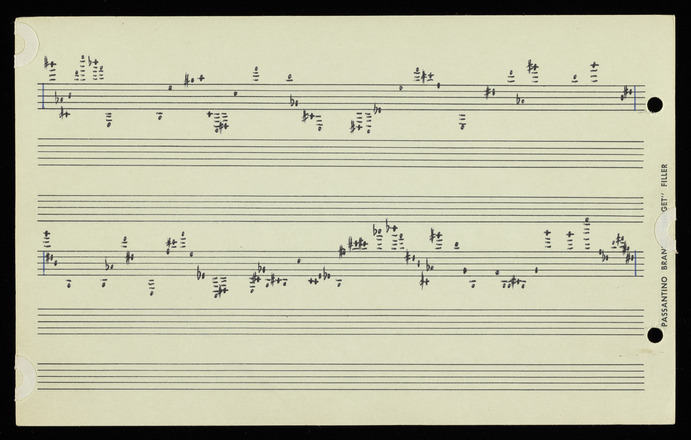
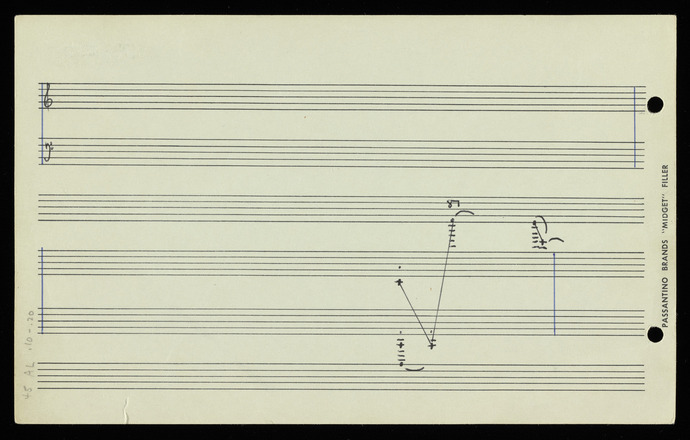
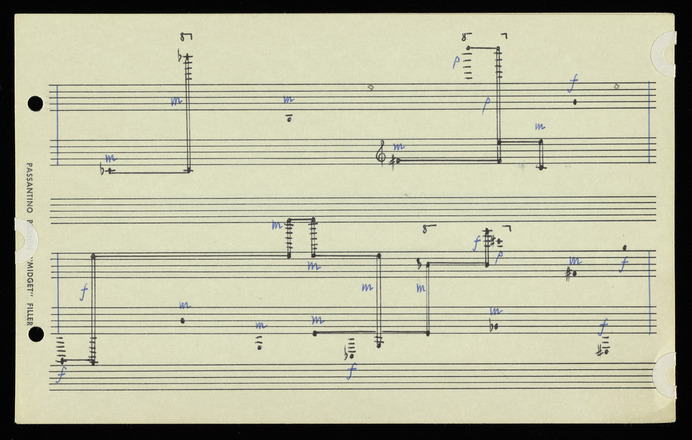
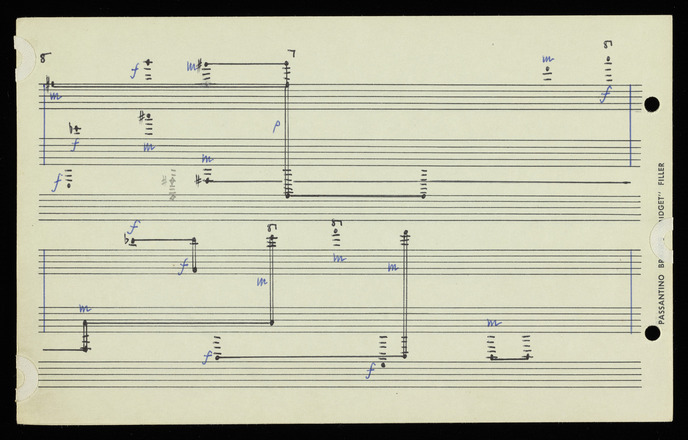
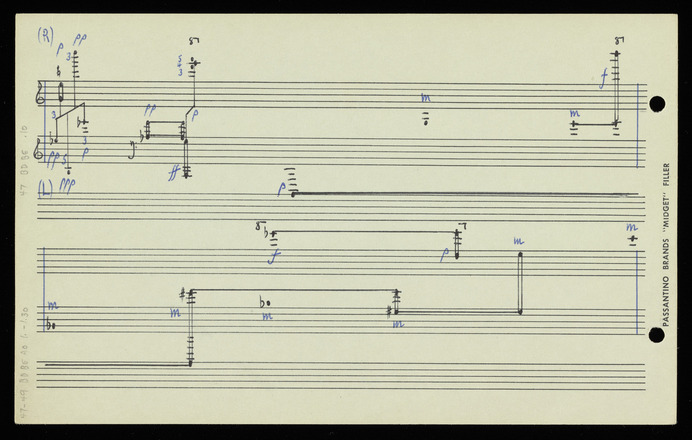
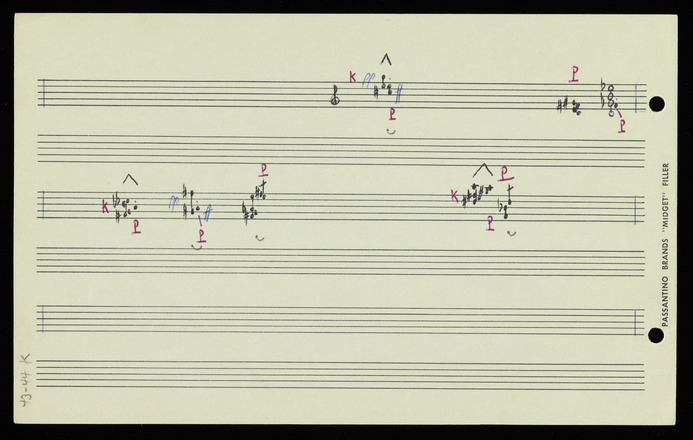
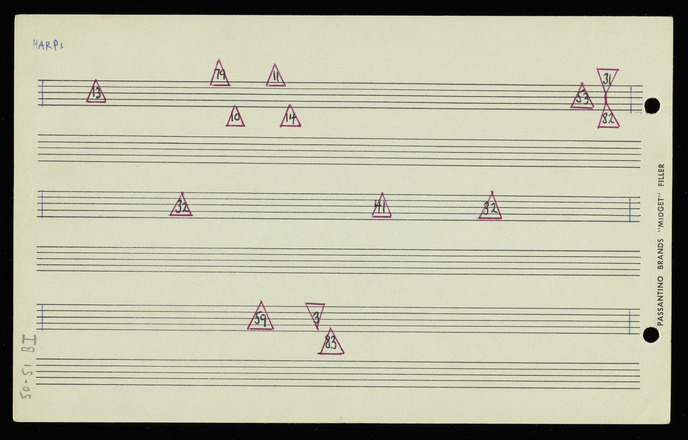
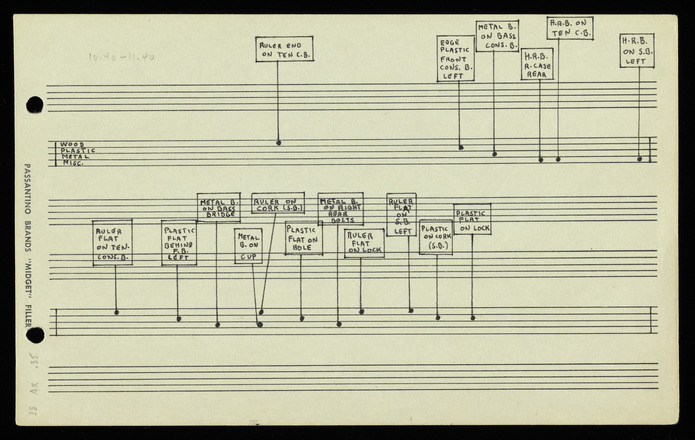
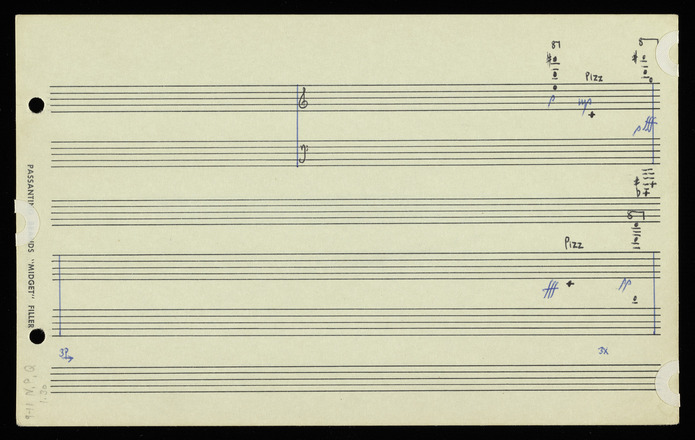
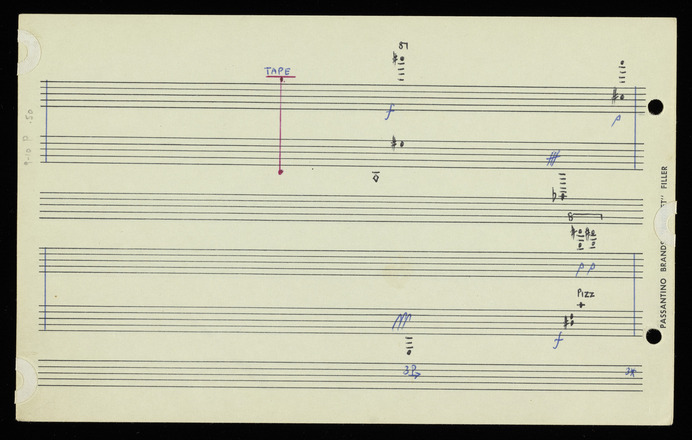
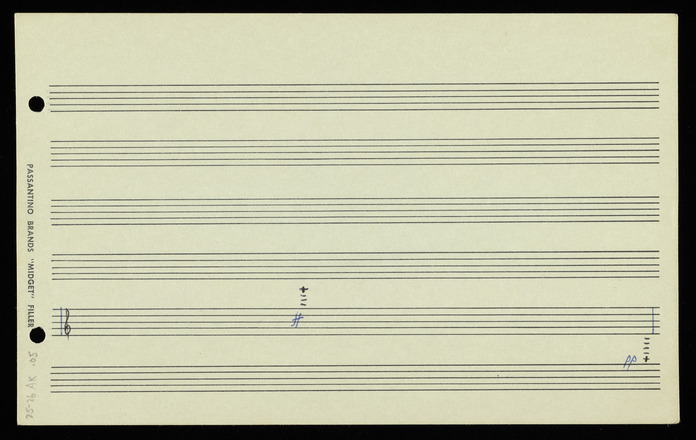
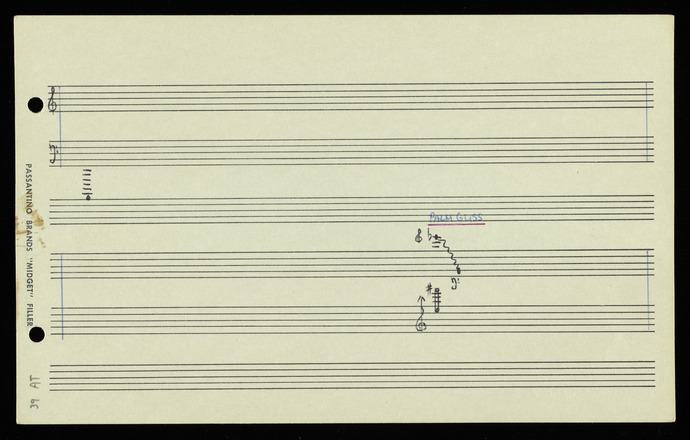
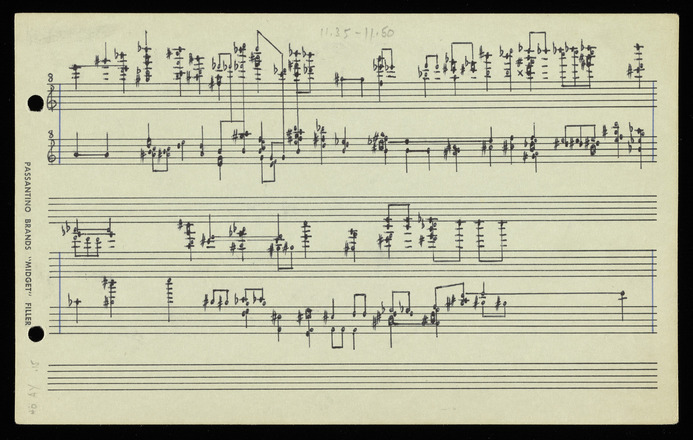
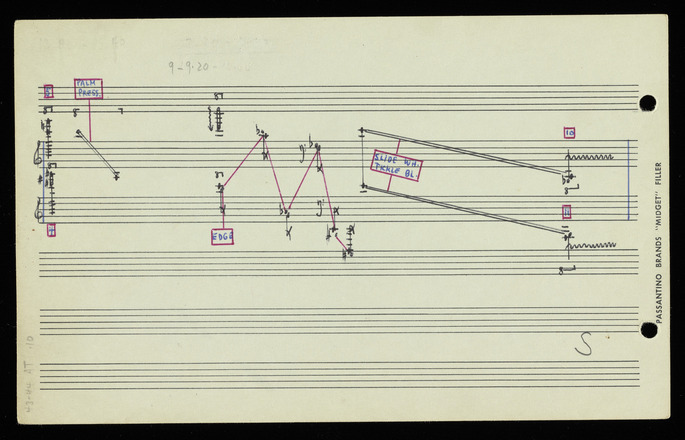
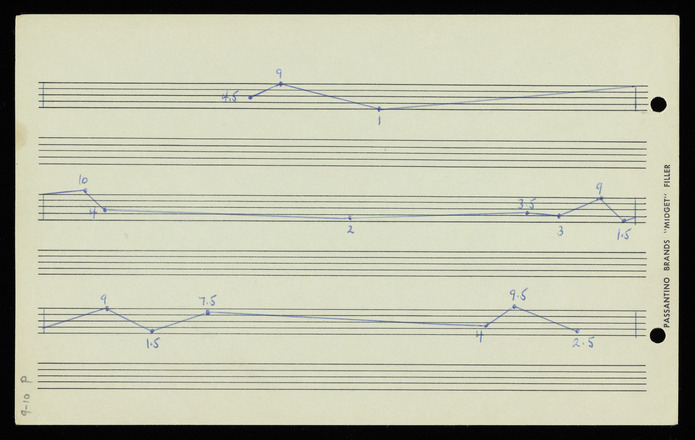
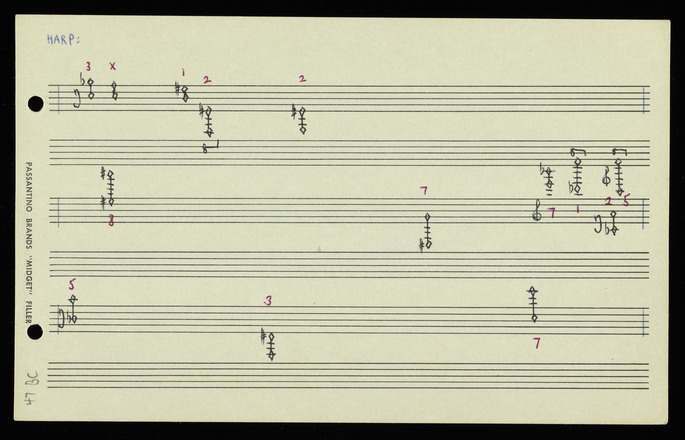
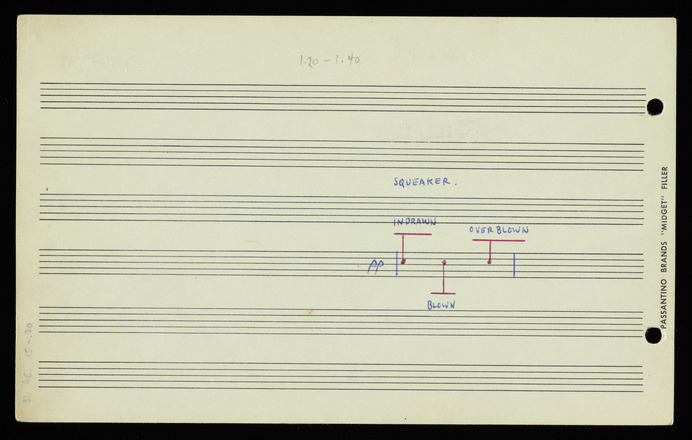
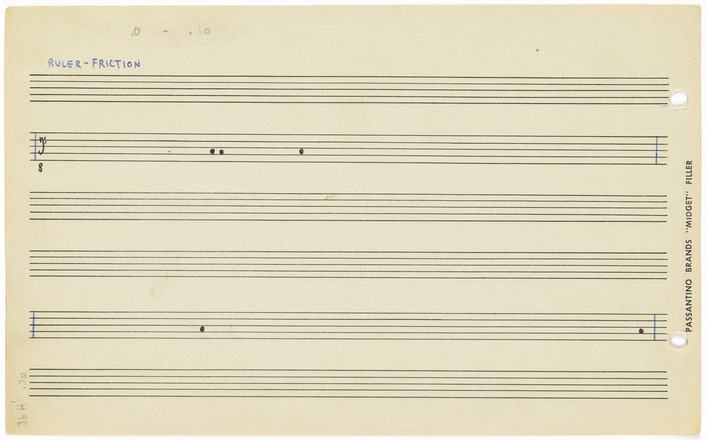
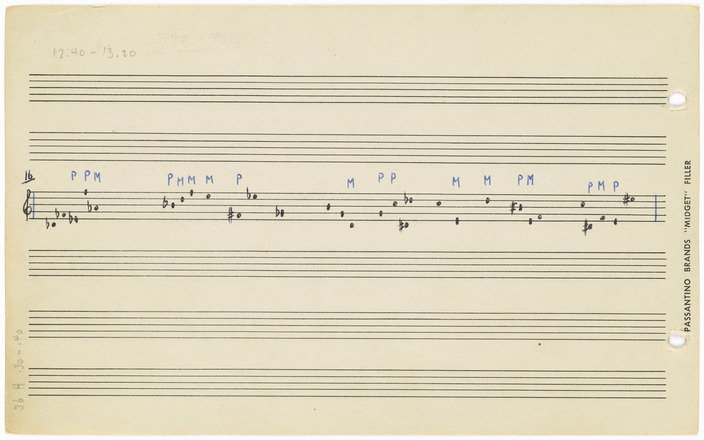
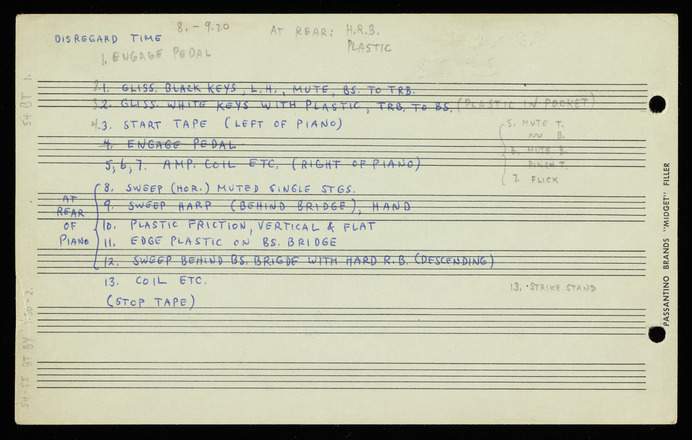
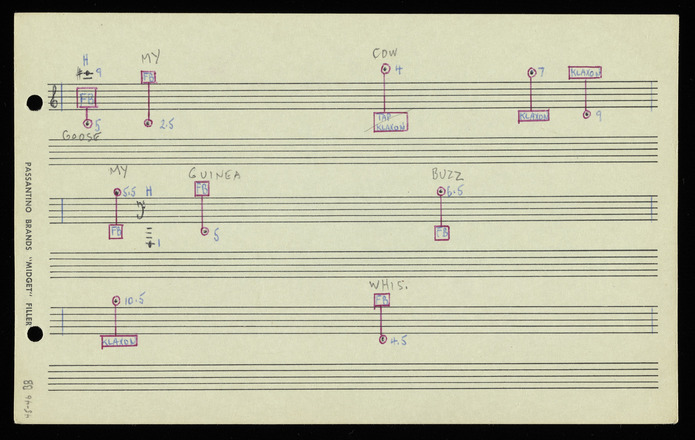
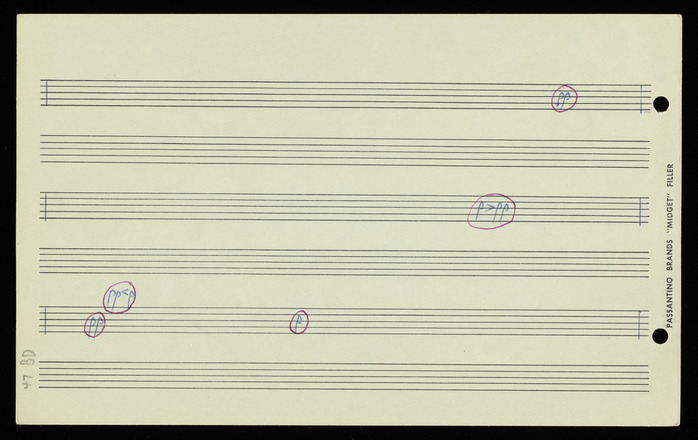
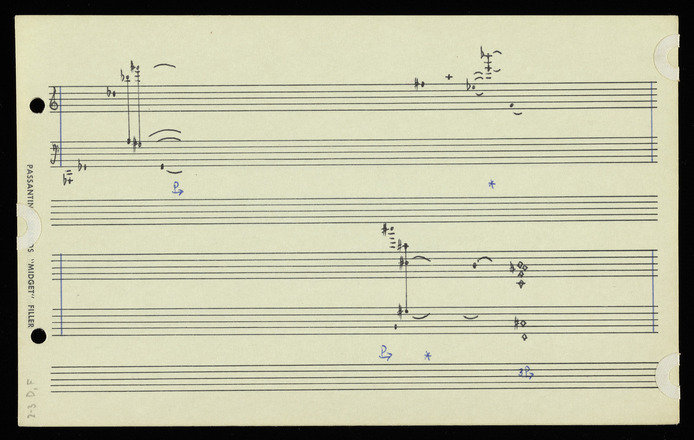
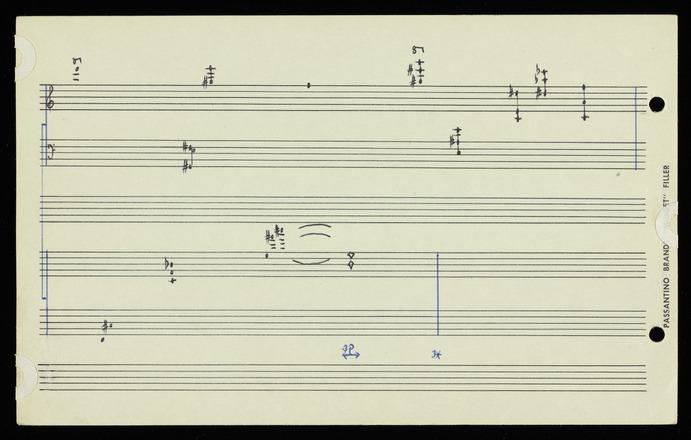
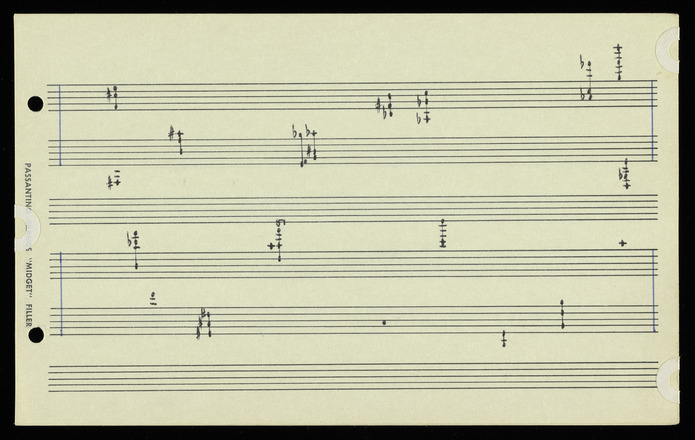
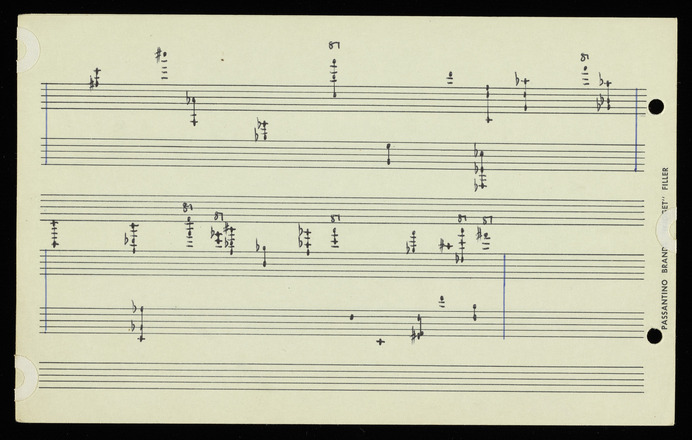
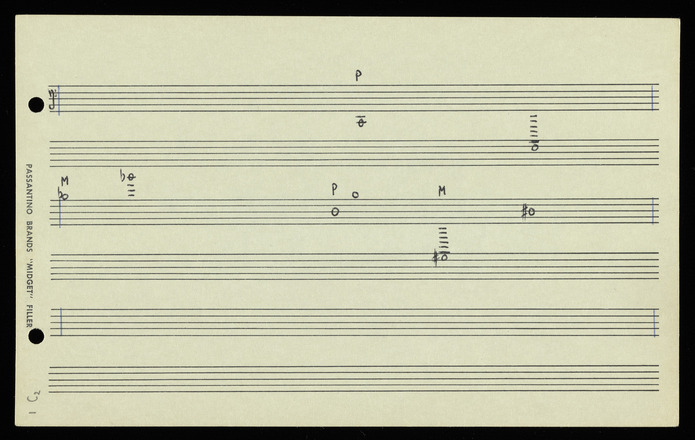
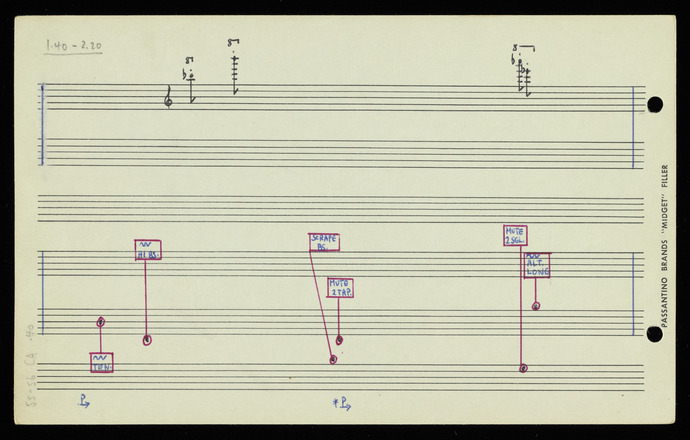
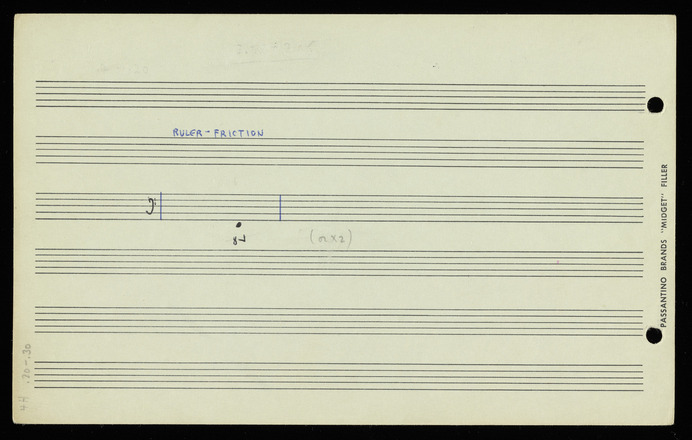
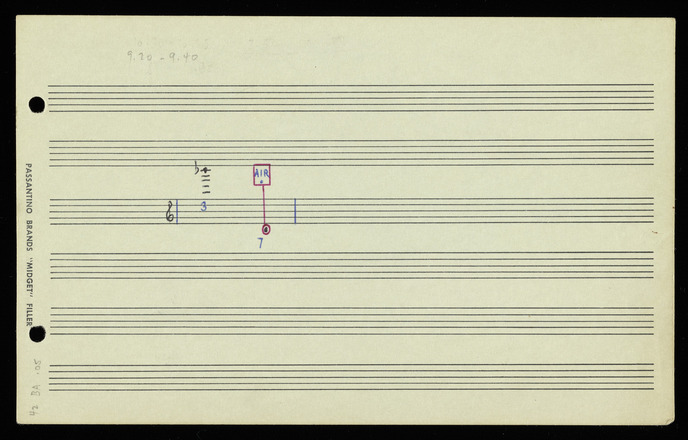
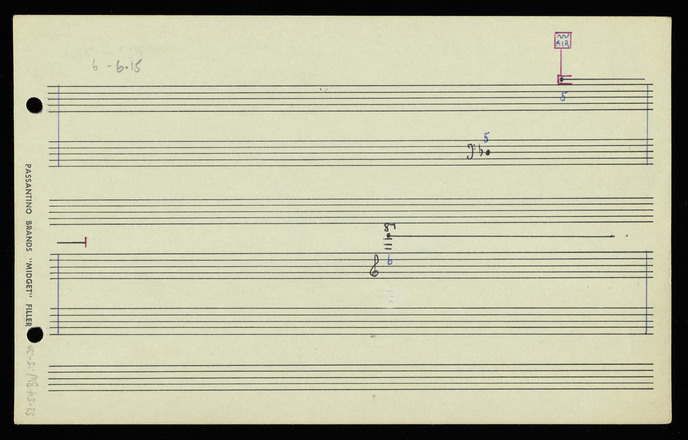
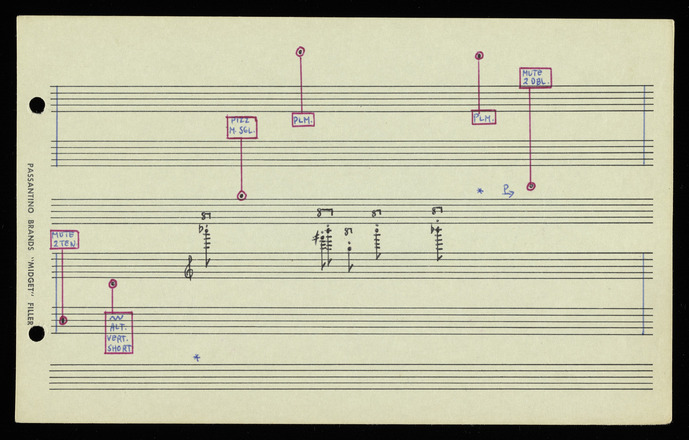
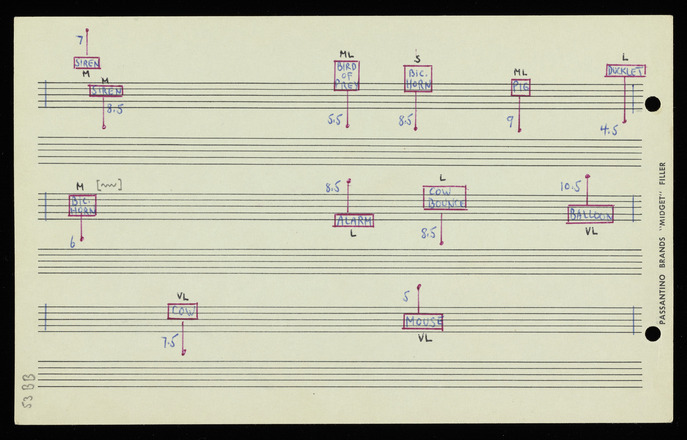
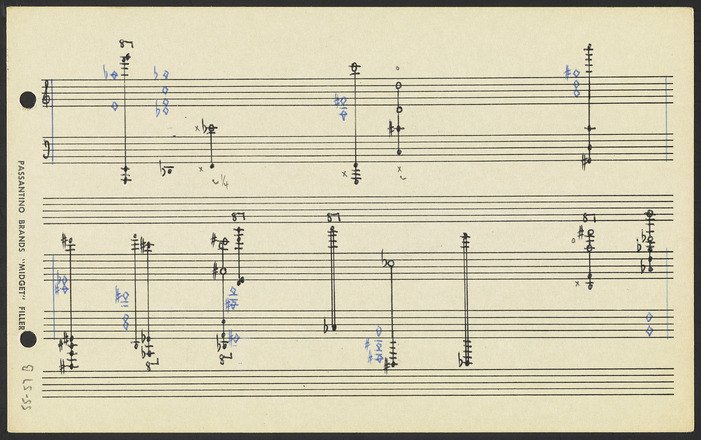
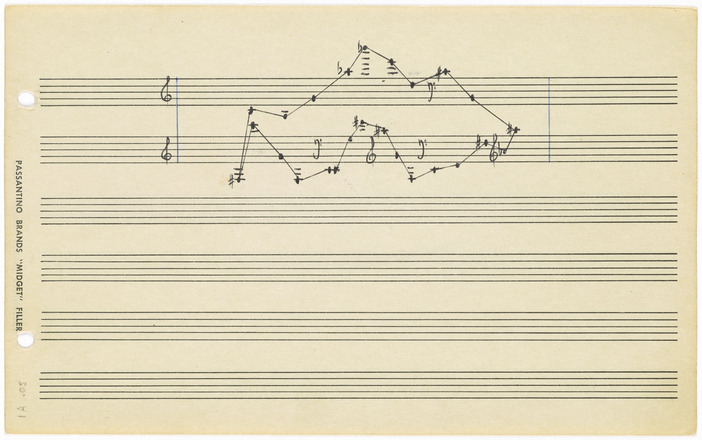
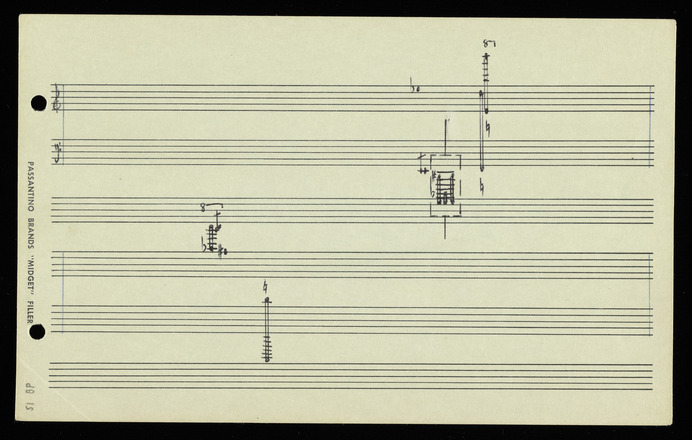
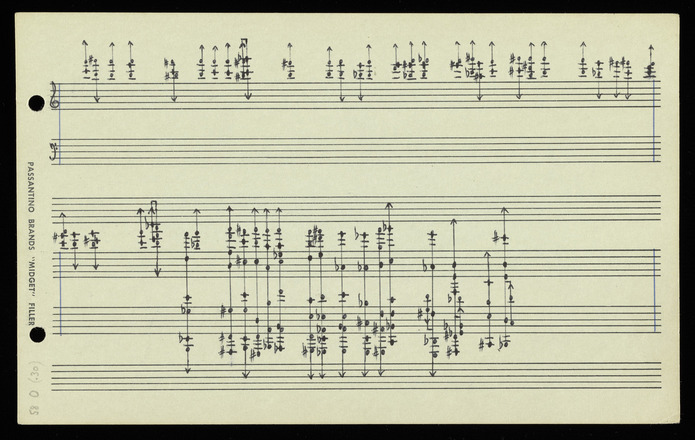
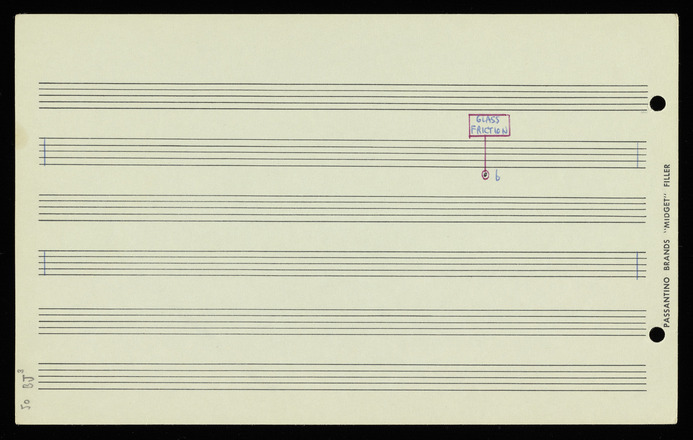
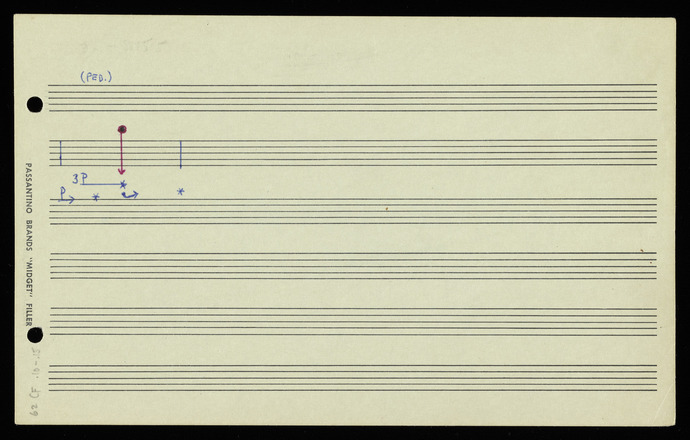
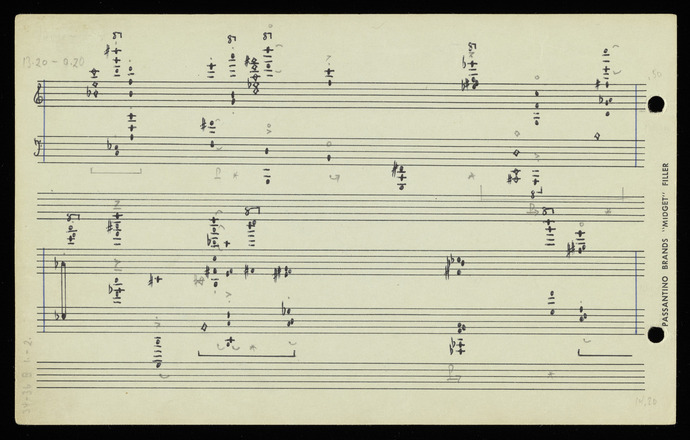
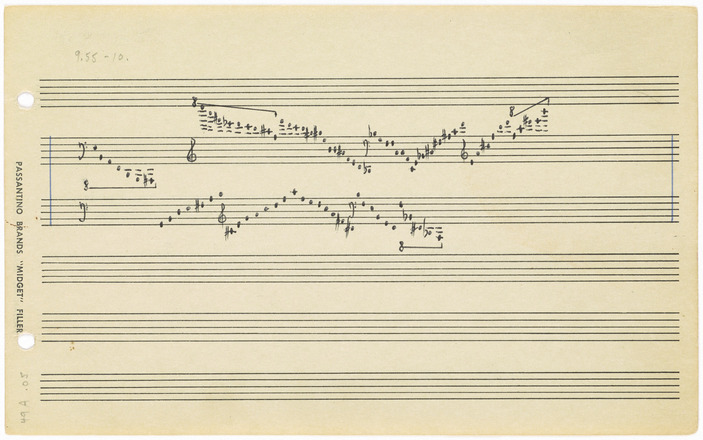
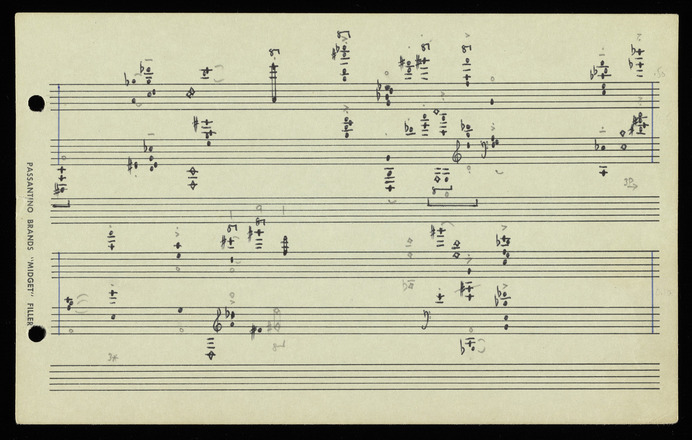
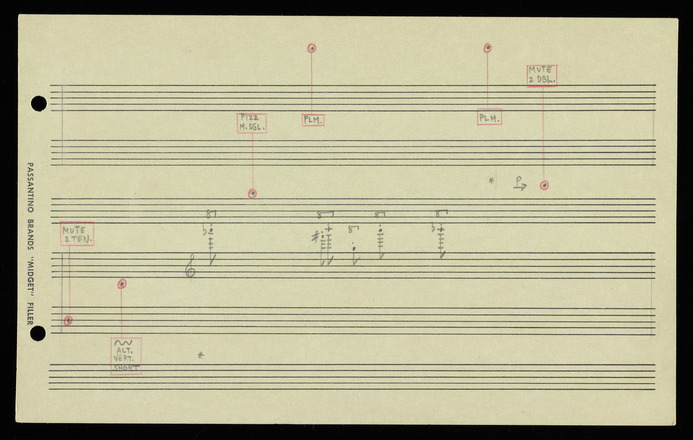
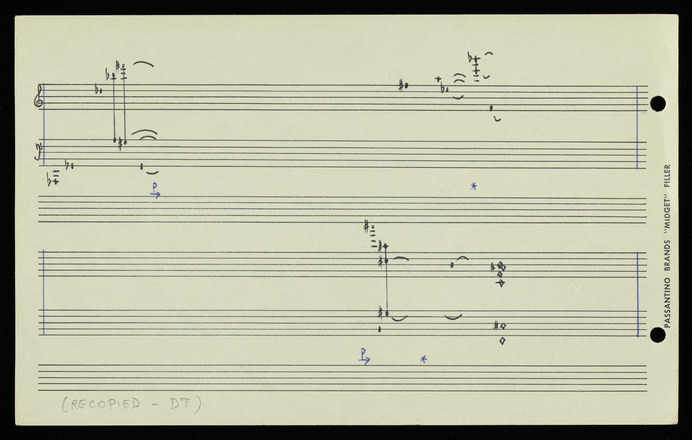
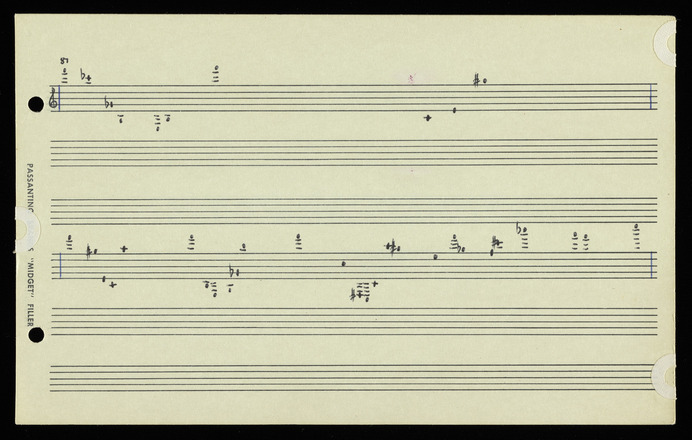
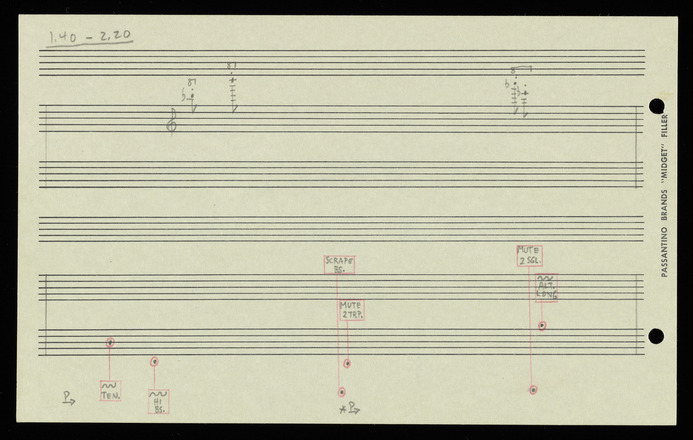
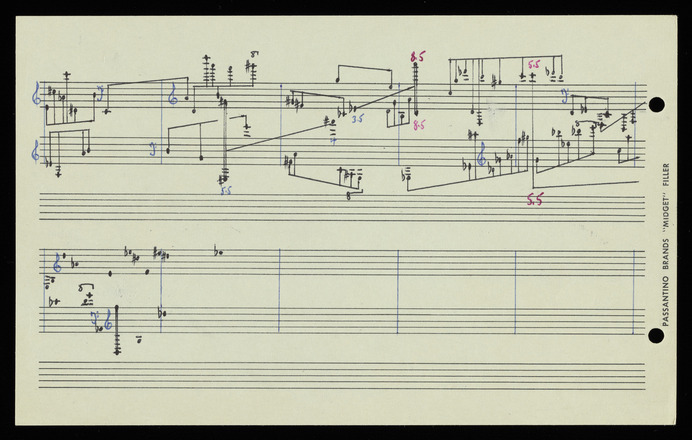
These loose sheets, given to the Getty Research Institute, could have been inserted, removed, and reordered with any of the sheets included in the binder of the first realization. The same color conventions of David Tudor’s notation apply here. Among these realization sheets, note that in Tudor’s realization of graph BT one finds short phrases of language indicating specialized auxiliary sounds, the eschewal of use of the staff to mark the passage of time, and the adoption of numbered list for which Western musical techniques and skills are no longer necessary. Tudor’s realization of graph BT echoes his use of “readymade” sound-producing materials in earlier works like Water Music (1952) and anticipates the use of language popularized by La Monte Young, George Brecht, George Maciunas, Yoko Ono, and Jackson Mac Low in the coming years.
Solo for Piano by John Cage © 1960 by Henmar Press Inc. Permission by C.F. Peters Corporation. All rights reserved.