Most Greek girls did not go to school. They stayed home and learned to do the things women did, like spin yarn,
weave fabric, and cook.
Girls grew up faster than boys. At age 15 they married men who were usually about 30 and moved into their husbands'
houses. Getting married and having a child were the two most important moments in a young woman's life.
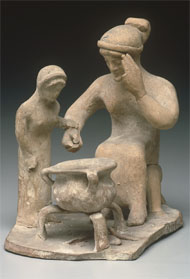
In ancient Greece, girls learned to cook by watching and practicing. This girl peers into a kettle as her mother
sprinkles in herbs. Imagine cooking 2,000 years ago without refrigerators, microwaves, or stoves!
|


 Past Exhibitions