October 8, 2010–February 26, 2017 at the Getty Villa
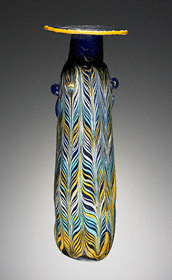
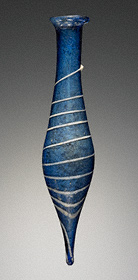
Blue Perfume Flask with White, Yellow, and Turquoise Feathered Decoration, Greek, 400–200 B.C.
Over 180 ancient glass objects from the collection of Erwin Oppenländer are featured in this exhibition.
The Oppenländer collection, which the Getty acquired in 2003, is remarkable for its cultural and chronological breadth. It includes works made in Mesopotamia, Egypt, the Greek world, and the Roman Empire, and spans the entire period of ancient glass production, from its origins in Mesopotamia in about 2500 B.C. to Byzantine and Islamic glass of the eleventh century A.D.
Also notable in the Oppenländer collection is the variety of ancient glassmaking techniques, such as casting, core forming, mosaic, inflation, mold blowing, cameo carving, incising, and cutting. All these techniques are still used by glass artists today.
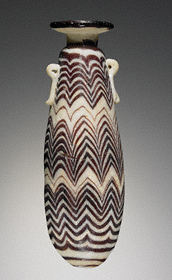
White Perfume Flask with Purple Zigzags,
Greek, 600–300 B.C.
Core-Formed Glass
Core forming was one of the earliest glassmaking techniques. Glassmakers shaped the body of the vessel around a core of ceramic-like material, wound colored trails of hot glass around it, and added handles and a rim. They then let the vessel cool and removed the core.
Most early core-formed containers were small flasks for perfumed oil, such as this one, which is only about five inches tall.
The coloration of the container shown here indicates that it was meant to imitate marble.
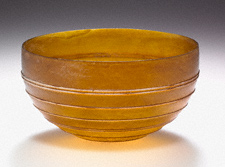
Casting is a technique of pouring hot glass into a mold. After the glass cools, glassmakers use various grinding and cutting techniques to refine the vessel's form and decoration. Decorative patterns are sometimes cut into the sides with a cutting wheel.
Bowls were the most common cast vessels. Pendants, inlays, and other small objects
were also created using this technique.
This bowl has two layers of different colors. Much of the white overlayer was removed through grinding, leaving ridges of white over the amber underlayer.
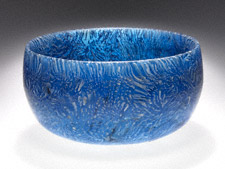
Bowl with Blue and White Canes,
Greek or Roman, 100–1 B.C.
Mosaic Glass
Mosaic glass vessels are among the most colorful ancient containers. They were formed by fusing numerous slices or ribbons (lengths) of cane in molds until they melted together into a swirl of colors, as seen on this blue and white bowl.
Multicolored canes and figural compositions for plaques and beads were made by layering different colors and manipulating them into designs. Roman mosaic glass later inspired Venetian glassmakers to create millefiori (Italian for "thousand flowers").
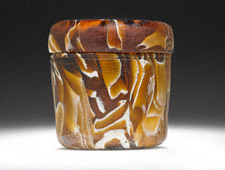
Lidded Container with Amber and White Marbling, Roman, A.D. 1–100
This pyxis, a lidded cosmetics or jewelry box, is made from marbled glass, a variant of mosaic glass.
The Roman glassmaker created a swirling pattern (similar to agate) by melting multiple colors of glass together.
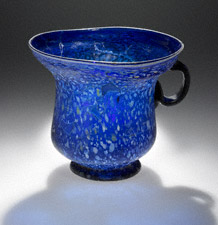
Blue Splashware Cup, Roman, A.D. 1–100
Free-Blown Glass
In the environs of Jerusalem, in about 50 B.C., glassmakers discovered they could inflate glass into a bubble at the end of a tube. This new glassblowing technique allowed glassmakers to produce vessels so quickly and cheaply that glass containers began to replace clay ones for household use.
Blown-glass vessels were decorated using a variety of techniques—pinching, pressing, pulling, painting, applying
trails (threads of glass), and rolling in colored
glass chips before reinflating (to create splashware). Glass with cut decoration was made to imitate hard-to-cut rock crystal and is often colorless. Painted glass is very rare, and the pigment has often worn away.
This splashware cup was a luxury item that was probably used in a wealthy home. It was decorated by rolling hot blue glass into glass chips of other colors.
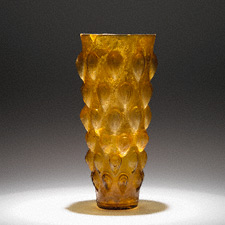
In about 25 B.C. glassmakers began to create decorative vessels, such as this cup, by blowing glass into a mold with incised designs. Mold fragments of stone, clay, bronze, and plaster have survived from antiquity. The earliest makers of molds for glassware may have been ceramists familiar with constructing molds for clay vessels.
Mold designs often incorporated decorative elements, such as palm fronds, columns, or lotus buds (as on this vessel), that disguise the joins of different sections.
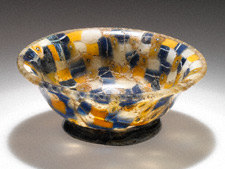
Cup with Blue, White, and Yellow Canes, Greek, 100–1 B.C.
Function
Glass had both practical and decorative uses in antiquity, just as it does today.
The ancient Greeks, Romans, and Etruscans stored ink, food, cosmetics, and perfumed oil in glass containers. They used glass tableware and played with glass game pieces. They looked into glass mirrors, lit the night with glass lamps, and gazed through glass windows. The wealthy decorated their homes with glass mosaics, inlays, and statuettes.
This patella cup was used nearly 2,000 years ago for eating and drinking.
Blue Perfume Flask with a White Trail,
Roman, A.D. 1–100
Perfume was precious and merited fine containers such as this one.
A glassmaker inflated this vessel and then wound a white trail around the blue glass body to create an elegant pattern.
This exhibition is a variation of a show that was presented January 28–July 24, 2006, and January 11–April 23, 2007, at the Getty Villa.
Visit the Video Gallery
Watch a glassmaker demonstrate ancient glassmaking techniques.


 Current Exhibitions